
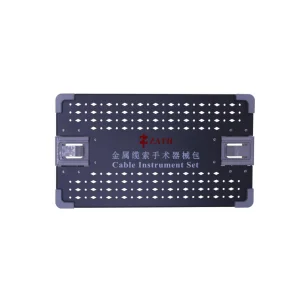
Featured Surgical Platforms
Precision Implants & Instrument Assemblies (Series I)
Engineered to international biocompatibility and mechanical fatigue specifications. Below is an initial selection of surgical hardware produced in our certified manufacturing facilities.
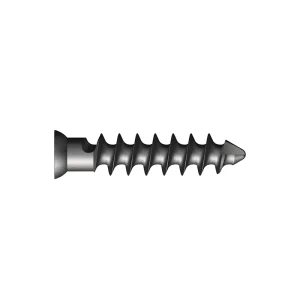
ODM Titanium FDN Acetabular Screw Exporters, Service
Explore Specifications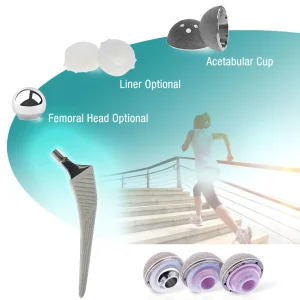
Discount Professional Medical Hip Implant Titanium Bipolar Hip Joint Prosthesis Manufacturers, Supplier
Explore Specifications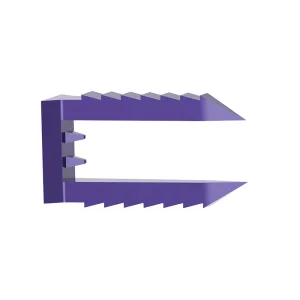
Famous Titanium Alloy Orthopedic Suture Anchor Titanium Manufacturer Companies, Products
Explore Specifications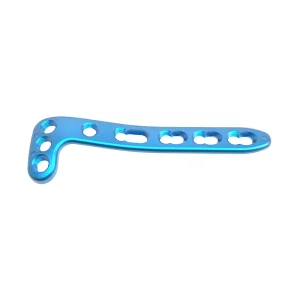
Best Proximal Medial Tibia Locking Compression Plate I Pricelist, Product
Explore Specifications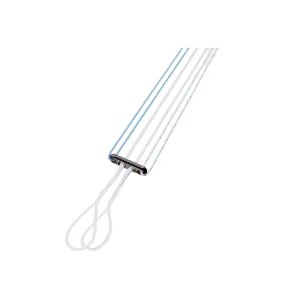
OEM SuperFix Titanium Endo Button With Loop Surgical Operations Company, Companies
Explore Specifications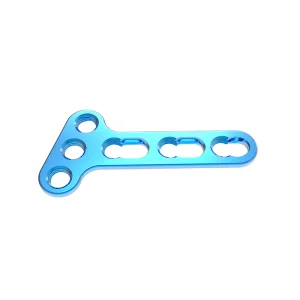
Buy Oblique T-Shape Locking Compression Plate Manufacturers, Pricelist
Explore Specifications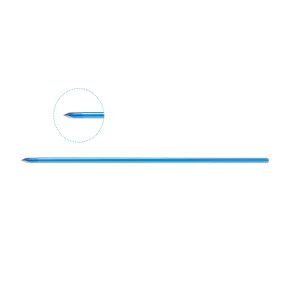
Best Diameter 1.5mm 2.0mm 2.5mm 3.0mm Titanium Alloy Threaded Bone Pin Manufacturers, Exporter
Explore Specifications
Clinical Biomechanics & Mechanics
Engineering Principles of This PFNA Fixation
The Proximal Femoral Nail Antirotation (PFNA) represents a revolutionary paradigm shift in addressing trochanteric and pertrochanteric fractures, particularly in osteoporotic bone.
Proximal femoral fractures, categorized under the AO/OTA 31-A classification (pertrochanteric, intertrochanteric, and high subtrochanteric fractures), present intricate biomechanical hurdles for orthopedic trauma surgeons worldwide. Historically, dynamic hip screws (DHS) and first-generation dual-screw cephalomedullary intramedullary nails were prone to notable failure rates in poor cancellous bone architectures. Complications such as lag screw "cut-out", "cut-through", rotational instability, and the infamous "Z-effect" (where differential migration of two parallel proximal screws creates head perforation or lateral extrusion) routinely disrupted healing trajectories.
The core innovation of the PFNA (Proximal Femoral Nail Antirotation) system lies in its single helical spiral blade mechanism. Unlike conventional lag screws that drill and discard valuable trabecular bone during thread carving, the PFNA helical blade operates on an impaction compaction principle. When inserted, the helical profile compacts the surrounding cancellous bone around its blades, enhancing anchoring stability and maximizing resistance to rotational shear stresses and varus collapse.
Radial Bone Compaction
The helical blade does not remove trabecular bone. Instead, it circumferentially compresses cancellous matrix during advancement, achieving higher insertional torque and bone-metal interface stability in osteoporotic femoral heads (Singh Index < 3).
Dynamic Controlled Collapse
The helical blade barrel incorporates longitudinal micro-grooves enabling controlled postoperative fracture impaction along the femoral neck axis while strictly forbidding rotational spinning of the proximal head-neck fragment.
Mediolateral Angle Optimization
Engineered with an anatomical 5-degree or 6-degree mediolateral valgus bend, modern OEM PFNA designs accommodate the entry point at the tip of the greater trochanter, avoiding gluteus medius avulsion and lateral cortex blowout.
Manufacturing Infrastructure
China Factory Supply Chain & OEM Scalability
Inside ZATH's Beijing Zhongguancun Science Park manufacturing base: Vertical integration from certified medical raw materials to sterile cleanroom packaging.
Contract manufacturing for Class III orthopedic medical devices demands flawless traceability, extreme dimensional tolerance control, and certified metallurgical consistency. Operating from our modernized production center in Beijing, China, ZATH (Beijing ZhongAnTaiHua Technology Co., Ltd., established 2009) maintains an integrated, high-throughput manufacturing infrastructure tailored specifically for global OEM and ODM orthopedic partners.
Certified Metallurgy (ASTM F136)
We source medical-grade Ti-6Al-4V ELI (Extra Low Interstitial) titanium alloy strictly conforming to ISO 5832-3 and ASTM F136 specifications. Raw ingots undergo spectrophotometric composition verification, ultrasonic defect detection, and tensile grain structure analysis prior to CNC batch release.
5-Axis Simultaneous CNC Machining
Our workshop houses high-precision Swiss-type automatic turning centers and DMG MORI 5-axis machining stations. Intricate deep-hole cannulation (Ø3.2mm - Ø4.2mm along nail lengths up to 420mm) is executed with runout tolerances held within ±0.015mm, ensuring smooth guide wire passage.
Surface Finishing & Class 10,000 Cleanrooms
Automated electrochemical anodization creates a bio-inert titanium oxide passivation layer, preventing galling during blade advancement. Implants pass through multi-stage ultrasonic degreasing before entering ISO Class 7 (Class 10,000) cleanrooms for double-sterile blister sealing.
15+
Years Specialized Orthopedic Manufacturing
300+
Skilled Workforce & Quality Auditors
100≈
Senior Biomechanical & CNC Engineers
100%
Batch CMM & Optical Tolerance Inspection
B2B Procurement Architecture
OEM/ODM Customization Matrix & Technical Parameters
Review the comprehensive modular specifications available for contract manufacturing, private-label branding, and surgical instrument configuration.
Global medical distributors, national tender contractors, and healthcare conglomerates possess divergent anatomical and regulatory requirements. Our OEM PFNA line supports comprehensive dimension configurations, including short nails for localized trochanteric management and long anatomical curved nails for complex subtrochanteric or combined diaphyseal fractures.
| Component Specification | Standard Dimension Matrix | Custom OEM/ODM Options | Biomechanical Objective |
|---|---|---|---|
| Nail Diameter (Distal) | Ø9.0mm, Ø10.0mm, Ø11.0mm, Ø12.0mm | Custom Ø8.5mm, Ø10.5mm, Ø13.0mm | Ensures exact fit inside isthmus without causing excessive endosteal reaming. |
| Short Nail Lengths | 170mm, 200mm, 240mm (Universal) | 180mm, 220mm; Left/Right Dedicated | Optimized for rapid minimally invasive insertion in pertrochanteric fractures. |
| Long Nail Lengths & Radius | 320mm to 420mm (20mm increments); ROC 1.5m | ROC 1.2m to 2.0m curvature customization | Accommodates natural anterior femoral bow to prevent anterior cortical impingement. |
| CCD Angle (Caput-Collum-Diaphyseal) | 125°, 130° | 120°, 135° available upon request | Restores normal femoral neck-shaft biomechanical alignment and limb length. |
| Helical Spiral Blade | Lengths: 75mm to 125mm (5mm increments) | Variable pitch flutes; Cement perforated holes | Prevents head rotation; allows optional polymethylmethacrylate (PMMA) augmentation. |
| Distal Locking Modes | Static / Dynamic oblong slots (Ø4.9mm) | Multi-planar angle orientation | Permits axial dynamization while eliminating distal rotational shear stress. |
Radiolucent Surgical Instrumentation & Quick-Targeting Delivery
An intramedullary nail is only as efficient as its instrumentation. ZATH provides precision-calibrated aiming arms crafted from high-grade carbon-fiber or titanium composites. The radiolucent targeting frame eliminates fluoroscopic shadows during intraoperative C-arm imaging, allowing orthopedic surgeons to align proximal blade sleeves and distal locking screws within seconds. Every set includes quick-connect flexible reamers, tissue protection sleeves, depth gauges, helical blade impactors, and reverse extraction hammers.
Audit-Ready Compliance
Regulatory Support, Localization & Quality Dossiers
Accelerating market entry across the European Union, Latin America, Southeast Asia, the Middle East, and Africa with turnkey documentation.
ISO 13485:2016 Certified QMS
Our quality management system is independently audited and certified under ISO 13485:2016 for design, manufacture, and cleanroom sterile packaging of orthopedic implants and surgical instruments. Complete Device Master Records (DMR) and Device History Records (DHR) are archived for 15+ years.
Complete Technical Documentation
We provide international distributors with ready-to-submit Common Technical Documents (CTD), including ISO 10993 cytotoxicity and biocompatibility reports, ASTM F384 / ASTM F543 dynamic bending fatigue benchmarks, and shelf-life accelerated aging validation (ASTM F1980).
Consular Legalization & FSC
We support distributor tenders by supplying certified Free Sale Certificates (FSC) issued by government competent authorities, notarized by the Ministry of Foreign Affairs, and legalized via Apostille or local embassy consular stamps (e.g., GCC, COFEPRIS, ANVISA, SFDA).
Localized Branding, UDI Barcoding & Sterile Traceability
In full accordance with US FDA 21 CFR Part 830 and EU MDR 2017/745 Unique Device Identification (UDI) regulations, every ZATH OEM PFNA nail, helical blade, and end cap features ultra-fine, corrosion-resistant laser marking. DataMatrix GS1 2D barcodes capture production lot numbers, expiration intervals, GTINs, and component references. For OEM brand owners, we formulate localized labeling in English, Spanish, French, Arabic, and Russian, complete with authorized EU/UK Responsible Person details.
Future Innovations
Emerging Technological Trends in Cephalomedullary Nailing
How next-generation materials, additive manufacturing, and digital surgery integrations are shaping the future of trochanteric fracture fixations.
Fenestrated Cement Augmentation
For severe geriatric osteoporosis, third-generation PFNA systems employ cannulated helical blades with perforation ports near the blade tip, allowing low-viscosity PMMA bone cement to be injected safely into the head without entering the hip joint space.
PFNA-II & Asian Anatomical Optimization
Standard Western designs often cause anterior cortex impingement in populations with shorter statures and tighter femoral bowing. Modern trends favor an anatomical radius of curvature of 1.5m and a reduced proximal diameter of Ø15.5mm to eliminate trochanteric split.
Carbon-PEEK Radiotranslucent Aiming Guides
Shifting away from heavy stainless steel instrumentation, contemporary aiming frames utilize high-modulus carbon-fiber-reinforced PEEK composites. They offer extreme mechanical rigidity, repeated steam autoclave durability, and completely unobstructed fluoroscopic visualization.
Additionally, with the global rise of robotic orthopedic platforms and computerized fluoroscopy navigation, OEM manufacturers are optimizing intramedullary nail geometry for real-time tracking array calibration. ZATH's forward R&D pipeline actively explores trabecular titanium 3D-printed surface topologies to stimulate biological bone ingrowth at proximal entry points.
Surgical Scenarios
Clinical Indications & Operative Precision
Understanding anatomical pathology to deliver engineered surgical reliability from incision to post-operative rehabilitation.
Primary Indications (AO/OTA Classification):
- 31-A1 Fractures: Pertrochanteric simple (two-part) fractures. Highly stable following insertion of a short PFNA with static or dynamic distal locking.
- 31-A2 Fractures: Pertrochanteric multi-fragmentary fractures with loss of posteromedial calcar buttress support. The helical blade compacts the weakened head-neck bone, preventing secondary varus collapse.
- 31-A3 Fractures: Intertrochanteric reverse oblique and transverse fractures. Long PFNA intramedullary nails are strongly indicated to bypass the lateral cortex stress concentrator zone and prevent shaft medialization.
- High Subtrochanteric & Pathological Fractures: Long PFNA implants with customized distal locking safely bridge metastatic osteolytic lesions or severe comminution extending 5cm below the lesser trochanter.
Operative Workflow & Complication Avoidance:
Surgical success requires rigorous adherence to the entry portal at the junction of the anterior third and posterior two-thirds of the greater trochanter tip. Opening reaming must precisely match the nail's proximal geometry (16.5mm or 15.5mm). The helical blade must be positioned centrally or slightly inferiorly in the femoral head on the AP projection, and centrally on the lateral view, targeting a Tip-Apex Distance (TAD) of strictly less than 25mm to safeguard against biomechanical mechanical cut-out.
Procurement Intelligence
Frequently Asked Questions (OEM PFNA Sourcing)
Essential technical, regulatory, and logistics answers for hospital group procurement directors and regional distributors.
What is the primary mechanical difference between a PFNA helical blade and a standard lag screw?
A standard lag screw carves away cancellous bone through continuous thread rotation, which significantly reduces anchoring strength in osteoporotic patients. In contrast, the PFNA helical blade is impacted without pre-drilling the full diameter, dynamically compacting surrounding trabeculae radially. This provides superior rotational grip, increases pullout force by up to 45%, and significantly diminishes the risk of superior bone cut-out.
Can you manufacture PFNA nails with localized anatomical dimensions for specific demographic regions?
Yes. Through our ODM/OEM engineering service, we produce both Western standard configurations and modified Asian / Latin American profiles (often designated as PFNA-II). These modifications include a downscaled proximal diameter (from 16.5mm to 15.5mm), a refined mediolateral angle of 5 degrees, and shortened nail lengths (170mm to 200mm) to prevent impingement against the anterior femoral cortex.
What certifications and quality control protocols accompany each OEM production batch?
Every shipment is produced under our certified ISO 13485:2016 quality management system. Implants are accompanied by Mill Test Raw Material Certificates (confirming Ti-6Al-4V ELI chemistry), 100% CMM dimensional inspection logs, surface roughness (Ra) verification, electrochemical passivation audit reports, and Ethylene Oxide (EO) or Gamma radiation sterilization validation records.
Are ZATH orthopedic implants provided in sterile or non-sterile packaging?
We provide both configurations. All series can be delivered in validated double-sterile blister pouches with Tyvek peel-back lids, packaged within our ISO Class 7 cleanrooms with a verified 5-year sterile shelf life. Alternatively, we supply non-sterile bulk packaging with customized hospital sterilization tray protocols to suit regional tender specifications.
What is the standard production lead time and international delivery timeframe?
For standard inventory items and stocked semi-finished blanks, dispatch takes 7–14 days. Custom OEM production runs typically require 30–45 days depending on tooling complexity and laser marking approvals. International air express freight (DHL, FedEx, UPS) guarantees airport-to-door delivery within 4–6 business days worldwide.
Do you supply matching surgical instrument sets with private-label branding?
Yes. We supply comprehensive surgical instrument sets matching the PFNA line, featuring carbon-fiber radiolucent aiming guides, calibrated drills, depth gauges, and blade insertion impactors. We offer custom CNC foam case layouts, laser-etched distributor branding, and anodized color coding on instruments for rapid operating room workflow.
Comprehensive Implant Matrix
Precision Implants & Instrument Assemblies (Series II)
Explore additional joint replacement, spinal internal fixation, and trauma stabilization systems manufactured to international regulatory benchmarks.
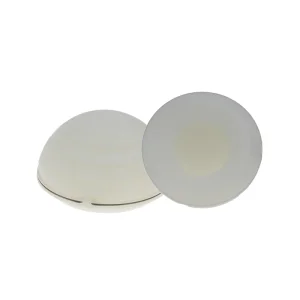
High-Quality TDC Cemented Acetabular Cup Artificial hip Joint Prosthesis Supplier, Suppliers
Explore Specifications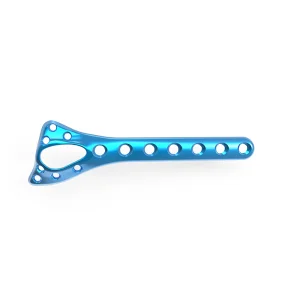
ODM DDR Locking Compression Plate Companies, Product
Explore Specifications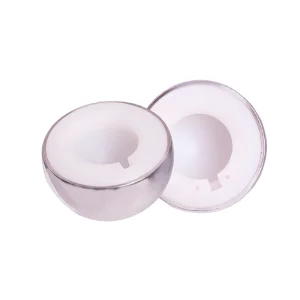
Wholesale FDAH Bipolar Acetabular Cup Medical Hip Joint Prosthetics Companies, Product
Explore Specifications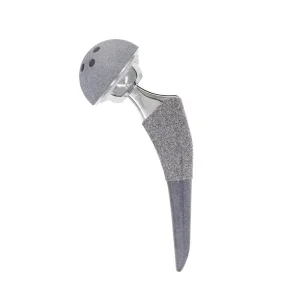
Cheap Hot sale Ti alloy JDS total hip replacement titanium joint prosthesis Quotes, Company
Explore Specifications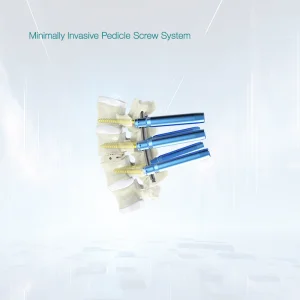
OEM High Quality ZATH HE Minimal Invasive Spine Pedicle Screw Manufacturers, Exporters
Explore Specifications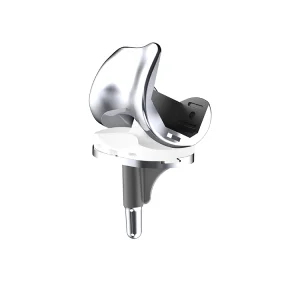
ODM Orthopedic titanium knee joint replacement prosthesis Exporters, Service
Explore Specifications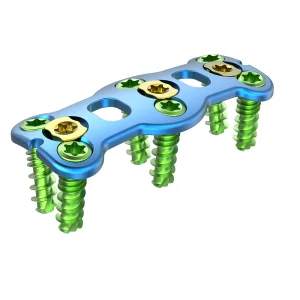
CE Certification High quality Orthopedic Cervical Shielder ACP Plate System Manufacturer, Suppliers
Explore Specifications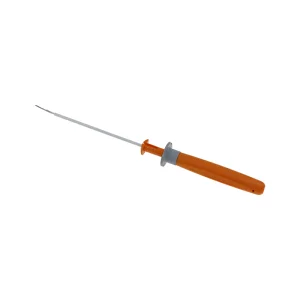
ODM Orthopedic Fast All Inside Meniscal Repair Device System Products, Service
Explore SpecificationsPartner with an Accountable Orthopedic OEM/ODM Manufacturer
Whether establishing a regional distribution network, submitting government hospital tenders, or launching custom private-label orthopedic implants, ZATH delivers proven precision engineering, technical compliance dossiers, and reliable global delivery.