
Precision Orthopedic Implant Platforms • Part I
Turnkey trauma, spine, and lower extremity reconstructive hardware manufactured under cleanroom conditions.
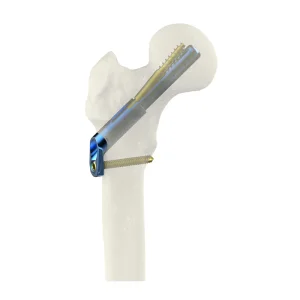
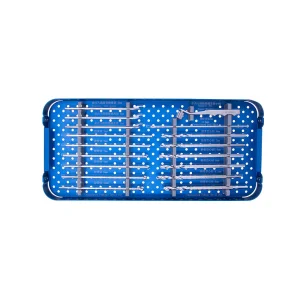
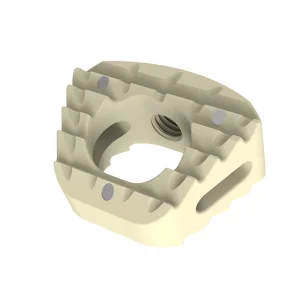
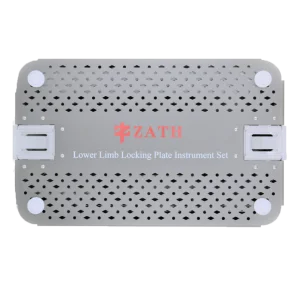
Global Commercial & Industrial Landscape of Tibial Osteosynthesis
Tibial fractures represent approximately 15% of all adult fractures encountered in emergency and level-1 trauma centers worldwide. Due to the tibia’s subcutaneous anteromedial border, limited soft-tissue envelope, and vulnerable vascular watershed zones, the surgical management of tibial fractures presents extreme clinical challenges. OEM/ODM medical device procurement teams must balance biological fixation, mechanical stiffness, fatigue life, and anatomical contouring to prevent non-union, mal-union, and infection.
Metallurgical Superiority
Our OEM titanium plate systems utilize high-purity Medical Grade 5 Titanium Alloy (Ti-6Al-4V ELI, conforming to ASTM F136 and ISO 5832-3). Compared with 316L stainless steel (modulus of ~210 GPa), titanium exhibits an elastic modulus of ~110 GPa. This closer alignment to human cortical bone (18–22 GPa) significantly mitigates stress shielding, preserves cortical vascular perfusion, and accelerates secondary bone remodeling via callus formation.
Anatomical Pre-Contouring
Pre-shaped profiles developed through volumetric 3D CT reconstruction databases ensure optimized fit across human anthropological variations. By minimizing intraoperative plate contouring, internal residual stresses that cause early metal fatigue or plate snapping under cyclic gait loading are eliminated. Our low-profile beveling reduces tissue tenting and tenosynovitis over the subcutaneous anterior tibia.
Combithread Locking Geometry
Equipped with standardized combi-holes, the system empowers orthopedists to execute absolute stability (interfragmentary compression via cortex screws angled in the dynamic compression unit) and relative biological stability (angular stable locking screws with tapered thread-in-plate engagement) in a single surgical construct.
Localized Anatomical Indications: Proximal, Shaft & Distal Tibia
Every anatomical zone of the tibia features unique mechanical load vectors, vascularity, and soft-tissue coverage. Our OEM titanium plate portfolio includes custom-tailored geometries targeting specific fracture classifications under the AO/OTA universal framework.
Proximal Tibial Plateau (Schatzker I–VI / AO 41)
Features proximal lateral and medial locking compression plates (LCP). Multi-directional subchondral rafting screw arrays support articular fragments, preventing secondary joint depression and varus collapse under axial load. Crucial for split-depression patterns, high-energy bicondylar fractures, and osteopenic bone structures.
Diaphyseal Shaft Fractures (AO/OTA 42)
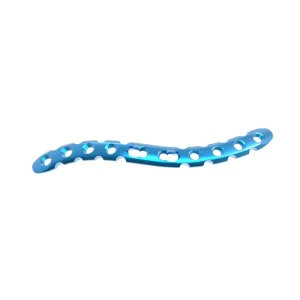
Broad and narrow wave/straight compression plates engineered for bridging osteosynthesis (MIPO) and biological fixation. Under-surface scalloping limits contact between plate and periosteum, minimizing disruption to endosteal blood supplies and expediting secondary secondary woven-bone remodeling.
Distal Tibia & Pilon (AO/OTA 43)
Anterolateral, medial, and posterior distal tibia plates designed with extremely thin distal tapering (1.5mm–2.0mm) to accommodate tenuous soft tissue at the supramalleolar region. Locking screw orientation captures the anterior Volkmann fragment, Chaput tubercle, and medial malleolar shoulder.
Mechanical & Manufacturing Specification Matrix
Standardized engineering tolerances and fatigue resistance verified according to ASTM F382 (Standard Specification and Test Method for Metallic Bone Plates).
| Implant System | Alloy Grade | Screw Interface (mm) | Plate Thickness (Shaft/Head) | Fatigue Strength (ASTM F382) | Target Clinical Indication |
|---|---|---|---|---|---|
| Proximal Lateral Tibia Plate IV | Ti-6Al-4V ELI (Grade 5) | Locking 3.5 / 5.0 | Cortex 4.5 | 4.2 mm / 3.2 mm tapered | > 1,000,000 cycles @ 250N | Schatzker I-VI, AO 41-A/B/C |
| Distal Medial Tibia LCP | Ti-6Al-4V ELI / CP-Ti | Locking 3.5 | Cortex 3.5 | 3.0 mm / 1.8 mm tapered | > 1,000,000 cycles @ 180N | Extra-articular Distal, AO 43-A |
| Distal Anterolateral Tibia Plate | Ti-6Al-4V ELI (Grade 5) | Locking 2.7 / 3.5 | Cortex 3.5 | 3.2 mm / 2.0 mm low-profile | > 1,000,000 cycles @ 200N | Pilon Fractures, AO 43-B/C |
| Broad Straight Tibia Shaft LCP | Ti-6Al-4V ELI (Grade 5) | Locking 5.0 | Cortex 4.5 | 4.5 mm uniform | > 1,500,000 cycles @ 400N | Diaphyseal Transverse/Spiral (AO 42) |
| Helical/Torsion Tibia Plate | Ti-6Al-4V ELI (Grade 5) | Locking 3.5 / 5.0 Combi | 3.8 mm calibrated | > 1,000,000 cycles @ 220N | Metaphyseal-Diaphyseal Transition |
Development Trends & Technology Roadmap (2025–2035)
The orthopedic trauma sector is shifting from passive mechanical splinting toward smart osteosynthesis, biological active interfaces, and personalized digital surgical workflows.
EBM & SLM 3D Lattice Printing
Additive manufacturing via Electron Beam Melting (EBM) and Selective Laser Melting (SLM) enables the creation of biomimetic trabecular porosity (pore size 400–600μm, porosity 65–80%). These open scaffold architectures encourage deep osteointegration and osteoconduction, radically reducing the incidence of implant loosening in osteoporotic tibial plateau salvage cases.
Antimicrobial Nanocoatings
Surgical site infection (SSI) and chronic osteomyelitis remain devastating risks in open Gustilo-Anderson Type II and III tibial injuries. Next-generation plates incorporate silver-ion (Ag+) plasma vapor deposition, bioactive hydroxyapatite (HA) layers, and antibiotic-eluting polymer topcoats that prevent bacterial adhesion without compromising osteoblast viability.
Carbon-Fiber PEEK Hybrids
Radiolucent CFR-PEEK fracture plates with integrated titanium thread bushings provide unimpeded fluoroscopic visualization of articular reduction throughout the procedure. Radiographic monitoring of callus progression is completely unhampered by metal scatter or artifact under CT and MRI modalities.
Contract Manufacturing & Regulatory Supply Chain Integrity
Navigating global medtech supply chains demands uncompromising conformity with European Medical Device Regulation (EU MDR 2017/745), US FDA 21 CFR Part 820, and national registration frameworks. We provide complete OEM/ODM solutions from raw bar stock to terminal sterile packaging.
Design for Manufacturability (DFM)
Our experienced biomechanical engineering staff collaborates with brand partners to optimize chamfers, thread tapers, and screw head seatings. By fine-tuning tool paths on high-precision German and Japanese 5-axis CNC machining centers, production cycle times are trimmed while strict dimensional tolerances (±0.005mm) are guaranteed.
Class 10,000 Cleanroom Sterile Packaging
Implants are processed through validated ultrasonic degreasing, passivation (ASTM A967), laser marking with Unique Device Identification (UDI), and sealed in double Tyvek blister packs within an ISO Class 7 (Class 10,000) cleanroom environment. Ethylene Oxide (EtO) or Gamma irradiation ensures a Sterility Assurance Level (SAL) of 10-6.
Full Dossier Technical Files & Audit Ready
Each shipment is delivered with comprehensive material certificates of analysis (MTR), biocompatibility reports (ISO 10993), static/dynamic four-point bending fatigue validations (ASTM F382), and full risk management documentation according to ISO 14971, expediting distributor clearance in target international markets.
Frequently Asked Questions: OEM Titanium Tibia Plating Systems
Essential technical, metallurgical, clinical, and regulatory answers for hospital procurement authorities, orthopedic distributors, and surgical teams.
1. Why is Ti-6Al-4V ELI titanium preferred over 316L stainless steel in tibial fracture reconstruction?
2. How does the combithread locking hole design achieve both dynamic compression and locked stability?
3. What clinical methods prevent soft tissue breakdown and infection in subcutaneous distal tibia fractures?
4. What customization and private-label OEM/ODM services does ZATH provide for international brands?
5. What mechanical fatigue testing validations are performed on tibial plating systems prior to distribution?
Precision Orthopedic Implant Platforms • Part II
Comprehensive trauma plates, intramedullary devices, and surgical instrumentation sets.
Accelerate Your Tibial Trauma Sourcing Pipeline
Connect directly with our biomedical research engineers and regulatory affairs officers. Obtain full CAD models, validation protocols, sample kits, and customized OEM quotation tiers within 24 business hours.