
Precision Orthopedic Implants & Specialized Assemblies
Sterile-packed, ISO 13485-certified internal fixation plates, joint prostheses, and surgical instruments manufactured for hospital procurement networks and tier-1 global distributors.
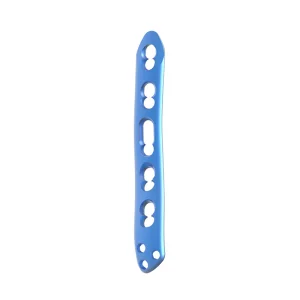
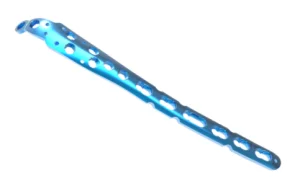
Biomechanical Imperatives in Distal Radius Dorsal Plating
Navigating the engineering balance between structural buttress rigidity, subchondral articular support, and the mitigation of extensor tendon impingement in high-energy dorsal wrist comminution.
Direct Dorsal Buttress Rigidity
Dorsal locking plates provide an irreplaceable biomechanical advantage in neutralizing secondary displacement forces in dorsally displaced intra-articular fractures (AO/OTA Type 23-B2, 23-C2, and 23-C3). By applying direct counter-pressure over the dorsal rim and Lister's tubercle, the implant acts as a true mechanical buttress, resisting the natural dorsal apex pull of the brachioradialis and wrist extensors under axial load.
Subchondral Raft Array Matrix
Our distal radius dorsal plate architecture incorporates dual-column multi-hole clusters engineered to project 2.4mm/2.7mm locking screws within 1.5mm to 2.0mm of the subchondral tidemark. This creates a multi-planar "rafting scaffold" beneath both the lunate and scaphoid facets, stabilizing osteochondral fragments, preventing late articular settling, and preserving radial inclination.
Ultra-Low Profile Tendon Protection
Historically, dorsal plates were associated with extensor tendon attrition. ZATH has re-engineered this paradigm via CNC 5-axis 3D contouring: tapered profile thickness tapering down to 1.2mm distally, fully chamfered edges (>45° radius blend), recessed screw-head countersinks, and mirror-polished dorsal surfaces designed to facilitate unhindered gliding of the Extensor Pollicis Longus (EPL) and Extensor Digitorum Communis (EDC).
Clinical & Biomechanical Consensus: While volar locking plates (VLP) remain the default for many distal radius injuries, dorsal plating is clinically mandated in cases of dorsal rim shear (Barton's fractures), dorsal die-punch intra-articular impaction of the lunate facet, and complex dorsal opening wedge corrective osteotomies where volar access cannot provide adequate direct reduction or direct rigid structural resistance.
Global Industry Evolution & Enterprise Procurement Drivers
Evaluating the shifting clinical landscape of wrist fracture fixation: demographic aging, variable-angle trajectory demands, and distributor supply chain realignments.
1. Multi-Column Variable Angle (VA) Locking
Fixed-angle locking screws can inadvertently penetrate the radiocarpal joint or fail to capture highly comminuted articular fragments. Modern enterprise procurement has shifted definitively toward Variable-Angle Locking (VAL) systems allowing ±15° of polyaxial angulation. This allows surgeons to adapt intraoperatively to idiosyncratic fracture planes without compromising mechanical thread interlock or causing screw cross-threading.
2. Geriatric Osteoporosis & Comminuted Trajectory
Global demographic aging has caused an exponential rise in low-energy fragility fractures presenting severe metaphyseal comminution and poor bone mineral density (BMD). Standard non-locking constructs experience high rates of screw pull-out. Hospitals increasingly require locking compression plates with hybrid combi-holes and subchondral raft configurations to guarantee immediate primary stability and early wrist mobilization.
3. Supply Chain Rationalization & MDR Impact
Distributors across the European Union, Latin America, and Southeast Asia face severe inventory shortages due to regulatory rationalization under EU MDR 2017/745. Large multinational brands have culled niche fracture sets. ZATH steps into this operational void as a certified, long-term OEM/ODM manufacturing partner providing comprehensive technical documentation, full biocompatibility files, and predictable production scheduling.
4. Hospital OR Efficiency & Pre-Sterile Kits
Global surgery centers are aggressively eliminating central sterile processing department (CSPD) turnaround bottlenecks. Enterprise procurement protocols demand single-use, pre-sterilized, double-blister packed distal radius kits inclusive of color-coded screws, depth gauges, and disposable drill guides to prevent cross-contamination, streamline traceability, and drastically reduce perioperative overhead.
| Engineering Parameter | Legacy Dorsal T-Plates | Standard Volar Locking Plates | ZATH Next-Gen Dorsal Locking Plate |
|---|---|---|---|
| Distal Profile Height | 2.2mm – 2.8mm (Bulky) | 1.8mm – 2.4mm | 1.2mm – 1.4mm Ultra-Low Profile |
| Screw Locking Mechanism | Monoaxial Fixed Thread | Fixed / Uni-axial 75° | Variable-Angle (±15° Polyaxial Cone) |
| Extensor Tendon Clearance | Poor; High tenosynovitis risk | N/A (Volar side risk: FPL) | Anatomical Lister's Notch + Chamfered Radius |
| Direct Dorsal Barton Reduction | Indirect, high mechanical failure | Biochemically indirect, unstable | Direct Anatomical Buttress Support |
| Subchondral Raft Trajectory | Single planar line | Pre-fixed convergent pattern | Divergent-Convergent Multi-Column Raft |
Industrial Solutions, Regulatory Compliance & Localized Support
From raw medical-grade ingot certification to surgical operating theater delivery, our ISO 13485-governed manufacturing ecosystem guarantees flawless clinical execution.
Medical Metallurgy
Every plate is micro-machined from certified implant-grade Titanium Alloy (Ti-6Al-4V ELI conforming to ASTM F136 and ISO 5832-3). We verify chemical composition, tensile elongation, and microscopic grain uniformity via independent spectrometer assays before feeding bar stock into multi-axis Swiss milling centers.
OEM & ODM Customization
We empower regional medical distributors to establish brand sovereignty. From proprietary screw drive geometries (Torx/Stardrive vs. Hex) to custom plate contours, customized laser etching, color anodization coding, and bespoke tray layout engineering, our R&D engineering team turns clinical concepts into validated medical devices.
Packaging & Sterilization
All distal radius locking plate systems are processed through automated ultrasonic passivation, multi-stage DI water cascades, and packaged within ISO Class 10,000 (Class 7) cleanroom facilities. Dual Tyvek/PETG blister sealing guarantees an impermeable sterile barrier under ISO 11607 protocols with validated 5-year shelf-life stability.
Global Dossiers & UDI
Our regulatory affairs department supplies complete registration support packages for local Ministry of Health submissions: Technical Construction Files (TCF), ISO 10993 biocompatibility testing, clinical evaluation reports (CER), Free Sale Certificates (FSC), and full GS1-compliant Unique Device Identification (UDI) laser marking.
Biomechanical Validation Under ASTM F382-17 Guidelines:
ZATH distal radius dorsal plates undergo rigorous cyclical dynamic fatigue testing up to 5,000,000 cycles at frequencies mimicking physiological wrist loading. The combination of cold-worked Ti-6Al-4V metallurgy and smooth fillet radii at plate hole transitions eliminates micro-notch stress concentrations, providing superior bending structural stiffness (BSS) without catastrophic fatigue notch embrittlement.
Technological Roadmap & Next-Generation Wrist Osteosynthesis
Pioneering additive manufacturing, bioresorbable alloys, and digital anatomical contouring for the next epoch of orthopedic trauma surgery.
3D Printed Trabecular Porous Plates
By leveraging Direct Metal Laser Sintering (DMLS), ZATH is researching trabecular titanium dorsal fixation plates that feature a porous undersurface (60-70% porosity, 300-500μm pore size). This biomimetic structure encourages vascularized osteointegration directly onto cortical fragments while decreasing structural modulus of elasticity, preventing long-term stress shielding along the radial metaphysis.
Bioresorbable Magnesium-Alloy Screws
Hardware removal remains one of the primary concerns in dorsal plating due to late tendon friction. ZATH's technical pipeline includes bioresorbable Mg-Zn-Ca alloy subchondral screws. These screws maintain rigid mechanical stabilization during the critical 12-week bone consolidation window and then systematically biodegrade into benign physiologic minerals, obviating the need for secondary surgical removal.
AI Patient-Specific Pre-Contouring
Integrating pre-operative wrist computed tomography (CT) with artificial intelligence segmentation algorithms allows automated morphometric modeling. ZATH's digital platform can generate patient-specific dorsal plates matched to the patient's contralateral intact wrist anatomy, eliminating intraoperative bending, preserving titanium structural integrity, and reducing OR anesthesia time.
Frequently Asked Questions for Hospital Buyers & Distributors
Clear, definitive answers to technical, metallurgical, clinical, and logistical questions encountered during supplier qualification.
What specific raw materials are utilized in ZATH dorsal locking plates?
We exclusively utilize certified medical-grade Titanium Alloy (Ti-6Al-4V ELI / Grade 23) conforming strictly to ASTM F136 and ISO 5832-3 standards. For specific regional markets requiring pure titanium, Commercially Pure Grade 4 (CP4) titanium variants are available upon request with accompanied chemical and mechanical mill test certificates.
How does the plate geometry mitigate extensor tendon complications?
Our dorsal plate integrates an ultra-low profile profile (1.2mm–1.4mm distally), full CNC-milled 45° chamfered edge radii, countersunk screw holes that seat heads flush with the plate surface, and an anatomical recess designed to leave the third extensor compartment (EPL tendon) completely unhindered.
What is the angular freedom of your Variable-Angle (VA) locking holes?
The ZATH variable-angle locking hole geometry allows up to a ±15° cone of polyaxial angulation in any direction (total 30° trajectory arc) using 2.4mm and 2.7mm locking screws. The multi-threaded locking design ensures complete mechanical engagement without the risk of cross-threading or premature screw head stripping.
Are custom OEM/ODM brand markings and packaging configurations supported?
Yes. We provide complete private-label OEM and ODM contract manufacturing. Services include custom high-resolution laser branding, distinct color anodization schemes for rapid diameter identification, tailor-made surgical instrument graphic trays, and customized CE-compliant sterile blister pouch printing.
What quality management certifications govern your Beijing production plant?
Beijing ZhongAnTaiHua Technology Co., Ltd. (ZATH) operates under a fully certified ISO 13485:2016 Medical Devices Quality Management System. We hold comprehensive UDEM conformity certifications, valid Free Sale Certificates (FSC), and complete biocompatibility reports conforming to ISO 10993 series testing.
What is the standard production lead time and international shipping SLA?
Standard inventory items and configured hospital sets are dispatched within 48 to 72 hours via international express couriers (DHL, FedEx, UPS, TNT), typically delivering within 4 to 6 business days worldwide. Custom OEM production runs typically operate on a reliable 30 to 45-day manufacturing cycle from blueprint signoff.
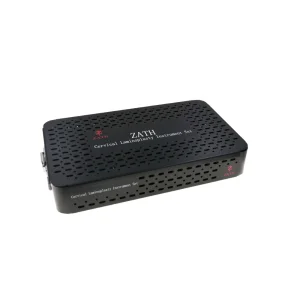
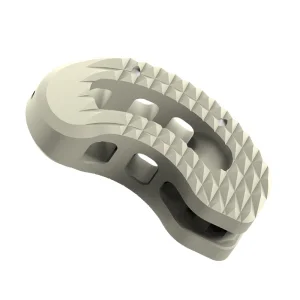
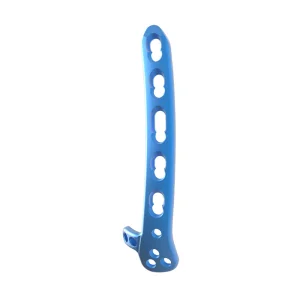
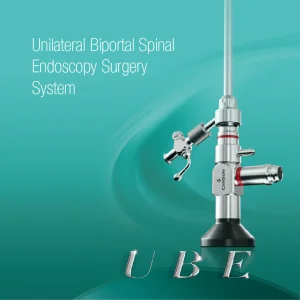
Complete Orthopedic Trauma, Spine & Arthroplasty Catalog
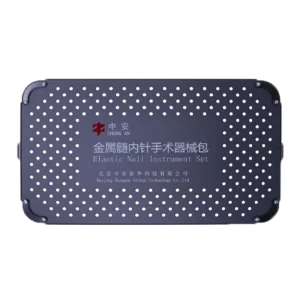
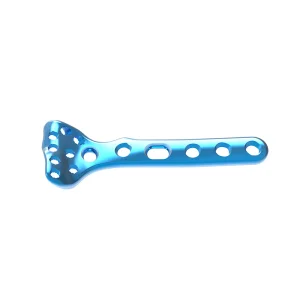
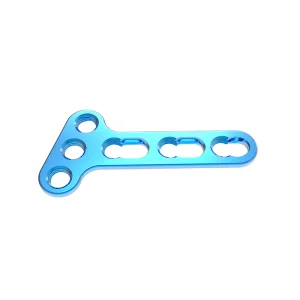
Explore our expanded series of matching clinical implants, endoscopes, and specialized surgical instrument sets manufactured to international regulatory standards.
Partner with an ISO 13485 Certified Orthopedic Powerhouse
Request our comprehensive product dossiers, CAD dimension prints, dynamic mechanical fatigue reports, and competitive wholesale pricelists for global tender submissions.