Surgical Implant Engineering & OEM Manufacturing
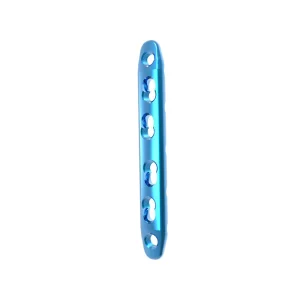
Wholesale Distal Radius Locking Plate Orthopedic Factory & Service
Providing ISO 13485 certified, anatomically pre-contoured volar plates, titanium Grade 5 micro-machining, and customized OEM/ODM industrial solutions for international medical implant brands and hospital supply chains.
Precision Engineering Catalog
Standard & Specialized Clinical Solutions (Batch A)
Direct supply of precision trauma, arthroscopy, and arthroplasty platforms tested under comprehensive biomechanical regimes.
Industry Whitepaper
Biomechanics & Clinical Evolution of Distal Radius Locking Systems
An in-depth analysis of subchondral support, watershed line clearance, and fixed-angle construct stability in complex articular trauma.
Watershed Line Engineering
Modern volar plate geometry requires strict adherence to the transverse anatomical margin of the pronator quadratus. Our ultra-low-profile distal edges are tapered below 1.5mm to eliminate flexor pollicis longus (FPL) tendon impingement while securing subchondral raft screw positioning right down to the styloid apex.
Polyaxial Variable-Angle Locking
Moving beyond conventional monoaxial locking threads, variable-angle (VA) locking technology permits screw trajectories within a nominal 30-degree cone. This degree of freedom empowers surgeons to capture tiny lunate facet fragments and comminuted articular margins without compromising fixed-angle rigidity or cross-threading risks.
Osteoporotic Load Redistribution
In fragility fractures common among geriatric demographics, our titanium Grade 5 (Ti-6Al-4V ELI) constructs bridge physiological stresses through an interlocking plate-screw scaffold. This mitigates reliance on compromised trabecular bone density and reduces post-reduction articular collapse rates drastically.
| Implant Parameter | ZATH Engineering Standards | Synthes / Global Benchmark Equivalent | Clinical Verification Criterion |
|---|---|---|---|
| Raw Material Specification | ISO 5832-3 / ASTM F136 Ti-6Al-4V ELI | ASTM F136 Medical Grade Titanium | Tensile strength ≥860 MPa; elongation ≥10% |
| Distal Edge Thickness | 1.2 mm – 1.5 mm Chamfered Low-Profile | 1.5 mm – 2.0 mm Profile | Minimizes FPL & FDP tendon attrition |
| Screw Thread Interface | VA Locking / Monoaxial Double-Lead 2.4/2.7mm | VA Locking Screw 2.4mm | Locking torque resistance ≥1.8 Nm without stripping |
| Surface Treatment | Type II Anodization (Medical Hardcoat) | Type II Anodized Surface | Fatigue fretting corrosion resistance & zero ion leaching |
| Traceability & Marking | High-definition Fiber Optic Laser UDI Matrix | Standard 2D Matrix Laser Mark | Full MDR / FDA Class II traceable lot identification |
Procurement Intelligence
Global Enterprise Sourcing Needs: Transforming Hospital Tenders
How distributor margins, national tender dynamics (DRG/VBP), and supply chain redundancies drive purchasing strategies worldwide.
Distributor Margin Compression
With healthcare reimbursement caps tightening across Europe, Latin America, and Southeast Asia, medical distributors can no longer afford the exorbitant markups charged by tier-1 legacy brands. Partnering directly with high-caliber factories like ZATH reconstructs gross operating margins upwards of 45-60% while matching equivalent metallurgical certifications.
Regulatory Dossier Readiness
Global procurement requires complete technical files (Tech Files), bio-compatibility validation (ISO 10993), sterilization validation (ISO 11137), and cleanroom particulate monitoring reports. ZATH provides exhaustive dossier packages that streamline local MoH product registrations in over 50 countries within condensed turnaround schedules.
Turnkey Surgical Instrumentation
Implants cannot be sold in isolation. Procurement committees demand complete, ergonomically balanced instrument kits. ZATH supplies hardened stainless steel quick-coupling torque-limiting screwdrivers, depth gauges, self-centering bone reduction forceps, and custom anodized aluminum graphic sterilization cases.
Manufacturing Infrastructure
China Industry 4.0: Resilient Scale & Micro-Tolerance Machining
Combining world-class Japanese and Swiss multi-axis milling infrastructure with integrated sterile-barrier supply chains in Beijing.
5-Axis CNC Milling
Utilizing high-speed DMG MORI and Citizen Swiss turn-mill centers to execute complex 3D helical locking holes and anatomically contoured distal radius curves in one single setup, holding micro-tolerances within ±0.005mm.
Class 10,000 Cleanrooms
Ultrasonic multi-tank degreasing, passivation, and bioburden decontamination are executed inside ISO Class 7 cleanrooms prior to heat-sealing in medical-grade Tyvek blister barriers ready for direct gamma or EtO terminal sterilization.
Optical CMM Verification
Every batch undergo rigorous Coordinate Measuring Machine (CMM) multi-point scans and optical profile projector inspection to confirm thread pitch compatibility between 2.4mm locking screws and distal plate threaded eyelets.
Aggregated Lead Time Advantage
By clustering CNC machining, passivation, anodizing, and packaging within our Beijing Zhongguancun Science Park hub, our production lead time drops from standard 90-day industry cycles down to 25-35 days for bulk OEM orders.
Surgical Scenarios
Localized Applications: Clinical Indications & Fracture Management
Addressing intra-articular and extra-articular distal radius fracture patterns using Henry’s modified approach.
AO/OTA Type 23-C3 (Complex Articular)
For complete multi-fragmentary articular disruptions, our volar plates feature dual column support. The radial styloid screws triangulate with intermediate column screws to recreate articular congruent contact and prevent carpal subluxation under early active motion rehab.
Smith & Colles Fractures with Dorsal Comminution
Even in fractures with extensive dorsal comminution, a volar approach utilizing subchondral raft locking screws offers adequate buttress support. This avoids the extensive soft-tissue stripping, extensor tendon complications, and plate prominence associated with primary dorsal plating.
Corrective Osteotomy Fixation
For malunited distal radius deformities with severe radial shortening, loss of volar tilt, or radial inclination loss, our specialized anatomical plates serve as dependable fixation scaffolds following corrective wedge osteotomy and bone grafting.
Procurement Engineering FAQ
Distal Radius Locking Systems: B2B Buyer Inquiries
Comprehensive technical and commercial clarifications tailored for medical device brand owners and purchasing managers.
What are the differences between your Titanium Grade 5 plates and stainless steel versions?
Our distal radius locking plates are predominantly manufactured from Medical Grade 5 Titanium Alloy (Ti-6Al-4V ELI / ISO 5832-3), which provides superior fatigue endurance, enhanced biocompatibility, and an elastic modulus closer to human cortical bone, reducing stress shielding. For specific public tender contracts requiring economy solutions, we also produce plates using 316LVM implant-grade stainless steel (ISO 5832-1).
How does ZATH safeguard against flexor tendon irritation near the watershed line?
Our engineering team incorporates a rounded, ultra-low-profile distal rim that tapers down to 1.2 mm. All screw holes in the distal cluster are countersunk so that 2.4mm locking screw heads rest flush or sub-flush with the plate surface. When placed properly proximal to the volar margin, this design virtually eliminates mechanical friction against the flexor pollicis longus (FPL) tendon.
What OEM and ODM custom engineering parameters are available for global partners?
We provide full customization of plate curvature profiles, length variations (distal shaft holes from 2 to 12 holes), custom laser markings, anodized color codings (gold, blue, green, rose), specialized packaging (sterile blister or non-sterile bulk), and tailor-made graphic instrument sterilization trays bearing your proprietary brand logo.
Which regulatory documentation and testing files are provided with bulk shipments?
Every production batch includes full Mill Material Certificates with chemical and physical test reports, Certificate of Conformance (CoC), ISO 13485 QMS validation records, dimensional CMM inspection reports, and, where applicable, ISO 11137 gamma irradiation sterilization certificates. Comprehensive CE technical dossiers are accessible to registered partners.
What is your typical production turnaround and global courier transit timeframe?
Standard OEM production batches are fulfilled within 25 to 35 business days from drawing sign-off. Bulk urgent hospital replacements are dispatched via DHL, FedEx, UPS, or EMS air express, typically arriving at overseas destination ports within 4 to 6 business days.
Complementary Orthopedic Platforms
Orthopedic Trauma, Joint & Spine Inventory (Batch B)
Comprehensive implants and matched instrument sets produced under strict ISO 13485 quality control.