Precision Reconstructive & Joint Systems
Engineered for exact biomechanical load transfer and rapid clinical osseointegration. Complete surgical instrument sets and modular components ready for immediate worldwide export.
The Global Industrial Dynamics of Orthopedic Nails
Biomechanical fundamentals, market valuation, and the critical transition from open plating to intramedullary osteosynthesis in global trauma care.
In modern traumatology, the global market for internal fixation systems is experiencing rapid evolution, with intramedullary (IM) nailing establishing itself as the undisputed gold standard for long-bone diaphyseal and metaphyseal fractures. Characterized by early patient weight-bearing, biological preservation of the periosteal vasculature, and reduced infection incidence compared to external or extensive plating, modern orthopedic nails represent a convergence of biomechanics, metallurgy, and ultra-precision manufacturing.
From an industrial perspective, the global orthopedic trauma market exceeds $7.8 billion annually, with intramedullary nailing constructs commanding nearly 38% of diaphyseal trauma volume. Factors driving this market include aging global populations prone to osteoporotic proximal femur fractures (e.g., trochanteric and subtrochanteric fractures), alongside rising incidences of high-energy vehicular and industrial polytrauma in emerging economies across Latin America, Southeast Asia, and the Middle East.
Biomechanical Imperatives: Load-Sharing vs. Load-Bearing Construct
Unlike eccentric locking plates that function as load-bearing splints vulnerable to cyclical cantilever bending stresses, an intramedullary nail acts as an internal load-sharing beam positioned along the physiological neutral axis of the bone. This axial alignment reduces the bending moment arm exponentially, yielding superior fatigue resistance under physiological gait cycles.
Furthermore, controlled axial micromotion induced at the fracture zone stimulates secondary fracture healing via robust external cartilaginous callus formation, bypassing the prolonged lag phases often seen in rigid primary direct healing. However, the engineering complexity lies in balancing torsional stability with bending stiffness. If an implant possesses excessive bending stiffness, stress shielding occurs, leading to cortical thinning and delayed union; conversely, inadequate torsional stiffness provokes rotational malalignment and pseudoarthrosis.
Cortical Perfusion
Closed, unreamed or minimally reamed insertion preserves endosteal and periosteal blood flow, lowering surgical wound complications to under 1.8% across clinical cohorts.
Fatigue Resistance
Crafted from medical grade Ti-6Al-4V ELI (ASTM F136), ZATH intramedullary nails undergo over 5,000,000 dynamic cycles in ASTM F1264 four-point bending fatigue tests without catastrophic failure.
Anatomical Bowing
Engineered with multi-radius curvatures (e.g., 1.5m to 2.0m radius of curvature for femoral systems) mirroring ethnic and demographic variations to prevent distal anterior cortical impingement.
China Factory Efficiency & High-Precision Metallurgy
How Beijing ZhongAnTaiHua Technology Co., Ltd. (ZATH) achieves tier-one dimensional precision, medical-grade traceability, and competitive scale economies.
Historically, the high-end orthopedic implant sector was heavily dominated by multinational conglomerates whose pricing structures placed severe budgetary strains on public healthcare systems and regional hospital networks. Over the past decade, Chinese medical device manufacturing has undergone an aggressive technological transformation. Headquartered within the national innovation hub at Zhongguancun Science and Technology Park, Pinggu, Beijing, ZATH combines advanced Swiss-type multi-axis CNC turn-mill machining, automated cannulation deep-hole drilling, and strict Class 10,000 cleanroom packaging.
Metallurgical Integrity and Raw Material Verification
ZATH manufactures internal fixation hardware exclusively from vacuum arc remelted (VAR) medical Grade 5 Titanium alloy (Ti-6Al-4V ELI conforming to ASTM F136 and ISO 5832-3) and ultra-clean surgical stainless steel (316LVM conforming to ASTM F138). Raw materials are certified with full spectral metallurgical analysis, oxygen/nitrogen gas content validation, and ultrasonic testing to exclude micro-voids prior to machining.
The Six Pillars of ZATH Production Line Superiority
By leveraging an integrated supply ecosystem within Beijing and northern industrial corridors, ZATH bypasses intermediate outsourcing layers. The entire manufacturing continuum—from gun-drilling long cannulated rods and precision threading locking screw holes to automated ultrasonic multi-tank degreasing, Type II electrochemical anodization, and laser etching—occurs under our direct ISO 13485:2016 audited facility.
Micro-Surface Finishing & Ra Control
Our electropolishing and controlled glass-bead blasting achieve a critical surface roughness (Ra) below 0.4 μm. This reduces bacterial colonization risk while preserving sufficient surface micro-texture for soft-tissue compatibility and easy extraction years post-union.
Cost-Efficiency & Capital Allocation
Global distributors collaborating with ZATH routinely realize a 40% to 65% reduction in landing inventory costs compared to European and North American tier-1 brands, freeing working capital to invest in field sales representatives and localized surgeon training sets.
Localized Clinical Application Scenarios
Precision-engineered solutions covering femoral, tibial, humeral, and pediatric trauma requirements.
Modern clinical trauma requires implants tailored to the distinctive mechanical forces and morphological geometry of each long-bone anatomy. ZATH’s intramedullary nail matrix encompasses four major clinical categories, backed by dedicated radiolucent carbon-fiber insertion targeting frames that ensure near-zero fluoroscopy parallax distortion during distal locking screw targeting.
Proximal Femoral (PFNA)
Optimized for pertrochanteric, intertrochanteric, and high subtrochanteric fractures. Features a helical dynamic blade design that compacts cancellous bone in the femoral head rather than reaming it, drastically reducing rotational cut-out in osteoporotic bone.
Tibial Nailing System
Designed for shaft, distal metaphyseal, and proximal third tibia fractures. Incorporates a Herzog bend of 10.5° proximally to allow easy infrapatellar or modern suprapatellar semi-extended entry, avoiding patellar tendon laceration.
Humeral Interlocking
Features versatile multi-planar distal screw holes with locking threaded caps. Engineered for antegrade entry via the rotator cuff interval or retrograde entry above the olecranon fossa, protecting the radial and axillary nerves.
Elastic Nails (ESIN/TEN)
Titanium elastic nails configured for pediatric diaphyseal femur and forearm fractures. Leverages a symmetrical three-point bracing principle that respects active growth plates and open physes while facilitating rapid weight-bearing.
Surgical Workflow Integration & Complete Instrumentation
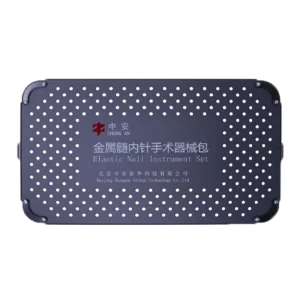
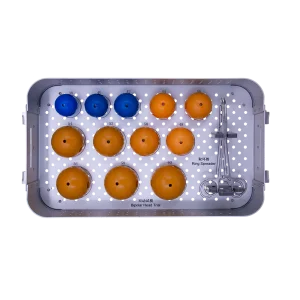
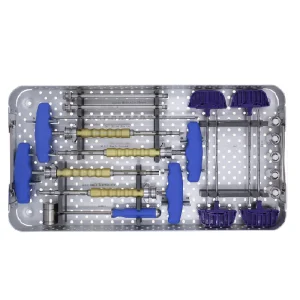
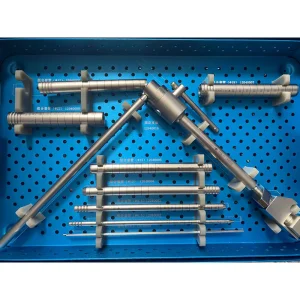
A high-performance orthopedic nail is only as effective as the surgical instrumentation deployed to insert it. ZATH supplies every orthopedic nail platform with matched, color-coded, CNC-milled instrument sets. These include high-torque cannulated flexible reamers, quick-coupling insertion handles, radio-transparent carbon-fiber targeting arms, tissue-protection drill sleeves, and calibrated depth gauges. This guarantees that surgical teams experience seamless instrument-implant tolerance without thread stripping or targeting jig misalignment during critical surgical moments.
Wholesale Orthopedic Nails Pricelist & Matrix
Transparent B2B tiered wholesale pricing benchmarks for international hospital groups, health authorities, and authorized national distributors.
In accordance with global medtech distributor expectations, ZATH operates a transparent, tiered wholesale pricing model reflecting procurement volume, packaging specifications (sterile blister-pack vs. bulk non-sterile hospital re-sterilizable), and surface treatment choices. The following matrix outlines wholesale baseline pricing based on FOB Beijing / Tianjin air freight terms.
| Implant System Classification | Standard Material Spec | Diameter / Length Range | Wholesale Tier (50–200 Units) | Volume Tier (201–1,000 Units) | Enterprise OEM (1,000+ Units) |
|---|---|---|---|---|---|
| PFNA Trochanteric Nail (Short 170-240mm) | Ti-6Al-4V ELI (ASTM F136) | ∅9.0 - 12.0 mm / 170 - 240 mm | $85.00 - $110.00 | $68.00 - $82.00 | Direct Inquiry (OEM) |
| PFNA Long Femoral Nail (Reconstruction) | Ti-6Al-4V ELI (ASTM F136) | ∅9.0 - 11.5 mm / 300 - 420 mm | $110.00 - $135.00 | $88.00 - $105.00 | Direct Inquiry (OEM) |
| Expert Tibial Nailing System | Ti-6Al-4V ELI / 316LVM | ∅8.0 - 11.0 mm / 255 - 390 mm | $75.00 - $98.00 | $58.00 - $74.00 | Direct Inquiry (OEM) |
| Humeral Interlocking Nail (Antegrade/Retro) | Ti-6Al-4V ELI (ASTM F136) | ∅7.0 - 9.0 mm / 200 - 280 mm | $65.00 - $85.00 | $52.00 - $66.00 | Direct Inquiry (OEM) |
| Elastic Pediatric Nail (ESIN/TEN) | Ti-6Al-4V ELI / Medical Ti | ∅1.5 - 4.5 mm / 400 - 450 mm | $16.00 - $24.00 | $12.50 - $17.00 | Direct Inquiry (OEM) |
| Distal & Proximal Locking Screws (Standard) | Ti-6Al-4V ELI / 316LVM | ∅3.5, 4.0, 4.5, 5.0 mm / 20 - 90 mm | $6.50 - $9.80 | $4.80 - $6.20 | Direct Inquiry (OEM) |
| Helical Dynamic Blade Component | Ti-6Al-4V ELI (ASTM F136) | Length 75 - 120 mm | $28.00 - $38.00 | $21.00 - $27.00 | Direct Inquiry (OEM) |
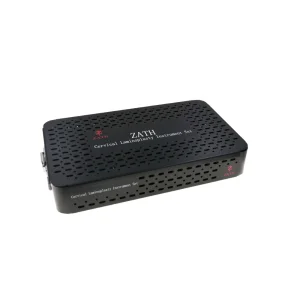
| Carbon-Fiber Targeting Instrument Set | Medical Grade 17-4PH / Carbon | Full Surgical Tray & Case | $1,850 - $2,600 | $1,450 - $1,750 | Custom Co-Brand |
Procurement Terms & Value-Add Services
All wholesale quotations include factory lot inspection certificates, laser part marking with customer-designated DM-matrix or GS1 barcodes, and non-sterile protective packaging. Optional gamma or EO sterile cleanroom blister packaging with 5-year validated shelf life is available at a nominal surcharge of $2.80–$4.50 per unit.
Orthopedic Nail Innovation & Regulatory Governance
Navigating EU MDR 2017/745, surface functionalization, smart intramedullary sensors, and supply chain risk mitigation.
The intramedullary trauma sector is undergoing rapid technological divergence. Procurement directors and strategic buyers are no longer evaluating hardware solely on initial purchase price; evaluation criteria now center on total cost of care, reoperation rates, and regulatory risk management.
Emerging Technological Trajectories
Key R&D domains shaping next-generation intramedullary systems include:
- Bioactive & Antibacterial Nano-Coatings: Development of silver nanoparticle and bioactive calcium phosphate coatings aimed at eradicating implant-associated osteomyelitis without inducing systemic toxicity.
- Radiolucent Carbon-Fiber PEEK Constructs: Providing zero metal-induced scatter during CT and MRI oncological follow-up, offering an optimal elasticity modulus matching natural cortical bone.
- Magnetic Distraction & Lengthening Nails: Motorized internal nail systems controlled by external rotating magnetic fields for limb lengthening and complex segmental defect reconstruction.
Strategic Global Sourcing & Quality Due Diligence Checklist
When qualifying an orthopedic implant supplier in China, hospital procurement boards and international distributors must enforce rigorous operational audits. ZATH maintains uncompromising compliance protocols that systematically de-risk partner supply chains:
ISO 13485:2016 QMS
Every manufacturing step is documented in Device Master Records (DMR) and Device History Records (DHR), guaranteeing complete lot traceability back to raw titanium ingot smelts.
Complete Technical Dossiers
We provide full clinical evaluation reports (CER), biocompatibility data (ISO 10993 series), and sterilization validation studies (ISO 11135 / ISO 11137) to facilitate accelerated regional ministry registrations.
OEM / ODM Agility
Custom nail geometry adjustments, modified Herzog angles, specialized color anodizing, and custom laser-engraved hospital logos delivered with prototype lead times under 21 business days.
Frequently Asked Questions (FAQ)
Essential guidance for medtech procurement managers, hospital supply chain executives, and regulatory submission leads.
1. What metallurgical grades are utilized in ZATH orthopedic nails, and can mill test certificates be provided?
2. How does ZATH guarantee concentricity and wall-thickness consistency in cannulated nails?
3. Are ZATH orthopedic nail systems compatible with existing market surgical targeting frames?
4. What packaging formats are available for international export?
5. What is the typical Minimum Order Quantity (MOQ) for wholesale and OEM private labeling?
6. How does ZATH support foreign regulatory submissions and tenders?
7. What is the production lead time and international shipping timeline?
8. What mechanism prevents rotational cut-out in ZATH’s Proximal Femoral Nail (PFNA)?
9. Does ZATH offer loaner or evaluation surgical instrument sets for clinical evaluation?
10. Can ZATH customize the curvature (radius of curvature) of femoral nails for distinct regional populations?
Trauma Plating, Fixation & Spine Systems
Comprehensive orthopedic hardware portfolio complementing your intramedullary nail inventory, all certified under our single ISO 13485 quality system.