
Precision Engineering
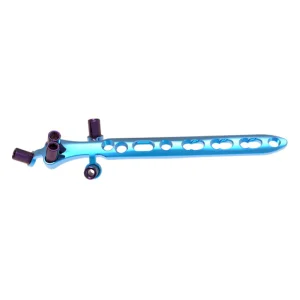
Featured Trauma & Arthroplasty Wholesale Implants
Explore standard and anatomical internal fixation assemblies, sterile-packed and fully validated for high-throughput orthopedic workflows.
Surgical Biomechanics
Placa LCP Evolution: The Paradigm Shift in Internal Fixation
The progression from conventional compression plates (DCP) to biological internal fixators (Placa LCP / Locking Compression Plate) represents one of the most critical breakthroughs in trauma surgery. By transforming the plate-screw interface into a rigid fixed-angle construct, periosteal vascularity is fully preserved.
Biological Osteosynthesis
Unlike dynamic compression plates that rely on friction against bone cortex, the Placa LCP functions as an internal fixator. It avoids direct compressive necrosis of the periosteum, safeguarding endosteal and periosteal blood flow essential for secondary bone healing via callus formation.
CombHole / Combi-Hole Mechanics
Engineered with dual-purpose interlocking holes, allowing surgeons the freedom to utilize standard cortex/cancellous screws for axial compression in dynamic units, or threaded locking screws for angular stability within the same construct.
Osteoporotic Fixation Superiority
In poor bone mineral density conditions, screw toggle and catastrophic pullout represent primary failure modes. Locking compression screws anchor into the plate threads, neutralizing cantilevering forces and distributing physiological loads safely across the full implant length.
| Fixation Parameter | Dynamic Compression Plate (DCP) | Locking Compression Plate (Placa LCP) | Clinical Advantage of LCP Systems |
|---|---|---|---|
| Stability Mechanism | Frictional force between bone and plate surface | Thread-locked angle-stable screw-to-plate connection | Zero friction dependence; eliminates screw loosening under cyclic load |
| Periosteal Perfusion | Compromised due to high plate-to-bone pressure | Preserved via elevated bridging / biological contouring | Accelerates osteogenesis; reduces non-union and infection rates |
| Bone Quality Tolerance | Requires dense cortical purchase (high pullout risk) | Exceptional hold in osteoporotic, comminuted bone | Substantially prevents secondary loss of reduction in geriatric trauma |
| Primary Healing Modality | Absolute stability with direct primary cortical union | Relative stability inducing rapid secondary callus formation | High elastic tolerance, ideal for bridge plating of comminutions |
Procurement Strategy
Global Enterprise Procurement Needs & Quality Metrics
B2B orthopedic importers, national hospital groups, and regional master distributors face growing regulatory rigor, reimbursement caps, and delivery friction. Sourcing wholesale Placa LCP solutions demands rigorous qualification across multiple technical and supply dimensions.
MDR & FDA Registration
Global buyers require comprehensive Technical Documentation (Design Dossiers, Biocompatibility ISO 10993, Biomechanical ASTM F382 fatigue reports) to facilitate swift market authorization across EU, Latin America, and MENA territories.
Grade 5 / Grade 2 Titanium
Strict demand for Ti-6Al-4V ELI (ASTM F136) or pure CP Titanium (ASTM F67) with mill certs, assuring high fatigue strength, biocompatibility, and magnetic resonance imaging (MRI) conditional safety.
Sterile OR Packaging
Transition from non-sterile bulk units to cleanroom double-blister sterile packaging with Tyvek lidding and validated 5-year shelf-life, cutting hospital autoclaving overhead and cross-contamination risks.
Turnkey Instrument Kits
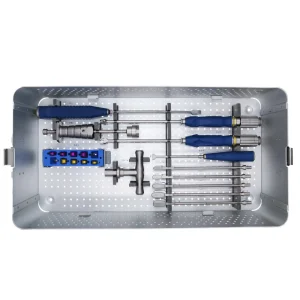
Plates alone fail without dedicated, ergonomic instrumentation: carbon fiber radiolucent drill guides, torque-limiting screwdrivers, tap drills, and plate benders engineered as single unified ecosystems.
Smart Manufacturing 4.0
China Factory 4.0: Supply Chain Resilience & Precision Machining
Operating from Beijing's Zhongguancun Science Park, our advanced manufacturing infrastructure bridges world-class multi-axis CNC technology, strict lot-level traceability, and agile volume scalability.
5-Axis DMG MORI CNC Machining
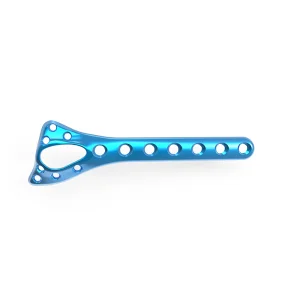
Complex anatomical contours—such as proximal humerus, distal radius, and distal medial tibia plates—are cut in single setups with sub-micron tolerances, eliminating micro-burrs and micro-fractures in screw hole threads.
Automated Quality Inspection
Integrated Coordinate Measuring Machines (CMM) and optical profile projectors deliver 100% dimensional and mechanical validation. Every batch features raw material chemical heat certs and fatigue cycle verification.
Cleanroom ISO Class 7 Packaging
Implant finishing incorporates ultrasonic multi-stage passivation and anodization, followed by primary barrier packaging in cleanrooms to fulfill stringent bioburden and endotoxin criteria prior to EO / Gamma irradiation.
15+
Years Implant Expertise
300+
Specialized Personnel
100%
Lot Level Traceability
4-6d
Global Express Replenishment
Clinical Performance
Localized Anatomical Applications & Surgical Versatility
From complex polytrauma center emergencies to routine elective reconstructions, our Placa LCP systems provide surgeons with anatomy-specific contours that minimize plate intraoperative shaping while maximizing biomechanical stability.
Proximal Humerus & Upper Extremity
Engineered for Neer 2-, 3-, and 4-part proximal humerus fractures. Multi-directional divergent locking screws penetrate the humeral head subchondral bone, counteracting varus collapse without breaching the articular surface.
Distal Radius Volar Systems
Ultra-low profile volar rim plates designed to protect the flexor pollicis longus (FPL) tendon. Anatomically pre-contoured buttress supports intra-articular shearing fragments with variable-angle screw trajectories.
Distal Femur & Proximal Medial Tibia
Heavy-duty, load-bearing plates engineered for AO/OTA 33-A and 33-C distal femur trauma. Combines bridge-plating kinematics across comminuted metaphysical zones with robust angle-stable condylar screw clusters.
Comprehensive Catalog
Complementary Orthopedic Platforms & Reconstructive Systems
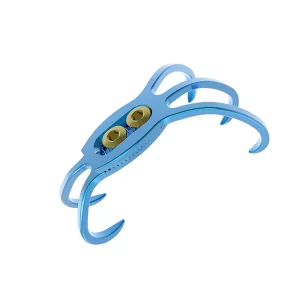
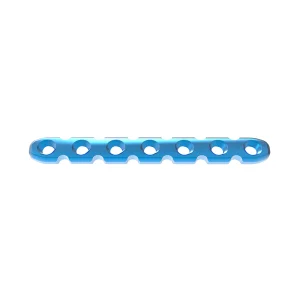
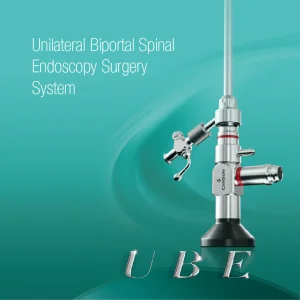
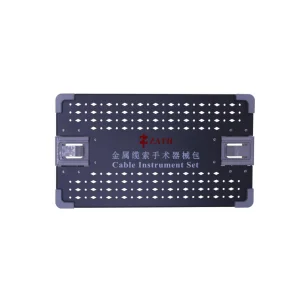
Complete your catalog with matching spinal implants, intramedullary nails, specialized instrumentation kits, and arthroplasty platforms.


Technical Clarifications
Frequently Asked Questions for Sourcing Directors
In-depth insights into OEM customization, quality assurance systems, and global distributor support protocols.
What metallurgical grades are utilized for ZATH Placa LCP manufacturing?
Our Placa LCP locking compression systems are manufactured primarily from implant-grade Titanium Alloy (Ti-6Al-4V ELI) compliant with ASTM F136 / ISO 5832-3 standards, as well as high-purity Medical-Grade Pure Titanium (CP-Ti) conforming to ASTM F67 / ISO 5832-2. Every batch is certified with mill test reports verifying chemical composition, tensile yield strength, and elongation limits.
How does the Placa LCP handle both locking and dynamic compression modes?
Our plates incorporate precision-machined Combi-Holes (CombHoles). One segment of the hole is threaded with tapered pitch geometry to receive locking screws, providing angle-stable fixation. The adjacent contiguous segment is designed with a dynamic compression ramp, allowing conventional cortex screws to produce interfragmentary dynamic compression along the plate's longitudinal axis.
What regulatory files are supplied for territorial medical device registration?
We supply full regulatory submission dossiers to authorized B2B distributors. Documentation includes our ISO 13485 QMS certificates, Free Sale Certificates (FSC), UDEM certifications, biocompatibility data according to ISO 10993, static and dynamic four-point bending fatigue reports compliant with ASTM F382, and sterile barrier packaging validations (ISO 11607).
Can ZATH accommodate OEM/ODM branding, specific dimensional variants, and sterile packaging?
Yes. As a comprehensive orthopedic manufacturer founded in 2009, our OEM/ODM capabilities encompass custom laser marking, tailored plate geometries (number of holes, pitch spacing, anatomical contour revisions), custom color-anodization for screw-diameter coding, and cleanroom double-sterile blister packaging with your proprietary brand design.
What is the standard production lead time and international delivery protocol?
Standard catalog configurations are maintained in safety stock at our Beijing logistics hub. Volume OEM batch production runs typically complete within 3 to 5 weeks depending on custom surface finishing and sterile packaging needs. Urgent replenishment orders ship internationally via DHL, FedEx, TNT, or air freight, arriving within 4 to 6 business days globally.