Cervical Reconstruction
ODM Posterior Cervical Plate Fixation Dome Laminoplasty Plate Bone Implant Pricelist, Service
Explore Korea Plate System
Engineered to satisfy stringent Korean Ministry of Food and Drug Safety (MFDS) standards, these initial tier-one spinal instrumentation solutions provide unmatched biomechanical fixation, fusion stability, and advanced intraoperative diagnostic accuracy for cervical and thoracolumbar spine interventions.
South Korea represents one of the world's most advanced clinical proving grounds for spinal surgery. Driven by rapid population aging, universal healthcare coverage via the National Health Insurance Service (NHIS), and a surgeon culture committed to early adoption of minimally invasive techniques, the Korean spinal implant ecosystem demands hyper-refined tolerance, versatile instrumentation, and flawless biocompatibility.
Over the past decade, South Korean spine neurosurgeons and orthopedic spine specialists have pioneered and popularized Unilateral Biportal Endoscopy (UBE) and Biportal Endoscopic Spinal Surgery (BESS). Unlike traditional open laminectomy or tubular microsurgery, UBE utilizes two independent portals: one dedicated to continuous saline irrigation and high-definition endoscope visualization, and the other designed for specialized micro-instruments, high-speed drills, and expandable interbody cage insertion.
This clinical shift has created an immediate demand for ultra-compact, low-profile spinal hardware. Traditional open posterior fixation systems and bulky cervical plates are systematically being upgraded to streamlined, bullet-nosed PEEK and porous 3D-printed titanium implants capable of navigating narrow saline-distended endoscopic corridors.
Korean medical device factories and technology hubs—concentrated in regions like the Wonju Medical Device Complex, Osong Bio Valley, and the Seoul Metropolitan High-Tech Corridor—have capitalized on this paradigm shift. However, escalating domestic production costs, localized raw-material dependencies, and high labor constraints have prompted top Korean MedTech companies and hospital procurement committees to seek strategic, large-scale original equipment manufacturing (OEM) partnerships that combine cutting-edge design IP with resilient manufacturing muscle.
Navigating South Korea's spine implant market requires rigorous alignment with the Ministry of Food and Drug Safety (MFDS) regulatory frameworks. Spinal hardware is classified primarily as Class II, Class III, or Class IV medical devices depending on invasiveness, tissue contact duration, and whether bone morphogenetic proteins (BMP) or bioactive coatings are integrated.
Beyond technical registration, commercial viability hinges on reimbursement codes established by the Health Insurance Review and Assessment Service (HIRA). In South Korea, HIRA sets stringent price ceilings on common spinal implants such as pedicle screws, anterior cervical plates, and interbody fusion cages. Hospitals and purchasing consortiums operate under tight reimbursement margins, requiring implants to deliver impeccable mechanical performance without the exorbitant premium pricing charged by Western multinational conglomerates.
Consequently, leading Korean healthcare groups, specialized spine centers like Wooridul Spine Hospital and Nanoori Hospital, and regional distributors are increasingly qualifying hybrid supply chains. They demand ISO 13485-certified manufacturers who can execute comprehensive technical documentation (including ASTM F1717, ASTM F2077, and ISO 12189 mechanical fatigue testing) while keeping unit economics accessible.
Worldwide orthopedic spine care is undergoing a dramatic structural transformation. From material sciences to robotic navigational synergy, procurement leaders must anticipate these global trends when auditing spine manufacturers.
While polyetheretherketone (PEEK-OPTIMA) remains a dominant interbody biomaterial due to its radiolucency and bone-matching modulus of elasticity (3.5–4.0 GPa), Electron Beam Melting (EBM) and Selective Laser Melting (SLM) titanium cages are rapidly surging. These constructs mimic natural trabecular bone porosity (60–80% porosity with 300–600 μm pore sizes), stimulating accelerated osteoblast migration and direct bone ingrowth while avoiding the hydrophobic fibrous encapsulation sometimes observed with untreated PEEK.
Minimally invasive spine surgery (MIS) is becoming the default standard. The rapid uptake of navigation platforms (e.g., Medtronic StealthStation, Globus ExcelsiusGPS) requires pedicle screw systems to maintain micro-metric coaxial alignment tolerances (±0.005 mm) and specialized quick-coupling instrumentation. Modular screw extensions and self-tapping cannulated screw heads reduce intraoperative radiation exposure and prevent cortical breach in compromised bone.
To prevent septic loosening and enhance fusion rates in osteoporotic patients, manufacturers are deploying advanced surface functionalization. Plasma-sprayed titanium on PEEK, hydroxyapatite (HA) multi-coatings, and silver-doped antimicrobial nanocoatings are gaining market traction. Implants must now serve not just as mechanical spacers, but as active osteoinductive scaffolds.
Hospital purchasing organizations (GPOs), private medical networks, and orthopedic distributors are facing severe pricing squeezes alongside tightening MDR (Medical Device Regulation 2017/745) requirements. Evaluating contract manufacturers requires examining raw material provenance, inspection rigor, and lead-time reliability.
Historically, global distributors relied on either domestic Western manufacturers (burdened by 400–600% markup premiums and inflexible batch sizes) or low-tier uncertified suppliers lacking biocompatibility master files. In the post-pandemic landscape, geopolitical shifts, raw titanium ingot shortages, and maritime logistics disruptions have exposed severe vulnerabilities in single-source supply models.
Hospital procurement directors in Seoul, Busan, Singapore, Frankfurt, and Dubai now evaluate three critical factors:
The most profitable medical device distributors today utilize a hybrid design-manufacturing framework. Under this paradigm, regional spine clinical specialists in South Korea or Europe define proprietary surgeon ergonomics, anatomical curvatures, and unique thread pitch concepts.
The heavy manufacturing, multi-axis machining, automated optical validation, and sterile blister packaging are then contracted to world-class Asian factories equipped with scalable capacity. This operational division cuts unit costs by 45–60%, shortens iteration cycles from 18 months down to 12 weeks, and maintains complete regulatory equivalence under unified ISO 13485:2016 quality systems.
Positioned within the Zhongguancun Science and Technology Park in Pinggu, Beijing, ZATH represents the culmination of advanced orthopedic precision manufacturing. Discover how modern Chinese Industry 4.0 infrastructure empowers global distributors with peerless efficiency and metallurgical integrity.
Utilizing state-of-the-art multi-axis CNC turn-mill centers and slow-speed wire electro-discharge machining (EDM), tolerances on intricate spinal components (such as polyaxial pedicle screw heads, saddle grooves, and ACP locking cams) are consistently held within ±3 micrometers. This micrometer-level uniformity eliminates cross-threading and intraoperative screw head slippage.
Unlike fragmented suppliers that outsource surface finishing, passivation, or cleanroom packaging, ZATH houses the entire chain in-house: titanium bar ultrasonic inspection, automated machining, multi-stage ultrasonic degreasing, Type II anodization, laser serial marking, cleanroom packaging, and lot-controlled warehousing. This single-roof structure reduces product turnaround times by up to 40%.
Supported by nearly 100 experienced senior and mid-level technicians, our Design for Manufacturability (DFM) team works side-by-side with international clients. Whether adapting a cage for a proprietary Korean endoscopic retractor or re-engineering a minimally invasive screw tulip for quicker rod reduction, rapid prototyping and mechanical testing can be executed within days.
Spinal pathology patterns in South Korea exhibit distinct epidemiological characteristics, including high rates of Ossification of the Posterior Longitudinal Ligament (OPLL), severe degenerative lumbar stenosis, and osteoporotic vertebral compression fractures in elderly populations.
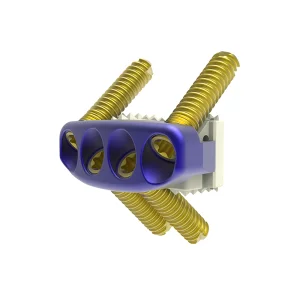
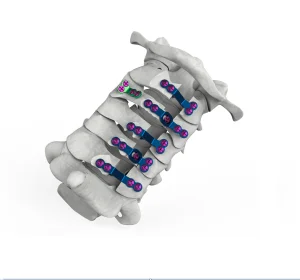
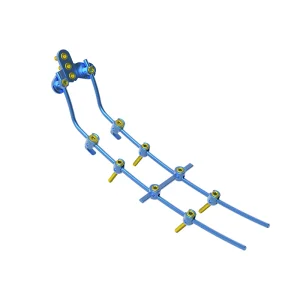
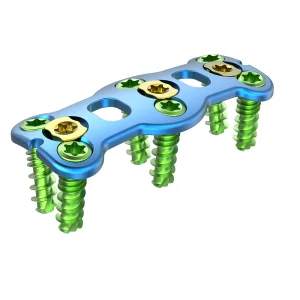
In South Korea, OPLL prevalence in individuals over 50 reaches approximately 3.6–4.8%, significantly higher than Western averages. In patients undergoing expansive open-door laminoplasty, the Posterior Cervical Plate Fixation Dome Laminoplasty Plate provides rigid hinge stabilization without the canal re-closure risks associated with suture-only fixation. For anterior decompression (ACDF/ACCF), the Shielder ACP Plate System provides an ultra-low profile profile (preventing postoperative dysphagia) and variable-angle self-locking screws to accommodate osteoporotic vertebral bodies.
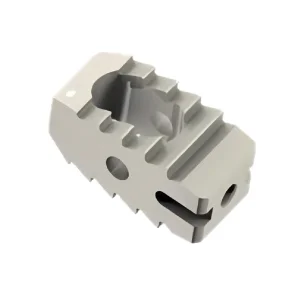
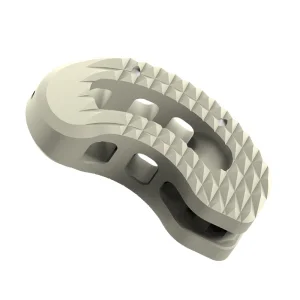
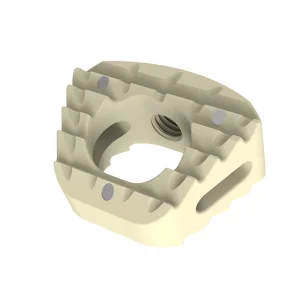
When performing biportal endoscopic transforaminal lumbar interbody fusion (Endo-TLIF), surgeons require cages that insert seamlessly through an 8–10 mm working port. The ZATH Thoracolumbar Interbody Cages (Straight & Angled PEEK) feature bulleted apex geometries, aggressive serrated anti-migration ridges, and large central graft chambers accommodating autologous bone slurry collected via endoscopic reamers, ensuring rigid anterior column support and high fusion success.
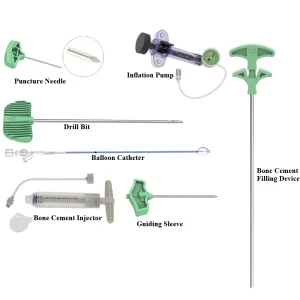
With Korea crossing the super-aged demographic threshold, osteoporotic vertebral compression fractures (OVCF) represent a leading cause of geriatric disability. The PKP Vertebroplasty Instrument Set Kit enables swift, controlled balloon inflation and targeted polymethylmethacrylate (PMMA) cement delivery under low injection pressure, restoring vertebral height, relieving intractable back pain, and preventing cement extravasation into the spinal canal.
Every implant manufactured under ZATH’s ISO 13485 QMS is benchmarked against recognized ASTM and ISO biomechanical standards to guarantee safety, fatigue endurance, and long-term osteointegration.
| Implant System / Component | Material Standard | Primary Mechanical Property | Applicable ASTM / ISO Test | Key Clinical Advantage |
|---|---|---|---|---|
| Cervical / Lumbar Cages | PEEK-OPTIMA (ASTM F2026) | Elastic Modulus: 3.5–4.2 GPa | ASTM F2077 (Static / Dynamic Axial & Torsion) | Zero stress shielding; artifact-free MRI/CT imaging |
| Anterior Cervical Plate (ACP) | Ti6Al4V ELI (ISO 5832-3 / ASTM F136) | Tensile Strength ≥ 860 MPa | ASTM F1717 (Corpectomy Model Fatigue) | Ultra-low profile (1.8mm); prevents post-op dysphagia |
| Pedicle Screws (MIS & Open) | Grade 5 ELI Titanium Alloy | Fatigue Strength ≥ 500 MPa @ 5x10^6 cycles | ASTM F1717 / ISO 12189 (Dynamic Runout) | Dual-lead thread for rapid insertion & high pull-out torque |
| Laminoplasty Dome Plates | Pure Titanium / Ti6Al4V Alloy | Yield Strength ≥ 780 MPa | In-house 3-Point Bending & Micro-hardness | Pre-curved anatomical contour fits lamina hinge easily |
| Vertebroplasty Balloon Catheters | Medical-grade High-Durometer Polyamide | Burst Pressure > 300 psi (20 atm) | ISO 10555-4 (Balloon Rupture Resistance) | Symmetrical inflation; controlled low-pressure cement cavity |
Clear, definitive answers addressing regulatory compliance, OEM customization, clinical sterilization, and logistical pipelines for distributors targeting South Korea and global orthopedic markets.
The remainder of our precision orthopedic implant and surgical kit series, engineered for high-demand hospital operating rooms and international surgical distribution. All links and technical specifications are fully preserved below.