
Portugal Tender Grade
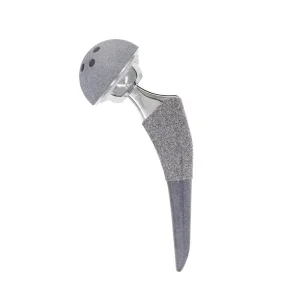
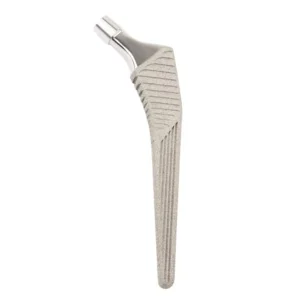
Ti Alloy JDS Total Hip Replacement Titanium Joint Prosthesis (Portugal Series)
- Grade 5 Ti-6Al-4V ELI Alloy
- Dual-Taper 12/14 Trunnion
- Hydroxyapatite (HA) Coated
Engineering high-congruency titanium femoral stems, porous acetabular cups, and precision revision instruments tailored for Portugal's SNS hospital tenders, private healthcare systems (CUF, Luz Saúde), and medical distributors.
Engineered to deliver high biological osteointegration and exact mechanical stability in primary and revision total hip arthroplasty (THA), compatible with direct anterior (DAA) and posterior surgical workflows.
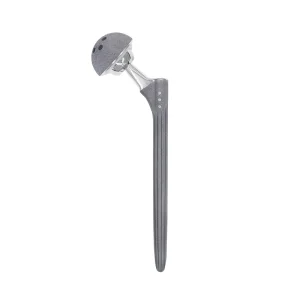
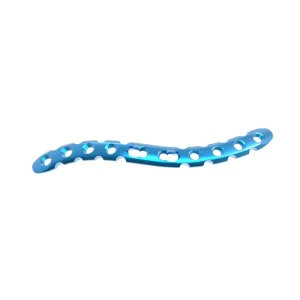
A comprehensive analysis of surgical volume drivers, public tender mechanisms (SNS/SPMS), and the expansion of private hospital networks across Continental Portugal and the Autonomous Regions of Azores and Madeira.
The Portuguese public healthcare infrastructure relies on the Serviço Nacional de Saúde (SNS), with central procurement spearheaded by SPMS (Serviços Partilhados do Ministério da Saúde). Public hospitals face severe budgetary limits alongside stringent demands for implant longevity.
Tenders demand high-grade titanium alloy stems, highly cross-linked polyethylene (XLPE) liners, and biolox-grade ceramic heads that conform to European Pharmacopoeia and ISO biocompatibility mandates, necessitating OEM suppliers capable of providing uncompromised mechanical documentation at competitive unit costs.
Private healthcare delivery in Portugal has experienced an extraordinary acceleration. Major private hospital consortia—including CUF, Luz Saúde, and Lusíadas Saúde—account for over 38% of total elective joint reconstructions in metropolitan Lisbon, Porto, and the Algarve.
Private orthopedists emphasize tissue-sparing approaches such as the Direct Anterior Approach (DAA) and rapid rehabilitation protocols. Hospitals require customized OEM packaging, precise surgeon instrument sets, and guaranteed lot availability without long backorder delays common among legacy multinational brands.
To alleviate surgical waiting lists, Portugal's Ministry of Health deploys the Sistema Integrado de Gestão de Inscritos para Cirurgia (SIGIC), which issues surgical vouchers (vales cirúrgicos) enabling public patients to undergo arthroplasty in affiliated private clinics.
Because SIGIC operates on fixed procedural reimbursement tiers, surgical providers operate under aggressive margin compression. Partnering with an accountable OEM foundry provides Portuguese medical device distributors the pricing latitude to supply top-tier femoral and acetabular components while preserving robust commercial margins.
Tailored implant geometries and instrumentation adapted to regional demographic variations, osteoporosis incidence, and modern European surgical techniques.
Adopted rapidly in orthopedic centers in Lisbon, Coimbra, and Porto, DAA minimizes soft-tissue disruption and accelerates post-operative ambulation.
Our cementless femoral stems feature reduced lateral shoulders, triple-taper geometries, and specialized offset broach handles with low-profile inserters, preventing damage to the tensor fasciae latae and abductor musculature during component impaction.
Regions such as Alentejo and interior Centro have some of Europe's highest proportions of octogenarian populations. Low-energy falls resulting in subcapital and transcervical fractures represent an ongoing emergency burden on hospital centers like CHU de Coimbra and Hospital de Évora.
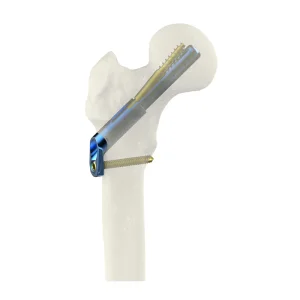
Our portfolio provides dual-option solutions: dual-mobility cementless/cemented stems for unstable geriatric necks to eliminate dislocation, alongside the Femoral Neck Antirotation System (FNAS) for stable fracture reduction.
As historical primary arthroplasties reach 15–25 years in situ, revision cases are surging across Portuguese university hospitals (Hospital de Santa Maria, CHUSJ Porto).
Our modular revision femoral stems feature distal interlocking options, coronal slots to modulate stiffness and prevent thigh pain, and proximal trabecular titanium augments to bridge extensive acetabular and metaphyseal bone loss.
Rigorous metallurgical compliance conforming to ASTM F136, ISO 5832-3, and European Medical Device Regulation (MDR) specifications.
| Component Platform | Material Formulation | Surface Tribology / Coating | Fixation Modality | Portuguese Clinical Indications |
|---|---|---|---|---|
| JDS Primary Stem | Forged Ti-6Al-4V ELI (ISO 5832-3) | Plasma-sprayed Hydroxyapatite (HA 150µm) over Ti Grit-Blast | Cementless Press-Fit | Active osteoarthritis, avascular necrosis, primary THA in young & active patients. |
| DDS Tapered Stem | Vacuum Arc Melted Ti-6Al-4V | Proximal Porous Titanium Macro-Structure (pore size 300-500µm) | Metaphyseal Press-Fit | Standard to Dorr Type A/B femoral canals; ideal for DAA tissue-sparing procedures. |
| TDS Polished Stem | High Nitrogen Stainless Steel / CoCrMo | Mirror Polished (Ra < 0.05µm) Taper-Slip Collarless Design | PMMA Bone Cement | Dorr Type C osteoporotic femurs, elderly trauma cases, low bone remodeling capacity. |
| Modular Revision Stem | Ti-6Al-4V ELI with Shot-Peened Surface | Proximal HA/Porous Titanium; Distal Longitudinal Flutes | Distal Diaphyseal Fixation | Paprosky Type II/III bone defects, periprosthetic fractures, aseptic loosening revisions. |
| Acetabular Shell System | Electron Beam 3D Printed Trabecular Ti | Continuously Graded Micro-lattice Porosity (65-75% Void Ratio) | Press-Fit with Multi-hole Screw Option | Dysplastic hips, high-stress primary cases, compromised acetabular bone stock. |
| Bipolar Hemi-Head | High-purity CoCrMo Alloy (ISO 5832-4) | Sub-micron Superfinished articulating mirror face + UHMWPE inner core | Self-Centering Bipolar | Displaced intracapsular femoral neck fractures in elderly patients with intact acetabulum. |
Bridging Chinese advanced industrial manufacturing with European distributor expectations through vertical integration, audited raw materials, and cleanroom packaging.
Our Beijing production facility utilizes advanced DMG MORI and Haas 5-axis CNC machining centers paired with Swiss-type automatic lathes. This setup ensures micron-level tolerances for the critical 12/14 trunnion taper and taper-locking modular interfaces.
By eliminating re-chucking variances, our production yields zero run-out errors on spherical tapers, preventing trunnionosis, micro-motion, and corrosion in metal-on-polyethylene or ceramic-on-polyethylene bearings.
Every single batch of Ti-6Al-4V ELI, CoCrMo, and UHMWPE bar stock is sourced exclusively from certified mills with complete chemical analysis and mechanical tensile testing certs (EN 10204 3.1).
Full laser serial marking, automated CMM coordinate verification, optical 3D surface profilometry, and ultrasonic cleaning create an unbroken digital record from raw billet to sterile blister pack, fully traceable during hospital audits.
Western tier-one multinationals carry substantial overhead costs that inflate implant catalog prices by up to 300%. Partnering directly with our OEM factory bypasses intermediary markups.
Portuguese distributors obtain factory-direct OEM pricing, private labeling customization, tailored surgical box assemblies, and consignment-ready inventory that allows aggressive winning tender bids under SPMS guidelines.
Strategic development vectors integrating advanced materials, additive manufacturing, and robotics compatibility.
Direct metal printing of customized porosity profiles mimicking natural human trabecular cancellous bone structures to accelerate osseointegration.
Advanced third-generation dual-mobility systems engineered to virtually eliminate postoperative dislocation in high-risk neuromuscular and geriatric cohorts.
Integration of open DICOM 3D CT surgical templating algorithms allowing Portuguese surgeons to preoperatively map cortical fit and femoral offset down to 0.5mm.
Development of quick-connect reaming sleeves, navigated optical trackers, and specialized broach interfaces for robotic and navigation-assisted operating rooms.
Rigorous quality protocols built to withstand European Notified Body surveillance and streamline Portuguese national registry approvals.
Under EU MDR 2017/745, total joint implants require extensive Clinical Evaluation Reports (CER) based on state-of-the-art equivalence or dedicated clinical investigation data.
Our in-house regulatory affairs department provides turnkey Technical Files, Risk Management Files compliant with EN ISO 14971:2019, biocompatibility reports following ISO 10993, and comprehensive fatigue testing per ISO 7206-4 and ISO 7206-6.
In Portugal, all medical devices distributed within public and private hospitals must be officially registered in the INFARMED (Autoridade Nacional do Medicamento e Produtos de Saúde, I.P.) database.
We supply Portuguese authorized representatives and distributors with all necessary documentation, including UDEM certifications, Free Sale Certificates (FSC), and bilingual Portuguese/English labeling and Instructions for Use (IFU).
All implantable joint components are packaged in Class 10,000 (ISO Class 7) cleanroom facilities utilizing pre-formed medical-grade Tyvek double blisters.
Sterilized via validated Ethylene Oxide (EO) or Gamma irradiation cycles, implants provide a confirmed 5-year sterile shelf life with rapid OR prep capability, minimizing hospital sterilization processing costs.
Essential guidance covering regulatory documentation, custom branding, logistics to Iberian hubs, and surgical set loaner programs.
We supply complete technical tender dossiers: full ISO 5832 raw material test reports, ISO 7206 fatigue test certificates, ISO 10993 biocompatibility test data, and localized Portuguese product brochures. We provide locked tender pricing structures to secure distributor margins across 24–48 month hospital framework contracts.
Yes. We offer complete OEM / ODM private labeling. This includes laser engraving your company logo, proprietary product branding, Portuguese IFUs, customized GS1 DataMatrix barcodes for EUDAMED/INFARMED compliance, and specialized outer packaging tailored to your brand identity.
Standard express courier shipments (DHL/FedEx/UPS Medical Express) arrive at Portuguese customs hubs within 4 to 6 business days. For planned container freight or large consignment replenishments, air freight transit takes 7 to 10 days, while direct ocean freight to the Port of Sines or Port of Leixões averages 28 to 32 days.
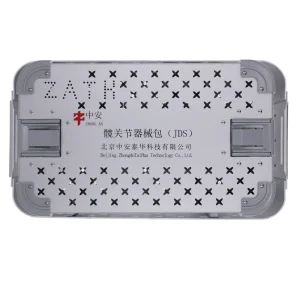
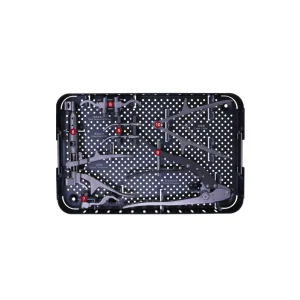
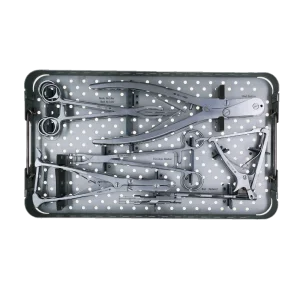
Yes. Every joint system is backed by dedicated, ergonomically balanced surgical instrument sets crafted from surgical stainless steel and aircraft-grade aluminum. Trays are engineered to fit standard European hospital autoclaves and container systems (Aesculap-style), complete with bilingual markings and quick-assembly broach handles.
All femoral stems undergo 100% CMM dimensional checks, eddy current surface flaw detection, and post-machining glass bead/grit-blasting. Representative samples are subjected to 5,000,000 cycles of dynamic endurance testing without fracture under ISO 7206-4 and 7206-6 protocols to verify long-term fatigue strength.
For standardized catalogue products with private-label packaging, our MOQ starts at 50 units per line. For entirely bespoke implant geometries or modified instrument trays, batch sizes typically start at 100 units. Flexible phased delivery schedules can be arranged against annual forecast contracts.
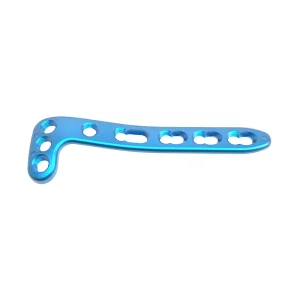
Explore our extended catalog of CE-certified implants and specialized instrumentation designed to support multidisciplinary orthopedic departments across Portugal.
Schedule a technical conference with our engineering leadership to review MDR technical files, sample instrument sets, and OEM manufacturing agreements tailored for the Iberian orthopedic market.