MIS Pedicle
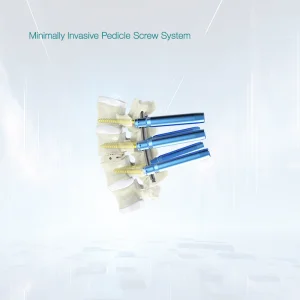
Ti-6Al-4V ELICannulated MIS
Engineered to satisfy demanding spine surgeon specifications, featuring low-profile tulip designs, high pullout resistance threads, friction-head stabilization, and surgical-grade titanium alloys.
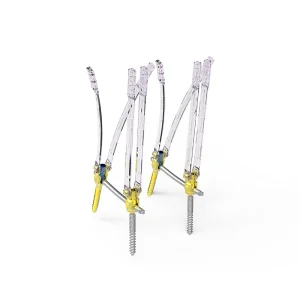
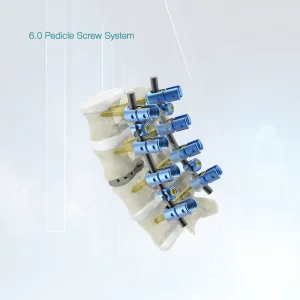
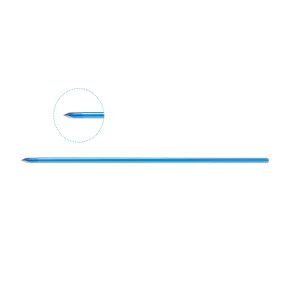
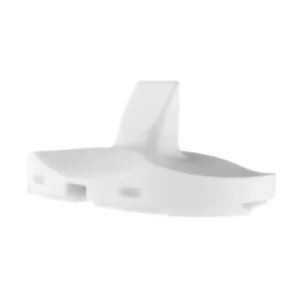
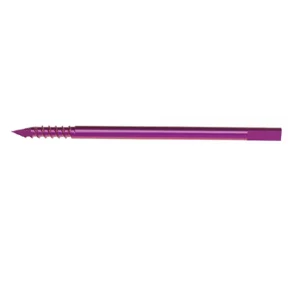
The thoracolumbar junction (T10 to L2) represents the mechanical transition between the rigid, rib-cage-supported thoracic cage and the flexible, lordotic lumbar spine. Manufacturing implants for this anatomical zone demands exceptional fatigue resistance and dimensional accuracy.
Under ASTM F1717 and ISO 12189 testing protocols, pedicle screws and longitudinal rods must endure over 5,000,000 continuous cycles of axial compression, flexion, and torsion without micro-fracturing or notch sensitivity.
Modern thoracolumbar pedicle screw systems require wide polyaxial angulation (±25° to ±30° in all planes) coupled with high anti-splay set screw threading that completely eliminates tulip deformation during final tightening.
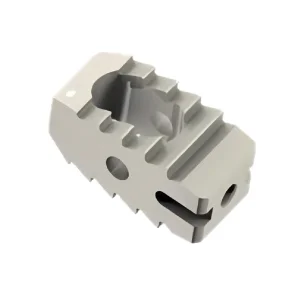
Interbody fusion devices (TLIF, PLIF, and Straight Cages) function as both structural load-bearing pillars and osteoconductive scaffolding, restoring disc height, lordosis, and neural foraminal volume.
Over the past fifteen years, China's orthopedic industrial ecosystem—anchored by science parks such as Zhongguancun Pinggu Park in Beijing—has evolved from basic component machining into advanced, vertically integrated engineering powerhouses.
Leading Chinese spine factories integrate raw material metallurgical inspection, high-speed Swiss-type longitudinal turning, wire EDM, ultrasonic passivation, laser marking, Class 100,000 cleanroom packaging, and EO/Gamma sterilization validation in one centralized corridor.
Turnaround times for custom implant geometries, personalized spinal deformation rods, or bespoke cannulated screwdriver designs are reduced from months to weeks. Digital CAD/CAM bridges and standardized DFM workflows fast-track commercial launches.
By leveraging domestic supply networks for certified medical grade Ti-6Al-4V and PEEK, alongside automated multi-pallet CNC processing lines, Chinese manufacturers provide global OEM partners with 30% to 50% cost reductions while meeting rigorous CE and ISO 13485 requirements.
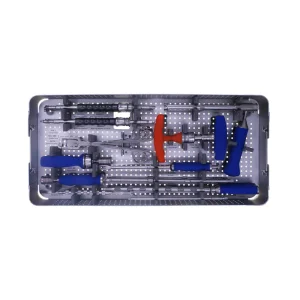
Spinal pedicle screws cannot function without matching instrumentation. Chinese facilities fabricate matched spinal kits—including self-holding hex screwdrivers, counter-torques, rod benders, distractor-compressors, and MIS towers—all color-coded and heat-treated.
A granular cross-reference demonstrating how factory-engineered implant configurations address specific surgical pathologies, patient anatomy, and procedural requirements in contemporary spine centers.
| Pathological Indication | Anatomical Level | Recommended System Configuration | Key Factory Engineering Criteria | Clinical Objective |
|---|---|---|---|---|
| Unstable Thoracolumbar Burst Fractures | T11 – L2 junction | Ø6.0mm Monoaxial / Polyaxial Screws + Pre-bent Titanium Longitudinal Rods + Crosslinks | High yield strength cold-worked Ti rods; buttress reverse thread set screws to resist bending forces. | Restoration of anterior vertebral height, mechanical realignment, and kyphosis prevention. |
| Degenerative Disc Disease & Spondylolisthesis | L4 – S1 | Dual-Thread Polyaxial Pedicle Screws + Straight PEEK Interbody Fusion Cage (TLIF/PLIF) | Wide polyaxial head freedom (±30°); aggressive cage anti-migration serrations with porous graft window. | 360-degree interbody stability, decompression of spinal canal, and solid osseous fusion. |
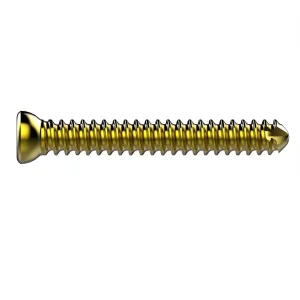
| Minimally Invasive Percutaneous Spine Surgery (MISS) | T12 – L5 | Cannulated Pedicle Screws with Integrated Detachable Extension Sleeves + Percutaneous Rod Inserters | Seamless guidewire transition without burrs; precise laser etched depth graduations; clean sleeve break-off. | Minimization of paraspinal muscle damage, reduced intraoperative blood loss, and rapid rehabilitation. |
| Adult Spinal Deformity & Degenerative Scoliosis | Multi-level thoracic to sacropelvic | Multi-Axial Reduction Pedicle Screws with extended tabs + Cobalt-Chromium (CoCr) High-Stiffness Rods | Deep tab reduction threads; exceptional thread shear resistance under high-torque corrective maneuvers. | Multi-planar coronal and sagittal spinal realignment with rigid pelvic fixation anchors. |
| Osteoporotic Vertebral Compression Fractures (OVCF) | T8 – L4 | Cement-Augmented Fenestrated Pedicle Screws + Percutaneous Kyphoplasty (PKP) Ballon Kits | Precision side-perforations for controlled PMMA bone cement distribution without venous extravasation. | Immediate anchor reinforcement in low-density trabecular bone, halting screw loosening. |
Addressing the stringent hurdles of European MDR 2017/745, US FDA 510(k), and national health tender requirements through standardized technical documentation, quality management, and testing dossiers.
Factory QMS systems are structured to generate ready-to-file technical documentation for regional distributors, including clinical evaluation reports (CER), biocompatibility assessments (ISO 10993), and risk management files (ISO 14971).
Implant factories offer medical-grade Tyvek double-blister sterile packaging, validated under ISO 11607 (accelerated and real-time aging for 5-year shelf life). This eliminates the cost and risk of hospital autoclave sterilization prior to primary use.
Every single spinal screw, rod, and crosslink is engraved with laser Two-Dimensional Unique Device Identification (UDI) matrix codes. Laser depth is calibrated to avoid microscopic stress concentrations while maintaining optical readability post-sterilization.
Comprehensive personalization capabilities spanning thread pitches (cortical-cancellous dual thread), tulip profiles, rod diameter options (Ø5.5mm vs. Ø6.0mm systems), custom anodized color schemes, and customized hospital instrument graphic cases.
Procurement directors and hospital buying groups apply structured criteria when vetting Chinese orthopedic manufacturers. Below is the multi-point evaluation framework used by high-volume global buyers.
Implant suppliers must furnish mill test certificates showing exact chemical analysis, tensile strength, elongation, and grain size for titanium alloy (Ti-6Al-4V ELI conforming to ISO 5832-3 / ASTM F136) and pure PEEK polymers.
High-volume manufacturing requires in-line optical comparators, contact coordinate measuring machines (CMM), and pneumatic roundness gauges to guarantee that screw thread profiles, tulip runouts, and set-screw pitches match within single-micron limits.
A dependable supplier maintains buffer inventory of standard screw lengths (Ø5.5 / 6.0 / 6.5mm in 35mm to 55mm lengths) and offers direct express logistics via DHL, FedEx, and UPS to resupply hospital stock within 4 to 6 business days.
Distributors require surgical technique manuals (STMs), sawbone anatomical models, demonstration cases, and workshop training modules to instruct local orthopedic spine surgeons on correct rod contouring, reduction maneuvers, and torque limits.
Comprehensive engineering, quality management, and procurement answers for hospital procurement specialists, regulatory officers, and international orthopedic distributors.
Leading manufacturers utilize medical-grade Ti-6Al-4V ELI (Extra Low Interstitial) conforming strictly to ASTM F136 and ISO 5832-3 standards. This material delivers the optimal balance of ultimate tensile strength, fatigue endurance under cyclic loading, corrosion resistance, and magnetic resonance imaging (MRI) compatibility with minimized artifact distortion.
Spinal pedicle screw and rod constructs undergo standardized testing in accordance with ASTM F1717 (Standard Test Methods for Spinal Implant Constructs in a Vertebrectomy Model) and ISO 12189. These evaluations verify static compression bending, static torsion, and dynamic fatigue runout endurance up to 5,000,000 cycles without mechanical failure.
To eliminate head splay during the final tightening sequence (typically calibrated at 10 to 12 Nm), engineers employ reverse-angle buttress threading or square thread mechanics on the set screw. This design directs rotational clamping forces radially inward rather than outward, preserving tulip wall integrity and ensuring secure rod locking.
Yes. Customization services encompass modified thread geometries, specialized self-tapping flute configurations, low-profile screw heads, extended break-off tabs for MIS procedures, custom anodization colors for diameter coding, custom packaging graphics, and private-label laser etching.
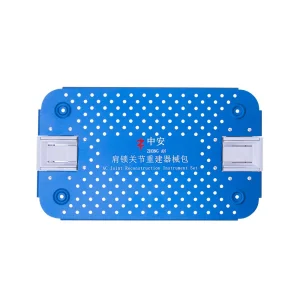
Both options are available. Implants can be supplied non-sterile in dedicated sterilization-grade anodized aluminum instrument trays, or sterile-packed within ISO Class 7 cleanrooms using medical-grade Tyvek blister packaging, validated under ISO 11607 and certified for up to a 5-year sterile shelf life.
Qualified distributor partners receive comprehensive registration dossiers, including ISO 13485 certificates, CE certificates, Free Sale Certificates (FSC), raw material mill test reports, mechanical test summaries, biocompatibility evaluations, and surgical technique manuals.
Dual-lead, dual-core threads transition from a fine pitch in the proximal cortical bone of the pedicle to a deeper, coarser pitch in the anterior vertebral cancellous body. This configuration substantially increases bone purchase and resistance to screw pull-out in older or osteopenic patients.
All surgical screwdriver handles utilized for final tightening incorporate internal calibrated spring mechanisms or electronic digital torque transducers. In-house calibration benches test each driver across 10 consecutive tightening cycles to verify torque cutoff within a ±5% margin of error.
Explore our extended portfolio of spinal interbody cages, trauma fixation locking plates, intramedullary nails, and arthroplasty components, all engineered under our certified ISO 13485 quality system.