
Precision Trauma & Orthopedic Product Showcase
Explore precision-engineered solutions compliant with ISO 13485 standards, covering sports medicine, locking compression plates, endoscopic systems, and tibial reconstruction platforms.

Evolution of Expert Tibial Nailing: Biomechanical Architecture & Clinical Imperatives
Transforming complex fracture treatment from traditional diaphyseal splinting to high-stability meta-diaphyseal reconstruction.
Tibial fractures represent the most prevalent long-bone fractures encountered in orthopedic traumatology, exhibiting an annual incidence rate fluctuating between 17 and 26 per 100,000 individuals globally. Because one-third of the tibial surface is subcutaneous along its entire length, high-energy impact injuries frequently result in severe soft tissue compromise, open bone exposure, periosteal devascularization, and neurovascular vulnerabilities. In treating these fractures, the Expert Tibial Nail (ETN) has emerged as the unequivocal gold standard, extending the indication boundary from simple mid-shaft transverse and oblique diaphyseal fractures to intricate proximal third, distal metaphyseal, and select intra-articular fractures.
The biomechanical paradigm underpinning modern intramedullary nailing centers on biological osteosynthesis: achieving axial alignment, rotatory stability, and length maintenance while preserving endosteal vascularization and adjacent periosteal envelopes. Traditional intramedullary nails were limited by parallel transverse locking options, which failed to resist angular and shear vectors in wide metaphyseal zones. In contrast, the second- and third-generation Expert Tibial Nail systems feature multiplanar distal and proximal locking screws, incorporating fixed-angle locking holes and Herzog curvature (typically positioned at 10.5° proximal bend) that matches native tibial canal anatomy, effectively nullifying apex anterior (recurvatum) and valgus deformity tendencies.
Anatomical Herzog Curvature
Engineered with a precise 10.5° proximal Herzog bend, preventing cortical impingement at the posterior cortex and facilitating seamless insertion through either infrapatellar or suprapatellar approaches without compromising entry portal cartilage integrity.
Multiplanar Locking Matrix
Proximal configurations feature three oblique mediolateral, anteroposterior, and diagonal threaded locking holes, while distal clusters offer four multi-directional trajectories within 5mm of the nail tip, enabling rigid purchase in ultra-short metaphyseal fragments.
Axial Dynamization Control
Integrated dynamic oval slots allow up to 7mm of controlled axial compression under natural weight-bearing, expediting secondary periosteal callus formation while eliminating pathological rotational instability through optional cross-locking.
Commercial Dynamics & Global Leading Manufacturers
A multi-tiered competitive evaluation of multinational orthobiologic giants versus dedicated ISO 13485 contract manufacturers.
The global intramedullary nailing device market is projected to reach $1.85 billion USD by 2030, driven by the expanding incidence of high-velocity vehicular collisions, extreme sports injuries, and a growing geriatric population vulnerable to osteoporotic low-energy distal tibial insufficiency fractures. Across global territories, healthcare cost-containment initiatives (such as DRGs in Europe, volume-based procurement (VBP) policies in Asia, and ASC bundled payments in North America) are reshaping orthopedic procurement models. Hospital networks increasingly prioritize devices that deliver uncompromising mechanical stability, streamlined instrumentation, and transparent cost per procedure.
The competitive ecosystem is stratified into two vital forces: established multinational orthopedic OEMs who drive initial patent boundaries, and advanced technological manufacturing centers (such as Beijing ZhongAnTaiHua Technology Co., Ltd. - ZATH) that synthesize world-class machining tolerances, sterile barrier packagings, and full-spectrum regulatory dossiers to empower regional hospital distributors with exceptional margin profiles and unmatched delivery speed.
| Manufacturer / Platform | Material Metallurgy | Proximal Configuration | Distal Vector Count | Targeting Precision System | Supply Chain Model |
|---|---|---|---|---|---|
| DePuy Synthes (Expert Tibial Nail - ETN) |
Ti-6Al-7Nb (TAN) / Stainless 316L | 3 Oblique Locking Screws + End Cap Angle Stable | 4 Multiplanar holes (including extreme distal) | Radiolucent Carbon Fiber Aiming Arm | Direct Hospital Distribution / Tier-1 Pricing |
| Stryker (T2 Alpha Tibial Nail) |
Type II Anodized Ti-6Al-4V | Advanced multi-hole locking with dynamic glide | 3 Tri-planar locking portals | Guided Targeting Sensor System | Direct Agency / GPO Contracts |
| Smith & Nephew (TRIGEN META-NAIL) |
Titanium Alloy (Ti-6Al-4V) | Threaded Herzog proximal angle fixation | Multi-hole distal angular configuration | SureShot Electromagnetic Distal Targeting | Direct / Regional Commercial Hubs |
| Zimmer Biomet (Natural Nail System) |
High-Strength Titanium Alloy | Anatomic proximal bend with multi-screw array | 3 Coronal & Sagittal locking options | Mechanical Carbon Guide Frame | Integrated Global Distributor Network |
| ZATH Orthopedics (Precision ETN System) |
Medical Ti-6Al-4V ELI (ASTM F136) | Tri-angular fixed-angle + dynamic slot + end-cap lock | 4 Multidirectional locking points within 5mm | High-Rigidity Quick-Coupling Radiolucent Arc | Direct OEM/ODM + Authorized Global Distributors (4-6 Day Worldwide Express) |
Private Labeling & Flexible Geometry
For orthopedic distributors entering localized national tenders, ZATH offers bespoke nail profile adaptations, including varying Herzog apex lengths (from 300mm to 440mm), customized laser etching, proprietary screw thread pitches, and dual-language sterile box custom packaging tailored to sovereign Ministry of Health criteria.
Agile Supply Buffer & Rapid Fulfillment
By operating comprehensive in-house multi-axis Swiss CNC manufacturing centers and ISO Class 7 cleanrooms in Beijing's Zhongguancun Science Park, order-to-delivery lead times are maintained at 4–6 days via integrated express courier chains (DHL, FedEx, UPS), preventing inventory stockouts during peak surgical seasons.
Localized Clinical Scenarios: Suprapatellar vs. Infrapatellar Approaches
Optimizing entry portal vector geometry, reaming hemodynamics, and fluoroscopic ergonomics across distinct patient pathologies.
Suprapatellar Semi-Extended Technique
In high-energy fractures of the proximal tibia, the quadriceps mechanism exerts substantial anterior pull on the proximal fragment, producing marked recurvatum deformity in traditional hyper-flexed infrapatellar positioning. Utilizing a semi-extended suprapatellar entry portal (15°–20° flexion) neutralizes extensor mechanism forces, allowing effortless reduction maintenance, collinear canal alignment, and unimpeded bi-planar fluoroscopy without assistant fatigue.
Extreme Distal Multi-Vector Fixation
When fractures extend within 3–5 cm of the talocrural joint line, standard intramedullary nails lose mechanical purchase due to funnel-shaped metaphyseal widening. The Expert Tibial Nail solves this via 4 specialized distal locking options: two mediolateral screws, one anteroposterior screw, and an oblique angle-stable locking vector that capture the subchondral bone block, preventing valgus/varus shifting without supplemental plating.
Reamed vs. Unreamed Hemodynamic Biology
In multi-trauma casualties exhibiting concomitant pulmonary contusions or Gustilo Type II/IIIA open wounds, cannulated expert nails allow gentle, calibrated reaming using flexible shaft reamers with deep flutes. Reaming generates osteogenic autologous bone graft slurry at the nonunion-prone fracture interface while keeping intramedullary pressure rises below critical thromboembolic thresholds.
A critical surgical factor in achieving anatomical reduction is selecting the correct entry portal along the proximal tibial plateau. The ideal anatomical entry point resides precisely in line with the longitudinal medullary canal axis on both anteroposterior and lateral fluoroscopic views: immediately lateral to the medial intercondylar eminence on the AP view, and directly on the anterior articular margin slope just ventral to the cruciate ligament footprints on the lateral projection. Inserting the nail too anteriorly generates massive hoop stress and anterior cortex blowout, while a posterior entry site risks posterior cruciate ligament avulsion and articular cartilage damage.
International Regulatory Compliance & Quality Engineering
Full traceability from raw titanium billet sourcing to ISO 13485 cleanroom sterile barrier release.
ISO 13485:2016 Certification
Our quality management framework strictly adheres to international medical device quality standards, auditing every manufacturing step from incoming raw metallurgical inspection to five-axis CNC tolerance verification, laser marking, and final pass-through cleaning.
CE, FSC & National Dossiers
Complete Technical Documentation Dossiers (aligned with EU MDR 2017/745, Free Sale Certificates, biocompatibility reports under ISO 10993, and mechanical fatigue data under ASTM F1264) are proactively provided to expedite regional Ministry of Health registrations.
Validated Sterile Barrier Packaging
Implants are vacuum-sealed inside dual medical-grade Tyvek blisters under Class 10,000 cleanroom conditions, validated for a 5-year shelf-life via gamma-irradiation or ethylene oxide (EtO) sterilization, eliminating hospital flash autoclave requirements.
| Evaluation Parameter | Ti-6Al-4V ELI (Grade 23 Titanium) | 316LVM Medical Stainless Steel | Clinical & Commercial Impact |
|---|---|---|---|
| Elastic Modulus (GPa) | 105 – 114 GPa | 200 – 210 GPa | Titanium is significantly closer to human cortical bone (18–25 GPa), reducing stress shielding and refracture risks upon hardware removal. |
| Fatigue Endurance Limit | > 580 MPa (Rotational Bending) | > 420 MPa | Critical for nonunion scenarios where the intramedullary nail must endure prolonged cyclic weight-bearing loads without catastrophic breakage. |
| MRI Compatibility | Paramagnetic (Artifact minimal) | Ferromagnetic (Strong scatter artifacts) | Titanium allows high-resolution postoperative MRI assessment of soft-tissue knee ligaments and distal syndesmotic tears. |
| Biocompatibility / Ion Leaching | Spontaneous TiO2 passivation layer; highly inert | Risk of nickel/chromium ion sensitization | Titanium minimizes soft-tissue inflammation, bursa irritation, and localized metallosis at the nail head and distal entry points. |
Technological Roadmap: The Future of Intramedullary Osteosynthesis
Bridging biomechanical hardware with robotic surgery, electromagnetic distal targeting, and smart intra-implant sensorics.
Radiation-Free Electromagnetic Distal Targeting
Freehand distal interlocking remains the primary source of ionizing radiation exposure to trauma teams during tibial nailing. Emerging surgical instrument sets incorporate electromagnetic field generators embedded directly within the carbon-fiber target probe, mapping the exact spatial coordinates of distal screw holes in real time without continuous C-arm fluoroscopy.
3D-Printed Trabecular Bone Interface
By leveraging selective laser melting (SLM) additive manufacturing, future tibial nail generations will integrate porous titanium lattices (60–70% porosity, 300–500 μm pore dimensions) along designated metaphyseal contact sectors. This promotes rapid bony osseointegration at critical pivot points while preserving an ultra-smooth nail shaft for seamless revision extraction.
Smart Nails with Strain Telemetry Sensors
Micro-electromechanical systems (MEMS) integrated within the hollow cannulated core of expert nails will continuously measure micro-strain and axial loading during patient ambulation. Transmitted wirelessly to clinician smartphones, these data points identify early delayed unions or impending mechanical fatigue failures months before visible changes appear on standard radiographs.
Frequently Asked Questions: Clinical Selection & Procurement
Essential guidance for orthopedic surgical heads, biomedical engineers, hospital procurement committees, and international medical distributors.
What clinical criteria justify selecting an Expert Tibial Nail over a conventional tibial nail?
Why is the suprapatellar surgical approach increasingly favored over the infrapatellar approach?
What metallurgical grade is optimal for intramedullary nails: Ti-6Al-4V ELI or 316LVM Stainless Steel?
How does the Herzog curvature influence entry portal selection and nail passage?
What is the role of end caps in modern Expert Tibial Nail systems?
Can ZATH accommodate private label OEM/ODM design modifications and sterile packaging?
What documentation is delivered to assist local Ministry of Health registration?
What is the typical shipping timeline for emergency replenishment orders?
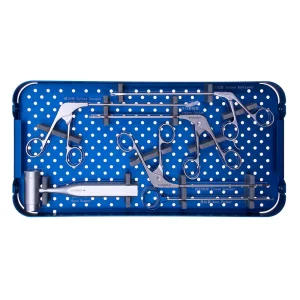
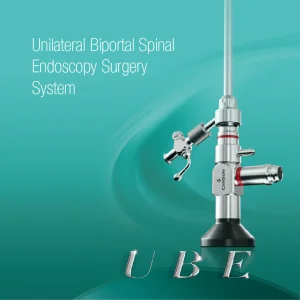
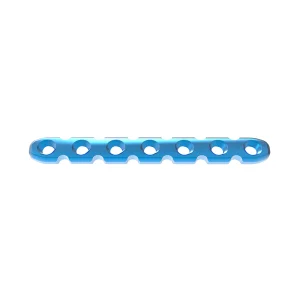
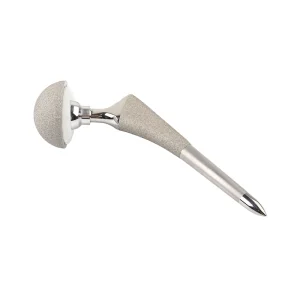
Extended Orthopedic Implants & Specialized Instrumentation
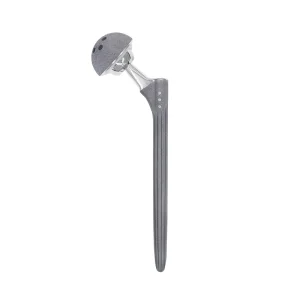
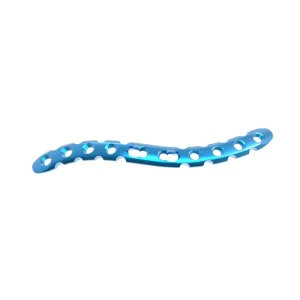
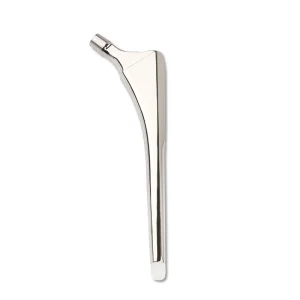
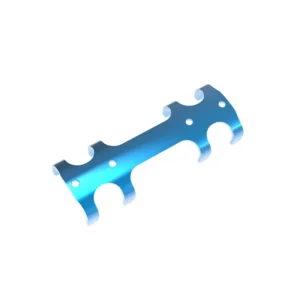
Explore hip prostheses, anatomical reconstruction plates, endoscopic spinal systems, and thoracic fixation implants designed for high clinical efficacy.
Equip Your Clinical Network with Next-Gen Nailing Platforms
Request technical specification brochures, surgical demonstration kits, sterile sample evaluations, or schedule an engineering consultation with our biomedical design team.