Next-Generation Locking Fixation Portfolio
Explore high-precision anatomical plate configurations, modular hip revision assemblies, and MIS trauma solutions manufactured under strict ISO 13485 quality protocols.
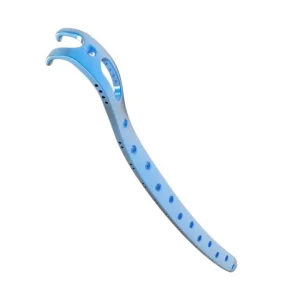
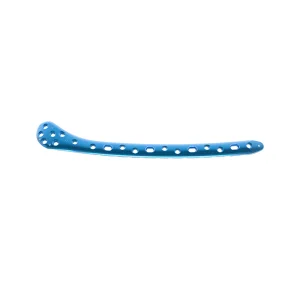
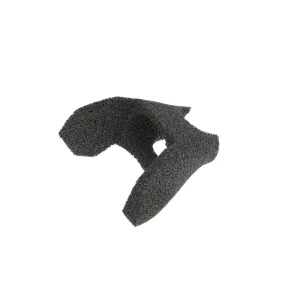
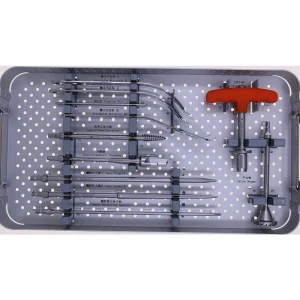
Global Commercial Landscape: Screw Locking Orthopedic Systems
An in-depth executive briefing on biomechanical stability, supply chain modernization, and the worldwide evolution of angular-stable internal fixation technologies.
Macro-Market Expansion
The global orthopedic fixation industry is undergoing rapid consolidation. As geriatric demographics rise globally, hospital networks face an increased prevalence of osteoporotic and comminuted fractures. Angular-stable screw locking plates have shifted from a specialized alternative to the clinical gold standard, minimizing the incidence of secondary reduction loss and screw toggle.
Supply Chain Resiliency & OEM/ODM
Tier-1 medtech enterprises and regional distributors are increasingly shifting from fragmented manufacturing to vertically integrated contract manufacturers. Enterprises like ZATH (Beijing ZhongAnTaiHua Technology Co., Ltd.) unify mill-certified raw material sourcing, multi-axis Swiss CNC turning, surface passivation, and sterile packaging under one accountable roof.
Regulatory & Traceability Barriers
Global regulatory tightening—governed by EU MDR 2017/745, US FDA 21 CFR Part 820, and ISO 13485:2016—demands uncompromised lot traceability. Medical device procurement authorities require complete digital footprints for each locking plate and cannulated cortical screw, spanning initial raw forging bar stock through validated final gamma or ETO sterilization.
Engineering Roadmap: From Fixed-Angle to Variable Locked Systems
Comparing biomechanical characteristics between conventional bone compression plating, fixed-angle locking systems, and variable-angle polyaxial technologies.
| Biomechanical Attribute | Dynamic Compression Plates (DCP) | Fixed-Angle Locking Compression (LCP) | Variable-Angle (Polyaxial) Locked Constructs |
|---|---|---|---|
| Primary Fixation Principle | Frictional contact force between plate & periosteum | Internal-external fixator bridging; threaded screw heads | Multi-directional screw trajectory with mechanical lock |
| Periosteal Blood Supply Preservation | High compression risk of periosteal devascularization | High preservation; plate sits slightly off cortical bone | Maximum vascular preservation; targeted bone engagement |
| Stability in Osteopenic Bone | Poor; frequent screw stripping and toggle failure | Superior; fixed thread connection prevents backout | Optimal; permits convergent/divergent cross-locking |
| Angular Freedom Range | Variable via standard non-locking drill guide | Strictly mono-axial along predetermined plate axis | ±15° conical polyaxial trajectory freedom |
| Clinical Application Scope | Simple transverse diaphyseal fractures | Complex metaphyseal and periprosthetic fractures | Articular comminution, revision THA/TKA, pediatric MIS |
Rigid Anatomical Contouring
Dedicated 316L stainless steel and early Ti-6Al-4V titanium pre-contoured plates matching regional anatomy (proximal femur, distal lateral tibia). Eliminated intraoperative hand-bending but lacked trajectory flexibility.
Combi-Hole Hybrid Locking
Standardized combined dynamic compression and threaded locking hole configurations. Allows orthopedic surgeons to alternate between lag screw interfragmentary compression and rigid angular locking within a single implant construct.
3D EBM Trabecular Meshes
Integration of Electron Beam Melting (EBM) titanium lattices directly onto locking plate undersides and revision sleeves, facilitating rapid biological osseointegration and personalized patient-matched trauma reconstructions.
Localized Application Scenarios & Surgical Protocols
Real-world trauma surgery scenarios demonstrating how screw locking orthopedic plates address acute clinical challenges across multiple skeletal segments.
Geriatric Proximal Femur Fractures
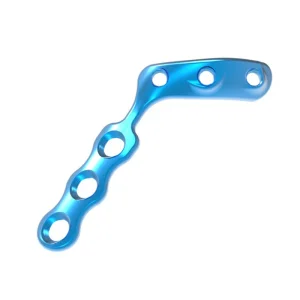
In osteoporotic pertrochanteric fractures, standard cancellous lag screws often suffer from "cut-out." The Proximal Femur Locking Plate III utilizes diverging angular locking screw trajectories that evenly disperse torsional load, providing rigid construct stability without bone cement augmentation.
High-Energy Distal Femur Comminution
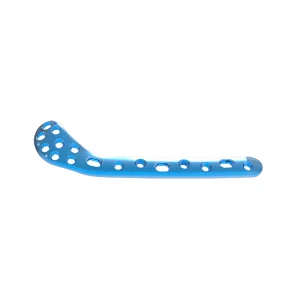
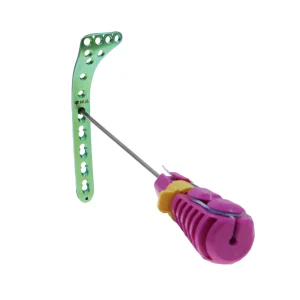
Motor vehicular trauma commonly results in AO/OTA Type 33 intra-articular condylar disruptions. Deploying the Distal Lateral Femur Locking Plate under Minimally Invasive Surgery (MIS) guides maintains biological fracture hematoma while securing subchondral bone reduction.
Complex Scapular & Clavicular Trauma
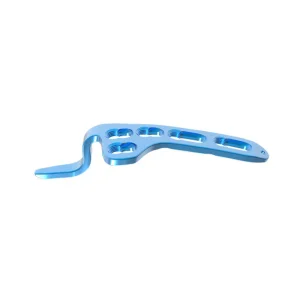
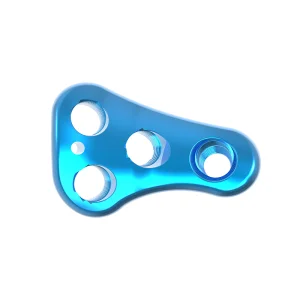
Irregular flat bones with minimal cortical depth demand low-profile anatomical hardware. Patent-designed Scapula Locking Plates and S-shaped clavicle systems conform natively without intraoperative contouring, reducing soft-tissue prominence and hardware irritation.
Integrated Manufacturing, Sterility & Global Procurement Solutions
A look inside ZATH's unified medical manufacturing ecosystem in Zhongguancun Science Park, Beijing.
Raw Metal Validation
Every batch of titanium alloy (Ti-6Al-4V ELI) and implantable stainless steel is spectrographically verified for chemical composition, tensile yield strength, and structural homogeneity.
Swiss CNC Milling
High-precision 5-axis CNC machining centers craft locking screw micro-threads and anatomically complex contours with micron-level tolerances, eliminating thread galling during insertion.
Sterile Packaging
ISO Class 7 cleanroom packaging with medical-grade Tyvek peel pouches provides an impermeable microbial barrier, drastically cutting hospital CSSD autoclaving costs and infection hazards.
Global Dossier Support
Full CE, ISO 13485, and Free Sale Certificates (FSC) paired with complete technical dossiers (biocompatibility, mechanical fatigue testing, pyrogen analysis) for frictionless ministry registrations.
Procurement & Clinical Engineering FAQ
Technical clarity addressing critical inquiries from hospital surgical boards, biomedical engineers, and international distributors.
What mechanical advantages do screw locking plates hold over dynamic compression plates?
Screw locking plates function as internal fixators. The threaded screw heads lock mechanically into the plate's mating threads, forming a fixed-angle construct. This eliminates the necessity of pressing the plate flush against bone tissue, thereby preserving the periosteal blood supply, eliminating secondary fracture displacement during screw tightening, and providing superior pull-out resistance in osteoporotic bone.
What product platforms does ZATH manufacture as a specialized orthopedic partner?
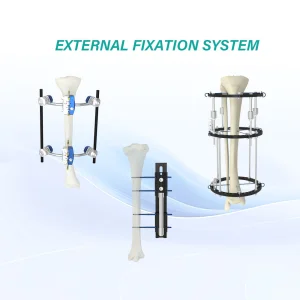
Founded in 2009 in Beijing, ZATH specializes across five major orthopedic platforms: Trauma (locking compression plates, cannulated cancellous/cortical screws, intramedullary interlocking nails, external fixators), Spine (posterior pedicle screw-rod systems, anterior cervical plates, interbody fusion PEEK cages, vertebroplasty kits), Joint Arthroplasty (hip stems, femoral heads, bipolar cups, total knee systems, 3D custom revision sleeves), Sports Medicine (titanium and suture anchors, loop buttons, ligament staples), and dedicated surgical instrument sets.
Can locking screws and standard cortex screws be used together within the same plate?
Yes, through ZATH's engineered "combi-holes." One side of the hole is threaded to accept conical locking screws at a predetermined rigid angle, while the adjacent non-threaded smooth dynamic compression unit accepts standard cortical or cancellous screws. This allows surgeons to dynamically compress the fracture plane first before finalizing rigid angular fixation.
How does ZATH safeguard raw material integrity and surface biocompatibility?
All implants are fabricated from certified Ti-6Al-4V ELI (ASTM F136) or medical-grade implant stainless steel (ASTM F138). Parts undergo precision de-burring, multi-stage ultrasonic cleaning, controlled electrochemical anodization (for titanium color coding and fatigue resistance), and pass strict bioburden testing prior to ISO 13485 cleanroom barrier packaging.
What OEM / ODM options and technical registration services are provided for distributors?
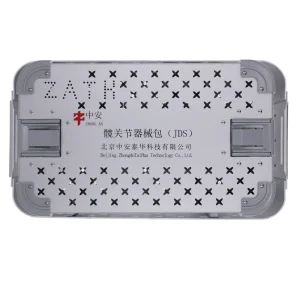
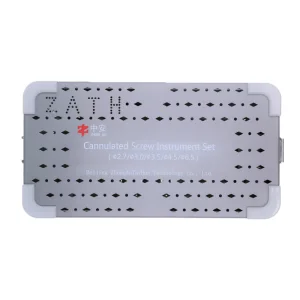
ZATH provides bespoke OEM/ODM manufacturing including custom laser engraving (brand logo, part numbers, UDI barcode), tailored plate sizing for regional anatomical profiles, customized instrument trays, and localized sterile blister packaging. We provide distributor partners with validated mechanical test reports (fatigue, bending strength), ISO 13485 audits, CE documentation, and Free Sale Certificates (FSC).
Additional Specialized Locking Systems & Instruments
Complete your surgical theater configuration with anatomically targeted trauma plates, joint revision stems, and micro-machined cortical fixation screws.