Precision Locking Compression Plates & Implants
Explore our top-tier CE & ISO 13485 certified orthopedic trauma and joint solutions.
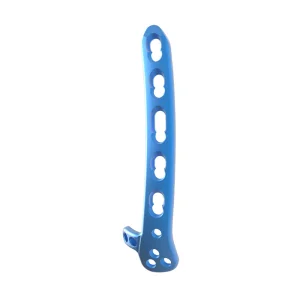
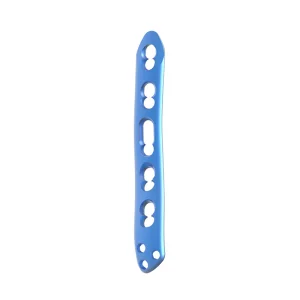
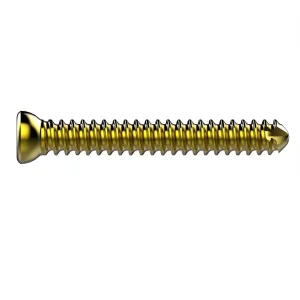
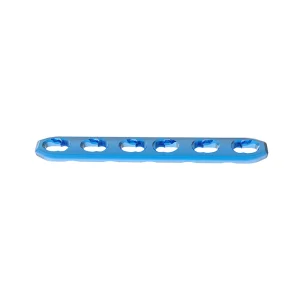

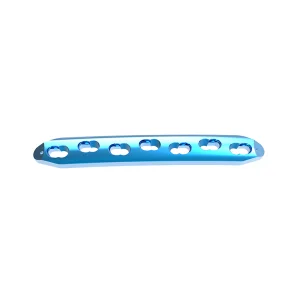

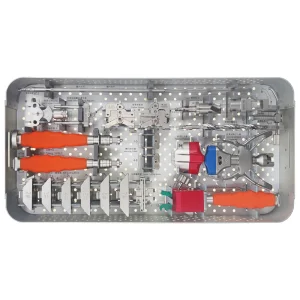
1. The Biomechanical Evolution of Medical Locking Compression Plates
Understanding the paradigm shift from conventional cortical compression plating to angularly stable, periosteum-preserving locking screw technology in modern orthopedic surgery.
Over the past three decades, the management of complex comminuted fractures, osteoporotic bone fixations, and non-union cases has undergone a monumental shift. Conventional orthopedic bone plates relied entirely on friction generated by pressing the plate against the periosteal surface via standard cortical screws. While effective for simple transverse fractures in dense cortical bone, this mechanism frequently led to secondary loss of reduction, cortical necrosis due to microvascular strangulation, and early hardware loosening in compromised bone beds.
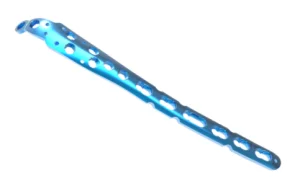
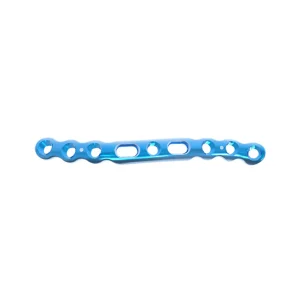
The introduction of the Medical Locking Compression Plate (LCP) revolutionized internal fixation by functioning as an extramedullary internal fixer. By utilizing threaded screw heads that mechanically lock into female threads precision-machined within the plate’s screw holes, the locking plate construct achieves angular and axial stability independent of plate-to-bone compression. This fundamental engineering breakthrough preserves the vital periosteal blood supply, minimizes soft-tissue disruption, and dramatically reduces hardware failure rates in metaphyseal and articular trauma.
Angular Stability
Threaded locking interfaces convert toggle forces into axial shear resistance, preventing primary and secondary loss of reduction even in severely osteopenic bone structures.
Biological Vascular Preservation
Limited-contact underside profiles (LC-LCP) prevent complete periosteal compression, shielding local osteocyte networks and accelerating natural callus formation.
Hybrid Combi-Hole Flexibility
Integrated combination holes allow trauma surgeons to seamlessly combine dynamic axial compression using standard cortical screws with rigid fixed-angle locking screws in a single implant.
2. Metallurgy, CNC Micro-Machining & Tolerance Control
How rigorous raw material selection, high-precision subtractive milling, and surface modification yield superior fatigue life and biocompatibility.
The biomechanical success of a medical locking plate is intimately linked to its structural material grade, thermal treatment, and machining precision. As a premier manufacturer and exporter, our production matrix adheres strictly to internationally recognized surgical implant standards, including ISO 5832-3 / ASTM F136 for Wrought Titanium-6Aluminum-4Vanadium ELI (Extra Low Interstitial) alloy, and ISO 5832-1 / ASTM F138 for implant-grade 316L Stainless Steel.
Titanium Grade 5 ELI is chosen for premium long-bone plates due to its exceptional strength-to-weight ratio, high fatigue endurance limit under cyclic loading, and lower elastic modulus (~110 GPa) compared to stainless steel (~200 GPa). This lower modulus closer matches human cortical bone (~18-22 GPa), effectively mitigating stress shielding and promoting physiological bone remodeling during the healing phase.
| Material Property / Parameter | Ti-6Al-4V ELI (ASTM F136) | Stainless Steel 316L (ASTM F138) | Clinical & Manufacturing Impact |
|---|---|---|---|
| Ultimate Tensile Strength (MPa) | ≥ 860 MPa | ≥ 690 MPa | Prevents permanent plastic deformation during heavy weight-bearing cycles. |
| Yield Strength (0.2% Offset, MPa) | ≥ 795 MPa | ≥ 460 MPa | Ensures high resistance to plate bending under extreme bending moments. |
| Elastic Modulus (GPa) | 110 GPa | 193 GPa | Ti ELI reduces stress shielding; SS offers rigid stabilization for complex articular reconstruction. |
| MRI / CT Compatibility | High (Minimal Artifacts) | Moderate (Noticeable Artifacts) | Titanium allows clearer post-operative radiographical and diagnostic imaging evaluation. |
| Cold-Welding Prevention | Anodized Surface Layer Type II | Electropolished Passivation | Prevents galling between screw threads and plate holes during surgical insertion. |
Machining multi-threaded locking holes into anatomically pre-contoured bone plates requires multi-axis CNC milling machines operating within sub-micron tolerance thresholds. A failure tolerance of even 0.02mm in the thread pitch can lead to screw cross-threading or premature stripping of the locking mechanism. Our advanced manufacturing line utilizes Swiss-type precision CNC lathes and 5-axis machining centers to guarantee uniform thread geometry, smooth entry angles, and perfect co-axial alignment between plate hole contours and locking drill guides.
3. Global Regulatory Compliance & Regional Registration Support
Streamlining market entry for global distributors through full technical documentation, ISO certifications, and regulatory white-labeling.
Navigating international medical device registration mandates requires far more than basic manufacturing capability; it demands a comprehensive, audit-ready regulatory infrastructure. For global importers, regional medical distributors, and hospital procurement groups, securing a reliable supply chain hinges on the manufacturer's ability to furnish compliant technical files, clinical evaluation reports (CER), and quality management certificates.
Our organization maintains a robust ISO 13485:2016 Certified Quality Management System covering design, development, machining, cleaning, primary cleanroom packaging, and EO (Ethylene Oxide) sterilization processes. We provide our global commercial partners with turn-key regulatory dossiers to expedite approvals across diverse jurisdictions.
European Union CE MDR Compliance
Full alignment with EU Medical Device Regulation (MDR 2017/745) Class IIb trauma requirements, complete with comprehensive Risk Management Files according to ISO 14971, Post-Market Clinical Follow-up (PMCF) protocols, and European Authorized Representative (EC REP) integration.
Emerging Market Registration Packages
Customized Dossier (STED format) assembly for local ministries of health across Latin America (ANVISA/INVIMA), Middle East (Saudi SFDA, UAE MOH), Southeast Asia (MDA, BPOM), and Africa. Includes legalized Free Sale Certificates (FSC) and Apostille notarization support.
4. Precision Manufacturing & China Supply Chain Architecture
Leveraging Beijing's advanced medical device industrial cluster for scalable, cost-efficient, and zero-defect orthopedic implant manufacturing.
In the global medical device arena, sourcing medical locking plates from a specialized OEM/ODM manufacturer based in China offers distinct strategic and financial advantages. Over the past decade, China's biomedical manufacturing hub—particularly centered around specialized technology parks in Beijing—has evolved into a world-class center for medical device precision engineering, combining state-of-the-art automated hardware with highly qualified metallurgical engineers.
By integrating raw material strategic reserves, fully automated multi-axis subtractive milling, automatic deburring, computerized optical inspection, and automated cleanroom packaging, our facility drastically reduces cost-per-unit while elevating product consistency and batch-to-batch repeatability.
Class 100,000 Cleanroom
Primary packaging and final washing cycles are executed within ISO Class 7 (Class 100,000) controlled environments, ensuring bioburden levels consistently meet strict ISO 11737 microbial limits prior to sterilization.
Automated 3D CMM Inspection
Every batch undergoes non-contact 3D Optical and Co-ordinate Measuring Machine (CMM) verification, validating complex anatomical curvatures and thread pitch accuracy against CAD master blueprints.
End-to-End Logistics
Direct partnerships with top global courier services (DHL, FedEx, UPS, TNT) and air freight operators guarantee door-to-door transit times of 4 to 6 business days worldwide, supported by real-time temperature and shock monitoring.
5. Global Procurement Needs & Strategic B2B Customization
Addressing the critical priorities of hospital purchasing boards, regional distributors, and medical device brand owners.
Hospital procurement committees and international medical device importers operate under severe margin pressures alongside uncompromising safety standards. When evaluating a potential Medical Locking Plate Manufacturer & Exporter, procurement directors demand clarity across four core operational pillars: supply chain stability, OEM/ODM white-label flexibility, surgical instrument kit availability, and total cost of ownership (TCO).
1. Full OEM & ODM White-Label Services
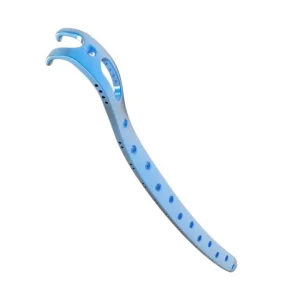
We provide extensive white-label options including laser-etched laser marking (logo, part numbers, lot codes, UDI GS1 barcodes), specialized surface anodization colors (gold, blue, green, magenta for anatomical coding), custom sterilizable tray design, and custom box packaging aligned with your localized brand strategy.
2. Complete Surgical Instrument Integration
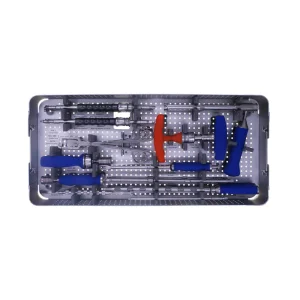
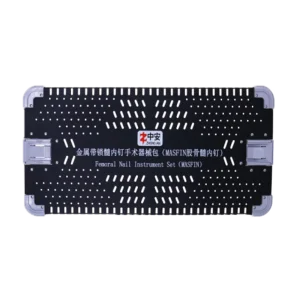
Implants are only as effective as the instruments used to insert them. We design, manufacture, and supply dedicated, fully sterilizable stainless steel and aluminum instrument sets matching every locking plate system. Sets include torque-limiting screwdrivers, drill guides, bending irons, and depth gauges engineered to prevent intraoperative failure.
6. Future Industry Trends in Trauma Plating Technology
Pioneering advancements shaping the next era of internal fracture fixation and bone healing.
The field of orthopedic trauma is continuously evolving. As surgical techniques transition towards minimally invasive plate osteosynthesis (MIPO) and personalized patient care, several key technological shifts are defining the future of locking plate design and manufacturing:
Polyaxial Locking Mechanisms
Unlike traditional monoaxial fixed-angle plates, polyaxial locking technology allows surgeons to insert screws at variable trajectories (typically within a 30-degree cone), enabling optimal screw placement around articular fragments and joint prostheses without sacrificing angular stability.
Patient-Specific 3D Printed Plates
Utilizing Selective Laser Melting (SLM) additive manufacturing in Titanium Grade 5, custom patient-matched locking plates are created directly from CT scan data for complex oncological reconstructions and severe malunion correction surgeries.
Antibacterial Surface Coatings
Incorporating nano-scale silver (Ag) ions or copper oxide (CuO) coatings onto anodized titanium plate surfaces inhibits bacterial adhesion and biofilm formation, directly attacking surgical site infection (SSI) risks in open high-energy trauma cases.
7. Anatomical Application Scenarios & Clinical Field Studies
Tailored locking compression plate geometries engineered for distinct orthopedic surgical sub-specialties.
Proximal & Distal Humerus
Low-profile anatomical plates featuring convergent/divergent locking screw clusters designed to preserve rotator cuff attachment points and securely grip osteoporotic humeral head cancellous bone.
Femoral Shaft & Distal Femur
Heavy-duty, high-load contoured locking plates engineered to withstand severe torsional and bending moments experienced in high-energy traffic accidents and falling traumas.
Proximal & Distal Tibia
Anatomically shaped periarticular locking plates optimized for minimally invasive incision procedures (MIPO), providing rigid buttressing against tibial plateau depression fractures.
Small Fragment & Clavicle
3.5mm / 2.7mm micro-locking compression plates tailored for complex clavicular S-shape contours, ulna, radius, and distal fibula fractures requiring minimal subcutaneous prominence.
8. Technical & Procurement FAQ
Addressing common queries from medical device importers, regulatory agents, and orthopedic surgeons.
What is the primary difference between dynamic compression plates (DCP) and locking compression plates (LCP)?
Conventional DCP plates rely entirely on friction between the plate and bone generated by screw compression, requiring precise plate contouring against the bone surface. LCP plates feature threaded hole profiles that lock into the screw heads, forming a fixed-angle construct. This system does not require plate-to-bone contact pressure, thereby preserving periosteal microcirculation and providing superior fixation stability in osteoporotic or comminuted bone.
Which material is better for medical locking plates: Titanium Grade 5 ELI or 316L Stainless Steel?
Both materials are ISO and ASTM approved for permanent implantation. Titanium Grade 5 ELI (Ti-6Al-4V) offers superior biocompatibility, higher fatigue resistance, lower weight, MRI compatibility, and an elastic modulus closer to natural human cortical bone, reducing stress shielding. 316L Stainless Steel is more cost-effective, offers slightly higher ductility for intraoperative contouring, and remains widely specified in many public hospital tender frameworks.
How do your manufacturing lines prevent cold welding between titanium screws and plates?
Cold welding (galling) occurs when raw titanium surfaces lock together under friction. We prevent this by applying an electrochemical Type II Anodization surface treatment to all titanium plates and screws. This process builds a controlled, dense micro-oxide surface layer that significantly reduces friction coefficient during screw insertion and ensures easy implant removal during post-healing hardware removal surgery.
Are your orthopedic implants shipped sterile or non-sterile?
We offer flexible packaging models. Implants can be supplied in double-layer Tyvek peel pouches subjected to validated Ethylene Oxide (EO) sterilization, arriving ready for immediate surgical use. Alternatively, implants can be shipped non-sterile in protective cleanroom packaging for hospital autoclave sterilization or localized packaging lines.
What documentation do you provide to assist with regional health authority registration?
We furnish complete regulatory technical files, including ISO 13485 certificate copies, CE MDR documentation, ISO 10993 biocompatibility test reports, mechanical fatigue test data according to ASTM F382 (four-point bending fatigue testing), raw material mill certificates, Free Sale Certificates (FSC), and sterilizer validation reports.
Can you manufacture customized bone plates based on custom OEM engineering drawings?
Yes. Our engineering R&D department specializes in OEM/ODM contract manufacturing. Global medical device companies can provide CAD models or technical drawings. We perform DFM (Design for Manufacturability) analysis, tooling development, prototype machining, mechanical validation, and full scale mass production within our ISO 13485 framework.
Additional Surgical Fixation & Replacement Systems
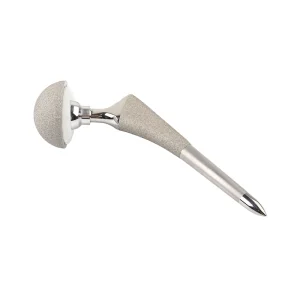
Examine our broader range of trauma plates, intramedullary nails, spinal instruments, and joint prostheses.