Precision Fracture Fixation Systems
Precision engineered internal fixators and matching instrumentation ready for institutional procurement and global distribution.
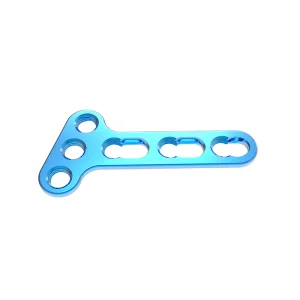
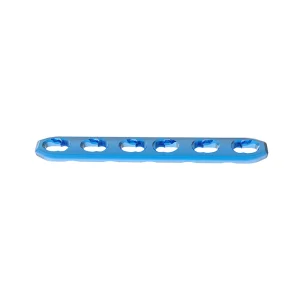
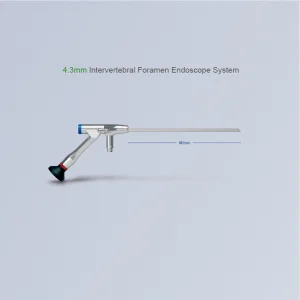
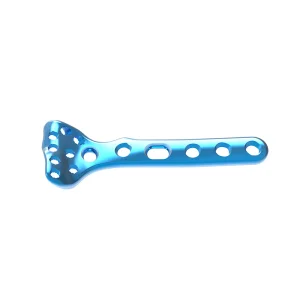
Proximal Femur Biomechanical Engineering & Clinical Landscape
A deep technical analysis into pertrochanteric, intertrochanteric, and subtrochanteric stabilization using medical-grade Titanium-Aluminium-Vanadium alloys.
Optimized Elastic Modulus
Fabricated using biocompatible medical-grade Ti6Al4V ELI (ASTM F136), our proximal femur locking plates provide an elastic modulus closer to cortical bone (~110 GPa) than stainless steel (~200 GPa). This mitigates the risk of stress shielding, promotes callus consolidation, and minimizes peri-implant refracture.
Fixed-Angle Biomechanical Hold
Proximal femur fractures frequently occur in osteoporotic bone where conventional cortical screws loosen under axial loads. By creating a fixed-angle construct, locking screws prevent toggle, collapse into varus, and secondary cut-out, transmitting cyclic gait stresses across the plate shaft instead of individual threads.
Multi-Vector Proximal Clustering
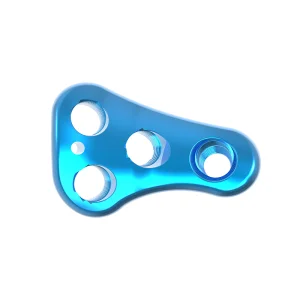
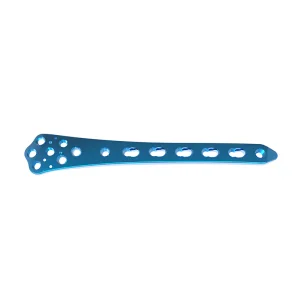
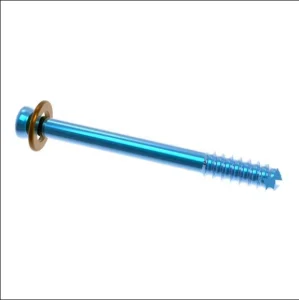
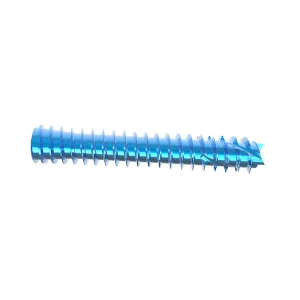
Designed with anatomical contours mimicking the lateral trochanteric profile, the plate head accommodates convergent/divergent cannulated locking screws directed into the femoral neck and head. This triangulated multi-axis anchorage preserves intraosseous vascularization while optimizing pullout force resistance.
| Specification Metric | ZATH Titanium Locking Plate System | Conventional Non-Locking Fixation | Clinical Significance |
|---|---|---|---|
| Raw Alloy Standard | Certified Medical Grade Ti6Al4V (ASTM F136 / ISO 5832-3) | Standard Austenitic Steel (316L) | Superior biocompatibility, reduced allergic responses, MRI artifact reduction. |
| Biological Interface | Limited Contact Profile (LC-Design) Undersurface | Full Surface Compression | Preserves periosteal capillary network; drastically reduces cortical necrosis. |
| Dynamic Failure Limit | Fatigue resistance past 1.0 × 10^6 cycles at physiologic load | High risk of fatigue failure under cyclic varus load | Mitigates hardware breakage prior to bony union in non-compliant or elderly patients. |
| Screw Hole Geometry | Combi-Holes (Dynamic Compression + Angular Locking) | Non-threaded Oval Slots | Permits axial pre-compression prior to locking in multi-fragmentary trauma fractures. |
China Manufacturing Scale & Engineering Efficiency
Based in Beijing's Zhongguancun Science and Technology Park, ZATH leverages a direct industrial supply chain, advanced CNC machining, and automated QA systems to deliver medical implants at world-class unit economics.
Multi-Axis Swiss CNC Precision
Equipped with high-precision 5-axis DMG MORI and Citizen longitudinal turning centers, allowing simultaneous helical machining of screw heads and complex plate curvatures with tolerances within ±5 μm.
Aggregated Lead Time Velocity
By localizing raw materials sourcing, wire-EDM roughing, polishing, surface anodization, and Class 10,000 cleanroom sterilization under one roof, our cycle-time is cut by up to 60% compared to fragmented western supply lines.
OEM / ODM Customization
Complete capabilities for distributor branding: rapid prototype 3D titanium printing, laser marking, customized hole configurations, specialized plate length profiles, and region-specific regulatory technical dossiers.
ISO 13485 Controlled Operations
Every titanium bar is certified via optical spectrometry, ultrasonic flaw detection, and tensile verification. In-line Zeiss CMM equipment validates critical thread pitch and angle locking dimensions for 100% batch reliability.
Global Industry Trends & Localized Clinical Applications
Adapting trauma fixation technology to dynamic regional demographics, hospital purchasing models, and clinical realities across emerging and mature markets.
Aging Populations & Fragility Fractures
With global life expectancy rising, proximal femur fractures represent one of the highest causes of morbidity in geriatric patients. Locking compression plates offer higher primary stability in porous, cancellous bone structures, supporting earlier weight-bearing and reduced hospitalization times.
MIPPO Surgical Technique Compatibility
Minimally Invasive Percutaneous Plate Osteosynthesis (MIPPO) demands tapered plate tips and radiolucent outriggers. Our proximal femoral designs slide smoothly beneath the vastus lateralis, preserving local vascular envelope architectures and optimizing soft-tissue healing.
Tender & Supply Chain Resilience
Healthcare procurement groups in Latin America, Southeast Asia, Eastern Europe, and the Middle East are divesting from monopolistic pricing. ZATH balances competitive bulk quotations with rigorous documentation (CE, ISO 13485, Free Sale Certificates), empowering local distributors.
Frequently Asked Technical Questions
Key criteria verified by medical device distributors, regulatory consultants, and orthopedic surgeons before procurement.
How does a titanium locking plate differ mechanically from intramedullary nailing in proximal femur cases?
While intramedullary nails are load-sharing devices positioned closer to the anatomical mechanical axis, proximal femur titanium locking plates excel in cases involving complex trochanteric comminution, lateral wall disruptions, narrow medullary canals, or previous distal implants. The locking plate functions as an internal fixator, resisting torsional shear and varus displacement without violating the femoral medullary canal.
What specific titanium grade is utilized, and why is Ti6Al4V chosen over pure titanium or stainless steel?
ZATH utilizes medical-grade Ti6Al4V ELI (Grade 23) in compliance with ASTM F136 and ISO 5832-3 standards. Compared to commercially pure titanium (CP Ti), Ti6Al4V provides significantly higher tensile strength (>860 MPa) and fatigue limit, preventing screw breakage under dynamic physiological loads. Compared to 316L stainless steel, it reduces stress shielding by 45% due to its lower modulus of elasticity, exhibits superior corrosion resistance, and produces fewer artifacts during postoperative MRI evaluations.
What regulatory dossiers and quality verifications are available for regional health registrations?
All ZATH production batches adhere to ISO 13485 quality systems. We supply our channel partners with full Technical Files, Mill Test Certificates (chemical composition and mechanical validation), Biocompatibility Reports (ISO 10993 series), Packaging Sterility Validation (ISO 11607), Accelerated Aging Shelf-Life data, and national Free Sale Certificates (FSC) to accelerate product licensing across global territories.
Can hospital surgical kits be customized under OEM or private label contracts?
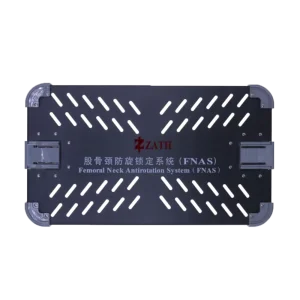
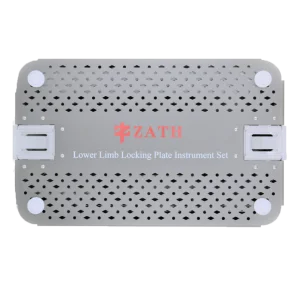
Yes. As a primary manufacturer founded in 2009, ZATH maintains complete OEM/ODM production pipelines. We can customize screw pitch layouts, plate curvature profiles, anodic surface colors (gold, blue, grey), laser-etched distributor branding, modular graphic sterilization cases, and dedicate dedicated production lines for hospital tender consignments.
How is logistics lead time maintained during sudden surge hospital supply tenders?
We maintain an active semi-finished buffer stock across high-incidence plate dimensions and screw sizes in our Beijing warehouse. Through enterprise express partnerships (DHL, FedEx, UPS, TNT), delivery of stock items reaches international medical hubs within 4 to 6 business days, complete with sterile barrier packaging ready for immediate operating room deployment.
Specialized Arthroplasty & Trauma Implants
Expand hospital inventory coverage with our full array of spine, trauma, and extremity surgical devices.