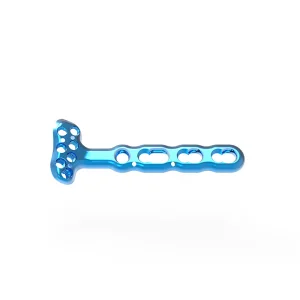
Featured Orthopedic Systems & Fixation Assemblies
Explore our precision-machined locking plates, anatomical reconstructive implants, and specialized surgical instrument sets manufactured under rigorous ISO 13485 and European CE regulatory benchmarks.
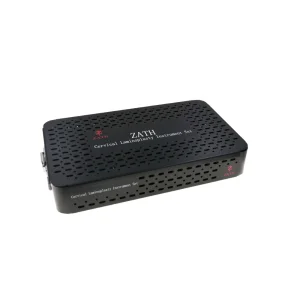
Cervical Laminoplasty Instrument Set
View Product & Quotes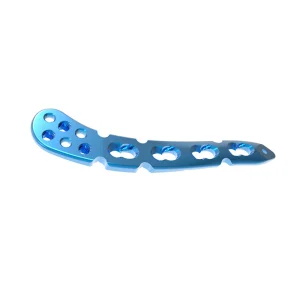
Distal Clavicle Locking Compression Plate
View Product & Quotes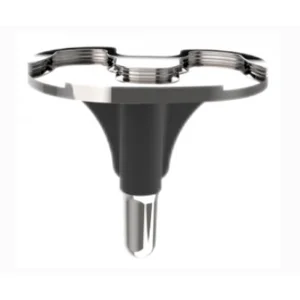
Enable Tibial Baseplate for Knee Replacement Joint Implants
View Product & Quotes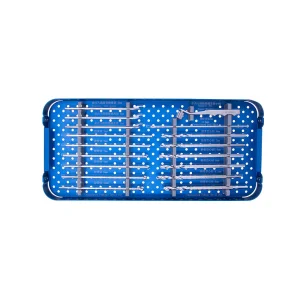
ACL/PCL Reconstruction Instrument Set
View Product & Quotes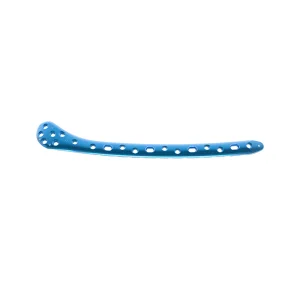
Distal Lateral Femur Locking Compression Plate I
View Product & Quotes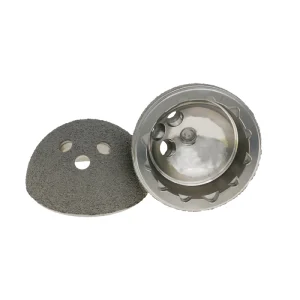
ODM ADC Acetabular Cup Surgical Instrument
View Product & Quotes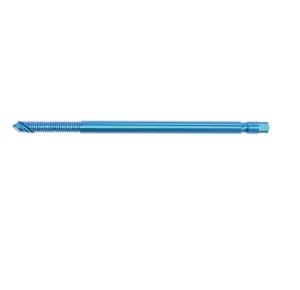
Titanium Alloy Pin for Orthopedic External Fixation
View Product & Quotes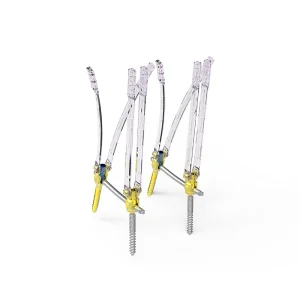
Spine Titanium Minimally Invasive Pedicle Screws
View Product & QuotesBiomechanics & Global Evolution of Locking Plate Systems
A technical paradigm shift: Transitioning from traditional mechanical friction compression to locked internal fixator mechanics for enhanced periosteal blood supply preservation.
Biological Osteosynthesis Paradigm
Conventional dynamic compression plates (DCP) require intimate bone-to-plate compression to achieve construct stability, often throttling periosteal microvascular circulation and delaying secondary bone union. Modern Locking Compression Plate (LCP) assemblies act as rigid extramedullary internal fixators. Because screw heads thread securely into the plate holes, construct stability does not rely on bone contact, leaving periosteal blood perfusion intact and dramatically reducing the incidence of avascular necrosis and delayed consolidation in complex comminuted fractures.
Variable-Angle Multi-Axial Fixation
Fixed-angle locking designs excel in metadiaphyseal alignment, but multi-fragmentary articular reconstructions require trajectory freedom. Our advanced variable-angle (VA) locking mechanisms grant a 30-degree circular cone of screw angulation per hole without compromising final threaded locking integrity. This facilitates precise subchondral rafting, anatomical buttressing, and absolute avoidance of intra-articular screw penetration, especially beneficial in fragile osteopenic bone matrices.
Biocompatible Titanium (Ti-6Al-4V ELI)
Constructed utilizing Grade 5 Extra Low Interstitial Titanium (ASTM F136 / ISO 5832-3), our plates achieve an optimal balance between high yield tensile strength (≥ 860 MPa) and a low elastic modulus (approx. 110 GPa). This closer elastic proximity to cortical bone diminishes stress-shielding phenomena, encourages physiological micro-strain that stimulates osteogenesis, and preserves post-healing structural bone density compared to traditional stainless steel constructs.
Global Procurement Needs & China Factory 4.0 Efficiency
Hospital procurement authorities and regional orthopedic distributors face simultaneous pressures: stringent MDR regulatory compliance, supply chain inflation, and increasing demand for cost-effective trauma implants.
Our state-of-the-art intelligent manufacturing hub in Beijing bridges the gap between top-tier Swiss-level machining accuracy and scalable volume manufacturing economics. By integrating continuous multi-axis wire EDM, automated high-precision CNC mills, and digital coordinate metrology, we ensure absolute batch-to-batch repeatability with sub-micron dimensional tolerances.
- Total Quality Control Under ISO 13485: Every single plate and screw undergoes coordinate measuring machine (CMM) dimensional verification, optical thread profilometry, and rigorous tensile-fatigue stress tests complying with ASTM F382.
- Validated Sterile Packaging Solutions: Pre-sterilized double-blister barrier packaging compliant with ISO 11607-1/2, ready for direct operating room use and drastically reducing hospital sterile processing overhead.
- Comprehensive OEM/ODM Engineering Support: Complete custom laser marking, localized packaging configurations, and rapid prototype translation for regional distributors seeking proprietary product differentiation.
Commercial Procurement Advantage
Cross-border medical procurement demands stability, regulatory clarity, and risk mitigation. ZATH provides full technical dossiers (Summary of Technical Documentation - STED) that streamline partner registrations across EU, LATAM, Southeast Asian, and Middle Eastern regulatory authorities.
• Custom color anodization for screw diameter coding
• Matched ergonomic surgical instrumentation trays
• Real-time batch QC mill certificate attachment
| Fixation Parameter | ZATH CE-Certified Locking Plates | Conventional Non-Locking Plates | Standard Market Competitors |
|---|---|---|---|
| Primary Material | Grade 5 ELI Titanium (Ti-6Al-4V ELI / ISO 5832-3) | Medical Stainless Steel (316L / ISO 5832-1) | Standard Medical Grade 5 / Stainless Steel |
| Mechanical Modulus | ~110 GPa (Significantly mitigates bone stress shielding) | ~200 GPa (Higher risk of cortical bone resorption) | 110 GPa - 210 GPa (Varying by lot) |
| Stability Mode | Fixed-Angle / Variable-Angle Internal Fixator | Frictional bone-plate compression only | Predominantly Monoaxial Locking |
| Screw-Plate Engagement | Threaded mechanical lock; zero axial displacement | Friction under screw head; prone to toggle loosening | Threaded mechanical interface |
| Periosteal Perfusion | Undisturbed; plate elevated slightly above periosteum | Severely compressed; potential local devascularization | Varies according to underside contouring |
| Sterility & Packaging | Cleanroom ISO Class 7 blister; gamma or EtO ready | Bulk non-sterile; hospital autoclave required | Optional sterile / largely bulk non-sterile |
Localized Anatomical Application Scenarios
Engineered to conform naturally to distinct human skeletal topologies, minimizing intraoperative bending requirements and surgical time.
Distal Volar Radius System
Specifically engineered for complex intra-articular and extra-articular distal radius fractures. The anatomical low-profile contour prevents flexor and extensor tenosynovitis or rupture, while divergent subchondral locking screws provide optimal buttressing for lunate and scaphoid facets even in severely comminuted fractures.
Proximal & Distal Tibia Locking
Featuring pre-shaped profiles for both the lateral tibial plateau and medial distal tibia (pilon). Thin distal flanges protect soft tissues across the subcutaneous border, while multi-planar fixed-angle screws construct a rigid internal scaffold capable of resisting intense varus and valgus shear forces during mobilization.
Distal Femoral Periarticular Solutions
Indicated for supracondylar, intra-articular, and periprosthetic fractures. Engineered with an anatomically curved shaft matching anterior femoral bowing, minimizing plate prominence and facilitating percutaneous submuscular insertion techniques (MIPO) that limit surgical soft-tissue trauma.
Frequently Asked Questions by Global Buyers
Essential technical, clinical, and compliance details to support qualification of your orthopedic implant manufacturer.
Our manufacturing facility operates under an audited ISO 13485:2016 Medical Devices Quality Management System. Our trauma and orthopedic product portfolios maintain CE certifications (covering compliance with MDD/EU MDR requirements), alongside Free Sale Certificates (FSC) to accelerate distributor registration processes worldwide.
We source exclusively medical-grade Ti-6Al-4V ELI (Grade 5 Extra Low Interstitial) conforming strictly to ASTM F136 and ISO 5832-3 standards. Every incoming bar stock consignment is quarantined, spectrographically analyzed for chemical composition, and accompanied by original mill test certificates traceable to each finished batch.
Yes. We support comprehensive OEM/ODM engineering partnerships. This covers custom plate geometries tailored to regional anthropometric data, proprietary laser-etched branding, bespoke color anodization schemes, customized sterile tray setups, and dedicated surgical instrumentation sets designed to work in synergy with the implants.
Standard catalog items with sterile packaging are maintained in inventory buffer stock for immediate dispatch via DHL, FedEx, or UPS within 4 to 6 business days. Custom contract manufacturing runs or large-scale private label orders typically ship within 30 to 45 days, accompanied by complete quality inspection records.
Comprehensive Trauma & Joint Systems Catalog
Explore further specialized trauma fixation plates, reconstruction screws, arthroplasty components, and biportal endoscopic spinal kits available for direct export quotation.
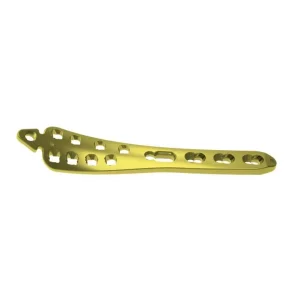
Distal Medial Tibia Locking Compression Plate II
View Product & Quotes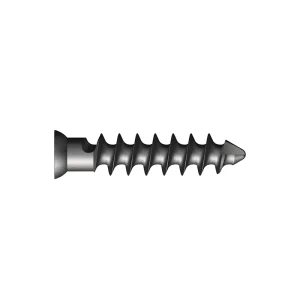
ODM Titanium FDN Acetabular Screw
View Product & Quotes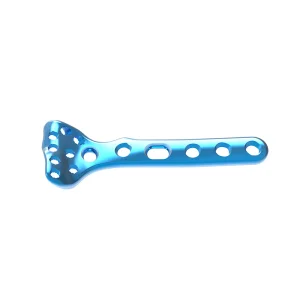
ODM DVR Locking Compression Plate I
View Product & Quotes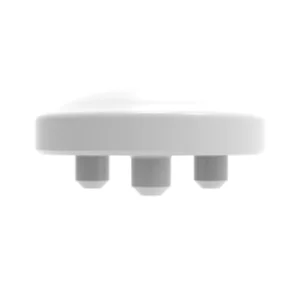
Enable Patella knee joint component for knee replacement
View Product & Quotes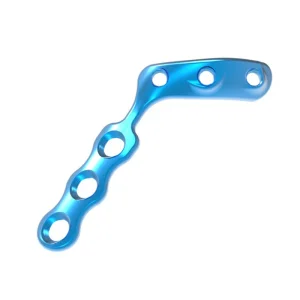
China patent design scapula Locking Plate factory CE ISO insured
View Product & Quotes
Orthopedic Implant Double Ended Bone Pin
View Product & Quotes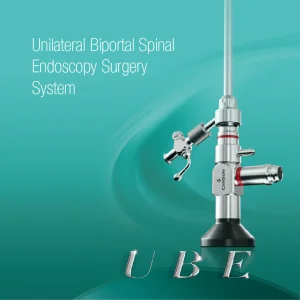
Spine Surgery Unilateral Biportal Endoscopy
View Product & Quotes