
High-Precision Orthopedic Product Matrix (Part I)
Explore our validated joint replacement, trauma plating, and spinal fixation systems manufactured under tight micron-level CNC tolerances.
Biomechanics of Variable-Angle Distal Radius Fixation
A rigorous engineering and clinical analysis of polyaxial locking constructs compared to conventional fixed-angle systems in complex AO/OTA 23-C3 fractures.
Surgical Indication Matrix and the Evolution of Volar Plating
Distal radius fractures represent approximately 17% of all skeletal injuries diagnosed in adult emergency traumatology. Historically, dorsal plating configurations led to catastrophic extensor pollicis longus (EPL) tendinopathy and tendon rupture due to minimal subcutaneous tissue coverage. The definitive modern consensus favors volar locking plates placed proximal to the "watershed line" of the distal radius.
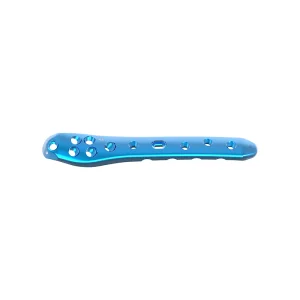
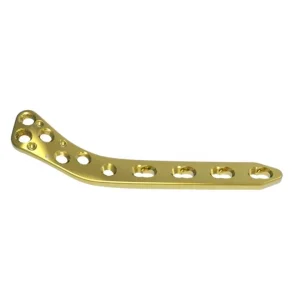
However, standard first-generation fixed-angle volar locking plates force every subchondral screw along a rigid, pre-determined trajectory. In multi-fragmentary intra-articular injuries—specifically AO Type 23-C2 and 23-C3 fractures featuring coronal split patterns, depressed lunate facet fragments, or comminuted radial styloid fractures—standard trajectory angles often miss critical subchondral bone blocks or breach articular cartilage surfaces. Variable-angle distal radius locking plate systems overcome this geometric limitation by enabling a conical angulation spectrum of up to ±15° (yielding a total 30° cone of freedom) per locking hole without compromising plate-screw thread engagement strength.
Subchondral Raft Support
Enables dense, multi-directional subchondral rafting screws that directly support depressed articular facets, specifically targeting dorsal rim and volar rim fragments to restore the carpal alignment angle.
Watershed Line Preservation
Anatomically contoured low-profile borders sit strictly proximal to the flexor pollicis longus (FPL) tendon glide path, minimizing postoperative flexor tendinitis while optimizing distal mechanical purchase.
Thread Interlock Integrity
Patented four-pillar or spherical co-axial thread-locking geometries machined from high-ductility titanium alloy prevent cross-threading and cold-welding during variable orientation locking.
Variable Distal Radius Plating System Technical Specifications
| Biomechanical Attribute | ZATH Engineering Standard | Clinical Reference / Tolerance Limit | Surgical Significance |
|---|---|---|---|
| Raw Material Alloy | Ti-6Al-4V ELI (Grade 23, ISO 5832-3 / ASTM F136) | Ultimate Tensile Strength > 860 MPa; Elongation ≥ 10% | Superior biomechanical fatigue resistance and bone biocompatibility |
| Angular Freedom Cone | ±15° from nominal central axis (30° total cone) | Calibrated by Variable Angle Drill Sleeve Guide | Permits surgeon to aim around joint facets and secure peripheral fragments |
| Plate Profile Thickness | 1.8 mm tapered to 1.3 mm at distal lip | Chamfered edge radius < 0.25 mm | Erradicates soft tissue impingement on flexor tendons (FPL/FDP) |
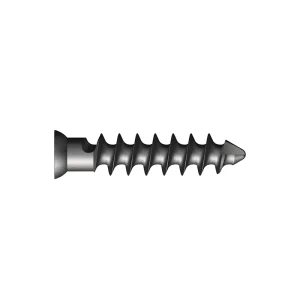
| Locking Screw Interface | Ø2.4 mm / Ø2.7 mm Star-Drive (Torx T8) Locking Screws | Torque limiter preset release: 0.8 Nm (±0.05 Nm) | Eliminates screw-head stripping and ensures rigid screw-plate coupling |
| K-Wire Fixation Portals | Ø1.2 mm / Ø1.5 mm dedicated targeting portals | Aligned parallel to radiocarpal articular surface | Visualizes distal articular slope and assists in temporary reduction |
Regional Operating Room Realities & Surgical Protocols
How the ZATH Variable Distal Radius Locking Plate Instrument system adapts to diverse emergency traumatology settings and challenging patient anatomies worldwide.
Geriatric Osteoporotic Fracture Fixation
In regions with rapidly aging populations (e.g., Western Europe, East Asia), distal radius fractures commonly exhibit severe metaphyseal comminution with spongy, porous cancellous bone. The multi-directional locking screws act as an internal fixator scaffold, distributing load across the subchondral surface without relying on bone-plate compressive friction.
High-Energy Polytrauma & Sports Injury Centers
In developing hubs and metropolitan trauma units dealing with high-velocity vehicular or sports injuries (AO Type C3.3), surgeons encounter multiple unstable split fragments. Variable-angle drill guides allow targeted stabilization of the detached volar rim or lunate facet through small window incisions using the Henry or modified FCR approaches.
Cost-Constrained Ambulatory Surgery Centers
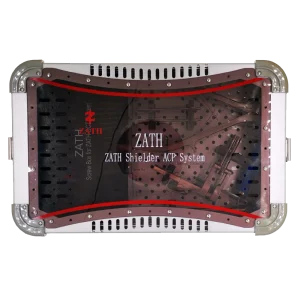
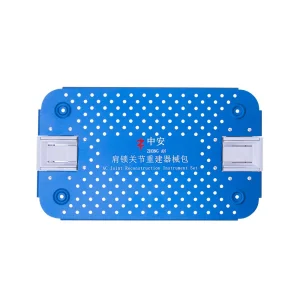
Day-surgery clinics in the Americas and Europe demand streamlined instrument trays that reduce sterilization turnaround times and minimize surgical tray count. ZATH integrates plate holding, variable-angle drilling, depth measurement, and torque-limited insertion into a unified modular container system.
China Factory Precision & Vertical Supply Chain Resilience
Operating from our modern facility in Zhongguancun Science Park, Beijing, ZATH combines high-speed 5-axis machining with end-to-end quality validation under ISO 13485.
In medical implant manufacturing, stability of raw stock chemistry and microstructural consistency determine clinical safety. Beijing ZhongAnTaiHua Technology Co., Ltd. (ZATH) deploys a fully consolidated, vertical industrial supply chain spanning raw medical-grade titanium procurement to automated Swiss-type sliding head turning and cleanroom sterile barrier packing.
5-Axis DMG MORI CNC Machining
Our workshop houses high-precision German and Japanese CNC centers capable of micro-milling complex anatomically pre-contoured distal radius curvature and thread profiles with repeatability tolerances under ±0.005 mm.
Procurement Rationalization & Cost Control
Direct factory manufacturing bypasses distributor markups. Our automated batch manufacturing reduces production waste, offering international partners 30% to 45% cost savings over multinational brands while exceeding ASTM tensile thresholds.
Class 100,000 Cleanroom Packaging
Sterile double-blister Tyvek packaging compliant with ISO 11607. Packaged implants undergo validated ethylene oxide (EO) or gamma sterilization with a verified 5-year sterile shelf-life for immediate surgical room readiness.
CE Certification, UDEM Auditing & Local Registration Support
Bridging global market access with comprehensive technical dossiers, clinical evaluation reports (CER), and full quality management alignment.
Acquiring and maintaining European CE mark certification and international hospital tenders requires ironclad regulatory consistency. ZATH provides international distributors with end-to-end documentation packs to streamline national health agency approvals (including ANVISA in Brazil, COFEPRIS in Mexico, SFDA in Saudi Arabia, and EU Competent Authorities).
| Compliance Dimension | Standard & Regulatory Standard | ZATH Submission Deliverable |
|---|---|---|
| Quality Management System | ISO 13485:2016 / EN ISO 13485:2016 | Audited by UDEM Notified Body; full scope covers design, machining, packaging, and dispatch. |
| Biocompatibility Safety | ISO 10993 Series (Cytotoxicity, Sensitization, Genotoxicity) | Certified GLP laboratory biological test reports for medical grade Ti-6Al-4V ELI alloys. |
| Biomechanical Validation | ASTM F382 (Metallic Bone Plates) / ASTM F543 (Bone Screws) | Fatigue strength test curves, static four-point bending tests, and screw pull-out force data. |
| Clinical Dossier (CER) | MEDDEV 2.7/1 Rev 4 & EU MDR 2017/745 Clinical Evaluation | Comprehensive systematic clinical literature reviews verifying equivalency and adverse event benchmarks. |
| Sterilization Validation | ISO 11135 (EtO) / ISO 11137 (Radiation) / ISO 11607 | Bioburden monitoring, residual ethylene oxide < 0.1 mg/device, accelerated 5-year aging assays. |
Technical Roadmap: Next-Generation Distal Radius Solutions
Anticipating the clinical demands of 2026–2030 through additive manufacturing, carbon-fiber composites, and digital surgical navigation integration.
3D-Printed Trabecular Surface Plating
Integration of electron beam melting (EBM) additive printing to create biomimetic porous trabecular titanium zones on the bone-facing plate undersurface, facilitating cellular adhesion and accelerated biological fracture callus consolidation.
Radiolucent Carbon-PEEK Constructs
Development of continuous carbon-fiber reinforced PEEK (CFR-PEEK) radius plates with variable-angle titanium locking bushing inserts, providing complete artifact-free intraoperative fluoroscopic visualization of articular reduction.
Smart AR-Guided Instrumentation
Coupling variable-angle drill sleeves with digital optical tracking arrays and augmented reality (AR) smart glasses, enabling sub-millimeter visualization of screw vectors relative to the dorsal cortex prior to drilling.
High-Precision Orthopedic Product Matrix (Part II)
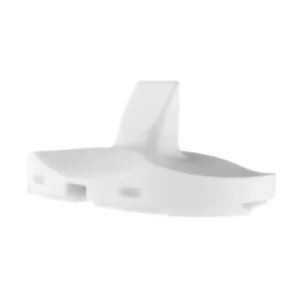
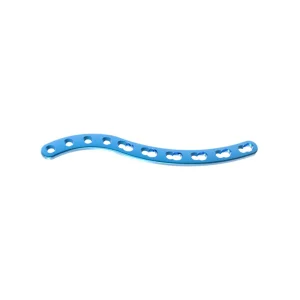
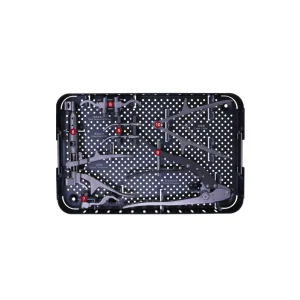
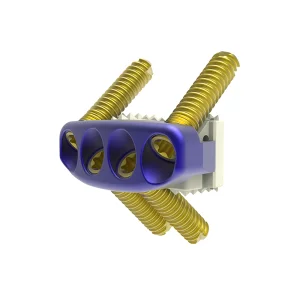
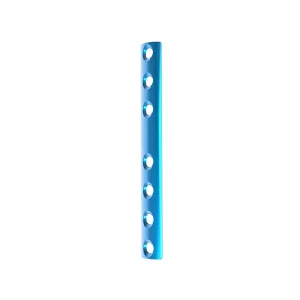
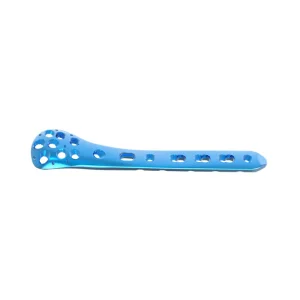
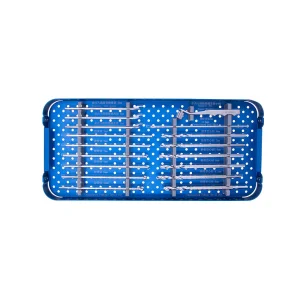
Review our specialized spinal cages, clavicle anatomical plates, knee inserts, and arthroscopic ligament reconstruction systems available for global distribution.
Frequently Asked Questions: Specifications & Sourcing
Crucial clinical, metallurgical, and international export questions answered by ZATH senior orthopedic development engineers.
How does ZATH prevent cold-welding or cross-threading during variable-angle screw insertion?
What is included in the complete Variable Distal Radius Instrument Set container?
Are ZATH variable distal radius plates pre-contoured, and can they be bent intraoperatively?
What documentation is supplied to support regional health authority medical device registration?
What is the standard delivery lead time for wholesale hospital replenishment orders?
Request Direct Manufacturer Quotations & Technical Catalog
Equip your regional hospital distribution channel with CE-certified orthopedic implants from Beijing ZhongAnTaiHua Technology Co., Ltd. (ZATH). Our technical team delivers competitive wholesale pricing tiers, full OEM/ODM manufacturing capability, and registration support files.