
High-Precision Orthopedic Implants & Specialized Instrument Assemblies
Engineered in compliance with ISO 13485 standards using biomedical Ti-6Al-4V ELI, biocompatible PEEK polymers, and high-density medical grade ceramics for trauma, joint, and spinal intervention.
Global Status: The Commercial Shift in Orthopedic Implant Materials
Why procurement officers, national tender directors, and surgical distributors are bypassing legacy Western trading intermediaries to access Tier-1 OEM foundries in China.
Deconstructing "Cheap" vs. "Cost-Engineered"
In biomedical engineering, the search term "cheap orthopedic implant material" no longer implies inferior metallurgy. It signifies the elimination of 300% to 500% multi-tiered trading markups. By sourcing directly from ISO 13485 certified production hubs like Beijing ZhongAnTaiHua Technology Co., Ltd. (ZATH), global distributors secure medical-grade titanium (Ti-6Al-4V ELI) and PEEK-OPTIMA at foundry floor costs, passing monumental savings to national healthcare systems.
Severe Western Inflation & Supply Strain
European and North American orthopedic manufacturers are constrained by escalating energy costs, localized labor shortages, and protracted milling bottlenecks. Lead times for basic titanium bone plates or trauma screws frequently extend past 24 weeks. Chinese high-throughput industrial clusters offer rapid production turnaround, consistent mill-run metallurgical sourcing, and immediate global logistics dispatch within 4 to 6 business days.
Global Tender DRG & VBP Compliance
With Diagnosis-Related Group (DRG) pricing models across Europe and Latin America, alongside Volume-Based Procurement (VBP) mandates across Asia, hospitals are under strict fiscal pressure. Orthopedic healthcare systems can no longer subsidize bloated brand premiums. Strategic buyers require fully certified, sterile-packed implants identical in tensile shear strength and bio-inertness to premier brands, but priced at factory-level unit costs.
Chinese Factory Efficiency: The Engine of Affordable Orthopedic Metallurgy
Unpacking the technological automation, metallurgical vertical integration, and cluster economics powering ZATH's Beijing manufacturing complex.
5-Axis CNC & Swiss Automation
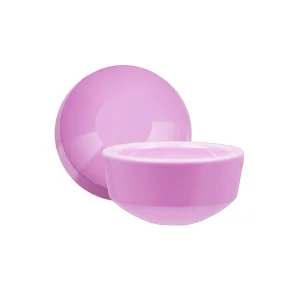
Our workshop integrates high-precision Swiss-type multi-axis turning machines and 5-axis CNC machining centers. Operating with micron-level tolerances (±0.005mm), we machine pedicle screw threads, polyaxial spherical heads, and anatomical locking plate contours in single-setup cycles, eliminating re-clamping deviations and manual handling overhead.
Vertical Supply Chain Integration
Located in the Zhongguancun Science Park (Pinggu, Beijing), ZATH benefits from direct upstream partnerships with certified medical titanium ingot and bar stock mills. By locking in vacuum-arc-remelted (VAR) Ti-6Al-4V ELI (ASTM F136 / ISO 5832-3) directly at mill-scale volumes, our raw material acquisition costs are 35% lower than fragmented European workshops.
Skilled Technical Engineering Force
Founded in 2009, ZATH employs over 300 dedicated specialists, including nearly 100 senior and mid-level biomechanical technicians. This institutional depth guarantees that complex OEM/ODM design adjustments, custom instrument sets, and rapid prototype revisions are executed in days rather than quarters, reducing product launch cycles by 60%.
In-House Sterile Cleanroom Packaging
Rather than subcontracting surface treatment, passivation, and gamma/EO sterilization packaging to expensive 3rd-party facilities, ZATH maintains certified in-house ISO Class 100,000 cleanrooms. This internal loop preserves strict bioburden control, shortens dispatch timelines, and protects sterile barrier integrity (ISO 11607).
Engineering Comparative Matrix: Orthopedic Biomaterials
A rigorous metallurgical comparison of raw materials utilized across our trauma, spinal fixation, and arthroplasty platforms.
| Biomaterial Classification | International Standard | Tensile Strength (MPa) | Modulus of Elasticity (GPa) | Biocompatibility & Corrosion | Primary Clinical Applications |
|---|---|---|---|---|---|
| Ti-6Al-4V ELI (Grade 23) | ASTM F136 / ISO 5832-3 | ≥ 860 MPa | 110 - 114 GPa | Exceptional passivation; TiO2 inert layer; Zero cytotoxicity | Pedicle screws, spinal rods, locking trauma plates, intramedullary nails |
| Unalloyed Titanium (CP Grade 2/4) | ASTM F67 / ISO 5832-2 | 345 - 680 MPa | 103 - 105 GPa | Maximum soft-tissue compatibility; rapid osseointegration | Maxillofacial plates, non-load bearing trauma mesh, porous coatings |
| Co-Cr-Mo Casting / Forging Alloy | ASTM F75 / ASTM F1537 | ≥ 950 - 1200 MPa | 210 - 240 GPa | Superior tribological wear resistance; micro-abrasion resistant | Femoral knee components, bipolar hip heads, heavy load-bearing stems |
| PEEK-OPTIMA (Polyetheretherketone) | ASTM F2026 / ISO 10993 | 90 - 100 MPa | 3.5 - 4.2 GPa (Matches Cortical Bone) | Radiolucent for artifact-free imaging; completely bio-inert | Interbody spinal fusion cages (cervical, TLIF, PLIF), sports anchors |
| UHMWPE (Ultra-High-Molecular Weight PE) | ASTM F648 / ISO 5834-2 | ≥ 40 MPa (Yield) | 0.8 - 1.2 GPa | Low coefficient of friction (<0.08); highly cross-linked XLPE available | Acetabular liners, tibial inserts for total knee arthroplasty (TKA) |
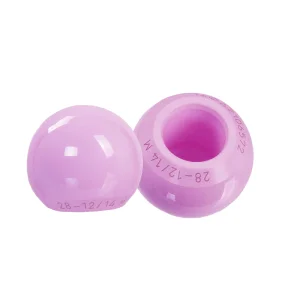
| BIOLOX delta Zirconia Toughened Alumina | ISO 6474-2 | ≥ 1150 MPa (Bending) | 380 GPa | Zero metallic ion release; diamond-like scratch resistance; wettable | Ceramic femoral heads, ceramic acetabular liners for hip arthroplasty |
*All materials processed at ZATH include validated mill test certificates (MTR) verifying chemical composition, elongation ratios, and microstructure grain sizing per ASTM/ISO specifications.
Clinical Application Paradigms & Anatomical Matching
How ZATH's precision-engineered orthopedic systems translate material durability into surgical efficacy across diverse hospital environments.
Trauma Fracture Reconstruction
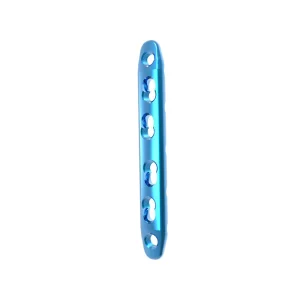
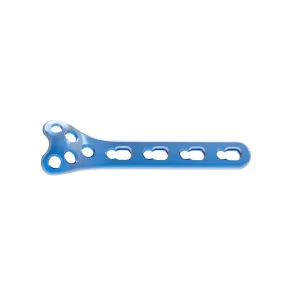
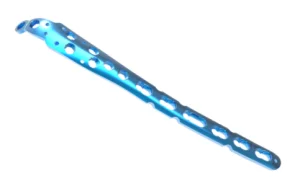
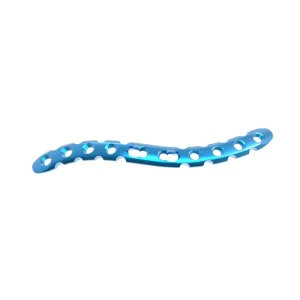
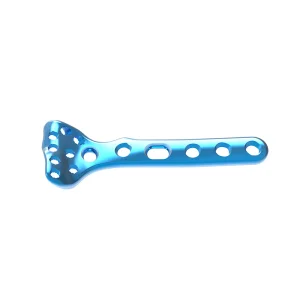
In acute emergency orthopedics, our Anatomical Locking Compression Plates (LCP) for humerus, clavicle, radial head, and proximal ulna provide rigid, low-profile internal fixation. Pre-contoured profiles minimize periosteal blood supply disruption and operative bending time, while combo-holes accept both cortical and locking screws for stable angular fixation in osteoporotic bone.
Spinal Deformity & Degeneration
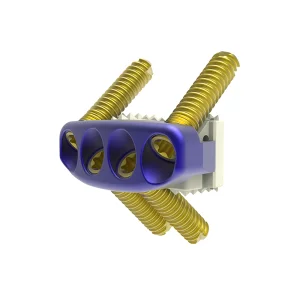
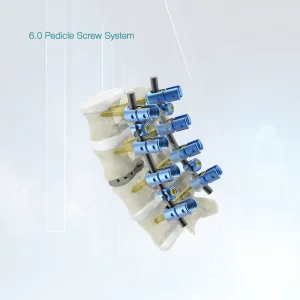
For degenerative disc disease and spondylolisthesis, ZATH's Zenith Zipper Polyaxial Pedicle Screws and ZP Cervical Interbody Cages offer biomechanical rigidity. The patented low-profile friction head facilitates smooth rod reduction, while biocompatible PEEK cages feature aggressive anti-migration serrations and an expansive hollow graft window to stimulate rapid boney bridging.
Total Joint Arthroplasty (Hip & Knee)
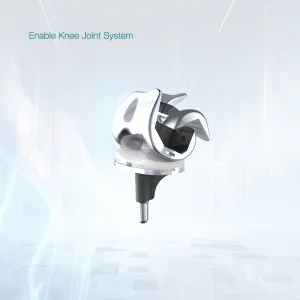
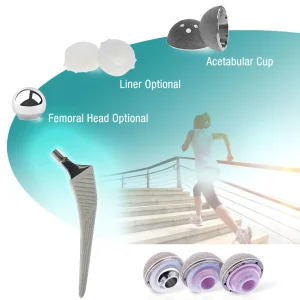
Severe osteoarthritis and femoral neck fractures demand prosthetic longevity. Our total knee replacement systems and bipolar hip stems utilize mirror-polished Co-Cr-Mo articulation interfaces against highly cross-linked UHMWPE or high-density ceramic liners. Micro-porous plasma-sprayed titanium surfaces encourage natural osteoblast ingrowth for cementless long-term secondary stability.
Sports Medicine Soft-Tissue Repair
Our SuperFix T titanium anchors, knotless PEEK anchors, and titanium cortical endo-buttons provide robust pull-out strength for arthroscopic rotator cuff, ACL/PCL ligament reconstruction, and labral repair. High-tensile ultra-high-molecular braided sutures deliver durable knot integrity with low suture elongation under dynamic physiological joint cyclic loading.
Emerging Frontiers: The Evolution of Orthopedic Implants
Next-generation additive manufacturing, trabecular biomimetic lattices, and bio-functionalized surface engineering shaping the upcoming decade.
3D Electron Beam Melting (EBM) Trabecular Titanium
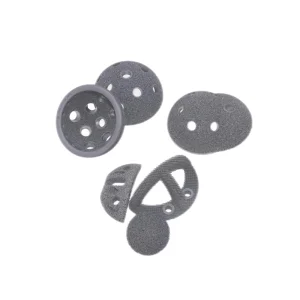
Direct Metal Laser Sintering (DMLS) and EBM additive technologies allow ZATH to fabricate porous trabecular titanium constructs mimicking human cancellous bone. With controlled porosity of 60% to 80% and pore sizes between 400 to 600 microns, these 3D printed acetabular revision systems promote osseous interlock while dramatically reducing stress shielding.
Bio-absorbable Magnesium & Zinc Alloys
The trauma industry is progressively advancing beyond permanent hardware. Biodegradable metallic implants synthesized from medical-grade magnesium (Mg-Ca-Zn alloys) offer mechanical support during primary bone healing, subsequently degrading harmlessly into non-toxic biological ions, eliminating secondary revision surgeries for hardware removal in pediatric and hand trauma cases.
Bioactive Nano-Coatings & Anti-Microbial Surfaces
To eliminate periprosthetic joint infection (PJI), advanced vacuum plasma spraying now applies nano-crystalline Hydroxyapatite (HA) combined with silver or zinc ion doping. These advanced surface modifications demonstrate both rapid bone apposition and broad-spectrum bacteriostatic inhibition against Staphylococcus aureus colonization.
Global Enterprise Procurement & Technical Audit Protocol
Essential checklist parameters medical device distributors, tender authorities, and hospital purchasing consortia must verify prior to supplier engagement.
1. Material Traceability & Mill Run Verifications
Never procure orthopedic implants without raw ingot Mill Test Reports (MTR). Verify that Ti-6Al-4V ELI conforms rigorously to ASTM F136 or ISO 5832-3. Chemical batch composition, maximum interstitial oxygen threshold (<0.13%), and tensile elongation (≥10%) must be documented on a batch-by-batch basis to eliminate catastrophic screw-rod shear failures.
2. Quality Management System (ISO 13485)
Ensure your factory partner operates an uncompromised ISO 13485 accredited quality management system. At ZATH, every single stage—from CNC swarf evacuation, automated ultrasonic degreasing, cleanroom packaging, to final labeling—is audited under rigid process validation protocols ensuring zero risk of cross-contamination.
3. Complete Surgical Instrumentation Synergy
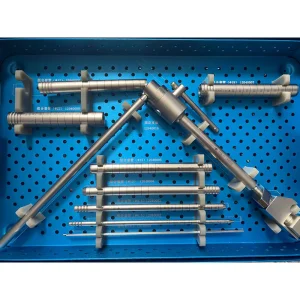
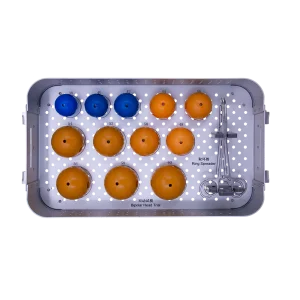
An implant is only as effective as its surgical delivery toolset. Low-cost workshops often fail by providing implants without dedicated surgical instrumentation. ZATH manufactures matched, ergonomic, hardened surgical instrument kits (cannulated reamers, tap screwdrivers, drill guides, trials) manufactured from 17-4PH / AISI 420 stainless steel for seamless intraoperative execution.
ZATH 6-Stage Precision Manufacturing Workflow
A transparent look inside our Beijing engineering facility, where raw medical metals are transformed into sterile, surgical-grade devices.
Raw Material Metallurgical Validation
Every lot of medical-grade titanium bar, PEEK rod, and CoCr ingots undergoes spectrographic chemical analysis and mechanical hardness testing upon receipt. Lot numbers are logged into our ERP system for 100% end-to-end device history record (DHR) tracking.
Wire EDM Blank Profiling
Precision Wire Electrical Discharge Machining (Wire EDM) slices blanks and intricate joint/plate geometry with virtually zero thermal mechanical stress or microstructural grain alteration, maintaining raw tensile resilience.
Multi-Axis High-Speed CNC Machining
High-end Swiss-type turning centers machine complex variable-angle locking holes, self-tapping screw threads, and anatomical curvature with fluid robotic automation and continuous digital coordinate calibration.
CMM Metrology & Mechanical Stress Rig
Parts undergo optical 3D Coordinate Measuring Machine (CMM) dimensional checks, surface roughness (Ra) verification, and static/dynamic fatigue testing to confirm conformity against ASTM F543 screw and ASTM F382 plate standards.
Passivation & Cleanroom Sterile Packaging
Components undergo validated ultrasonic de-ionized washings and chemical nitric passivation to create an impenetrable titanium dioxide barrier, followed by sterile Tyvek pouch sealing within Class 100,000 cleanrooms.
Climate-Controlled Warehouse & Dispatch
Finished goods are inventoried under strict temperature and humidity monitoring, cataloged with GS1-compliant UDI barcodes, ready for rapid 4 to 6 business day DHL/FedEx courier delivery to international distribution partners.
Enterprise Buyer Inquiries: Orthopedic Implants Sourcing
Straightforward technical, financial, and regulatory answers addressing the most common concerns of global procurement directors.
How does ZATH maintain low factory-direct pricing without sacrificing medical-grade quality?
What international regulatory documentation is supplied for regional market registration?
Can ZATH manufacture custom OEM/ODM orthopedic implants and custom instrument sets?
Are the implants supplied pre-sterilized or non-sterile for hospital autoclaving?
What is the standard production lead time and international delivery speed?
What quality control protocols prevent thread stripping, cross-threading, or metal fatigue failure?
Advanced Arthroplasty, Reconstruction & Trauma Fixation Systems
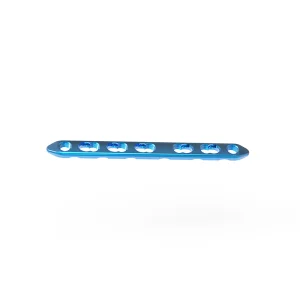
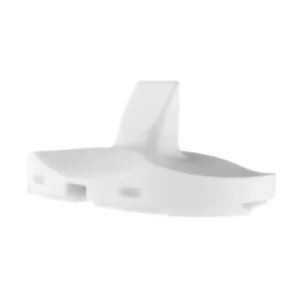
Explore our extensive portfolio of high-grade knee prostheses, revision acetabular systems, and precision clavicle/ulna anatomical plates.
Accelerate Your Orthopedic Distribution Margins Today
Eliminate unnecessary broker markups and establish a direct supply relationship with Beijing ZhongAnTaiHua Technology Co., Ltd. (ZATH). Receive our comprehensive 2026/2027 implant and surgical instrument catalog, pricing schedules, and OEM registration support.