Specialized Joint & Reconstruction Product Platforms
Engineered from Grade 5 Ti-6Al-4V ELI and certified biocompatible polymers, providing surgical rigidity, exact mechanical alignment, and modular trauma restoration.
DHS (Plaque De Compression De La Hanche): Engineering White Paper
A deep-dive technical assessment into sliding osteosynthesis mechanics, clinical indications across proximal femoral fractures, and international procurement requirements.
1. Biomechanical Working Principles of the Dynamic Hip Screw (DHS) System
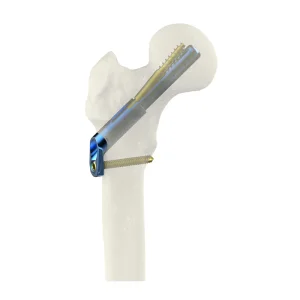
The DHS (Dynamic Hip Screw), internationally recognized in Francophone clinical literature and institutional tenders as the Plaque de Compression de la Hanche, remains the clinical benchmark for internal fixation of stable trochanteric and select basicervical femoral fractures. Engineered around the concept of controlled dynamic collapse, the osteosynthesis system balances axial weight-bearing loads with primary biological bone consolidation.
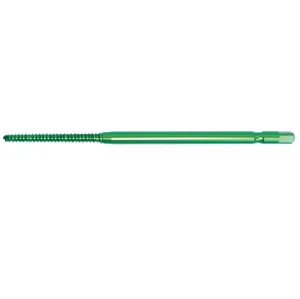
The system functions via a large-diameter cancellous lag screw (typically Ø 12.7 mm) sliding freely within the precision-machined barrel of a side plate secured to the femoral shaft with 4.5 mm cortical screws. When physiological load is applied during early postoperative mobilization, the lag screw translates proximally down the barrel trajectory. This controlled sliding impaction transfers mechanical stress directly across the fracture gap rather than concentrating catastrophic bending moments upon the plate-barrel junction, dramatically minimizing the risk of hardware breakage, cut-out through the osteoporotic femoral head, or secondary varus displacement.
| Implant Specification | Standard Configuration | Extended Modular Options | Clinical Biomechanical Significance |
|---|---|---|---|
| Barrel Angulation (CCD) | 135° (Standard anatomical) | 130°, 140°, 145°, 150° | Restores patient-specific neck-shaft angle to prevent limb length discrepancy. |
| Barrel Length Options | Standard (38mm) | Short Barrel (25mm / 28mm) | Accommodates shorter femoral necks or smaller anatomies without impinging articulation. |
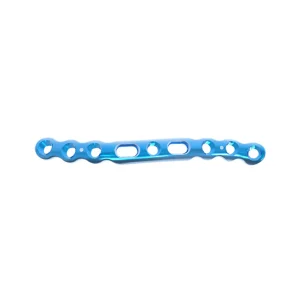
| Side Plate Shaft Holes | 2 to 6 Holes (Trauma standard) | 8, 10, 12, 14 Holes (Subtrochanteric) | Distributes strain across the diaphysis; prevents localized stress riser fractures. |
| Biocompatible Alloys | Ti-6Al-4V ELI (ISO 5832-3) | 316LVM Surgical Steel (ISO 5832-1) | High fatigue resistance, reduced modulus of elasticity to mitigate stress shielding. |
2. Global Epidemiological Demographics & Commercial Landscape
The global incidence of proximal femur fractures is projected to surpass 4.5 million annually by the year 2040, accelerated by aging populations in North America, Western Europe, and East Asia, alongside rising traffic and workplace trauma in developing regions. Orthopedic hospital networks, public healthcare ministries, and private trauma groups face escalating pressure to procure cost-efficient, uncompromisingly reliable osteosynthesis systems that avoid catastrophic implant fatigue failure.
While cephalomedullary nails (CMNs) are favored in complex unstable fractures with subtrochanteric comminution, the DHS (Plaque de Compression de la Hanche) remains the uncontested gold-standard for AO/OTA 31-A1 stable fractures and AO/OTA 31-A2.1 pertrochanteric configurations. The predictable mechanical vector, preservation of the abductor mechanism, lower risk of distal anterior femoral cortex perforation, and superior cost-effectiveness make the DHS system an indispensable anchor in both mature and emerging market trauma formularies.
Geriatric Osteoporotic Anchorage
Optimized buttress thread pitch and dual-cut tap flutes provide immediate mechanical bite inside low-density cancellous bone of the femoral head, resisting axial rotation and cutout.
Dynamic Slide Geometry
Micro-polished cylindrical barrels with stringent coaxial tolerances prevent binding and jamming under high shear forces, ensuring predictable impaction without rotational deformity.
Modular TSP Stabilization
Integratable with trochanteric stabilizing plates (TSP) and auxiliary anti-rotation parallel screws to convert dynamic constructs for unstable multi-fragmentary fractures.
High-Precision CNC Engineering: The Beijing Advantage
How Beijing ZhongAnTaiHua Technology Co., Ltd. (ZATH) harnesses automated machining cells, ISO 13485 cleanroom validation, and integrated logistics to outperform global benchmarks.
Multi-Axis Swiss Machining
Utilizing high-speed Star and Citizen multi-axis Swiss-lathes and 5-axis DMG MORI milling centers, our factory machines the critical plate-barrel juncture from solid medical-grade bar stock without cold-bending stress risers.
This process eliminates micro-fissuring and microstructural dislocation along the acute angle of the plate, yielding a fatigue life exceeding 5,000,000 physiological cyclic loads under ISO 7206-4 testing.
Electropolishing & Surface Passivation
Every dynamic hip screw component undergoes electrochemical deburring, automated ultra-precision mirror polishing, and nitric acid passivation conforming to ASTM F86 standards.
This guarantees an exceptionally low friction coefficient (μ ≤ 0.08) within the barrel lumen, preventing galling or cold-welding between titanium contact surfaces during sliding dynamic impaction.
Class 100,000 Cleanroom Packaging
Implant components are cleaned in an automated multi-stage ultrasonic degreasing system with pure reverse-osmosis deionized water before robotic assembly inside our ISO Class 7 (Class 10,000) and Class 8 cleanrooms.
Double-barrier medical Tyvek packaging ensures sterile integrity, enabling direct OR delivery with a verified 5-year sterile shelf life via EO gas or Gamma irradiation.
- Traceability: Full chemical heat-lot mapping from raw medical billet to finished sterile box.
- OEM Scale: Scalable batch volume supporting custom plate lengths, barrel angles, and private branding.
- Lead-Time Velocity: Rapid production cycles backed by an integrated supply chain in Beijing's Zhongguancun Science Park.
Clinical Scenarios for DHS Plaque De Compression
Precision anatomical targeting across geriatric fragility fractures, high-energy trauma, and complex corrective osteotomies.
Correct anatomical indication and surgical execution dictate the success of DHS osteosynthesis. Decades of orthopedic biomechanical literature confirm that the primary predictor of dynamic hip screw performance is the Tip-Apex Distance (TAD) described by Baumgaertner. Maintaining a total TAD ≤ 20 mm on anteroposterior and lateral fluoroscopic projections virtually eliminates lag screw cutout from the femoral head.
Indication 1: AO/OTA 31-A1 Simple Pertrochanteric Fractures
In two-part stable fractures (31-A1.1, A1.2, A1.3) with intact posteromedial buttress (lesser trochanter continuity), the DHS provides immediate load sharing. The lateral plate maintains anatomical femoral shaft alignment while the lag screw allows the proximal fragment to telescope stably into the distal calcar, stimulating rapid primary osteogenesis without significant limb shortening.
Indication 2: AO/OTA 31-A2.1 Multi-Fragmentary Peritrochanteric Fractures
When the posteromedial buttress is compromised, a standard DHS plate can be combined with a Trochanteric Stabilizing Plate (TSP). The TSP locks over the DHS plate barrel, providing an anatomical lateral buttress that prevents lateralization of the greater trochanter and excessive medial telescoping of the femoral shaft, preserving abductor tension and physiological biomechanics.
Indication 3: Basicervical Fractures & Intertrochanteric Osteotomies
Basicervical neck fractures display rotational instability. The DHS system accommodates an auxiliary 6.5 mm or 7.3 mm cannulated antirotation cancellous screw placed parallel and superior to the lag screw. This dual-axis construct secures rotational stability during axial compaction. Furthermore, in corrective intertrochanteric valgus or varus osteotomies for osteoarthritis or avascular necrosis (AVN), 140° or 150° high-angle DHS plates provide rigid, predictable realignment.
Distributor & Hospital Procurement: The Exporter Model
Complete technical dossiers, regulatory alignment, and matched modular instrumentation configured for international orthopedic tenders.
Full Regulatory Dossier Support
We provide global distributors with complete technical documentation, including ISO 13485 quality system certificates, Free Sale Certificates (FSC), biocompatibility evaluations (ISO 10993), and biomechanical testing validation reports to accelerate domestic ministry registrations.
Matched Ergonomic Instrument Kits
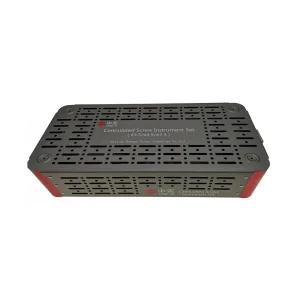
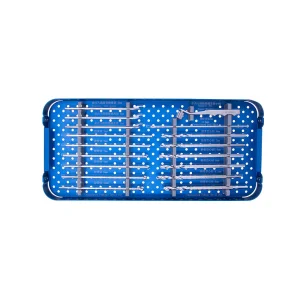
An osteosynthesis system is only as precise as its instruments. ZATH delivers complete DHS surgical instrument sets, including hard-anodized aluminum angle guides (130°-150°), triple reamers with calibrated depth stops, tap sleeves, centering sleeves, and radiolucent carbon-fiber insertion handles.
OEM / ODM Custom Manufacturing
We configure implant geometry, hole count, barrel tolerances, surface laser etching, custom anodized colors, and customized graphic box packaging tailored specifically to institutional brand requirements and national tender parameters.
Frequently Asked Questions: DHS Systems
Engineering, surgical, regulatory, and logistics inquiries answered directly by our orthopedic manufacturing engineering team.
What is the key mechanical difference between Titanium and Stainless Steel DHS plates?
How does ZATH prevent lag screw cut-out during severe dynamic loading?
Can ZATH provide OEM/ODM custom barrel angles and shaft hole counts?
What quality certifications and regulatory documents accompany export shipments?
What are the typical export lead times and shipping modes for bulk orders?
Does ZATH supply matched surgical instrument sets for the DHS system?
Comprehensive Surgical Hardware Manufacturing Portfolio
Full-spectrum implants, specialized endoscopic tools, and precision fixation systems produced under one roof in Beijing.