Core Verified Solutions
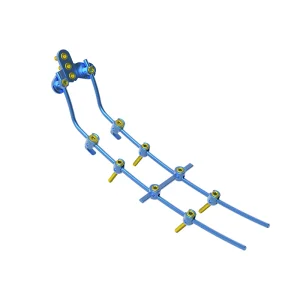
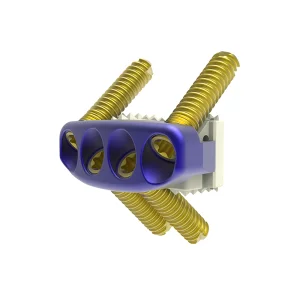
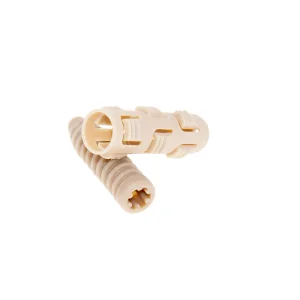
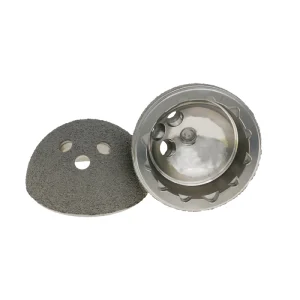
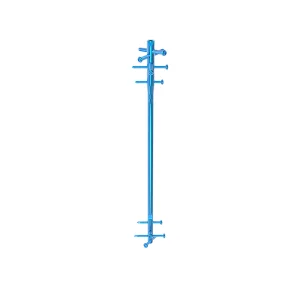
Featured Medical Systems: Upper Tier Surgical Hardware
Explore precision-manufactured implants and diagnostic systems certified to ISO 13485 standards, engineered to meet the demanding requirements of hospitals, distributors, and surgical centers worldwide.
Sourcing Evaluation
Discount Orthopedics From India: Structural Realities & The Sourcing Dilemma
While low labor costs and emerging domestic infrastructure make Indian manufacturers attractive for cost-sensitive buyers, clinical distributors require a clear breakdown of systemic supply chain trade-offs.
Labor Arbitrage vs. Machine Repeatability
Indian orthopedics historically offer low initial per-piece purchase orders driven by competitive labor costs. However, trauma plates and polyaxial pedicle screws require multi-axis high-speed Swiss CNC machining centers. Manual and semi-automated finishing steps often lead to micro-burrs and inconsistent thread-pitch tolerances across high-volume production batches.
Regulatory Dossier Gaps & Audit Vulnerabilities
Under the Central Drugs Standard Control Organization (CDSCO) guidelines, many domestic Indian fabricators operate under Class A/B domestic licensing. Transitioning to European MDR (EU 2017/745) Class IIb and Class III documentation requires extensive biological evaluation (ISO 10993) and clinical follow-up data that many low-cost exporters cannot provide.
Supply Chain Cluster Consolidation
Indian manufacturers often source raw medical-grade Ti-6Al-4V ELI (ASTM F136) and PEEK from international distributors, which can lead to tariff friction and lead-time volatility. Fully integrated industrial ecosystems streamline these inputs, stabilizing pricing and delivery schedules across global distribution networks.
Advanced Manufacturing
China Smart Factory 4.0: Supply Chain Resilience & Metallurgical Superiority
Combining complete vertical integration, rigorous quality control, and advanced CNC manufacturing to provide high-precision surgical implants without supply disruption.
Sub-Micron CNC Automation
Automated 5-axis DMG MORI and Citizen Swiss-type lathe cells eliminate operator variability, producing complex anatomical plates and threaded locking structures with tolerances within ±0.005mm.
End-to-End Lot Traceability
From ingot spectral verification to vacuum plasma-sprayed (VPS) porous titanium coatings, every unit is serialized with 2D DataMatrix laser markings to ensure full traceability under ISO 13485:2016.
Cleanroom Sterilization Systems
Class 10,000 (ISO Class 7) cleanrooms produce double-sterile blister packaging for direct OR delivery, minimizing hospital sterilization logistics and cross-contamination risks.
Predictable Global Dispatch
Strategic logistics infrastructure adjacent to major transportation hubs supports international dispatch via DHL, FedEx, and air cargo with transit times averaging 4 to 6 business days.
Comparative Matrix
Engineering Benchmarks: India Exporter vs. China Integrated Factory
A direct, parameter-by-parameter evaluation to help procurement directors make data-backed supply decisions.
| Evaluation Parameter | Discount Indian Manufacturers | China 4.0 Precision Ecosystem (ZATH Standards) | Strategic Impact on Importers |
|---|---|---|---|
| Raw Material Origin | Primarily imported ingots; fluctuating supply leads to mixed alloy grades (commercial Ti vs. ELI). | Certified medical-grade Ti-6Al-4V ELI (ASTM F136) & PEEK (Invibio) direct supply with chemical mill test reports. | ✔ High Fatigue Life & Biocompatibility |
| Dimensional Precision | Conventional CNC and manual lathe finishing; variable tolerance window (±0.02mm to ±0.05mm). | Multi-axis Swiss turning centers and coordinate measuring machines (CMM) maintaining ±0.005mm tolerances. | ✔ Seamless Instrument-Screw Engagement |
| Surface Modification | Standard acid etching and manual anodizing; inconsistent oxide layer thickness. | Controlled robotic anodic oxidation, micro-arc oxidation, and vacuum plasma spraying (VPS). | ✔ Accelerated Osseointegration |
| Packaging & Sterilization | Frequently non-sterile in bulk polybags, requiring autoclave cycles at local hospitals. | Validated ISO Class 7 cleanrooms, medical Tyvek blister packs with EO or Gamma irradiation options. | ✔ Reduced OR Prep & Zero Cross-Infection |
| Regulatory Readiness | Local CDSCO approvals; MDR Class IIb technical dossiers often incomplete. | ISO 13485:2016 audited, UDEM CE compliance documentation, and Free Sale Certificates (FSC) ready for submission. | ✔ Fast-Track National MOH Registrations |
Technical Roadmap
Clinical Innovation Roadmap: Beyond Traditional Metallurgy
Our long-term R&D pipeline integrates bio-absorbable polymers, patient-matched additive manufacturing, and digital surgical guidance systems.
Additive EBM Porous Trabecular Structures
Electron Beam Melting (EBM) 3D printing enables the production of open-cell trabecular titanium matrices that mimic natural cancellous bone, achieving elastic moduli closer to human cortical bone and reducing stress shielding in joint reconstruction.
Next-Gen Resorbable Bioceramics
Our biomaterials laboratory is advancing composite suture anchors and interference screws that blend medical-grade PLDLA with nano-hydroxyapatite (β-TCP), providing reliable primary fixation while steadily resorbing during tendon-to-bone healing.
Minimally Invasive Guided Navigation
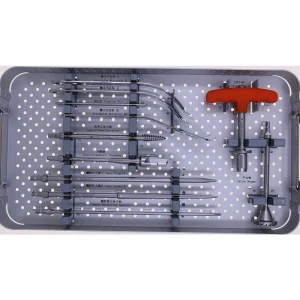
Our team develops integrated instrumentation systems—such as 3-in-1 MIS thoracolumbar pedicle platforms—that match optical navigation trackers, reducing incision size, fluoroscopic radiation exposure, and operating time.
Procurement FAQ
Global B2B Buyer Inquiries & Technical Support
Essential guidance for distributor tender evaluations, custom manufacturing, and global shipping operations.
How does pricing compare between Chinese precision manufacturers and Indian suppliers?
While low-tier suppliers in India may offer lower catalog prices, they frequently carry hidden costs: separate instrument set purchases, manual cleaning/autoclaving, and rework caused by dimensional variations. Our integrated supply model provides complete, sterile-packed, ready-to-use systems that significantly lower total procurement and operational costs over the lifetime of a clinical distribution contract.
Can you provide technical dossiers for national Ministry of Health registrations?
Yes. Our regulatory affairs department delivers complete technical files compliant with ASEAN Common Submission Dossier Template (CSDT), European MDR (EU 2017/745), and regional Latin American COFEPRIS/ANVISA frameworks. We provide ISO 13485 certificates, UDEM conformity declarations, Free Sale Certificates (FSC) verified by the Chinese embassy, and biocompatibility study results under ISO 10993.
What are your minimum order quantities (MOQ) for OEM/ODM private-label partnerships?
We support private-label distributors through flexible engagement tiers. Standard portfolio items customized with laser-etched distributor branding and regional labeling start at low evaluation thresholds. For fully custom ODM implants involving new tooling, FEA stress analyses, and clinical instrument development, project quotes are established following engineering design reviews.
How do you guarantee batch-to-batch metallurgical stability?
All titanium raw bar stock is sourced exclusively with full spectroscopic verification reports confirming conformance to ASTM F136 (Ti-6Al-4V ELI) and ISO 5832-3 standards. Incoming materials undergo internal ultrasonic flaw detection and microstructure grain size validation before entering production. Mill inspection certificates are archived with every production run.
What is the standard production and shipping lead time for institutional tenders?
Catalog implants and standard matching instrument kits maintain baseline warehouse inventory for immediate shipment, arriving via DHL/FedEx/air freight within 4 to 6 business days worldwide. Custom production runs for government tenders or specialized sizes typically complete manufacturing and sterile packaging within 3 to 5 weeks from technical blueprint sign-off.
Comprehensive Hardware Catalog
Clinical Trauma, Spine & Sports Medicine Implants
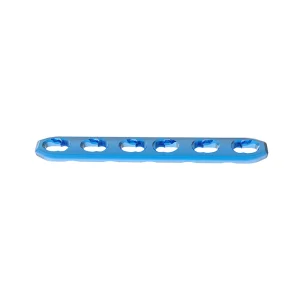
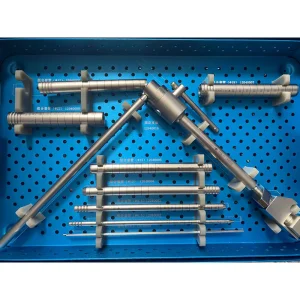
Complete surgical instrumentation and implant assemblies engineered for biomechanical stability, anatomic alignment, and predictable fusion outcomes.