
High-Performance Trauma & Joint Solutions (Top Series)
Engineered to international regulatory mandates, our core orthopedic platforms combine grade-5 medical titanium alloy (Ti-6Al-4V ELI) with high-throughput CNC micro-machining for predictable clinical osteosynthesis.
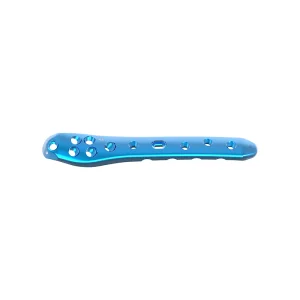
China Proximal Femur Locking Plate V Suppliers, Pricelist
View Product Specs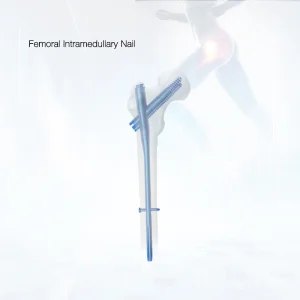
OEM Surgical Hospital Use InterZan Titanium Interlocking Nail for Femur Supplier, Factories
View Product Specs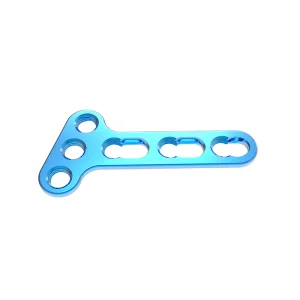
Buy Oblique T-Shape Locking Compression Plate Manufacturers, Pricelist
View Product Specs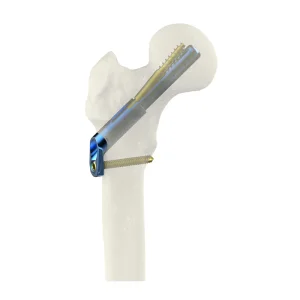
Custom Femoral Neck Antirotation System (FNAS) Exporters, Product
View Product Specs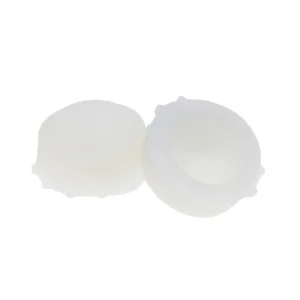
High-Quality Hip Joint ADC Acetabular Liner Manufacturer, Supplier
View Product Specs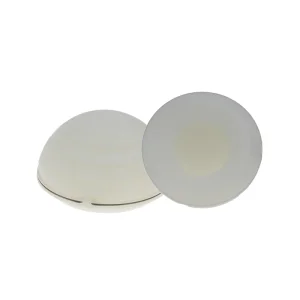
High-Quality TDC Cemented Acetabular Cup Artificial hip Joint Prosthesis Supplier, Suppliers
View Product Specs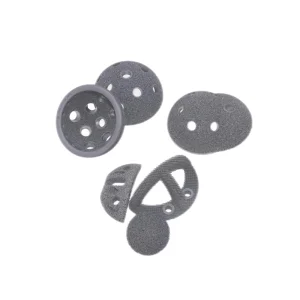
ODM 3D Printing Acetabular Revision System Manufacturers, Pricelist
View Product Specs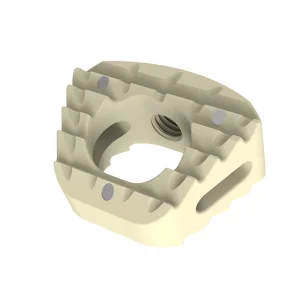
Discount ZATH Brand Cervical Interbody Cage PEEK Cage Factory CE ISO Pricelist, Quotes
View Product SpecsThe Global Commercial & Industrial Landscape of Intramedullary Nailing
An in-depth analysis of worldwide trauma caseloads, clinical market valuations, load-sharing biomechanics, and shifting procurement dynamics among healthcare networks.
Evolution from Rigid Splints to Biomechanical Load-Sharing Constructs
Intramedullary (IM) nailing remains the uncontested gold standard in surgical osteosynthesis for long-bone fractures across the femur, tibia, and humerus. Valued globally at over USD 4.8 billion within the broader trauma fixation sector, intramedullary fixation owes its market dominance to fundamental mechanical principles. Unlike extramedullary plating constructs that act as eccentric load-bearers, intramedullary nails reside along the anatomical central mechanical axis of the diaphyseal shaft. This coaxial alignment drastically reduces the bending moment experienced by the implant, distributing compressive and axial forces through a physiological load-sharing model that encourages secondary bone healing via periosteal callus formation.
Across North America, Western Europe, and rapidly modernizing economies throughout the Asia-Pacific and Latin America, demographic divergence is driving dual clinical demands. In developed markets, an aging population has created an unprecedented incidence of fragility fractures—specifically osteoporotic proximal femoral and intertrochanteric injuries (AO/OTA 31-A and 31-B). These cases demand cephalomedullary systems equipped with dynamic anti-rotation blades or integrated lag screws designed to mitigate cutout in degraded cancellous bone. Concurrently, developing nations experience high volumes of polytrauma from vehicular and industrial accidents, necessitating modular, high-tensile titanium reamed systems capable of bridging comminuted diaphyseal fractures under acute, resource-variable surgical conditions.
China Factory Efficiency: Industrial Scale & Engineering Edge
How state-of-the-art Chinese medical manufacturing clusters in Beijing and the Yangtze River Delta optimize quality systems, raw material control, and lead times.
Multi-Axis CNC Swiss Machining
Our centralized production runs multi-axis CNC sliding-head Swiss lathes (Star, Citizen) and 5-axis vertical machining centers. Intramedullary nails require complex geometries—cannulated central lumina for guidewires, helical dynamic slots, and variable curvature radii (R1500 to R2000 mm). Precision machining ensures absolute axial concentricity and burr-free locking holes within ±0.015 mm tolerances.
Medical Metallurgy & Surface Physics
Manufacturing adheres strictly to biomedical standards ASTM F136 (Ti-6Al-4V ELI) and ISO 5832-3. Sourced raw billets undergo spectrographic chemical verification, eddy-current ultrasonic non-destructive flaw detection, and Type II anodization. This creates an inert titanium dioxide protective layer that eliminates fretting corrosion, minimizes soft tissue adhesion, and increases cyclic fatigue life.
Vertically Integrated Supply Clusters
By situating precision tool fabrication, electrolytic polishing, Class 100,000 (ISO Class 7/8) cleanrooms, and automated packaging within a single unified facility, our factory shortens OEM production cycles from industry averages of 16 weeks down to 4 to 6 weeks. Complete in-house coordinate measuring machine (CMM) inspections prevent delivery bottlenecks.
Anatomy-Specific Scenarios & Biomechanical Solutions
A surgical engineering breakdown of intramedullary fixation across distinct anatomical sectors, bone mineral density variations, and complex fracture topologies.
Femoral Diaphyseal & Trochanteric Fixation
Antegrade entry points (greater trochanter versus piriformis fossa) balance ease of percutaneous access with coaxial alignment. For pertrochanteric fractures, dual lag screws or integrated helical cephalic blades provide angular stability, preventing the "Z-effect" and lateral sliding while supporting early post-operative patient weight-bearing.
Tibial Suprapatellar Approaches
Moving beyond conventional infrapatellar techniques, modern semi-extended suprapatellar nailing minimizes quadriceps disruption and eliminates apex-anterior procurvatum deformity in proximal-third fractures. Multiplanar distal locking configurations ensure stable fixation in distal metaphyseal-diaphyseal transitions (Pilon variants).
Humeral Rotator-Cuff Sparing Nails
Humeral shaft fractures treated with antegrade intramedullary fixation utilize straight nail profiles with medialized entry points to protect the avascular zone of the supraspinatus tendon. Threaded screw-in-nail locking options prevent secondary back-out and eliminate radial nerve impingement common with traditional plating.
Pediatric Elastic Stable Nails (ESIN)
Titanium Elastic Nails (TEN/ZEIN) accommodate open growth plates in pediatric diaphysis fractures. Two pre-curved, oppositely bent flexible rods establish a symmetrical three-point biomechanical brace inside the canal, maintaining length, alignment, and rotational balance without compromising epiphyseal plates.
Emerging Industry Trends: The Future of Intramedullary Osteosynthesis
Pioneering advancements across biomaterial engineering, smart sensory monitoring, magnetic actuation, and radiolucent structural design.
Technological Frontiers Shaping Trauma & Reconstruction Surgery
The intramedullary implant category is undergoing transformative engineering evolution. While standardized titanium nails have resolved mechanical failure modes, the surgical community demands devices that actively facilitate biological osteogenesis, simplify operative technique, and provide real-time recovery data. Five distinct technological vectors are establishing competitive differentiation for medical device companies:
| Technology Platform | Material / Mechanism | Clinical Value Proposition | Global Regulatory & Market Adoption |
|---|---|---|---|
| Radiolucent Carbon-PEEK Nails | Carbon-fiber-reinforced polyetheretherketone (CFR-PEEK) | Artifact-free CT/MRI imaging; modulus of elasticity (18 GPa) closely matching cortical bone (12-18 GPa), eliminating stress shielding. | Rapid Growth Specialized oncology & non-union trauma centers. |
| Magnetic Motorized Lengthening Nails | Hermetically sealed rare-earth magnetic gears inside titanium tube | Non-invasive limb lengthening and bone transport without external fixator pin-site infection risks; operated via external handheld transmitter. | High Barrier Deformity correction & leg length discrepancy surgery. |
| Smart Strain-Gauge Sensor Nails | Micro-electromechanical systems (MEMS) with RFID telemetry | Continuous transcutaneous data streaming of interfragmentary micromotion and load transfer to track callous consolidation objectively. | Clinical Trials Transitioning from university bench to pilot evaluations. |
| Antibiotic-Eluting Surface Coatings | Gentamicin / Silver nanoparticle bioactive carrier matrices | Provides localized bactericidal concentrations above the minimum inhibitory concentration (MIC) for open Gustilo-Anderson fractures. | CE MDR Focus High demand in severe trauma management and revisions. |
| Expandable Intramedullary Nails | Hydraulically inflated corrugated stainless steel / titanium | Eliminates requirement for distal interlocking screws by conforming directly to inner endosteal morphology via saline pump expansion. | Selective Use High-speed field surgery and low-fluoroscopy applications. |
Global Enterprise Sourcing: Regulatory Compliance, Audits & QA
A rigorous checklist for distributors, procurement heads, and OEM brand holders qualifying medical implant suppliers.
Quality Dossiers & ISO 13485
Implantable Class IIb/Class III devices require uncompromising QMS documentation. Sourcing protocols mandate valid ISO 13485:2016 accreditation covering sterile barrier processing, biocompatibility compliance according to ISO 10993 (cytotoxicity, systemic toxicity, sensitization), and Technical Construction Files (TCF) aligned with European Medical Device Regulation (EU) 2017/745 (MDR) and US FDA 510(k) standards.
Mechanical Fatigue Benchmarking
Every intramedullary design configuration must survive four-point dynamic bending fatigue testing per ASTM F1264 and ISO 15025. Evaluating load-bearing endurance to over 5,000,000 cycles without plastic deformation or fracture at the nail's distal locking apertures ensures implant integrity under immediate post-operative physiological stresses.
Sterility Assurance & Packaging
Hospitals are rapidly abandoning non-sterile bulk implants in favor of double-barrier Tyvek® sterile packaging (gamma radiation or ethylene oxide sterilization validated to SAL 10⁻⁶ per ISO 11137). Pre-sterile packaging protects against nosocomial hospital infections, simplifies operating room inventory replenishment, and guarantees individual UDI barcode tracking.
Frequently Asked Questions (FAQ) for Orthopedic Procurement
Authoritative technical, commercial, and operational clarifications addressing common distributor queries during factory auditing and product onboarding.
What titanium alloy specification is utilized in your intramedullary nail manufacturing?
How do your cephalomedullary nails prevent rotation and cut-out in osteoporotic femoral neck fractures?
Are surgical instruments supplied in matching sets, and can targeting jigs be calibrated?
What are your minimum order quantities (MOQ) and production lead times for OEM/ODM private labeling?
Do you provide full documentation support for local Ministry of Health (MOH) product registrations?
How are implants cleaned and packaged to maintain sterility assurance level (SAL)?
Comprehensive Orthopedic Portfolio & Instrument Sets (Bottom Series)
Explore our full trauma fixation plates, elastic intramedullary systems, cortical screws, and specialized reconstructive joint arthroplasty instruments.
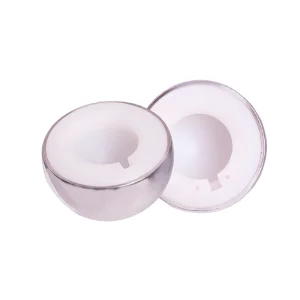
Wholesale FDAH Bipolar Acetabular Cup Medical Hip Joint Prosthetics Companies, Product
View Product Specs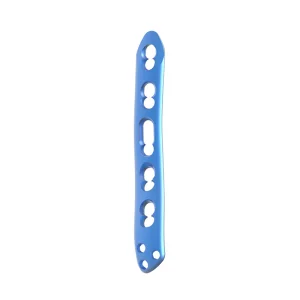
Buy Distal Medial Humerus Locking Compression Plate Factory, Exporters
View Product Specs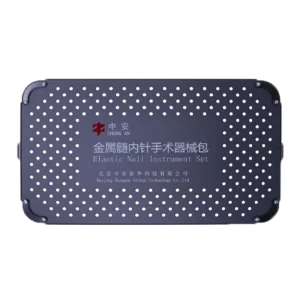
CE Certification Elastic Nail Instrument Set (ZEIN) Supplier, Factories
View Product Specs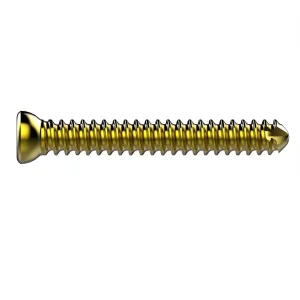
Best 2.0mm 2.7mm 3.5mm 4.5mm Cortical Screw Suppliers, Exporters
View Product Specs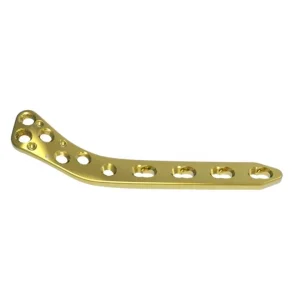
OEM Proximal Lateral Tibia Locking Compression Plate Supplier, Factories
View Product Specs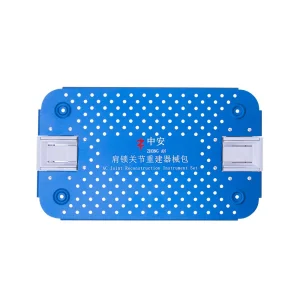
ODM AC Joint Reconstruction Instrument Set Supplier, Products
View Product Specs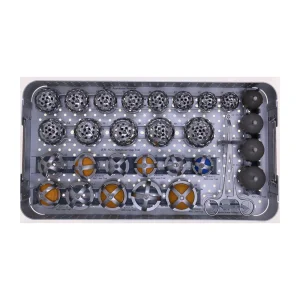
High-Quality Hip Joint Replacement Universal Instrument Set (Acetabular Part) Exporter, Products
View Product Specs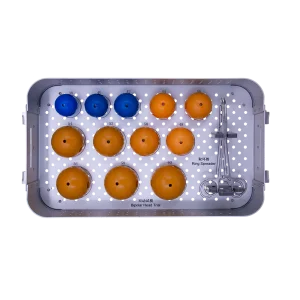
Famous Orthopedic Implant Human Use Bipolar Hip Instrument Set Suppliers, Exporter
View Product SpecsPartner with a Globally Verified Orthopedic Pioneer
From primary trauma response to complex limb salvaging and pediatric correction, intramedullary nailing requires zero compromise in metallurgical provenance, mechanical machining tolerance, or clinical usability. As an established enterprise operating over 15 years within the Zhongguancun Science and Technology Park in Beijing, our factory blends Swiss-engineered manufacturing efficiency with deep orthopedic OEM/ODM expertise.
Distributors, surgical hospital groups, and tender procurement organizations benefit from streamlined lot-traceable production, flexible consignment models, and certified sterile-packed device configurations that fulfill the most stringent requirements of surgeons, hospital administrators, and international health authorities worldwide.