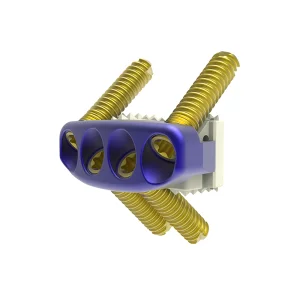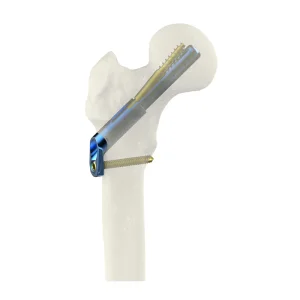
Surgical Matrix & Complementary Systems
Primary Orthopedic Solutions: Trauma, Spine & Joint Platforms
Engineered under stringent ISO 13485 quality protocols, every implant integrates seamlessly with dedicated surgical instrument sets for global clinical distribution.
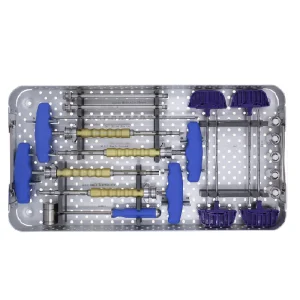
Spine Instrument Set (Zenith HE Instrument Set)
Explore Specifications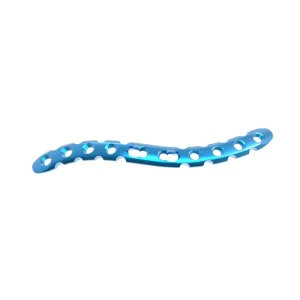
Clavicle Reconstruction Locking Compression Plate
Explore Specifications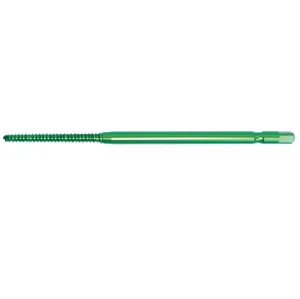
Cancellous Bone Pin for Orthopedic External Fixation
Explore Specifications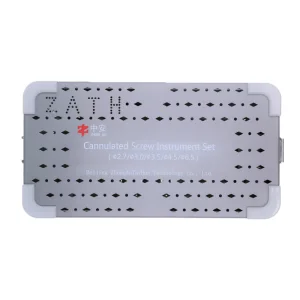
Stainless Steel Cannulated Screw Instrument Set
Explore Specifications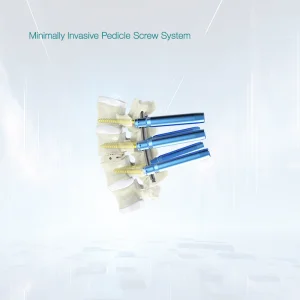
ZATH HE Minimal Invasive Spine Pedicle Screw
Explore Specifications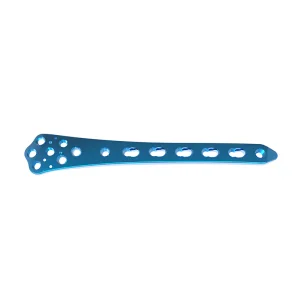
Distal Lateral Femur Locking Compression Plate
Explore Specifications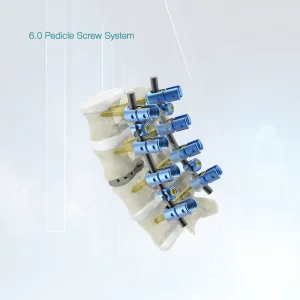
Zipper Polyaxial Pedicle Screws Spine System
Explore Specifications
Enterprise Procurement Blueprint
Global Sourcing Dynamics for LCP Distal Radius Plates
In-depth commercial and operational considerations governing international orthopedic tenders, group purchasing organizations (GPOs), and regional distributorships.
The distal radius fracture remains the single most common long-bone trauma encountered in modern clinical practice, representing roughly 17% to 20% of all fractures treated in emergency orthopedics worldwide. In an aging demographic driven by osteoporosis, coupled with active sports-related trauma in younger working-age cohorts, the clinical demand for anatomical Locking Compression Plates (LCP) for the volar distal radius has grown at a compound annual growth rate (CAGR) exceeding 6.8% over the past decade.
For international medical distributors, tertiary health systems, and ministry-level health procurement departments, qualifying a reliable orthopedic manufacturer is a complex strategic decision. Buyers are navigating strict regulatory transitions such as the European Medical Device Regulation (EU MDR 2017/745), escalating healthcare inflation, and the imperative for absolute lot-to-lot repeatability. When evaluating an LCP Distal Radius Plate pricelist, enterprise procurement directors must balance unit acquisition costs against the total clinical burden—which encompasses revision surgery risk, flexor tendon irritation rates, and instrument compatibility.
Cost Transparency & Tiered Pricing
Direct manufacturer contracting provides an average 40% to 55% reduction against tier-one multinational pricing. We provide scalable unit pricing matrices indexed to annual minimum order quantities (MOQ), raw titanium grade fluctuations (Grade 5 ELI / Ti-6Al-4V), and bulk or sterile individual packaging specifications.
Procurement EconomicsSterile vs. Non-Sterile Packaging
Hospital networks are shifting rapidly to pre-sterilized, double-blister Tyvek packaging. Pre-sterilization reduces sterile processing department (SPD) bottlenecks, eliminates residual detergent chemical risks, and delivers complete GS1-standard UDI (Unique Device Identification) barcode verification at the bedside.
Operational EfficiencyConsignment & Inventory Buffer
To eliminate clinical stockouts, ZATH assists tier-one regional distributors with tailored stocking buffer agreements. By synchronizing consignment instrument sets with rotating inventory refills via DHL, FedEx, and UPS expedited air cargo, global logistics friction is minimized.
Supply Chain Security
Biomechanical Engineering & Clinical Performance
Volar Locking Mechanics: Resolving Intra-Articular Complexities
Addressing AO/OTA Type 23-C3 fractures through anatomic pre-contouring, flexor tendon preservation, and subchondral multi-planar fixed-angle fixation.
Historically, dorsal plating systems were plagued by extensor tendon tenosynovitis and subsequent rupture of the extensor pollicis longus (EPL). The advent of the volar locking compression plate revolutionized wrist traumatology by shifting fixation to the volar surface, where greater soft tissue coverage exists. However, suboptimal plate positioning distal to the watershed line presents significant risk to the flexor pollicis longus (FPL) tendon. Modern engineering demands a rigorous balance between subchondral joint support and ultra-low profile plate margins.
ZATH’s LCP Distal Radius Locking System incorporates advanced finite element analysis (FEA) to sculpt an anatomically pre-contoured distal lip that rests proximal to the watershed line while projecting divergent subchondral locking screws within 2 mm of the articular surface. This architecture captures dorsal lip fragments, styloid avulsions, and central lunate facet depression without violating the radiocarpal joint space.
Critical Clinical Consideration: The Soong Classification & Watershed Line
Modern surgical literature demonstrates that Grade 2 volar prominence (plate positioned directly on or distal to the watershed line) correlates with up to an 8% flexor tendon rupture rate if left unaddressed. ZATH titanium volar plates are engineered with chamfered, electropolished distal edges (thickness tapering to 1.5 mm) and recessed screw heads to minimize tendon friction under heavy cyclical wrist flexion.
Anatomical Pre-Contouring
Digitally mapped from over 1,200 Asian and Caucasian wrist CT datasets, eliminating the need for intraoperative plate bending that degrades titanium fatigue limits.
Anatomic GeometryCombi-Hole Flexibility
Combines dynamic compression unit (DCU) geometry with internal machine-threaded locking holes, offering surgeons complete liberty to compress first or lock immediately.
Hybrid FixationPolyaxial Variable Angulation
Permits screw divergence or convergence of up to ±15° in all directions, allowing precise targeting of displaced articular fragments without compromising thread retention.
Targeted TrajectoryType II Anodized Surface
Advanced surface electro-passivation enhances micro-hardness, prevents cold welding between screw head and plate hole, and limits osteoblast adhesion for simplified hardware removal.
Surface Integrity
B2B Technical & Commercial Reference
LCP Distal Radius Plate Pricelist & Parameter Matrix
Factory-direct FOB benchmark pricing for authorized orthopedic distributors, medical device importers, and hospital procurement groups.
| System Model / Clinical Type | Material Spec | Shaft Holes (Head Holes) | Profile Thickness | Screw Compatibility | Est. FOB Ex-Factory (USD)* | Sterile Blister Packaging |
|---|---|---|---|---|---|---|
| Volar Distal Radius LCP (Standard) | Ti-6Al-4V ELI (ASTM F136) | 3, 4, 5, 6 Holes (5 Head Holes) | 2.0 mm tapering to 1.5 mm | 2.4 mm / 2.7 mm Locking & Cortex | $22.00 – $34.00 | Sterile / Non-Sterile |
| Variable-Angle (Polyaxial) Volar LCP | Ti-6Al-4V ELI (ASTM F136) | 3, 4, 5, 7 Holes (6 Head Holes) | 2.0 mm ultra-low contour | 2.4 mm Variable-Angle Locking | $28.00 – $42.00 | Sterile / Non-Sterile |
| Dorsal Distal Radius LCP (T- & L-Shape) | Medical Grade 316L / Ti ELI | 3, 4, 5 Holes (3-4 Head Holes) | 1.5 mm Low-profile chamfer | 2.4 mm Locking / Cortex Screws | $18.50 – $29.00 | Sterile / Non-Sterile |
| Distal Radial Styloid Locking Plate | Ti-6Al-4V ELI (ASTM F136) | 3, 4 Holes (3 Head Holes) | 1.6 mm Anatomical column | 2.4 mm Locking / 2.7 mm Cortex | $20.00 – $31.50 | Sterile / Non-Sterile |
| Distal Radius Fragment-Specific System | Ti-6Al-4V ELI (ASTM F136) | Modular Column/Rim Plates | 1.3 mm – 1.5 mm Micro-profile | 2.0 mm / 2.4 mm Locking Screws | $24.00 – $38.00 | Sterile / Non-Sterile |
| Matching Dedicated Instrument Kit | Stainless 17-4PH / PEEK / Silicone | Full Set with Torque Drivers & Drill Guides | Custom Anodized Sterilization Box | Calibrated Torque Limiting 0.8 Nm | $650.00 – $1,200.00 | Steam Autoclavable |
*Note: Ex-factory quotation ranges reflect wholesale B2B tiered contracts (MOQ: 100 units per specification). Actual quotations may vary based on exact packaging preferences, laser etching customization, OEM private labeling requirements, and target country regulatory documentation fees.
Future R&D Trajectory
Technology Roadmap: Wrist Trauma Horizons 2025–2030
Pioneering the intersection of additive manufacturing, biodegradable metallurgy, and digital surgical navigation.
The standard wrought-machined locking plate, while clinically proven, faces inherent biomechanical limitations—predominantly stress shielding resulting from the elastic modulus mismatch between cortical bone (15–20 GPa) and titanium alloy (110 GPa). ZATH’s forward-looking engineering roadmap targets the elimination of secondary hardware removal procedures and the enhancement of subchondral osseointegration through breakthrough advanced material science.
3D-Printed Trabecular Meshes
Utilizing Selective Laser Melting (SLM) and Electron Beam Melting (EBM) to produce patient-specific and standardized distal radius plates with engineered porous undersurfaces. By mimicking trabecular bone porosity (65–75% interconnected pores, 300–500 µm pore size), we lower the effective modulus of elasticity to under 30 GPa, virtually eliminating peri-implant osteopenia.
Horizon 2026Bioresorbable Magnesium Alloys
Investigating high-purity magnesium-rare earth (Mg-RE) alloys for distal radius fixation. Degrading safely into non-toxic magnesium ions through slow biocorrosion over 12 to 18 months, these systems maintain rigid fixation during fracture healing and dissolve once the bone unites, completely eliminating hardware removal surgeries.
Horizon 2028Carbon-PEEK Radiolucency
Carbon fiber-reinforced polyetheretherketone (CFR-PEEK) constructs provide complete radiolucency on intraoperative C-arm fluoroscopy. Surgeons can assess intra-articular screw penetration down to the sub-millimeter level during fracture reduction without metal artifact interference.
Horizon 2029
Global Regulatory Governance
Regulatory Compliance & Export Readiness
Comprehensive documentation, rigorous cleanroom controls, and multi-jurisdictional dossier support for swift national health authority registration.
ISO 13485:2016 Certified
Our quality management system governs every operational phase: from certified medical-grade titanium bar stock receipt to 5-axis CNC micro-milling, finishing, inspection, and cleanroom packaging.
Certified QMSUDEM & FSC Documentation
We supply official Certificates of Free Sale (FSC) authenticated by competent authorities, accompanied by CE/UDEM attestations, ensuring rapid dossier clearance across Latin America, the Middle East, and Southeast Asia.
Fast RegistrationClass 100,000 Cleanroom
Final washing via automated multi-tank ultrasonic passivation line followed by packaging inside Class 100,000 (ISO Class 8) cleanrooms. Validated ethylene oxide (EtO) and Gamma irradiation cycles meet ISO 11135 and ISO 11137.
Sterility AssuranceTurnkey Technical Dossiers
Full support for Common Technical Dossiers (CTD), biocompatibility summaries according to ISO 10993, static and dynamic fatigue bench test data under ASTM F382, and clinical evaluation reports (CER).
Dossier Support
Procurement & Technical Verification
Frequently Asked Questions for B2B Importers & Surgeons
Direct answers addressing metallurgical validation, MOQ flexibilities, sterilization options, and OEM manufacturing agreements.
What makes ZATH's LCP Distal Radius Plate biomechanically superior in complex intra-articular fractures?
ZATH distal radius plates feature an anatomically optimized contour shaped precisely to the distal volar radial rim without encroaching past the watershed line. Subchondral screw hole trajectories are intentionally angled to establish a cross-supporting subchondral raft. This distributes axial loads away from depressed joint fragments back to the radial shaft, significantly reducing the incidence of secondary articular collapse in osteoporotic patients (AO Type 23-C2 and C3).
What is the standard Minimum Order Quantity (MOQ) and lead time for bulk and OEM orders?
For standard ZATH-branded plates in sterile or non-sterile packaging, our MOQ is 50 units per specification, with order fulfillment typically dispatched within 7 to 10 working days. For custom OEM/ODM arrangements—including proprietary laser-etched distributor branding, custom anodization coloring, modified hole geometries, or tailored blister packaging—the initial MOQ is typically 200 units per spec with a typical first-batch manufacturing cycle of 30 to 45 calendar days.
How does ZATH guarantee lot-to-lot traceability from raw titanium to the OR?
Every production batch begins with certified titanium alloy ingots (ASTM F136 Ti-6Al-4V ELI) accompanied by chemical and mechanical mill test certificates. Each raw material batch receives a unique internal heat code that is laser-etched onto every finished plate alongside GS1-compliant 2D DataMatrix UDI barcodes. Digital quality records, including CMM coordinate measuring machine reports and bioburden test reports, are archived for a minimum of 15 years in compliance with ISO 13485.
Can ZATH provide complete regulatory dossier files for local Ministry of Health registration?
Yes. Our dedicated international regulatory affairs team provides complete technical files: ISO 13485 quality system certificates, Certificates of Free Sale (FSC) issued by the Chinese National Medical Products Administration (NMPA) or European authorized representative attestations, full biocompatibility summaries (ISO 10993), packaging aging validation reports (ISO 11607), and mechanical fatigue test results according to ASTM F382 standards.
Are instrument sets supplied on consignment or sold outright with implant contracts?
We offer flexible arrangements tailored to the distributor's business model. Dedicated 2.4/2.7 mm distal radius instrument sets (including calibrated 0.8 Nm torque limiters, threaded drill guides, depths gauges, self-holding screwdrivers, and sterilizing trays) can be purchased outright or subsidized with multi-year volume implant supply contracts. Consignment and demo loan sets are also available for registered distributors entering hospital tender evaluations.
Comprehensive Factory Portfolio
Advanced Implant Portfolio: Hip, Spine & Intramedullary Nailing
Explore ZATH's full breadth of precision-engineered orthopedic solutions engineered for durability, surgical ease, and proven clinical outcomes.
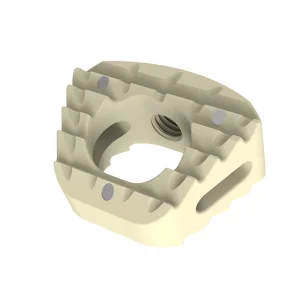
ZATH Brand Cervical Interbody PEEK Cage
Explore Specifications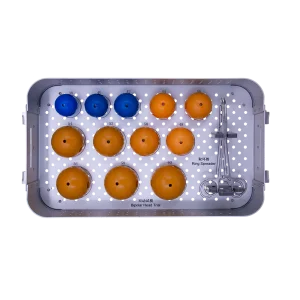
Human Use Bipolar Hip Instrument Set
Explore Specifications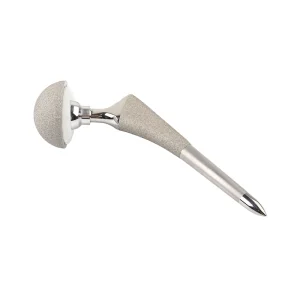
FDS Cementless Stem Hip Joint Prosthesis
Explore Specifications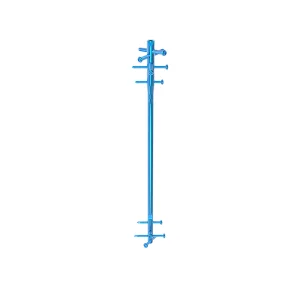
Customized Expert Tibia Intramedullary Nail
Explore Specifications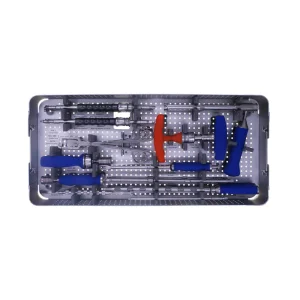
Zipper 6.0 Spinal Internal Fixation System Instrument
Explore Specifications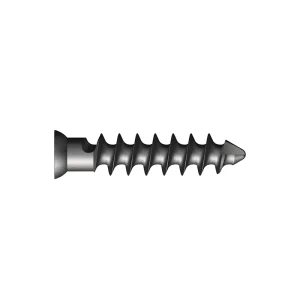
Titanium FDN Acetabular Screw
Explore Specifications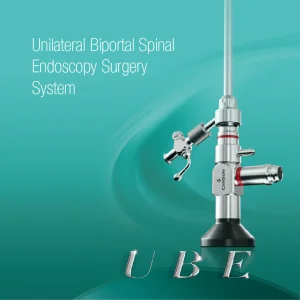
Spine Surgery Unilateral Biportal Endoscopy (UBE)
Explore Specifications