Surgical Solutions Portfolio Part I
Featured Orthopedic Systems & Fixation Technology
Precision-manufactured titanium implants and matched instrumentation sets manufactured in ISO 13485 cleanroom facilities for high-yield operating room workflows.
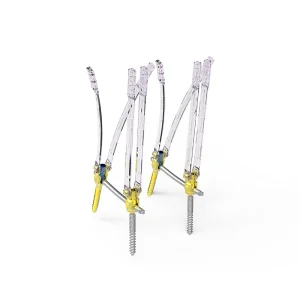
ODM Spine Titanium Minimally Invasive Pedicle Screws Manufacturer, Pricelist
Explore Specification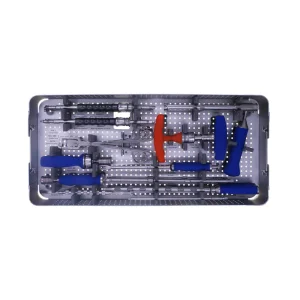
CE Certification Zipper 6.0 System Spinal Internal Fixation System Instrument Exclusive Set Factories, Product
Explore Specification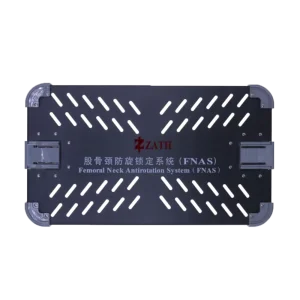
Famous Femoral Neck Antirotation System (FNAS Instrument Set) Supplier, Products
Explore Specification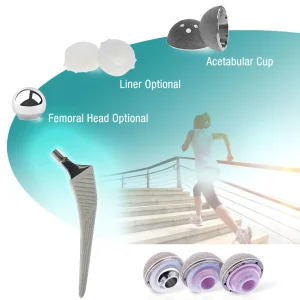
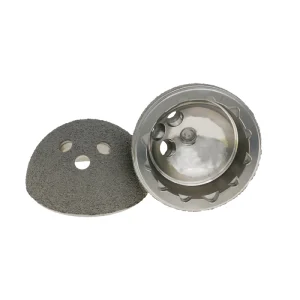
Discount Professional Medical Hip Implant Titanium Bipolar Hip Joint Prosthesis Manufacturers, Supplier
Explore Specification
ODM Orthopedic Fast All Inside Meniscal Repair Device System Products, Service
Explore Specification
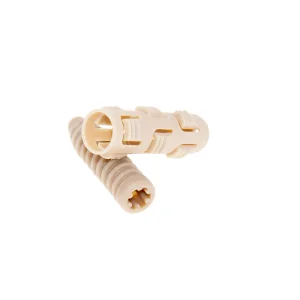
Famous Titanium Alloy Orthopedic Suture Anchor Titanium Manufacturer Companies, Products
Explore Specification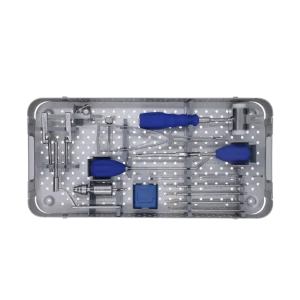
ODM High Quality ZP Cage Instrument Set Manufacturer, Manufacturers
Explore Specification
Clinical Biomechanics & Global Pathology
Macro Industry Solutions: Overcoming Femoral Trochanteric Instability
How modern intramedullary nailing architectures solve helical bone cut-out, secondary varus collapse, and early weight-bearing challenges in an aging global demographic.
Helical Blade Bone Compaction
Unlike conventional dynamic hip screw (DHS) threads that ream and remove cancellous trabeculae during insertion, the PFNA helical blade impacts and radially condenses the surrounding osteoporotic bone. This biomechanical compaction multiplies bone-to-implant contact area, generating superior anchor purchase and minimizing rotational torque failure under peak physiological loading.
Load-Sharing Closed Intramedullary Axis
By centering the titanium implant within the medullary canal rather than laterally on the cortex, the lever arm from the femoral head center to the implant axis is shortened by over 25% to 30%. This dramatic mechanical reduction in bending moments curbs screw cut-out, curtails nail breakage, and allows immediate post-operative rehabilitation for vulnerable geriatric fracture cases.
Dynamic Telescoping & Varus Mitigation
The anti-rotation sliding design facilitates controlled lateral sliding and dynamic axial secondary impaction of the femoral head fragment onto the shaft. Controlled telescoping allows continuous load transfer across the fracture gap during early mobilization, mitigating hardware penetration through the articular cartilage into the acetabular dome.
Industrial Insight: Titanium Alloy (Ti-6Al-4V ELI) vs. Stainless Steel (316LVM)
In proximal femoral reconstructive surgery, material modulus matching is critical. Ti-6Al-4V ELI provides an elastic modulus (~110 GPa) significantly closer to cortical bone (~18-20 GPa) than surgical stainless steel (~200 GPa). This substantial reduction in stress shielding promotes natural secondary bone healing, accelerates periosteal callus bridge formation, and mitigates distal cortical hypertrophy. Beijing ZhongAnTaiHua Technology Co., Ltd. (ZATH) machines all flagship intramedullary systems using vacuum arc remelted (VAR) medical-grade titanium conforming to ASTM F136 and ISO 5832-3 standards.
15+
Years of Manufacturing Innovation (Since 2009)
< 1.2%
Cut-out Incidence with Helical Compaction
100%
Digital CMM Dimensional Lot Traceability
4-6 Days
Worldwide Express Air Delivery
Supply Chain Economics & Industry Dynamics
Global Commercial & Industrial Landscape of PFNA Manufacturers
Navigating volume-based hospital procurement (VBP), multi-axis CNC production scalability, and tier-one OEM/ODM contract partnerships across European, Asian, and Latin American orthopedics.
| Evaluation Parameter | Legacy Multinational Brands | Specialized OEM/ODM Manufacturers (e.g. ZATH) | Local Uncertified Workshops |
|---|---|---|---|
| Raw Material Provenance | Certified Ti-6Al-4V ELI (ASTM F136) | Certified ASTM F136 / ISO 5832-3 with 100% Mill Heat Trace | Uncertified commercial titanium rods |
| Manufacturing Infrastructure | Multi-axis Swiss CNC turning & automated milling | In-house Wire EDM, Multi-axis CNC, Robotic Cleanrooms | Manual 3-axis mills, outsourced deburring |
| Quality System & Audits | MDR / FDA 510(k) cleared | ISO 13485, UDEM Certification, Free Sale Certificate (FSC) | Ad-hoc domestic permits only |
| Distributor Cost Efficiency | High premium (overhead, direct marketing fees) | Direct factory tier-1 wholesale; ideal for hospital tenders | Low initial cost, high clinical liability |
| Customization / OEM Flexibility | Rigid catalog, no private-label adaptability | Custom anodization, laser branding, regional sizing, sterile packaging | Minimal engineering customization capability |
Transition from Fragmented Supply to Consolidated Production
Global health authorities and regional hospital syndicates increasingly demand verifiable origin audit trails. The historical reliance on disaggregated subcontracting has shifted toward vertically integrated manufacturers. At Beijing ZhongAnTaiHua Technology Co., Ltd. (ZATH), located in the Zhongguancun Science and Technology Park, raw bar stock validation, multi-axis helical thread milling, electropolishing, cleanroom barrier packaging, and EO/Gamma sterilization run under one audited roof. This eliminates cross-contamination risks and provides foreign distributors with airtight technical documentation.
Instrument Ergonomics & Reusable Carbon Aiming Arms
A PFNA implant's clinical success depends directly on the accuracy of its distal targeting and proximal insertion instrumentation. Leading manufacturers replace heavy, magnetic steel aiming guides with radiolucent carbon-fiber carbon-PEEK arm assemblies. These precision targeting jigs prevent radiographic parallax artifacts during intraoperative fluoroscopy, lower surgical times by 20-30%, and maintain rigidity throughout multiple high-pressure autoclave cycles.
Assurance & Market Clearance
Localized Regulatory Support & Global Compliance Framework
Empowering international orthopedic distributors to secure hospital tender awards with complete Common Technical Dossiers (CTD) and expedited customs clearance.
Technical Dossiers & Registration Files
ZATH provides regional partners with comprehensive biocompatibility reports (ISO 10993 series), biomechanical fatigue test data (ASTM F384 / ASTM F543 for bone screws and intramedullary devices), accelerated aging shelf-life validations, and cleanroom bioburden logs required by ministries of health across the Middle East, Southeast Asia, Africa, and Latin America.
Sterile Single-Pack Readiness
Every ZATH PFNA implant is sealed within medical-grade double Tyvek sterile barrier packaging, pre-sterilized via Ethylene Oxide (EO) or validated Gamma irradiation. This saves hospital sterilizing departments significant labor, enables direct shelf stocking in OR suites, and provides patient-level traceability barcodes compliant with FDA Unique Device Identification (UDI) regulations.
Rapid Cold-Chain & Air Freight Hubs
With an integrated logistic distribution channel leveraging air express partners (DHL, FedEx, UPS, TNT, EMS), urgent backorders and custom-sized replacement batches are dispatched from our Beijing headquarters within 24 to 48 hours, reaching major worldwide air cargo hubs in 4 to 6 business days for uninterrupted hospital inventory continuity.
Surgical Indications & Anatomy Matching
Clinical Application Scenarios: Anatomical Customization & Indications
Optimizing clinical outcomes across AO/OTA 31-A1, A2, and A3 fracture classifications with tailored nail geometries and distal locking options.
AO/OTA 31-A1 & A2
Peritrochanteric & Intertrochanteric Fractures
Short PFNA nails (170 mm to 240 mm) featuring a 5° mediolateral (ML) angle accommodate the insertion path through the greater trochanter tip without damaging the gluteus medius tendon. The single helical blade achieves solid compaction in brittle bone fragments, establishing rigid resistance against rotational toggle.
AO/OTA 31-A3
Reverse Oblique & Transverse Fractures
Standard lateral plates often fail in reverse obliquity due to high medially directed shear stresses. Long PFNA nails (300 mm to 420 mm) with an anatomical anterior radius of curvature (ROC ~1.5m to 1.8m) eliminate anterior femoral cortical impingement and provide balanced intramedullary neutralization throughout the femoral diaphysis.
Subtrochanteric & Pathological
Subtrochanteric Extension & Non-Unions
For fractures extending below the lesser trochanter, long nails equipped with multi-planar static and dynamic distal interlocking configurations bridge severe comminution. Distal beveling and flexible nail tips systematically minimize stress concentrations, preventing periprosthetic fractures at the nail terminus.
R&D Horizons
Technology Roadmap: The Next Frontier in Femoral Reconstruction
How additive manufacturing, bio-inductive trabecular matrices, and computer-assisted guidance systems are reshaping intramedullary trauma fixations.
3D EBM Trabecular Blade Coatings
Direct metal electron beam melting (EBM) titanium coatings engineered with 60-70% open porosity and 300-500 µm pore size facilitate rapid osteointegration directly onto the blade body for durable fixation in severely degraded cancellous bone.
Electromagnetic Distal Targeting
Eliminating continuous radiation exposure during distal screw placement, modern magnetic sensor targeting arrays guide cross-screw drilling without fluoroscopy, reducing surgeon radiation exposure to near zero while enhancing precision.
Bioactive Cement Augmentation Ports
Next-generation cannulated PFNA blades feature micro-perforated windows near the tip to permit targeted polymethylmethacrylate (PMMA) or calcium phosphate cement injection, increasing anchorage strength by up to 200% in osteoporotic bone.
Smart Strain & Healing Telemetry
Micro-electromechanical (MEMS) sensors integrated within the nail proximal cavity measure micro-strain patterns and temperature variations wirelessly via NFC/Bluetooth, alerting clinical teams to delayed union or mechanical instability before symptoms arise.
Technical & Procurement FAQ
Frequently Asked Questions for Medical Device Buyers
Authoritative technical and commercial clarifications directly addressing the operational considerations of orthopedic distributors and hospital procurement committees.
What distinguishes a true PFNA helical blade from standard lag screw intramedullary systems?
A standard intramedullary lag screw relies on rotational threading that excavates and cuts bone during insertion, reducing cancellous bone stock in the femoral head. A Proximal Femoral Nail Antirotation (PFNA) helical blade inserts without reaming the head cavity. As it enters, its fluted helical geometry compresses cancellous bone laterally against the blade walls. This localized impaction creates a dense structural envelope that resists cut-out and rotational rotation, which is especially beneficial in fragile osteopenic bone.
How does Beijing ZhongAnTaiHua Technology Co., Ltd. (ZATH) assure quality under ISO 13485?
Founded in 2009 in Beijing's Zhongguancun Science and Technology Park, ZATH operates a cleanroom and multi-axis CNC manufacturing facility governed by ISO 13485 medical device management protocols. Every material batch is verified with spectrometer chemical assay analysis and mechanical yield tests. Components undergo coordinate-measuring machine (CMM) dimensional verification, surface profilometry testing, ultrasonic multi-bath degreasing, cleanroom packaging, and lot-tracked sterilization validated to achieve a minimum 10⁻⁶ sterility assurance level (SAL).
What documentation and support does ZATH provide for international product registration?
ZATH supplies overseas distributors with complete registration documentation including ISO 13485 certificates, UDEM certificates, Free Sale Certificates (FSC) issued by national medical products authorities, factory audits, declarations of conformity, ISO 10993 biological evaluation reports, and ASTM F384/F543 mechanical test data. Our technical team assists local agents through submission inquiries to shorten regulatory approval cycles.
What are the options for OEM / ODM private branding and catalog customization?
ZATH offers complete OEM and ODM private label arrangements. Distributors can customize fiber-laser brand engraving, color anodization coatings (such as titanium golden, sky blue, or deep teal coding), packaging boxes, and surgical tray configurations. We also adapt nail diameters, cap lengths, distal slotted geometries, and aiming arm specifications to align with specific regional surgical preferences.
What is the clinical difference between short (170-240mm) and long (300-420mm) PFNA configurations?
Short PFNA nails are primarily indicated for stable and unstable peritrochanteric and intertrochanteric fractures (AO/OTA 31-A1 and 31-A2) where the femoral diaphysis is intact. They allow rapid placement via smaller incisions. Long PFNA nails are indicated for reverse oblique fractures (AO/OTA 31-A3), subtrochanteric fractures, segmental multi-level injuries, and pathological or osteoporotic bone where an extended working length prevents stress risers at the distal tip.
What express shipping routes and delivery guarantees are available for urgent orders?
Standard inventory implants and instrument kits are dispatched within 24 to 48 hours of confirmation. Through relationships with DHL, FedEx, TNT, UPS, and EMS air services, international consignments typically arrive at regional central distribution centers within 4 to 6 business days, accompanied by full customs airway bills, commercial packing lists, and sterilization lot documentation.
Surgical Solutions Portfolio Part II
Trauma Plating, Arthroplasty & Fixation Implants
Expanding comprehensive surgical options from fracture osteosynthesis and reconstructive plating to total joint arthroplasty platforms.
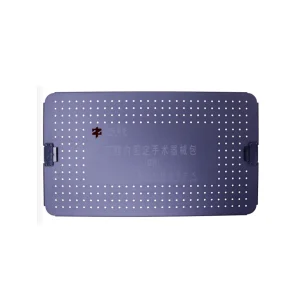
China High Quality Pelvic Reconstruction Plate Instrument Set Factories, Exporters
Explore Specification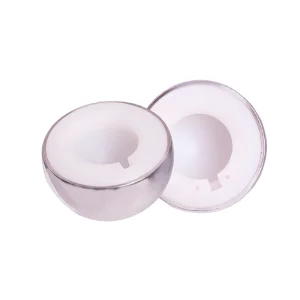
Wholesale FDAH Bipolar Acetabular Cup Medical Hip Joint Prosthetics Companies, Product
Explore Specification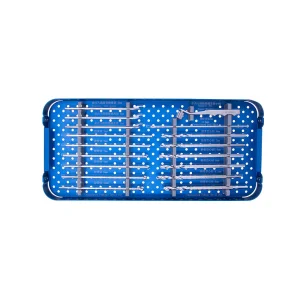
Buy ACL/PCL Reconstruction Instrument Set Supplier, Exporters
Explore Specification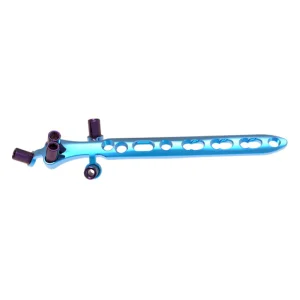
China Proximal Ulna ISC Locking Compression Plate I Pricelist, Service
Explore Specification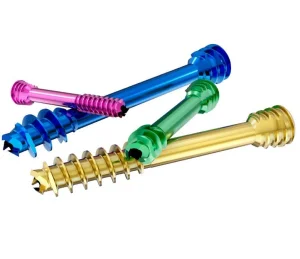
Famous Medical use double threaded cannulated screw with price Factory, Exporters
Explore Specification
Cheap Titanium Alloy Pin for Orthopedic External Fixation Pricelist, Exporter
Explore Specification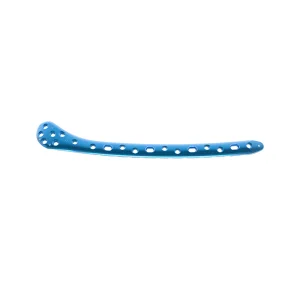
Best Distal Lateral Femur Locking Compression Plate I Factory, Company
Explore Specification