
Essential Trauma, Spine & Joint Implant Systems
Direct from our ISO 13485 cleanroom facility in Zhongguancun Science Park, Beijing: precision engineered fixation hardware and surgical instrumentation designed for global orthopedic distribution.
The Global Commercial Reality of Reconstruction Nailing Systems
Evaluating the shift from extramedullary plating to biomechanically superior intramedullary reconstruction nails in complex polytrauma, subtrochanteric fractures, and geriatric fragility cases.
In contemporary orthopedic traumatology, the management of complex proximal femoral fractures—particularly those presenting as comminuted subtrochanteric patterns, reverse obliquity fractures (AO/OTA 31-A3), and combined ipsilateral femoral neck and shaft fractures—represents one of the most mechanically demanding surgical challenges. Extramedullary constructs such as dynamic condylar screws (DCS) or standard lateral proximal femur locking compression plates (PFLCP) are subjected to extraordinarily high bending moments across the medial calcar. Under physiological weight-bearing conditions, the medial compressive forces exceed 1,200 Newtons, resulting in documented mechanical complication rates, plate fatigue failures, and screw pull-out in upwards of 14% of extramedullary fixation cohorts.
Consequently, the global trauma care ecosystem has experienced an irreversible clinical migration toward Reconstruction Intramedullary Nails (Recon Nails). By situating the load-bearing implant within the medullary canal, the biomechanical lever arm from the hip joint center of rotation to the implant axis is shortened by approximately 45% to 55% compared to lateral plates. This central load alignment converts dangerous transverse bending forces into well-tolerated axial compression along the long axis of the femur. For international hospital procurement committees and orthopedic distributors, selecting a world-renowned, dependable reconstruction nail supplier is no longer merely a matter of basic inventory procurement—it is a critical clinical risk mitigation strategy directly affecting union rates, cut-out prevention, operating theater efficiency, and total cost of care.
Subtrochanteric Segment Fractures
Neutralizes severe multi-vector deforming forces caused by the iliopsoas, gluteus medius, and adductor muscle groups, preventing proximal fragment flexion, abduction, and external rotation deformities.
Ipsilateral Neck & Shaft Fractures
Provides unified single-incision or dual-portal stabilization of both intracapsular/basicervical femoral neck disruptions and midshaft diaphyseal segmental comminution without compounding periosteal devitalization.
Pathological & Osteoporotic Bone
Delivers prophylactic and therapeutic reinforcement for widespread metastatic osteolytic lesions or severe osteopenic bone (Singh Index < 3), utilizing cannulated reconstruction lag screws for optimum anchorage.
Chinese Factory Efficiency: How Beijing ZATH Redefines Implant Production
High-precision Swiss-type 5-axis CNC machining centers, high-strength medical titanium alloys, and streamlined ISO 13485 cleanroom operations deliver peerless unit economics and zero-defect consistency.
Historically, the global orthopedics market was monopolized by Western multinational manufacturers, whose astronomical capital expenditures, retail sales overheads, and bloated marketing layers resulted in distributor acquisition prices exceeding $1,200 to $2,500 USD per intramedullary nail assembly. Today, precision medical device hubs in China—headlined by Beijing ZhongAnTaiHua Technology Co., Ltd. (ZATH)—have completely rewritten this paradigm through massive capital investment in advanced manufacturing technology, localized vertical integration, and deep metallurgical engineering.
At the core of ZATH’s competitive advantage is our end-to-end manufacturing campus within the Zhongguancun Science and Technology Park in Pinggu, Beijing. Covering the full lifecycle from medical-grade raw bar stock verification to final gamma/EO sterilization, our production matrix harnesses state-of-the-art multi-axis CNC turning and Swiss-type milling equipment. This eliminates multi-vendor handoffs, minimizes cumulative tolerance stack-up, and guarantees dimensional repeatability within ±0.005mm tolerances across millions of machining cycles.
Medical Grade Titanium Alloy (ELI)
We utilize Ti6Al4V Extra Low Interstitial (ASTM F136 / ISO 5832-3). ELI alloy provides superior fracture toughness, modulus of elasticity closely matching cortical bone (110 GPa vs. 200 GPa for stainless steel), and remarkable fatigue resistance under cyclical loads exceeding 10 million cycles.
Automated Cannulation Deep-Drilling
Precision continuous-feed gun drilling ensures absolute concentricity across nail lengths up to 460mm. The resulting ultra-smooth internal lumen prevents guide wire binding, reduces friction during insertion over reamed k-wires, and mitigates intraoperative jams.
Electrochemical Anodic Oxidation
Proprietary Type II surface anodization hardens the titanium outer surface layer, significantly diminishing fretting corrosion and microscopic cold welding between the intramedullary nail sleeve and transverse locking screws upon dynamic loading.
State-of-the-Art Design Architecture: Curvature, Jigs & Distal Targeting
Analyzing anatomical radius of curvature (ROC), distal dynamization slots, and radiolucent carbon-fiber targeting instrumentation that minimize fluoroscopy times.
Historically, first-generation femoral intramedullary nails were designed with an anterior radius of curvature (ROC) between 2.0 to 3.0 meters. Clinical registry data in recent years confirmed that this overly straight design caused frequent anterior cortex impingement, distal thigh pain, and occasional iatrogenic anterior cortex perforation upon nail advancement in patients with pronounced femoral bow. Modern ZATH Reconstruction Nails are engineered with an anatomically matched Radius of Curvature of 1.5 to 1.8 meters, precisely reflecting true global anthropometric morphology and eliminating distal anterior abutment.
Furthermore, our cephalomedullary nail features an integrated proximal lateral flare angle of 4° to 5°. This allows a minimally invasive insertion site directly through the tip of the greater trochanter rather than the piriformis fossa. Trochanteric entry significantly reduces surgical dissection time, minimizes blood loss, and protects the critical ascending branches of the medial femoral circumflex artery, virtually abolishing the risk of iatrogenic avascular necrosis (AVN) of the femoral head.
Carbon-Fiber Radiolucent Targeting
Targeting arm constructs manufactured from high-tensile carbon-fiber-reinforced PEEK polymers provide 100% radiolucency under intraoperative C-arm fluoroscopy. Surgeons achieve unobstructed lateral and AP views of guide pins without metallic shadow interference.
Dynamic vs. Static Distal Options
Featuring an oblong distal locking slot engineered for 5mm of controlled dynamization alongside dual static locking holes. This gives the surgeon complete freedom to convert static fixation to dynamic weight-bearing should delayed union be observed at 8-12 weeks.
Dual-Lag Screw Rotational Lock
Two cephalic reconstruction lag screws (typically 6.4mm superior and 8.0mm inferior) are inserted into the subchondral bone of the femoral head. This bi-planar parallel fixation effectively thwarts the 'Z-effect' and reverse Z-effect, preventing screw migration into the joint cavity.
Famous Reconstruction Nail Pricelist & Cost Analysis
Transparent comparative cost breakdowns empowering regional orthopedic distributors, hospital procurement managers, and government health ministries.
Orthopedic procurement budgets in both emerging and developed healthcare systems face constant downward reimbursement pressure under DRG (Diagnosis-Related Group) and national tender frameworks. Traditional tier-one European and American medical device conglomerates sustain distributor landed margins through opaque tier pricing and mandatory consigned inventory quotas. In contrast, partnering directly with an established Beijing-based manufacturer like ZATH provides crystal-clear wholesale pricing structures, zero hidden licensing fees, and full freedom to capture healthy distributor margins.
The following reference pricelist reflects FOB/CIF wholesale benchmark pricing across key intramedullary reconstruction nail assemblies, auxiliary hardware, and dedicated reusable instrumentation kits for qualified international distributors and bulk tender buyers.
| System Component Description | Material Specification | Dimensional Range | Certification | Global MNC Price (Est.) | ZATH Direct Factory Price |
|---|---|---|---|---|---|
| Recon Femoral Nail (Long) | Ti-6Al-4V ELI (ASTM F136) | Ø 9.0–12.0mm; L: 340–440mm | ISO 13485 / CE | $1,100 – $1,800 | $145 – $260 / pc |
| Recon Femoral Nail (Short / Gamma Style) | Ti-6Al-4V ELI (ASTM F136) | Ø 10.0–13.0mm; L: 170–240mm | ISO 13485 / CE | $850 – $1,400 | $110 – $195 / pc |
| Recon Lag Screw (Cephalic) | Ti-6Al-4V ELI / Anodized | Ø 6.4mm / 8.0mm; L: 65–125mm | ISO 13485 / CE | $160 – $280 | $18 – $32 / pc |
| Distal Interlocking Screw | Ti-6Al-4V ELI / Self-Tapping | Ø 4.5mm / 5.0mm; L: 25–85mm | ISO 13485 / CE | $75 – $120 | $7.50 – $14 / pc |
| End Cap / Closure Screw | Ti-6Al-4V ELI | 0mm, 5mm, 10mm, 15mm extension | ISO 13485 / CE | $90 – $150 | $9 – $18 / pc |
| Full Carbon-Fiber Instrument Set | PEEK + Stainless Steel 17-4PH | Targeting jig, drill sleeves, reamers | ISO 13485 / CE | $6,500 – $12,000 | $1,200 – $2,400 / set |
Comprehensive OEM/ODM & Private Label Services
Empowering international brands with bespoke engineering, tailored color anodization, custom size runs, and comprehensive registration documentation.
Private Label & Custom Branding
High-resolution fiber-laser etching of distributor logos, bespoke product family naming, and custom color-coded anodization (e.g., gold, royal blue, emerald green) for instantaneous diameter recognition in the sterile field.
Bespoke Size Matrices
Engineering adaptation for regional anthropometric variations, including specialized short-stature femoral curvatures for East Asian and Latin American patient populations, or heavy-duty reinforced core nails for bariatric cohorts.
MOH Registration Dossiers
Complete submission dossiers adhering to ASEAN CSDT, European MDR (EU) 2017/745 formats, and Latin American COFEPRIS / ANVISA technical requirements, accelerating local market registration clearance from years to months.
Frequently Asked Questions: Reconstruction Nails & Sourcing
Critical clinical, mechanical, and logistical answers researched directly from hospital tenders, surgical leads, and biomedical procurement executives.
What is the key mechanical difference between standard antegrade femoral nails and reconstruction nails?
While standard antegrade femoral nails utilize oblique or transverse proximal locking screws directed into the lesser trochanter solely for rotational control of midshaft fractures, Reconstruction Nails (Recon Nails) incorporate dual proximal cephalomedullary portals angled obliquely upward (typically at 125° to 135°) through the femoral neck directly into the subchondral bone of the femoral head. This provides load-bearing structural support for the femoral neck, allowing simultaneous stabilization of ipsilateral femoral neck fractures, high subtrochanteric fractures, or reverse obliquity intertrochanteric fractures that a standard femoral nail cannot address.
Why does Beijing ZATH utilize Ti-6Al-4V ELI titanium instead of standard surgical stainless steel?
Ti-6Al-4V ELI (Extra Low Interstitial, ASTM F136 / ISO 5832-3) exhibits an elastic modulus of approximately 110 GPa, which is much closer to human cortical bone (15-30 GPa) than 316L stainless steel (~200 GPa). This significantly attenuates the 'stress shielding' phenomenon, promoting natural periosteal callus formation through controlled axial micro-motion. Furthermore, titanium ELI displays exceptional corrosion resistance, superior fatigue life under cyclic gait loading, and generates substantially fewer imaging artifacts under post-operative MRI and CT diagnostics.
How does ZATH prevent the dreaded 'Z-effect' during dual lag screw reconstruction nailing?
The 'Z-effect' occurs when unequal load distribution between two parallel cephalic lag screws causes the superior screw to back out laterally while the inferior screw migrates medially into the hip joint, or vice versa. ZATH prevents this through three engineering safeguards: (1) precision-machined parallel tolerances within the nail barrel that restrict parasitic toggle; (2) differential thread pitch and diameter configuration (larger core diameter for the inferior screw to support principal calcar compression); and (3) an integrated proximal set-screw locking mechanism that firmly anchors the lag screws at a predetermined depth while permitting controlled sliding collapse.
What documentation and certification are supplied to support regional health authority import registrations?
For every distributor partner, ZATH issues a comprehensive regulatory package comprising: (1) Certificate of ISO 13485 Quality Management System accreditation; (2) CE Certification / UDEM notified body verification; (3) Official Free Sale Certificate (FSC) issued by government medical product authorities; (4) Raw material metallurgical mill certificates (chemical composition & tensile strength verification); (5) Biocompatibility testing documentation (ISO 10993); and (6) Sterilization validation certificates (gamma irradiation / EO gas complying with ISO 11137 / ISO 11135).
What are the minimum order quantities (MOQ) and delivery lead times for OEM/ODM private-label nail systems?
For standard ZATH-branded catalog items in stock, there is no minimum order quantity, and orders ship via express courier (DHL, FedEx, UPS) within 4 to 6 days. For custom OEM/ODM private-label programs involving custom laser etching, customized packaging artwork, or specific anodization hues, our starting MOQ is typically 50 to 100 units per nail size run, with production lead times averaging 3 to 4 weeks from technical CAD drawing sign-off.
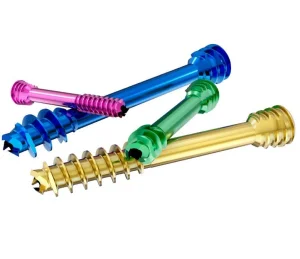
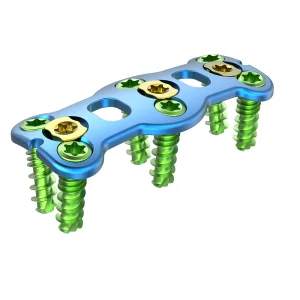
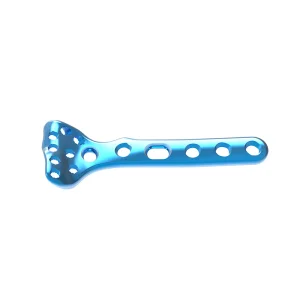
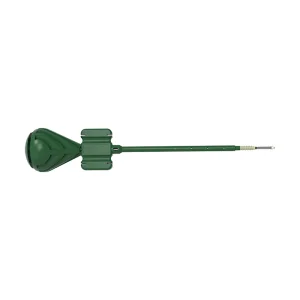
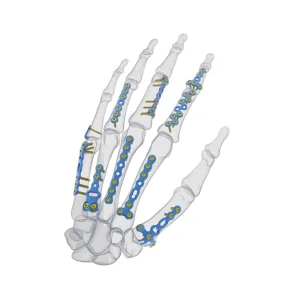
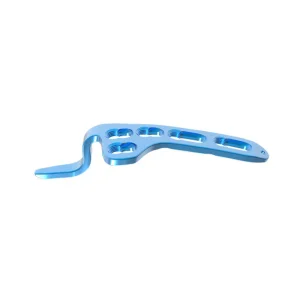
Specialized Trauma Plating, Screws & Sports Medicine Implants
Expand your surgical procurement catalog with our certified trauma locking plates, cannulated compression systems, and high-performance ligament anchors.
Initiate Your Reconstruction Nail Supply Partnership Today
Whether equipping municipal trauma centers or establishing exclusive territorial distributorships, connect directly with Beijing ZATH’s engineering and sales export teams.
Direct Inquiries
Detailed product catalogs, CAD specifications, and customized FOB/CIF price quotes.
Contact Export TeamComprehensive Catalog
Download our 2026/2027 complete orthopedic implant & surgical instrument set catalog.
Request Complete CatalogGlobal Service Network
Explore regional distributor warehousing, training programs, and clinical support nodes.
View Global Service