Precision Internal & External Fixation Solutions
Sterile-packaged implants and matching precision surgical instrumentation engineered for complex trauma reconstruction, osteotomies, and joint stability.
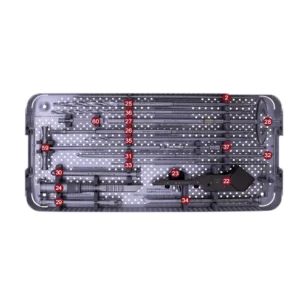
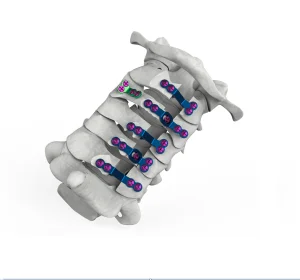

Industry Biomechanical Demands for Calcaneus Locking Systems
Overcoming the challenges of intra-articular collapse, thin lateral soft-tissue envelopes, and high shear forces through modern metallurgical innovation.
Böhler’s & Gissane Angle Restoration
Calcaneal fractures account for ~60% of all tarsal injuries, with roughly 75% being intra-articular (Sanders Type II, III, and IV). Modern titanium locking plates are biomechanically contoured to restore the crucial Böhler's angle (20°–40°) and the angle of Gissane, preventing long-term subtalar incongruity, chronic hindfoot varus deformities, and debilitating post-traumatic osteoarthritis.
Fixed-Angle Subchondral Sustentaculum Tali Support
Cancellous bone loss in the calcaneal body creates significant central void space following reduction. Titanium calcaneus locking plates utilize converging multi-directional and fixed-angle locking screws directly aimed at the dense sustentaculum tali. This constructs an unyielding internal scaffolding that prevents secondary collapse under physiological axial loads during non-weight bearing recovery.
Low-Profile Contours & Soft-Tissue Preservation
The lateral aspect of the heel has extremely vulnerable vascular supply via the lateral calcaneal artery. High-profile plates frequently cause wound dehiscence and peroneal tendon impingement. Premium factories implement ultra-thin profiles (1.3mm–1.5mm) with electropolished, chamfered margins to optimize soft-tissue clearance without compromising structural rigidity.
Global Enterprise Procurement Requirements
How regional medical distributors, tender authorities, and hospital groups navigate regulatory scrutiny, material provenance, and supply chain continuity.
Medical Grade Ti-6Al-4V ELI (ASTM F136)
International regulatory compliance requires rigorous mill testing verification. Unlike commercial pure titanium or lower-grade alloys, Extra Low Interstitial (ELI) titanium guarantees exceptional fatigue resistance, higher tensile strength (>860 MPa), and an elastic modulus that closely mimics cortical bone to minimize stress-shielding phenomena.
Sterile Barrier Double-Blister Packaging
Hospital supply chains demand pre-sterilized, EO or Gamma-irradiated implant packages. Sterile-packed calcaneus plates with traceable GS1-128 barcoding eliminate Central Sterile Processing Department (CSPD) turnaround delays, prevent nosocomial surgical site infections, and guarantee immediate operating theatre readiness.
OEM/ODM White-Label Precision
Global brand owners and national distribution partners require turnkey contract manufacturing solutions. This includes custom anodization colorways (gold, blue, magenta, natural titanium), laser etching of proprietary branding, personalized screw hole configurations, and tailored surgical tray designs tailored to specific regional surgical techniques.
Titanium Calcaneus Locking Plate System Matrix
Exacting geometric and biomechanical parameters developed for Sanders Type II-IV calcaneus fracture fixation.
| Feature / Parameter | Standard Trauma Spec | Clinical Advantage | Quality Standard |
|---|---|---|---|
| Raw Material | Ti-6Al-4V ELI (Grade 23 Titanium) | Maximum biocompatibility, fatigue life, and MRI safety | ASTM F136 / ISO 5832-3 |
| Plate Thickness | 1.3 mm – 1.5 mm Ultra Low-Profile | Reduces skin breakdown and soft-tissue tension | Micron Precision CNC Controlled |
| Screw Architecture | 2.7mm / 3.5mm Locking & Cortex Screws | Provides angular stability and multidirectional anchor | Self-Tapping Stardrive / Hex |
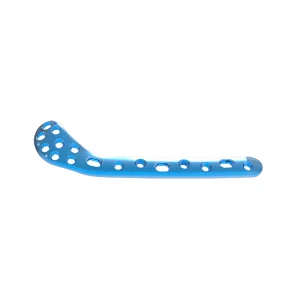
| Contouring Profile | Pre-shaped Anatomical Lateral Grid | Mimics calcaneal outer wall, eliminates manual bending | 3D CT Anthropometric Sizing |
| Surface Treatment | Type II Anodization / Micro-blasted | Reduces soft tissue adhesion; increases wear resistance | ISO 13485 Cleanroom Finished |
| Sterilization Option | Sterile-Packed (EO/Gamma) or Non-Sterile | Immediate emergency OR ready; saves autoclave time | ISO 11137 / ISO 11607 Certified |
Macro Regulatory Solutions & Factory Compliance
Navigating complex international medical device approvals through documented technical dossiers and accredited manufacturing.
Full Technical Documentation Dossiers
We provide distributors with comprehensive technical construction files (TCF), including biocompatibility data (ISO 10993), biomechanical static and fatigue testing reports (ASTM F382), sterilization validation records (ISO 11137), and stability test dossiers to accelerate local MoH and FDA registrations.
Traceable In-House 6-Stage Quality Control
All raw bars originate from certified titanium mills. Our Pinggu, Beijing facility executes 100% multi-axis Swiss CNC machining, ultrasonic multi-bath degreasing, coordinate measuring machine (CMM) dimensional checks, Class 100,000 cleanroom packaging, and lot-tracked laser marking before dispatch.
Local Distributor & Surgeon Training
Beyond manufacturing, we support partner tender applications with bespoke surgical instrument kits, cadaver lab educational materials, surgical technique guides (STG), and fast-turnaround sample sets that allow local sales reps to effectively train orthopedic foot and ankle trauma teams.
Technological Roadmap & Next-Gen Calcaneal Fixation
Integrating additive manufacturing, minimally invasive sinus tarsi approaches, and bio-resorbable technologies.
3D Printed Trabecular Porous Scaffolds
Selective Laser Melting (SLM) is enabling the creation of patient-specific, 3D-printed titanium calcaneus mesh plates that feature interconnected trabecular lattices (pore diameter 400–600 μm). These bioactive structures promote rapid osseointegration and osseoconduction, virtually eliminating non-union in severely comminuted fractures.
Sinus Tarsi MIPO Plate Geometries
Surgeons are rapidly shifting from extensive lateral L-shaped expansile incisions to Minimally Invasive Percutaneous Osteosynthesis (MIPO) via the sinus tarsi corridor. Our future engineering roadmap features dedicated narrow-perimeter, percutaneous slide plates with low insertion resistance, drastically lowering surgical complication rates.
Smart Fixation & Antibacterial Nano-Coatings
Next-phase R&D explores silver nanoparticle (AgNP) and bioactive silica sol-gel surface modifications. These advanced coats deter biofilm emergence from Staphylococcus aureus while promoting healthy osteoblast adhesion, providing enhanced postoperative safety in diabetic and compromised patients.
Frequently Asked Clinical & Purchasing Questions
Essential information for distributor sourcing managers, tender evaluation boards, and orthopedic department heads.
What makes Titanium Calcaneus Locking Plates superior to stainless steel variants?
How does the plate achieve firm purchase in osteoporotic or comminuted bone?
What customizations are supported under your factory OEM/ODM agreements?
What is your production capacity, lot traceability, and delivery timeline?
Can these calcaneus locking plates be utilized via the Sinus Tarsi approach?
Arthroplasty, Locking Systems & Reconstruction Catalog
Expand your hospital catalog with verified high-performance titanium joint, spine, and trauma platforms.