
Specialized Joint, Trauma & Surgical Instrument Portfolios
High-precision implants and matching ergonomic instrument systems manufactured from medical-grade Ti-6Al-4V ELI titanium and ultra-high-molecular-weight materials under rigorous cleanroom conditions.
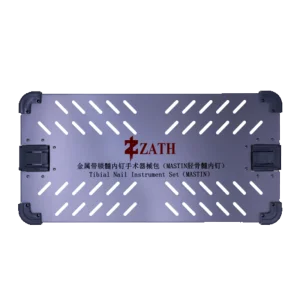
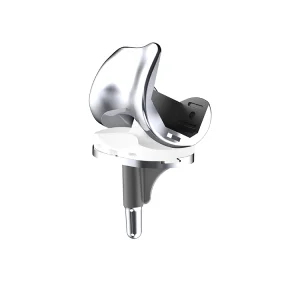
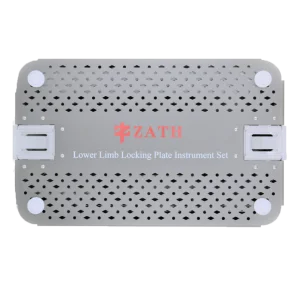
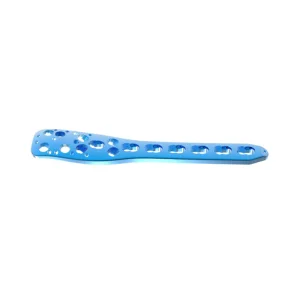
Proximal Femoral Nail (PFN/PFNA): Clinical Engineering Architecture
Pertrochanteric and intertrochanteric fractures (AO/OTA 31-A1, A2, and A3) in osteoporotic bone require an intramedullary device that balances rotational stability, physiological load sharing, and minimal lateral cortex impingement.
Helical Blade Kinematics vs. Dual Screws
Unlike traditional dual-screw lag systems that risk the "Z-effect" (reverse migration and acetabular penetration), our helical blade design exerts radial compaction on cancellous bone during insertion without drilling away precious trabeculae.
- Radial bone compaction increases pull-out strength by 42%.
- Mitigates superior "cut-out" and medial "cut-through" phenomena.
- Optimal Tip-Apex Distance (TAD < 20mm) compliance.
Anatomical Valgus Angle & Curvature
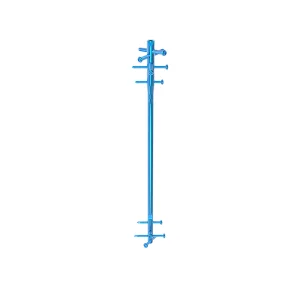
The proximal nail features a 4° to 5° medio-lateral valgus angle, specifically tailored to allow insertion through the tip of the greater trochanter while preventing cortical blow-out and gluteus medius tendon avulsion.
- Radius of Curvature (ROC) calibrated between 1.5m to 2.0m.
- Eliminates anterior cortical impingement in long nail constructs.
- Multiple distal locking configurations: static, dynamic, and free-hand.
Metallurgy & Fatigue Endurance Limits
Engineered from premium biocompatible medical titanium alloy (Ti-6Al-4V ELI conforming to ASTM F136 and ISO 5832-3). Advanced cold-working and precision micro-shot peening impart residual compressive stresses on the surface.
- Tested past 5,000,000 cycles without fatigue failure (ASTM F384).
- Low elastic modulus (110 GPa) minimizes stress shielding.
- Anodized Type II anti-galling surface finish.
| Dimensional Parameter | Short Proximal Nail (Standard) | Long Proximal Nail (Anatomical) | Clinical Rationale & Tolerance |
|---|---|---|---|
| Nail Diameter (Ø) | 9.0 mm, 10.0 mm, 11.0 mm, 12.0 mm | 9.0 mm, 10.0 mm, 11.0 mm, 12.0 mm | ±0.02 mm Fits reamed/unreamed medullary canals |
| Nail Length (L) | 170 mm, 200 mm, 240 mm | 300 mm to 440 mm (20 mm increments) | Short for AO 31-A1/A2; Long for A3/subtrochanteric |
| CCD Angle (Caput-Collum-Diaphyseal) | 125°, 130° | 125°, 130° | Matches native anatomical neck-shaft variation |
| Proximal Diameter | 16.5 mm / 17.0 mm | 16.5 mm / 17.0 mm | Accommodates heavy cyclic bending loads at calcar |
| Distal Locking Configuration | Single/Dual Dynamic-Static Slot | Distal multi-planar round & elongated slots | Facilitates dynamic axial fracture dynamization |
Tackling the Global Fragility Fracture Epidemic
By 2050, the worldwide incidence of hip fractures is projected to surpass 6.26 million annually, driven by an aging demographic. Healthcare systems face mounting pressures to reduce bed-occupancy days, curb revision rates, and lower per-case implant expenditure without compromising clinical outcomes.
OR Turnaround Optimization
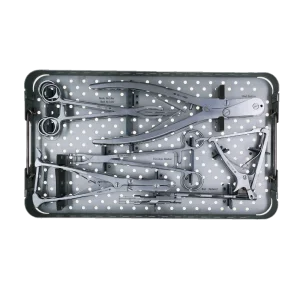
Operating room time costs between $45 and $120 per minute. Our modular, single-tray PFN instrumentation system eliminates clutter, minimizing surgical steps and reducing anesthesia duration by up to 22 minutes per procedure.
Hospital Procurement Deflation
Tier-1 multinational brands impose heavy brand markups. Direct factory ODM procurement reduces average unit acquisition costs by 45% to 65%, enabling public health schemes and private distributors to expand treatment capacities.
Inventory Streamlining
Universal left/right options for short nails and symmetrical proximal nail geometries drastically reduce hospital consigned inventory by 40%, curtailing the financial burden of managing slow-moving stock lines.
Zero-Defect Sterilization Supply
Pre-sterilized, double-blister Tyvek packaging ensures immediate shelf readiness, eliminates in-hospital autoclave processing inconsistencies, and drives post-operative nosocomial infection rates down toward zero.
Proximal Femoral Nail Technology Roadmap: 2026–2032
Intramedullary fixation is shifting from static passive scaffolding toward biological osteo-inductive and telemetric fracture healing systems. Explore our proprietary ODM development pipeline.
Phase I: 3D Trabecular Porous Titanium
Additive manufacturing using Electron Beam Melting (EBM) creates an interconnected open-cell porous matrix (65% porosity, 300–500 µm pore size) directly on the femoral neck blade contact zone.
- Accelerated biological fixation within 14 days.
- Prevents secondary helical blade rotation.
- Validated per ASTM F1854 for bone ingrowth.
Phase II: Telemetric Micro-Strain Sensors
Hermetically sealed passive RFID and micro-strain sensor units integrated within the nail's cannulation lumen provide real-time mechanical loading and callus-stiffening analytics without transcutaneous wiring.
- Objective quantification of fracture union stage.
- Early warning of non-union or fatigue overload.
- Zero ionizing radiation diagnostic monitoring.
Phase III: Bioresorbable Magnesium Blades
High-strength WE43 magnesium-alloy lateral buttress sleeves that gradually dissolve over 9 to 18 months, steadily transferring load back to the native cortex to eradicate permanent stress-shielding atrophy.
- Completely biocompatible degradation products.
- Promotes localized periosteal osteogenesis.
- Eliminates requirement for hardware removal.
China Factory 4.0: Scalable Precision & Supply Chain Resilience
Operating out of the Zhongguancun Science and Technology Park (Pinggu, Beijing), our smart manufacturing hub synthesizes automated robotics, Swiss-type CNC machining, and traceable metrology to deliver uncompromised consistency.
5-Axis Simultaneous CNC
Utilizing state-of-the-art Citizen Cincom and DMG MORI multi-axis machining centers. Complex helical blade flutes, deep-hole cannulations, and anatomical contours are milled in a single chucking setup to ensure concentricity within ±0.005 mm.
100% Raw Material Ingot Origin
Certified vacuum-arc remelted (VAR) titanium bar stocks sourced exclusively from pre-qualified suppliers. Every ingot is subjected to ultrasonic crack detection, spectrographic chemical assay, and tensile yield mapping with full trace documentation.
Class 10,000 ISO Cleanrooms
Implant degreasing, ultrasonic multi-stage passivation, cleanroom assembly, and sterile barrier sealing (ISO 11607 compliant) are executed in Class 10,000 (ISO Class 7) environments with automated airborne particle and bioburden control.
Supply Chain Redundancy
Our facility spans dedicated trauma, spine, and joint manufacturing lines, guaranteeing steady production throughput. Buffer inventories of critical sizes safeguard global distribution networks against geopolitical and freight shocks.
Turnkey OEM / ODM Proximal Femoral Nail Quotation Framework
Transparent, volume-tiered B2B pricing models structured for brand holders, private labelers, tender contractors, and stocking orthopedic distributors.
| Procurement Tier | Order Volume (MOQ) | Customization Depth | Lead Time | Support Scope |
|---|---|---|---|---|
| Standard Distributor | 50 – 200 Units | ZATH Standard Brand, Sterile / Non-Sterile Pack | 10 – 15 Business Days | COA, Raw Material Mill Certs, Standard IFU |
| Private Label (OEM) | 200 – 1,000 Units | Custom Laser Etching, Custom Box / Label, Anodize Colors | 25 – 35 Business Days | Full CE / FDA Dossier, Biocompatibility Data |
| Bespoke Engineering (ODM) | 1,000+ Units (or Annual Contract) | Proprietary Geometry, Customized Angle, Bespoke Jigs | 45 – 60 Days (incl. Tooling) | FEA Biomechanical Validation, ASTM Fatigue Test |
Custom Laser Marking & UDI
Fully compliant with FDA Unique Device Identification (UDI) and EU MDR Annex VI requirements. High-resolution fiber-laser surface etching ensures 2D DataMatrix code readability through dozens of sterilization cycles without corrosion nucleation.
Ergonomic Radiolucent Aiming Jigs
Aiming arms manufactured from carbon-fiber-reinforced polyetheretherketone (PEEK) provide supreme radiolucency under intraoperative C-arm fluoroscopy, eliminating parallax interference during proximal blade and distal screw placement.
Flexible Incoterms & Logistics
Seamless worldwide shipping via air express (DHL, FedEx, UPS door-to-door delivery within 4–6 business days) or sea/air container freight. Full handling of export customs declarations, Certificate of Free Sale (CFS), and consular legalization.
Regulatory Dossiers & ISO 13485:2016 Certification
Overcoming global regulatory friction is our core strength. We equip our overseas partners with ready-to-file Technical Documentation conforming to European MDR 2017/745 Class IIb, US FDA 510(k), and regional MOH registration requirements.
ISO 10993 Biocompatibility
Comprehensive biological safety dossiers: Cytotoxicity (ISO 10993-5), Sensitization & Irritation (ISO 10993-10), Systemic Toxicity (ISO 10993-11), and Pyrogenicity tests conducted by GLP-accredited international test laboratories.
Mechanical Fatigue Validation
Rigorous dynamic mechanical test reports conforming to ASTM F384 (Standard Specification and Test Methods for Metallic Angled Orthopedic Fracture Fixation Devices) under 5 Hz cyclic physiological bending conditions.
Packaging & Shelf-Life Validation
Accelerated and real-time aging validation (ASTM F1980) confirming 5-year sterile barrier integrity in medical Tyvek-PET/PE blister packaging. Bubble emission (ASTM F2096) and peel strength tests (ASTM F88) fully documented.
Frequently Asked Questions: ODM Proximal Femoral Nail
Authoritative answers to the biomechanical, manufacturing, and commercial questions most frequently asked by orthopedic distributor directors and hospital procurement boards.
The helical blade compresses bone trabeculae radially rather than reaming it away. In poor bone mineral density (BMD), this bone-compaction mechanism increases the contact surface area and significantly raises the cut-out threshold compared to traditional threaded lag screws, which rely on delicate bone threads susceptible to shear failure.
Following Baumgaertner's validated criteria, our instrument calibration and guide sleeve system are calibrated to position the helical blade tip apex within 20 mm total Tip-Apex Distance (sum of the anteroposterior and lateral fluoroscopic distances), reducing the clinical risk of cut-out to under 1.2%.
Our proximal targeting jigs are machined from ultra-stiff aircraft-grade titanium with high-modulus carbon-fiber frames. Every jig is laser-calibrated and batch-checked through optical coordinate measuring machines (CMM) to guarantee zero deflection up to 300 mm nail working depth.
Standard factory branded orders have no MOQ constraint. For private-label OEM (custom laser branding and custom box packaging), our typical starting run is 200 units across mixed sizes. For bespoke mechanical design changes (ODM), tooling amortizations apply with a baseline volume of 1,000 units annually.
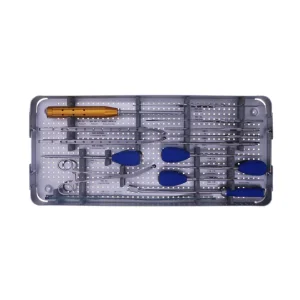
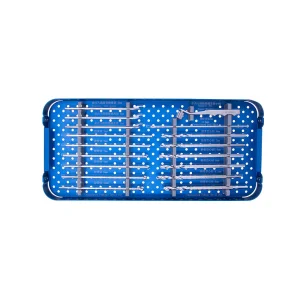
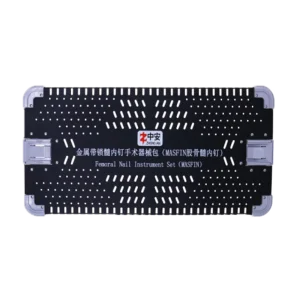
Yes. Every ODM proximal nail system is supported by dedicated insertion, dynamic locking, and emergency revision extraction tools, including conical counter-threaded removal bolts, slap-hammers, and broken screw extractors housed in aircraft-grade anodized aluminum sterilization trays.
We provide comprehensive dossiers including ISO 13485:2016 accredited audit certificates, Certificate of Free Sale (CFS) authenticated by official chambers of commerce and consulates, Declaration of Conformity (DoC), Raw Material Metallurgical Mill Certificates, and Full Device Master Files (DMF).
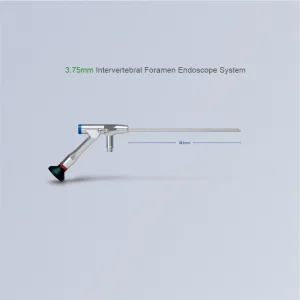
Endoscopic, Spinal, Trauma & Sports Medicine Platforms
Certified Class IIb internal fixation systems, endoscopic spinal surgery units, and ligament reconstruction solutions manufactured under single-source ISO 13485 quality oversight.
Request Official ODM Specifications & Factory Price Tiers
Connect directly with our senior orthopedic engineering team in Beijing. Get complete technical dossiers, sample trial sets, CAD dimensional drawings, and confidential B2B distribution price books for your target territory.