
Precision Osteosynthesis & Endoscopy Systems
Explore our foundational trauma and endoscopic portfolio machined from biocompatible implant-grade titanium and medical stainless steel under strict cleanroom controls.
State of the Art in Intramedullary Tibial Nailing: Biomechanics & ODM Manufacturing
A technical treatise on metallurgical specifications, structural fatigue thresholds, and load-sharing dynamics in modern orthopedic surgical reconstruction.
1. Clinical Biomechanics: The Evolution of Intramedullary Load-Sharing Constructs
Tibial diaphyseal and metaphyseal fractures represent some of the most mechanically demanding trauma scenarios treated by orthopedic surgeons. The tibia features minimal anteromedial soft tissue coverage, an eccentric blood supply predominantly derived from the nutrient artery entering the posterior cortex below the soleal line, and substantial axial and torsional loading vectors during ambulation. Intramedullary nailing (IMN) serves as the gold-standard biological fixation philosophy, acting as an internal load-sharing splint rather than a rigid load-bearing construct like traditional compression plating.
From an engineering standpoint, our ODM tibial nail systems preserve the periosteal biology and fracture hematoma by distributing stress along the central anatomical neutral axis of the medullary canal. By aligning the implant with the mechanical axis of the lower extremity, bending moments are exponentially reduced compared to eccentric lateral or medial plates. To prevent post-operative valgus, varus, or procurvatum/recurvatum deformities—particularly in challenging distal or proximal third extra-articular fractures—our CAD/CAM modeling integrates an anatomically calibrated 10.5° Herzog proximal bend and a 3° distal Herzog deflection. These precisely calculated angles facilitate insertion without compromising the posterior cortex or forcing malalignment across the tuberosity entry corridor.
Our OEM/ODM manufacturing protocols strictly comply with ASTM F1264 (Standard Specification and Test Methods for Intramedullary Fixation Devices). Dynamic fatigue testing verifies that our Ti-6Al-4V ELI (Extra Low Interstitial) and Ti-6Al-7Nb implants comfortably surpass 5.0 million load cycles at 1,200 N without structural micro-fissuring or failure at the proximal and distal transverse locking screw junctions.
2. Metallurgical & Biomechanical Property Comparison
Distributors and medical procurement groups must balance clinical performance, biocompatibility, MRI artifact interference, and direct cost-of-goods. Below is our internal foundry evaluation comparing standard surgical grade materials for ODM intramedullary nail fabrication:
| Material Specification | Yield Strength (MPa) | Elastic Modulus (GPa) | Fatigue Limit (Cycles @ 600MPa) | Biocompatibility & MRI Artifacts | Optimal Clinical Indication |
|---|---|---|---|---|---|
| Titanium Alloy Grade 5 ELI (Ti-6Al-4V ASTM F136) | ≥ 795 - 860 | 110 - 114 | > 10&sup7; (Exceeds ASTM F1264) | Superior osseointegration; minimal artifact scatter | Primary choice for high-energy shaft & metaphyseal fractures |
| Niobium-Stabilized Titanium (Ti-6Al-7Nb ISO 5832-11) | ≥ 900 | 105 | > 10&sup7; (Highest fatigue tolerance) | Vanadium-free; ultra-low systemic cytotoxic potential | Long-term retention, pediatric transition, premium tenders |
| Medical Stainless Steel (316LVM ASTM F138) | ≥ 690 - 750 | 200 - 210 | ~ 5 x 10&sup6; (Higher risk of micro-fretting) | Moderate; marked ferromagnetic MRI distortion | Austere humanitarian environments & cost-sensitive markets |
China Precision Manufacturing: The High-Tech ODM Paradigm
Combining world-class CNC engineering, stringent cleanroom protocols, and automated metrology to deliver premium implants with an agile cost structure.
Swiss 5-Axis Turning & Gun-Drilling
We deploy high-speed Citizen and Star Swiss-type sliding headstock lathes capable of synchronous milling, eccentric thread machining, and single-pass cannulation deep gun-drilling up to 480mm lengths with concentricity variances kept within ±0.01mm.
End-to-End Lot Traceability
Every titanium batch undergoes spectrometer spectroscopic verification and ultrasonic internal void detection. Bar stock heat numbers are laser-engraved onto semi-finished components, creating non-repudiable traceability from ingot to the operating table.
Type II Hard Anodization
Proprietary electro-chemical Type II anodization stabilizes the passive TiO2 layer, reducing fretting wear at screw-nail interfaces by 42% and eliminating cold welding, ensuring painless hardware extraction years post-consolidation.
Class 10,000 / 100,000 Packaging
Automated ultrasonic multi-stage detergent washing in reverse-osmosis DI water precedes primary cleanroom packaging in medical-grade Tyvek blister pouches, certified for gamma or ethylene oxide (EtO) terminal sterilization protocols.
Next-Generation Tibial Nailing Paradigm: Disruptive Industry Trends
Surgical methodologies and biomechanical hardware are rapidly evolving. As an ODM partner, we integrate clinical advancements into production-ready platforms.
1. Suprapatellar Semi-Extended Instrumentation
Traditional infrapatellar entry forces deep knee hyperflexion (>90°), which often pulls the proximal tibial fragment into procurvatum via patellar tendon tension. The industry is rapidly shifting toward suprapatellar entry through the retropatellar pouch with the knee positioned in semi-extension (15°–20°). Our ODM factory supplies dedicated long cannulated protective sleeves, trocar trocars, and specialized curved targeting guides that safeguard intra-articular cartilage, quadriceps tendons, and the patellofemoral joint.
2. Multi-Planar Distal Angular Locking
Historically, distal locking was restricted to straightforward coronal and sagittal screws, leaving complex pilon variants susceptible to toggling. Contemporary designs incorporate up to four multidirectional locking options within 20mm of the distal tip, including oblique, posterior-to-anterior, and crossing medial-to-lateral trajectories. This enables surgeons to securely anchor ultra-distal meta-diaphyseal fractures without resorting to extensive open articular plating.
3. Dynamic Axial Dynamization & Smart Coatings
Delayed unions are mitigated through controlled axial micro-motion. Our nail designs integrate a dedicated 7mm dynamic slot alongside static round holes. Surgeons can perform secondary dynamization by simply extracting the static screw, enabling controlled axial impaction while maintaining complete rotational stability. Additionally, pilot ODM runs are currently validating antimicrobial silver-ion and nano-hydroxyapatite vapor deposition to combat hospital-acquired osteomyelitis in compound fractures.
Tailored Solutions for Localized Clinical Scenarios
Trauma patterns vary drastically depending on patient demographics, mechanism of injury, and emergency center logistical capabilities. Our tibial systems cover the complete trauma continuum.
Polytrauma Emergency & Damage Control
In high-velocity automotive collisions where patients present with unstable hemodynamic status, prolonged operative duration can trigger the lethal triad of hypothermia, acidosis, and coagulopathy. Our rapid reamed/unreamed tibia system features a streamlined one-click radiolucent carbon-fiber jig that cuts targeting and distal freehand screw insertion times by up to 35%, making it ideal for swift definitive conversion.
Geriatric Osteoporotic Fractures
Aging populations suffer spiral metaphyseal fractures under low-energy falls. In compromised bone density with wide intramedullary canals, standard screws risk screw cutout and loss of fixation. Our ODM system supports specialized end-caps that internally lock the most proximal oblique screws, creating a fixed-angle construct comparable to angular-stable locking compression plates without wide periosteal stripping.
Austere, Military & Humanitarian Deployments
Field hospitals often operate without constant fluoroscopic C-arm image intensifiers. We manufacture universal non-magnetic targeting frames equipped with mechanical depth calipers and electromagnetic/ultrasonic guidance options that allow robust distal screw capture even under austere conditions where radiologic confirmation is severely restricted.
Global Enterprise Solutions: Strategic OEM/ODM Contracting
A turnkey manufacturing bridge enabling multinational brand holders and hospital tender bidders to scale production rapidly while ensuring unyielding compliance.
CE MDR & FDA 510(k) Ready Dossiers
Navigating the EU Medical Device Regulation (MDR 2017/745) and US FDA clearances requires extensive paperwork. We provide qualified distributors with comprehensive Device Master Files (DMF), biological evaluation reports (ISO 10993), packaging aging validation (ASTM F1980), and full finite element analysis (FEA) biomechanical simulation packages.
Turnkey Surgical Instrument Trays
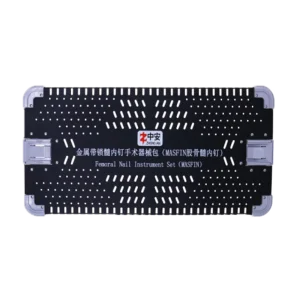
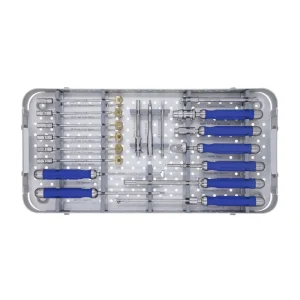
An implant is only as good as its delivery system. We design and mill tailor-made aluminum sterilization trays containing ergonomic cannulated reamers, flexible drive shafts, quick-coupling screwdrivers, insertion handles, radiolucent aiming arms, and extraction hardware—custom-anodized with your brand identity and laser markings.
Tiered Supply Chain Economics
Global distributors face compressed hospital margins and price controls. By consolidating our supply chain in Beijing's Zhongguancun Science Park, we eliminate intermediate subcontracting layers. Our partner clients benefit from factory-direct pricing, flexible minimum order quantities (MOQ), and guaranteed batch lead times of under 30 days for bespoke runs.
Global Enterprise RFQ Parameters: Requesting Quotations
To receive an accurate and competitive ODM quote for customized tibia intramedullary nail systems, global buyers are encouraged to provide clear baseline specifications.
Technical Baseline Checklist for Tender & Private Label Quotes
When issuing a Request for Proposal (RFP) or Request for Quote (RFQ) to our engineering division, specifying the following critical dimensions will accelerate technical feasibility clearance and unit pricing estimates:
- Nail Diameter: Ø 8.0mm to Ø 13.0mm (0.5mm increments)
- Length Matrix: 255mm to 435mm (15mm increments)
- Cannulation Bore: Inner Ø 4.2mm for Ø 3.0mm guide wire
- Proximal Herzog Angle: 10.5° (Customizable 9°–12°)
- Distal/Proximal Screws: Ø 4.0mm / Ø 5.0mm Cortical/Cancellous
- Drive Type: Star/Torx T25 or Hexagonal 3.5mm
- End Caps: 0mm flush, +5mm, +10mm, +15mm extension
- Thread Pitch: Dual-lead reverse-cutting flutes
- Packaging: Non-sterile bulk or Sterile Double-Tyvek
- Sterilization Compatibility: EO or Gamma Radiation
- Labeling: UDI-compliant GS1 DataMatrix barcodes
- Custom Branding: Laser logo etching & color anodizing
Technical & Procurement FAQ for Hospital Distributors
In-depth responses to the most frequent biomechanical, logistical, and commercial inquiries submitted by international hospital supply buyers.
What is the standard turnaround time for custom ODM tooling and initial sample delivery?
For custom geometric variations on existing platforms (e.g., modified proximal bends or specialized distal locking hole orientations), CAD modeling and FEA simulation are finalized within 10 working days. First-article pilot samples manufactured on 5-axis CNC machines are dispatched within 20 to 30 calendar days along with full coordinate measuring machine (CMM) dimensional inspection reports.
How does your factory prevent galling and cold-welding between titanium locking screws and nail holes?
Titanium-on-titanium friction in biological environments can lead to microscopic galling during insertion and severe cold-welding over extended implantation. We utilize electro-chemical Type II anodization to harden the surface crystalline structure of the implant and control thread tolerances within ±0.005mm. This micro-hardness barrier reduces the coefficient of friction and guarantees uncompromised hardware extraction years post-surgery.
Can you manufacture universal targeting instruments suitable for both infrapatellar and suprapatellar approaches?
Yes. Our modular MASFIN expert instrumentation platform features interchangeable insertion arms and sleeve systems. By substituting the short infrapatellar soft-tissue protector with our extended, curved suprapatellar cannulated guide tube, the same core insertion handle and targeting carbon jig can be utilized, significantly decreasing instrument set inventory costs for hospital networks.
What minimum order quantities (MOQ) apply to private label laser etching and sterile packaging?
For standard catalogue specifications carrying custom distributor laser branding and sterile Tyvek pouch packaging, our baseline MOQ starts at only 50 units per size run, or an aggregate initial trial order of 200 mixed units. Fully custom engineered nail molds or non-standard metallurgical compositions typically require an aggregate threshold of 500 units to amortize specialized CNC fixture setup costs.
What documentation do you provide to support local Ministry of Health (MoH) medical device registrations?
We provide a comprehensive technical registration dossier including ISO 13485:2016 certification, Certificate of Free Sale (CFS), biocompatibility testing data (cytotoxicity, systemic toxicity, sensitization per ISO 10993), ASTM F1264 mechanical static and dynamic fatigue validation, packaging seal integrity verification (ASTM F1929), and shelf-life accelerated aging reports.
What are the international shipping terms and express freight transit durations?
We support standard Incoterms including EXW, FOB Beijing/Tianjin, and CIF/DAP destination airport. Routine bulk shipments are expedited via air freight couriers (DHL, FedEx, UPS, EMS) with transit times typically ranging from 4 to 6 business days worldwide, complete with pre-cleared customs documentation and harmonized tariff coding (HS Code: 9021.90.00).
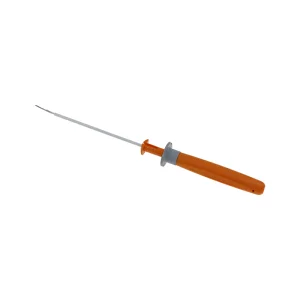
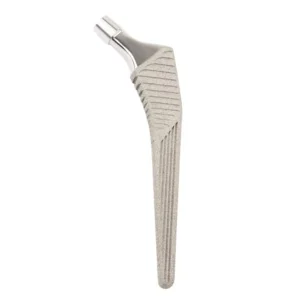
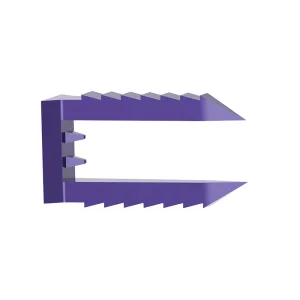
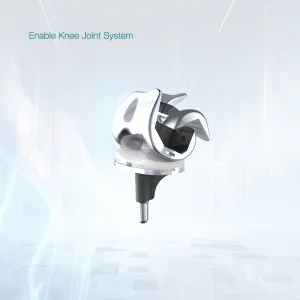
Ancillary Joint, Spine & Sports Medicine Implants
Complete your supply portfolio by pairing tibia nails with our comprehensive clinical platforms covering arthroplasty, spinal instrumentation, and soft tissue repair.
Initiate Your ODM Tibial Nail Contract Evaluation
Collaborate with Beijing's premier ISO 13485 orthopedic manufacturer. Request comprehensive price schedules, technical files, CAD blueprints, and cleanroom qualification certificates today.