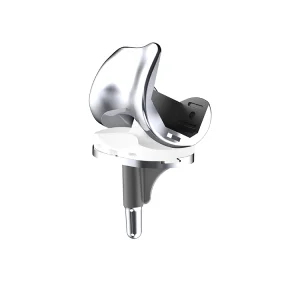
Precision Trauma & Arthroplasty Implant Systems
Engineered under ISO 13485 medical device directives to support clinical efficacy, high biomechanical load tolerances, and streamline surgical intervention.

Macro Dynamics in Global Distal Radius Fixation Procurement
Distal radius fractures constitute nearly 18% of all adult fractures encountered globally. Institutional healthcare networks, hospital groups, and multinational distributors face an evolving procurement ecosystem.
Supply Chain Resiliency
Global orthopedics has migrated away from fragmented sourcing. Tier-1 enterprise buyers now necessitate dedicated OEM/ODM hubs capable of guaranteeing continuous raw-material reserves (certified Ti-6Al-4V ELI & medical-grade 316L stainless steel) with 100% heat-lot traceability to eliminate manufacturing bottlenecks.
Regulatory Convergence
Navigating global regulatory landscapes demands exhaustive design dossiers. Exporters must fulfill stringent MDR (EU) 2017/745 Class IIb standards alongside FDA 510(k) pathway parameters, complete with biomechanical fatigue analysis (ASTM F382) and verified cleanroom microbial limits.
Cost Rationalization vs Quality
Tendering entities in emerging and mature markets require aggressive cost amortization without degrading clinical outcomes. OEM alliances allow distributors to bypass distributor margin stacking while retaining custom instrumentation, sterile blister packing, and institutional co-branding.
Years of Specialized Manufacturing
Skilled Technicians & QA Personnel
Sterile Packed & Lot Documented
Express Global Tier-1 Delivery
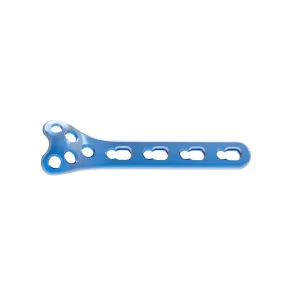
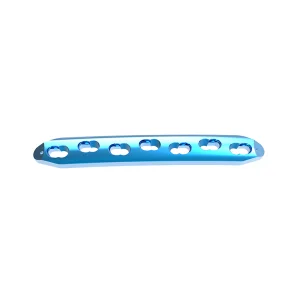
High-Precision OEM Distal Radius Locking Plate Solutions
Addressing intra-articular comminution, osteoporotic fragility fractures, and soft tissue irritation with cutting-edge anatomical profiling and locking geometries.
Volar Watershed Contour
Engineered to sit flush proximal to the watershed line, mitigating flexor pollicis longus (FPL) tendon irritation while providing subchondral buttressing to prevent secondary articular collapse under dynamic physiologic loads.
Polyaxial Variable-Angle Locking
Features robust threaded cone interfaces allowing up to ±15° multi-directional screw trajectory adjustments. Enables precise capture of fragmented styloid, lunate facets, and dorsal rim fragments without cross-threading risks.
Ultra-Low Profile Chamfering
Electro-chemically polished finishes paired with double-beveled plate peripheries drop the edge profile down to 1.5mm, dramatically reducing soft tissue tension and adhesion risks in active demographic cohorts.
Technological Roadmap & Future Trauma Trajectory
Strategic advancements shaping the future decade of orthopedic manufacturing, from generative algorithmic lattice design to digital surgical twins.
Additive Porous Trabecular Layers
Incorporation of selective laser melting (SLM) additive manufacturing to generate osteoconductive titanium matrices on bone-contact surfaces, reducing stress shielding.
Patient-Specific 3D Reconstruction
Rapid conversion of DICOM CT data into pre-bent, custom anatomy plates for severe distal radius malunions, shortening surgical time by upwards of 40 minutes.
Bio-Active Anti-Infective Nanocoatings
Application of anodized titanium nanotube arrays with sustained antimicrobial silver ion and antibiotic release capabilities to radically decrease periprosthetic infection rates.
Integrated Telemetric Micro-Sensors
Researching embedded micro-strain gauges designed to passively transmit real-time bone-union stiffness metrics via wireless NFC telemetry to clinical teams.
Institutional Compliance & Regional Distributor Enablement
A reliable OEM/ODM partnership requires comprehensive technical dossiers and proactive logistical facilitation.
Turnkey Technical Files
Comprehensive STED-compliant technical files, material biocompatibility (ISO 10993), sterilization validation (ISO 11137), and stability shelf-life data packages ready for ministry submissions.
Sterile Packaging & UDI
Cleanroom packaging in high-barrier Tyvek blisters with dual sterile barriers. Full alignment with GS1 standards, including 2D Datamatrix UDI marking for direct OR scanning.
Instrument Tooling Sets
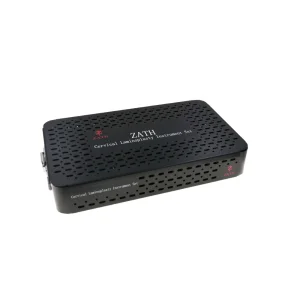
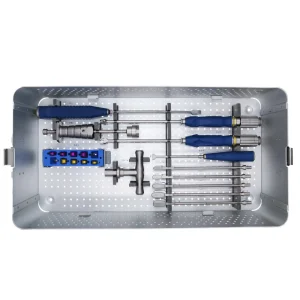
Supplied with complete, autoclavable PPSU/Radel graphic cases featuring precision torque limiters, depth gauges, self-retaining screwdrivers, and drill guides.
Flexible OEM/ODM Branding
High-resolution fiber laser marking of customer logos, SKU codes, custom anodization coloration systems, and customized carton packaging configurations.
Frequently Answered Technical & Commercial Questions
In-depth responses curated by our senior orthopedic biomedical engineering team for hospital tenders and international distributor inquiries.
What specific materials are utilized for distal radius locking plates and screws?
Our plants strictly utilize medical-grade Titanium Alloy (Ti-6Al-4V ELI conforming to ISO 5832-3 / ASTM F136) and high-purity medical-grade Stainless Steel (316L conforming to ISO 5832-1 / ASTM F138). Raw materials are certified with full chemical composition and tensile mill certificates traceable to original ingot heats.
How do you validate the mechanical fatigue properties of your locking compression systems?
We execute dynamic cyclic fatigue tests according to ASTM F382 standard test methods for metallic bone plates. Implants endure a minimum of 2.5 million cycles under aggressive bending-moment parameters without plastic deformation or fracture, simulating physiological cyclic post-op loading until clinical consolidation.
Can customized plate geometries or variable-angle screw profiles be developed under ODM contracts?
Yes. Our in-house R&D engineering department uses 5-axis CNC high-speed machining centers alongside advanced multi-axis Swiss turn machines. We partner directly with client orthopedic surgeons to iterate virtual CAD geometry, run FEA stress modeling, produce rapid functional prototypes, and handle full tooling setup within 4-8 weeks.
What are standard delivery turnaround times for high-volume overseas distributor shipments?
Standard warehouse stocked configurations are dispatched within 48 hours. High-volume custom OEM runs require 30 to 45 days. Expedited express air-cargo shipments (via DHL, FedEx, TNT, UPS) arrive at most global metropolitan ports within 4 to 6 business days, complete with automated shipping notifications and temperature monitoring where required.
What regulatory documentation is supplied for regional market medical device registration?
We provide full ISO 13485 QMS certificates, FSC (Free Sale Certificates), UDEM documentation, biocompatibility test results, sterilization process validation (EO or Gamma), surgical technique guides, and exhaustive Product Technical Requirements (PTR) documentation to expedite clearance in regional ministries of health.
End-to-End Surgical Implants & Instrument Solutions
Explore our extended series of clinical-grade joint replacement, spine arthrodesis, and sports medicine fixation systems.