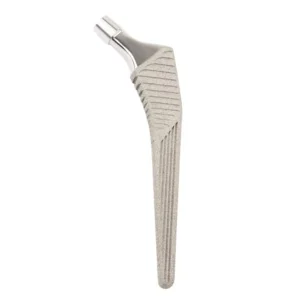
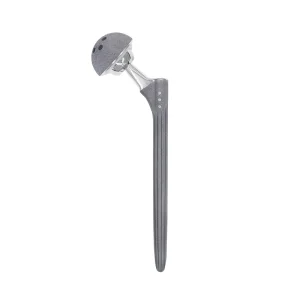
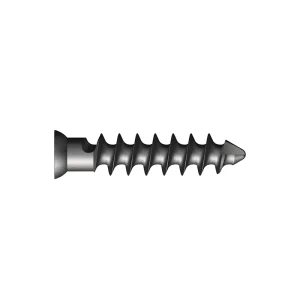
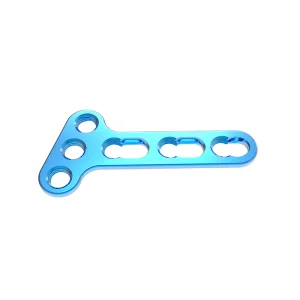
Primary Instrumentation & Trauma Implants
Sterile-packed and precision-machined orthopedic devices engineered for high primary stability, streamlined operative execution, and repeatable surgical outcomes.
White Paper: Clinical Landscape & Industrial Demand
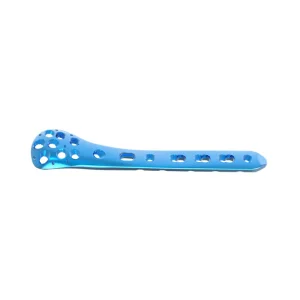
Proximal femur fractures—spanning pertrochanteric, intertrochanteric, subtrochanteric, and basocervical segments—represent one of the most critical challenges in modern orthopedic trauma surgery.
Commercial Status & Biomechanical Fundamentals of Proximal Femur Plating
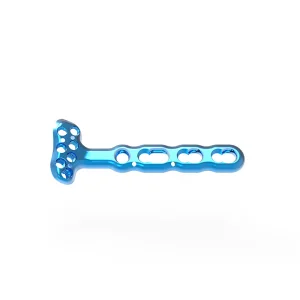
The global commercial demand for proximal femur titanium plates has experienced sustained acceleration, propelled by an aging demographic and escalating osteoporotic fracture rates alongside high-energy vehicular trauma. Clinically, proximal femoral locking compression plates (PFLCP) provide fixed-angle biomechanical bridging that preserves periosteal vascularization while mitigating the risk of primary cut-out or medial collapse.
Compared to conventional 316L stainless steel constructs, medical titanium alloy (Ti-6Al-4V ELI conforming to ASTM F136 / ISO 5832-3) delivers an elasticity modulus markedly closer to cortical bone (110 GPa versus ~200 GPa). This biological compliance dramatically mitigates the stress-shielding phenomenon, avoiding localized osteopenia beneath the plate while fostering peri-implant callous remodeling.
Fixed-Angle Stability in Weakened Bone
Locked multi-screw divergence across the femoral neck and head provides angular stability that neutralizes heavy varus deforming forces. Threaded plate holes anchor screws rigidly, eliminating friction-based plate-to-bone compression and safeguarding periosteal blood flow essential for non-union prevention.
Optimized Periosteal Clearance
Modern proximal femur locking plates incorporate undercut limited-contact surface geometry. By drastically reducing total surface contact with the femoral cortex, the construct minimizes biological disruption to the lateral periosteal circulation, accelerating cellular osteogenesis and physiological bridging.
Dynamic Load Redistribution
By absorbing cyclic physiologic forces during initial ambulation, titanium plates distribute tensile stresses along the lateral tension band and compressive forces across the calcar femorale. This controlled mechanical load-sharing prevents early catastrophic fatigue hardware breakage.
Technological Evolution & Manufacturing Trends
The manufacturing landscape for internal fixation devices is undergoing rapid transformation, migrating away from standard machining methodologies toward high-precision multi-axis Swiss-lathe processing, selective laser melting (3D printing), and bio-inert physical vapor deposition (PVD) coatings.
Multi-Axis CNC Milling
State-of-the-art 5-axis DMG MORI CNC milling machines fabricate intricate anatomical contours from certified solid Ti bar stock with micron-level tolerances, guaranteeing accurate screw-thread locking engagements.
Variable-Angle (VA) Locking
Moving beyond monoaxial designs, variable-angle locking holes permit surgeons up to ±15° of polyaxial angulation off-axis, targeting healthy bone purchase in complex intra-articular comminution.
Surface Bio-Functionalization
Micro-arc oxidation (MAO) and Type II anodization generate controlled micro-nanostructured titanium dioxide layers, increasing biocompatibility, fatigue resistance, and reducing intraoperative cold-welding risk.
Low-Profile Beveled Margins
Tapered plate tips and ultra-low profile edges significantly decrease iliotibial band (ITB) irritation and soft tissue impingement, leading to accelerated functional recovery and diminished secondary hardware removal requests.
Clinical Indications & Technical Specifications
Proximal femur titanium locking systems are purpose-engineered for multi-segment anatomical reconstruction across lateral proximal femoral geography. The mechanical properties must adhere to stringent physical criteria.
| Clinical Indication | AO/OTA Fracture Classification | Optimal Plate Length (Holes) | Recommended Screw Trajectory | Fixation Goal |
|---|---|---|---|---|
| Peritrochanteric Comminution | AO 31-A1, 31-A2 | 2 to 6 Shaft Holes | Triple Proximal Divergent Cancellous | Preventing medial calcar displacement |
| Reverse Obliquity Fractures | AO 31-A3 | 6 to 10 Shaft Holes | Multi-Plane Bi-Cortical Locking | Neutralizing primary shear strain vectors |
| Subtrochanteric Extension | AO 32-A/B/C Proximal | 8 to 16 Shaft Holes | Staggered Cortical Bridging | Extending moment arm along diaphysis |
| Osteoporotic Malunion / Revision | Non-union / Hardware Failure | Anatomic Long Bridging Plate | Variable-Angle Polyaxial Fixation | Broad structural load-sharing & bone grafting |
Supply Chain Solutions & Strategic Technology Roadmap
Procuring medical implants globally requires uncompromised supply continuity, tight regulatory compliance, and rapid turnaround. ZATH bridges the gap between precision manufacturing in China and local regulatory compliance worldwide.
Turnkey OEM/ODM Engineering
From custom laser marking and unique color anodizing to customized anatomical curvatures fitted to demographic-specific femur morphometry, our engineers deliver ready-to-market solutions that align with your branding and regional surgical preferences.
Comprehensive Dossier Support
Navigating MDR, FDA 510(k), and regional MOH approvals is simplified via complete technical documentation, biosecurity validation, ISO 10993 cytotoxicity testing, dynamic biomechanical fatigue test data, and sterile barrier shelf-life verifications.
Future Roadmap: AI-Driven Ergonomics
Our long-term development pipeline incorporates finite element analysis (FEA) machine-learning models to continually optimize plate wall thickness versus screw hole proximity, maximizing torsional rigidity while minimizing bulk hardware volume.
Frequently Asked Questions (Procurement & Clinical FAQ)
Detailed technical, regulatory, and supply responses for hospital procurement directors, orthopedic distributors, and surgical facility managers.
What are the mechanical advantages of Proximal Femur Titanium Plates over Intramedullary (IM) Nails?
Which specific raw titanium material grade is utilized in your implants?
Are implants supplied in validated cleanroom sterile packaging?
Can the proximal plate design accommodate bone cement augmentation for severe osteoporosis?
What is the typical delivery schedule and distributor MOQ?
Comprehensive Orthopedic Implant Portfolio
Complementary joint replacement, spine stabilization, and limb salvage implants engineered to integrate with our proximal femur fixation lines.