ISO 13485 Certified • MDSAP-Aligned Arthroplasty Engineering
Buy Knee Joint Replacement Companies & Service Serving Canada
A Technical White Paper & Turnkey Medical Manufacturing Directory Designed for Canadian Provincial Health Authorities, Orthopedic Distributors, Surgical Hospital Networks, and Private Arthroplasty Centers.
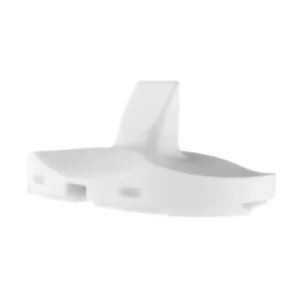
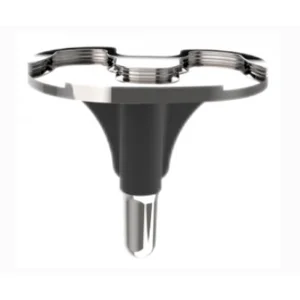
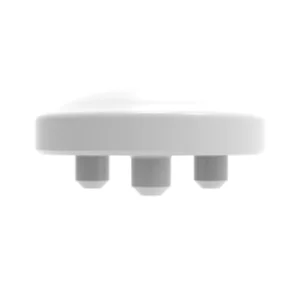
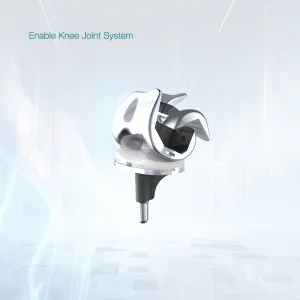
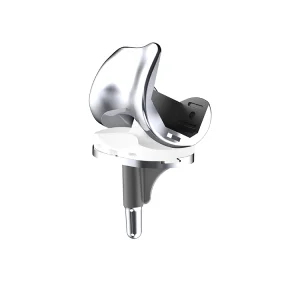
Primary Knee Joint Arthroplasty Core Lineup for Canada
Engineered to satisfy stringent biomechanical kinematics and Health Canada Class III/IV medical device durability expectations. High-precision modularity designed for primary, complex primary, and revision knee reconstruction.
Canadian Knee Arthroplasty Industry: Macro Trends & Supply Pressures
Understanding the dynamic clinical, economic, and logistical landscape shaping total joint reconstruction procurement across Canada's ten provinces and three territories.
75,000+
Annual Knee Replacements in Canada
42%
Cases Exceeding CIHI Wait Benchmarks
$1.4B+
Annual Canadian Joint Care Expenditure
100%
Health Canada Class III/IV Mandate
Surgical Backlogs & CIHI Data
Data from the Canadian Institute for Health Information (CIHI) indicates severe wait-time variance across provincial health authorities (such as Ontario Health, Alberta Health Services, and Vancouver Coastal Health). With demographic aging accelerating osteoarthritis incidence, provincial procurement teams are demanding resilient implant supply partnerships that circumvent multinational oligopolistic backorders and supply chain chokepoints.
Rise of Ambulatory Centers (ASCs)
In response to public operating room backlogs, provinces like British Columbia, Alberta, and Ontario have expanded contracting with independent, ambulatory surgical centers (ASCs) performing outpatient and rapid-recovery total knee arthroplasty (TKA). These facilities demand streamlined instrument trays, pre-sterilized modular implants, and competitive unit costs that ensure fiscal sustainability under blended public-private funding models.
Health Canada & MDSAP Standards
Joint arthroplasty systems deployed in Canada require Medical Device Licenses (MDL) under Class III (tibial baseplates, inserts) and Class IV (active/drug-eluting or highly customized systems). Compliance with ISO 13485:2016 through the Medical Device Single Audit Program (MDSAP) is an absolute prerequisite. Suppliers must furnish comprehensive biocompatibility, fatigue testing (ISO 14879-1), and wear debris characterization documentation.
Global Industrial Landscape
Global Supply Chain Shift: Modernizing Knee Prosthesis Procurement
How cutting-edge Asian manufacturing infrastructure combined with European and North American regulatory protocols delivers unprecedented supply reliability and cost rationalization.
Global Metallurgy & Precision CNC Evolution
The global joint replacement manufacturing landscape has transitioned from fragmented boutique workshops to mega-scale, vertically integrated biomedical production hubs. Medical-grade titanium (Ti-6Al-4V ELI conforming to ASTM F136) and high-nitrogen Cobalt-Chromium-Molybdenum (CoCrMo per ISO 5832-4) alloys are now transformed using Swiss 9-axis simultaneous machining centers. By integrating laser surface texturing and robotic polishing, modern facilities achieve mirror finishes with Ra < 0.02 μm, significantly reducing abrasive UHMWPE wear in articulating geometries.
Tackling Inflationary Healthcare Procurement in Canada
Provincial group purchasing organizations (GPOs) such as Plexxus, Mohawk Medbuy Corporation, and HealthPRO Titanium have historically been beholden to legacy US-based conglomerates whose legacy marketing expenses inflate implant unit pricing by up to 300%. Our OEM/ODM model empowers Canadian distributors and hospitals to source directly from an ISO 13485-certified manufacturer with sterile packaging and complete regulatory dossier backing, slashing acquisition budgets while preserving uncompromised patient safety margins.
Advanced Biomechanical R&D
Material Science & Kinematic Alignment Architecture
Bridging traditional mechanical alignment with personalized kinematic alignment using advanced additive manufacturing and biomimetic polymers.
3D Electron Beam Melting (EBM)
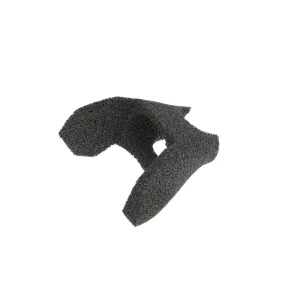
Deploying selective laser melting (SLM) and electron beam melting (EBM) to synthesize fully interconnected trabecular titanium matrices. With nominal pore sizes calibrated between 400 and 600 μm and 65-75% porosity, these structures mimic native cancellous bone elasticity (Young's modulus ~3-4 GPa), effectively mitigating stress shielding and facilitating rapid, biological osseointegration for cementless knee designs.
Antioxidant Vitamin E XLPE Polymers
Conventional gamma-radiation crosslinking leaves free radicals prone to in vivo oxidation, progressive embrittlement, and delamination. Our next-generation tibial inserts blend ultra-high-molecular-weight polyethylene (GUR 1020/1050) with homogeneous α-tocopherol (Vitamin E). This arrests free-radical oxidative cascades indefinitely without compromising mechanical yield strength, shear resistance, or fatigue crack thresholds.
Robotic & PSI Compatibility
Modern Canadian surgical suites increasingly deploy computer-assisted navigation and robotic milling systems (e.g., Stryker Mako, Zimmer ROSA, Smith+Nephew CORI). Our knee prosthesis cadastre features open-architecture digitized CAD libraries, allowing seamless assimilation into robotic planning software and Patient-Specific Instrumentation (PSI) cutting blocks for sub-millimeter surgical accuracy.
Operational Deployment
Turnkey Solutions for Canadian Healthcare Environments
Customized logistical and clinical implementation protocols engineered to overcome geographic dispersion, remote hospital challenges, and institutional procurement complexities.
Northern & Rural Regional Hospital Networks
Community health authorities across Northern Ontario, Saskatchewan, Manitoba, and the Canadian Territories face unique logistical hurdles. Delivery interruptions due to extreme sub-zero weather can disrupt elective joint schedules. We provide Canadian hospital consortia with dedicated buffer-stock stocking consignments, modularized universal containment trays (reducing autoclave reprocessing cycles by 40%), and pre-sterilized vacuum packaging rated for rugged air and ground transport across extreme Canadian temperature gradients.
Urban academic medical centers in Toronto, Montreal, Calgary, and Vancouver are rapidly shifting low-comorbidity knee arthroplasties toward Same-Day Outpatient Discharge. Our implants feature high-flexion condylar geometry (up to 145° range of motion), cruciate-retaining (CR) and posterior-stabilized (PS) interchangeable insert geometries, and ergonomic, color-coded trial sets that allow surgical teams to execute reproducible, tissue-preserving resections in under 45 minutes.
Customized OEM/ODM Programs for Canadian Orthopedic Importers
From custom private labeling with Health Canada-compliant bilingual (English/French) medical device markings to regional consignment warehousing: partner with our manufacturing team to secure your supply pipeline.
Integrated Orthopedic Platforms Serving Canadian Surgical Centers
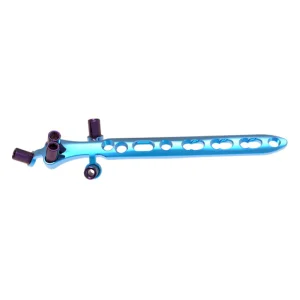
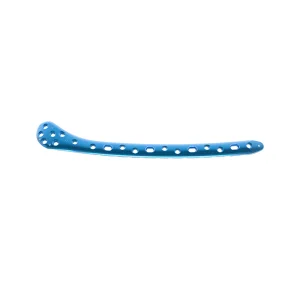
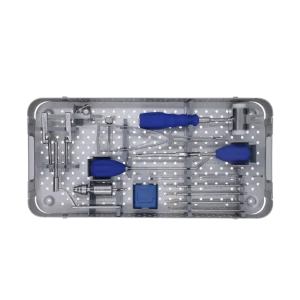
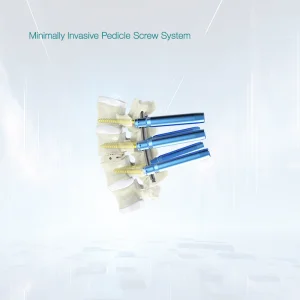
Beyond our primary knee joint replacement implants, our Beijing manufacturing base exports comprehensive reconstructive, fracture-fixation, and spinal stability assemblies to Canadian and worldwide medical distributors.
Total Knee System
Canada Clinical Titanium Total Knee Joint Replacement Implants
Knee Joint Replacement Technology Roadmap: 2025 to 2035
Strategic R&D milestones addressing infection resistance, real-time kinematics, and personalized biomechanics for the next generation of total knee arthroplasty.
Phase 1: Bioactive Coatings (2025-2027)
Deployment of sub-micron Hydroxyapatite (HA) plasma sprays and antimicrobial silver/copper-doped ion coatings to prevent prosthetic joint infection (PJI)—the leading cause of early knee revision in Canadian joint registries. Enhances periprosthetic bone bridging under osteoporotic baseline conditions.
Phase 2: Sensorized "Smart" Implants (2027-2030)
Integration of passive RFID micro-sensors and micro-electromechanical (MEMS) load-cells within the tibial baseplate. These modules wirelessly broadcast dynamic compartment balance, contact pressure distribution, and sub-clinical polyethylene wear metrics directly to post-op patient monitoring dashboards.
Phase 3: Resorbable Bioceramics (2030-2035)
Next-generation customized scaffolds incorporating bioresorbable magnesium alloys and 3D silicon nitride lattices. These systems stimulate natural subchondral bone regeneration, transitioning the arthroplasty philosophy from inert mechanical substitution toward complete biological integration.
How do ZATH knee joint replacement implants comply with Health Canada Medical Device Regulations?
Our manufacturing operations in Beijing are certified under ISO 13485:2016 and aligned with the Medical Device Single Audit Program (MDSAP). For Canadian market entry, total knee prosthesis components are categorized as Class III or Class IV medical devices. We supply Canadian license holders and distributor partners with comprehensive summary technical documentation (STED), biocompatibility dossiers (ISO 10993 series), biomechanical fatigue test reports (ISO 14879-1), cleanroom particle validation, and accelerated aging stability data necessary to obtain and maintain Medical Device Licenses (MDL) from Health Canada's Medical Devices Directorate.
What raw materials and traceability standards are utilized for the tibial and femoral knee components?
We utilize medical-grade wrought titanium alloy (Ti-6Al-4V ELI conforming to ASTM F136 and ISO 5832-3) and premium vacuum induction melted Cobalt-Chromium-Molybdenum alloy (Co-Cr-Mo per ASTM F75 / ISO 5832-4). Articulating inserts and patellar resurfacing components are machined exclusively from medical-grade UHMWPE (GUR 1020 / GUR 1050 per ASTM F648 and ISO 5834-2), with optional antioxidant Vitamin E stabilization. Each individual implant blank is laser marked with a unique DataMatrix 2D bar code and serial identifier, guaranteeing complete metallurgical lot traceability back to raw bar-stock mill certificates.
How are the implants packaged and sterilized to ensure aseptic operating room delivery in Canada?
All finished implants are packaged inside ISO Class 7 and Class 5 cleanrooms utilizing medical-grade Tyvek double-blister sterile barrier systems conforming to ISO 11607-1/2. Sterilization is executed via validated ethylene oxide (EO) or gamma radiation processes yielding a Sterility Assurance Level (SAL) of 10⁻⁶. Products carry a guaranteed 5-year sterile shelf life, protected against extreme ambient transport temperatures and atmospheric pressure fluctuations encountered in trans-Canadian shipping.
Can ZATH support Canadian OEM/ODM private branding and custom instrumentation design?
Yes. We possess comprehensive internal OEM and ODM capabilities. We can adapt sizing scales, condylar radius curvatures, femoral resection angles, and stem modularity to your specific clinical design inputs. Furthermore, we develop fully branded, high-grade stainless steel (custom 17-4 PH, 420, 316L) surgical instrumentation sets, including quick-release femoral sizers, tibial alignment guides (intramedullary and extramedullary), and anodized aluminum autoclavable storage containment boxes with laser-etched inventory layout diagrams.
What are typical lead times and logistics arrangements for Canadian hospital procurement orders?
For standard catalog items, we maintain active finished and semi-finished buffer inventories in our Beijing bonded warehouse, enabling express dispatch via DHL, FedEx, or air cargo within 4 to 6 business days directly to Canadian hubs (Toronto Pearson YYZ, Vancouver YVR, Montreal YUL, Calgary YYC). Bulk hospital tender contracts and customized production runs are typically scheduled with a 30 to 45-day manufacturing cycle, with complete shipping manifests and export documentation pre-cleared for Canada Border Services Agency (CBSA) processing.
How do you assist Canadian healthcare institutions in meeting cost-containment benchmarks?
By eliminating multi-tier domestic intermediary markups, corporate overhead, and legacy sponsor royalties, our factory-direct partnership delivers typical acquisition savings of 30% to 50% compared to legacy multinationals. This direct cost rationalization enables Canadian public hospitals and private ambulatory clinics to perform higher annual case volumes within capped regional global budgets, directly reducing provincial surgical wait-lists.
Establish an Accountable Canadian Joint Replacement Supply Channel
Connect directly with our senior orthopedic biomechanical engineers and international export regulatory team to evaluate technical dossiers, request surgical specimen samples, or negotiate regional distribution partnerships.