
Precision Spine & Trauma Systems Selected for Moscow Clinics
Direct OEM/ODM orthopedic configurations calibrated for municipal and federal clinical protocols across the Russian Federation.
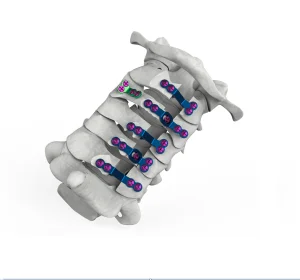
ODM Posterior Cervical Plate Fixation Dome Laminoplasty Plate System
Explore Product & Quotes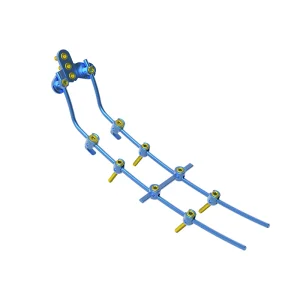
ODM Non-invasive Ladder Optical Coherence Tomography Diagnostic System
Explore Product & Quotes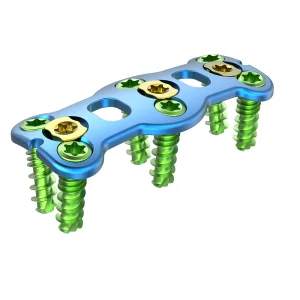
High-Precision Orthopedic Cervical Shielder ACP Plate Fixation System
Explore Product & Quotes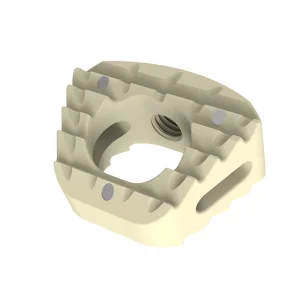
ZATH Medical Radiotranslucent Cervical PEEK Interbody Fusion Cage System
Explore Product & QuotesTrauma & Spine Surgical Demand Across the Moscow Metropolitan Area
Addressing the shifting landscape of high-energy skeletal trauma management, import substitution policies, and emergency surgical readiness in Moscow clinical networks.
Clinical Dynamics in Moscow Traumatology Centers
The Moscow metropolitan area—encompassing leading emergency centers such as the N.V. Sklifosovsky Research Institute for Emergency Medicine, the Priorov National Medical Research Center of Traumatology and Orthopedics, and the Pirogov City Clinical Hospital No. 1—handles one of the highest annual volumes of long-bone polytrauma cases in Eastern Europe.
Sub-zero winter conditions dramatically escalate the incidence of diaphyseal, metaphyseal, and pertrochanteric fractures. Standard off-the-shelf instrumentation often fails to address severe comminuted fractures or variations in femoral bowing seen across diverse patient demographics. Surgeons require custom-angled aiming arms, versatile proximal targeting jigs, and variable-length reaming rods capable of handling high cyclic fatigue without micro-deflection.
- High caseloads of high-energy tibial, femoral, and humeral diaphyseal injuries.
- Increasing demand for minimally invasive percutaneous osteosynthesis (MIPO) sets.
- Stringent expectations for intraoperative ergonomics and tactile torque feedback.
Supply Chain Realignment & Import Substitution in the RF
Over the past three years, the Russian medical device market has undergone profound systemic restructuring. The withdrawal and irregular delivery cadences of legacy Western orthopedic multinational manufacturers created urgent vulnerabilities in Moscow operating theatres.
In response, medical distributors and regional tender organizers have pivoted toward reliable, Tier-1 original design and manufacturing (ODM/OEM) powerhouses capable of providing full technical dossiers for Roszdravnadzor registration. Custom intramedullary nail instruments must not only match legacy European dimensional compatibility (e.g., AO-type quick couplings, standard hex and star drives) but must deliver superior mechanical resilience under intense autoclaving regimens.
- Strategic transition toward stable, direct-from-factory procurement models.
- Zero tolerance for surgical kit delivery backorders in emergency trauma centers.
- Emphasis on complete interoperability between implants and modular instrumentation.
Precision Architecture of Custom Intramedullary Nail Instruments
Engineered for seamless load sharing, minimal soft-tissue disruption, and foolproof distal locking alignment during emergency fracture reconstruction.
Carbon-Fiber Radiotranslucent Aiming Arms
Distal locking failure accounts for up to 30% of intraoperative delays in closed intramedullary nailing. Our custom Moscow instrumentation utilizes aerospace-grade carbon fiber composite aiming frames coupled with titanium connection hubs. This guarantees exceptional fluoroscopic transparency, allowing surgeons clear C-arm visualization without parallax errors or metallic shadowing.
Monobloc & Modular Flexible Reamers
Intramedullary pressure management during canal preparation is critical to avoid fat embolism syndrome in polytrauma patients. Our instrumentation kits feature optimized flute geometries on reamer heads, manufactured from Custom 455 hardened stainless steel, connected to flexible Nitinol-alloy drive shafts that preserve medullary blood supply while delivering maximum cutting efficiency.
Dynamic Distal Targeting & Quick-Connect Drives
Every set integrates hardened guide sleeves with self-centering trocar points that prevent drill skiving on hard cortical bone. Quick-coupling ergonomic silicone-molded handles isolate high-frequency mechanical vibration, giving the operating orthopedist precise haptic feedback when inserting proximal locking screws or executing multi-axial dynamic compression.
| Component Assembly | Material Specification | Surface Treatment / Hardness | Biomechanical Objective | Moscow Hospital Requirement |
|---|---|---|---|---|
| Proximal & Distal Aiming Jigs | Carbon PEEK / Aerospace Ti-6Al-4V | Anodized Type II / Low Reflectance | Zero X-ray distortion under C-arm fluoroscopy | Fast alignment in high-volume trauma rooms |
| Cannulated Step Drills | Medical 17-4PH / Custom 455 Steel | TiN Coating, HRC 52-56 | Rapid trans-cortical penetration without thermal necrosis | Endurance across 200+ autoclave cycles |
| Nail Insertion / Extraction Rods | Medical High-Yield Stainless Steel | Electropolished, Stress-Relieved | Withstand axial impact hammering without deformation | Universal compatibility with extraction slap hammers |
| Calibrated Trocar & Guide Sleeves | Austenitic 316LVM / Ti-Alloy | Laser-Etched Depth Calibration (mm) | Exact depth verification for distal bicortical lock screws | Elimination of secondary fluoroscopy steps |
China Factory 4.0: Metallurgical Precision & Supply Resilience
How Beijing ZhongAnTaiHua Technology Co., Ltd. (ZATH) delivers unparalleled engineering accuracy, scalable capacity, and direct logistical certainty to the Moscow medical hub.
5-Axis CNC Precision & Strict Tolerancing
At our Beijing production facility in Zhongguancun Science Park, intramedullary instrumentation components and spinal implants are machined using multi-axis Swiss-type turning centers and German 5-axis CNC machining centers (DMG Mori / Citizen). Dimensional variances are rigidly confined within ±0.005mm.
Raw bar stocks are strictly sourced with comprehensive metallurgical heat-treatment certificates (ASTM F136 ELI Titanium and ASTM F138 Surgical Stainless Steel). Every batch undergoes optical emission spectrometry, microstructural metallographic analysis, and coordinate measuring machine (CMM) multi-point validation before releasing to cleanroom packaging.
Direct Freight & Russian Customs Regulatory Support
Navigating cross-border medical commerce requires deep procedural sophistication. ZATH provides dedicated procurement pathways tailored for Russian distributors, including bilingual technical documentation (Russian/English), factory-sealed sterile barrier blister packs, and ISO 13485 QMS validation files compliant with Roszdravnadzor dossier compilation.
Shipments can be routed via direct air freight to Moscow Sheremetyevo (SVO) or Domodedovo (DME) with customs clearance turnaround within 4 to 6 business days, or via dedicated overland rail networks (China-Europe Railway Express directly to Moscow Vorsino logistics hub) for large-volume stock replenishment.
Technology Roadmap: Next-Gen Traumatology & Orthopedic Solutions
Anticipating the technological progression of orthopedics across Moscow trauma institutes through 2026-2030.
Electromagnetic Distal Tracking (EM Guidance)
Radiation exposure remains a critical occupational hazard for trauma teams in Moscow municipal hospitals. Our R&D pipeline is integrating radiation-free electromagnetic distal sensor modules directly into the distal tip of intramedullary nails, enabling 100% accurate green-light screw guidance without continuous fluoroscopic C-arm exposure.
Nano-Crystalline Antimicrobial Surface Engineering
Preventing pin-track and intramedullary infections in high-energy open fractures is vital. Next-generation custom instrumentation and implants feature specialized silver-ion and anodized surface modifications that inhibit bacterial biofilm colonization while promoting rapid cortical osteointegration.
Additive Manufacturing / 3D-Printed Trabecular Augments
For complex post-traumatic bone loss, tumor resections, and severe revision cases, our Beijing facility supports rapid 3D printing of patient-specific porous titanium metaphyseal sleeves that interface directly with standard intramedullary nail shafts, eliminating bone-graft harvesting morbidity.
Spine, Trauma & External Fixation Systems for Moscow Sourcing
Fully compliant, CE/ISO 13485-certified implants and corresponding modular instrument sets available for hospital procurement and distribution partnerships.
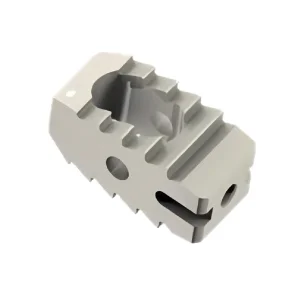
Thoracolumbar Interbody PEEK Cage (Straight Design)
View Details & Quotes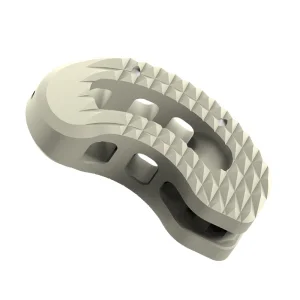
ODM Thoracolumbar Interbody Lordotic Cage (Angled Architecture)
View Details & Quotes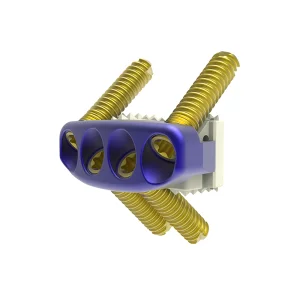
ZP Cervical Interbody Fusion Cage System (CE & ISO Certified)
View Details & Quotes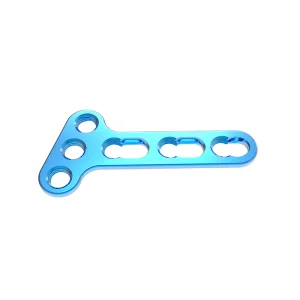
Oblique T-Shape Locking Compression Plate (Distal Radius Trauma)
View Details & Quotes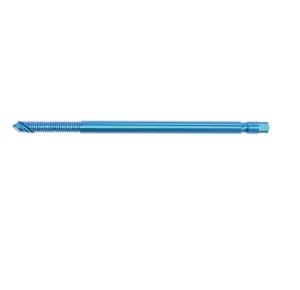
Schanz Titanium Alloy Pin for Orthopedic External Fixation Frames
View Details & Quotes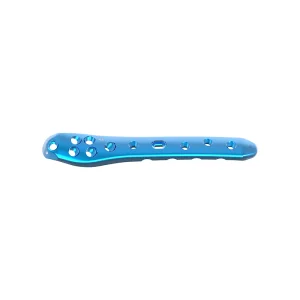
Anatomical Proximal Femur Locking Plate System V (Peritrochanteric)
View Details & Quotes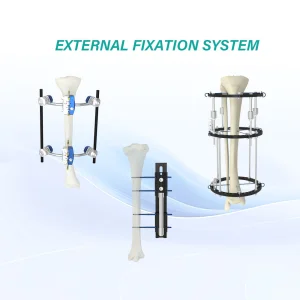
Heavy-Duty Stainless External Fixation Fixator Construct
View Details & Quotes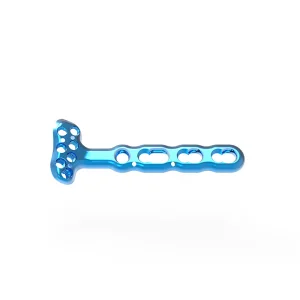
DVR Volar Distal Radius Locking Compression Plate System
View Details & QuotesFrequently Asked Questions: Sourcing Custom Instruments for Moscow
Essential guidance for Russian medical device distributors, chief biomedical engineers, and hospital purchasing departments.
How does ZATH ensure instrument compatibility with existing Western nail systems already in use in Moscow hospitals?
Our engineering team specializes in reverse-engineering and modular standardization. We manufacture custom intramedullary nail instruments with universal quick-connect couplings, standard hexagonal/Stardrive screw interfaces, and radius-of-curvature alignments compatible with primary global systems (including Synthes, Stryker, and Smith & Nephew profiles). Distributors can specify thread pitch, guide wire diameters (e.g., 2.5mm ball-tip / 3.0mm smooth), and sleeve dimensions to ensure 100% interoperability with existing hospital inventory.
What documentation does ZATH provide to support Roszdravnadzor registration in the Russian Federation?
We supply a comprehensive technical registration dossier adhering to Russian Federal and EAEU standards. This includes ISO 13485 QMS certificates, CE technical files, factory Declaration of Conformity, raw material mill certificates (toxicological and biocompatibility testing per ISO 10993), mechanical fatigue test reports (ASTM F384 / ASTM F1264), and standardized Russian/English user instruction manuals (IFU).
What are the minimum order quantities (MOQ) and lead times for customized instrument containers?
For standard orthopedic instrument sets and catalog configurations, minimum order quantity starts as low as 1 to 5 complete graphic sterilization tray sets. For fully bespoke OEM/ODM design projects—such as tailored radiolucent carbon fiber aiming arms or specialized distal targeting jigs—the initial prototype phase requires 2 to 3 weeks, with full production batches delivered in 4 to 6 weeks. Express air freight to Moscow hubs (SVO/DME) typically takes 4–6 business days.
How do ZATH instruments withstand repeated hospital autoclaving and harsh chemical cleaning?
All ZATH instruments are fabricated from medical-grade precipitation-hardening stainless steels (17-4PH, Custom 455) and aircraft-grade titanium alloys (Ti-6Al-4V ELI). Working surfaces receive high-grade passivation and titanium carbonitride or hard anodized coatings, validated to endure over 200 cycles of standard high-temperature steam sterilization (134°C at 2.1 bar) and ultrasonic enzymatic washing without surface corrosion, loss of laser marking, or dimensional degradation.
What payment settlement and currency options are supported for Russian procurement partners?
To ensure frictionless cross-border commercial transactions, ZATH accommodates multi-currency settlement channels, including direct Chinese Yuan (CNY) wire transfers via VTB, cross-border CIPS payment rails, and flexible escrow or letter of credit terms for authorized distributors and municipal supply contractors.
Request Custom Intramedullary Instrumentation Quotes
Collaborate directly with our Beijing orthopedic engineering team. Obtain custom CAD drawings, instrument set layouts, and competitive direct-factory pricing for your Moscow medical network.