Knee Joint Replacement Instrument Manufacturers & Supplier for Chicago
ISO 13485-certified precision orthopedic instrumentation, trial kits, cutting blocks, and custom OEM/ODM solutions tailored for Cook County hospitals, Midwest academic medical centers, and ambulatory surgical networks.
Clinical Core Equipment
Featured Total Knee & Orthopedic Instrument Systems for Chicago
Engineered for micrometer-accurate distal cuts, tibial plateau preparation, and balanced flexion/extension gaps in high-demand joint reconstruction suites.
Knee Arthroplasty
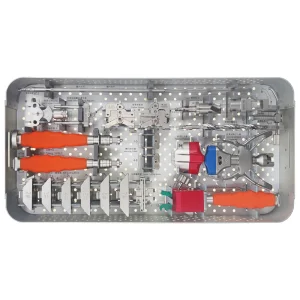
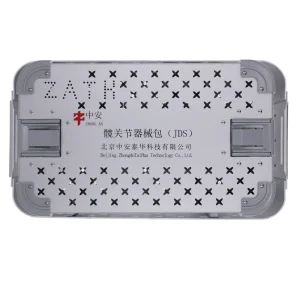
Chicago Surgical Hub: Total Knee Joint Replacement Instrument Kit
The Greater Chicago Arthroplasty Market: Demographics, Hospitals & Cost Compression
The Chicago metropolitan region—anchored by Cook County, DuPage, Lake, and Will counties—represents one of the densest and most technologically sophisticated orthopedic corridors in North America. World-class institutions such as Rush University Medical Center, Northwestern Memorial Hospital, the University of Chicago Medical Center, and massive regional care networks like Advocate Health Care and NorthShore-Edward-Elmhurst Health collectively perform upwards of 42,000 total knee and hip arthroplasties each year.
However, Chicago healthcare procurement directors face intensifying macro-pressures. CMS bundled payment initiatives (such as BPCI Advanced and the Comprehensive Care for Joint Replacement model) have converged with commercial payer fee-schedule reductions. Concurrently, procedural shifts have accelerated: over 55% of routine primary total knee arthroplasties (TKAs) across Illinois are migrating out of inpatient surgical towers into independent or joint-venture Ambulatory Surgical Centers (ASCs).
In an ASC operating environment, traditional surgical instrument consignment models from domestic mega-vendors prove financially untenable due to exorbitant tray lease rates, rigid minimum utilization quotas, and sterilizer throughput bottlenecks. Chicagoland surgical providers demand dedicated, ultra-durable, cost-effective knee replacement instrumentation sets that deliver surgical precision while slashing procurement expenditures by 40% to 60%.
High Volume Demographics: Aging baby-boomer demographics in Cook County and the surrounding suburbs necessitate reliable, repeatable surgical instrumentation.
Total knee arthroplasty instruments are subject to extreme mechanical shear, cyclic autoclave thermal stresses, and caustic alkaline detergent exposure. We utilize aerospace and surgical grade alloys engineered to resist micro-fracture and galvanic pitting.
Custom 455 & 17-4PH Stainless
Cutting blocks, intramedullary reamers, and drill guides are CNC-machined from precipitation-hardening martensitic stainless steel (AISI 630 / Custom 455). Yield strengths exceed 1100 MPa, preventing saw blade skiving and slot deformation during high-speed oscillation.
ASTM F136 ELI Titanium
For dynamic alignment handles, trial sizers, and pin clamping mechanisms, Grade 5 ELI titanium (Ti-6Al-4V) delivers critical mass reduction. Trays are up to 40% lighter than all-steel configurations, alleviating ergonomic strain on Chicago sterile processing personnel.
Medical Radel® (PPSU) & PEEK
Trial femoral and tibial inserts, along with modular impactor tips, utilize polyphenylsulfone (Radel®) and medical PEEK. These polymers withstand over 1,000 continuous steam sterilization cycles without dimensional swelling, chemical embrittlement, or color fading.
Instrument Component
Material Specification
Dimensional Tolerance
Surface Treatment / Hardness
Sterilization Compatibility
Distal Femoral Cutting Block
17-4PH (SUS630) Martensitic SS
±0.005 mm (Saw Slot)
Passivated ASTM A967 / 42-45 HRC
Pre-vac Steam, STERRAD® (VHP), EtO
Tibial Resection Guide (EM/IM)
Custom 455 Stainless + Ti-6Al-4V
±0.010 mm Angular Drift
Electropolished & Bead-Blasted
Autoclave 134°C (273°F), Flash cycles
Femoral Sizing & 4-in-1 Block
AISI 630 Precipitation Hardened
±0.008 mm Chamfer Slots
Anti-Glare Micro-Etched / 44 HRC
Standard Dynamic Air Removal Steam
Trial Articular Inserts (CR/PS)
Medical PPSU (Radel®) Polymer
±0.015 mm Thickness
High Lubricity Hydrophobic Polish
Steam Autoclave, Gas Plasma (H2O2)
Modular Femoral Impactor / Extractor
316LVM Surgical SS + Silicone Grip
Class H7 Modular Quick-Lock
Deep Cryogenic Stabilized Temper
Steam Autoclave (Heavy Detergent Resilient)
Advanced Manufacturing Ecosystem
State-of-the-Art Factory Infrastructure: Zhongguancun Science Park Facility
Operating since 2009 within the Zhongguancun Science and Technology Park in Pinggu, Beijing, ZATH combines high-precision manufacturing with strict regulatory controls. Our campus encompasses advanced multi-axis CNC machining centers, wire electrical discharge machining (EDM), Class 100,000 (ISO Class 7/8) cleanroom packaging enclosures, and an on-site metallurgical testing laboratory.
While domestic contract machine shops in the US Midwest face severe skilled labor constraints, our facility employs over 300 highly specialized personnel, including approximately 100 seasoned biomedical engineers and toolmakers. We leverage imported Japanese Citizen multi-axis Swiss-turn lathes and German DMG MORI 5-axis simultaneous machining systems, ensuring that every cutting guide, alignment rod, and articular trial meets sub-micron tolerances.
By choosing ZATH as an OEM/ODM manufacturing partner, Chicago hospital networks, brand owners, and surgical device distributors eliminate middleman markups. We support end-to-end product development—from rapid 3D CAD modeling and custom DFM (Design for Manufacturability) analysis to low-volume pilot batches and scalable containerized production runs.
100% In-House Value Stream: Raw bar stock verification, multi-axis milling, surface finishing, passivation, laser etching, and cleanroom packaging under one roof.
Rapid DFM Iteration: Prototype-to-sample turnaround in 10–14 business days to expedite FDA pre-market testing and clinical verification.
Global Supply Chain Synergies
Why Chicago orthopedic buyers source directly from our ISO 13485 facility:
40–60% Capital Expenditure ReductionSubstantially lower unit acquisition cost compared to legacy Midwest US contract manufacturers, freeing operating capital for hospital networks.
Uncompromising Quality VerificationZeiss Coordinate Measuring Machines (CMM), optical profilometers, and hardness testers inspect 100% of critical cutting dimensions before release.
Scalable Capacity & Tray CustomizationFrom single custom instrument trays tailored to a surgeon's specific technique to thousands of standardized hospital system sets.
Audit-Proof Compliance
Regulatory Assurance & Direct Chicago Air Logistics
Navigating United States Food and Drug Administration (FDA) expectations and international medical device regulations requires rigorous documentary discipline, verified lot traceability, and frictionless customs execution.
ISO 13485 & FDA 21 CFR 820
ZATH operates under comprehensive ISO 13485:2016 Medical Devices Quality Management System protocols. Our operational controls directly mirror the FDA's Quality System Regulation (21 CFR Part 820 / QMSR alignment), ensuring that Design History Files (DHF) and Device Master Records (DMR) support seamless US pre-market submissions.
Mill Test & Biocompatibility Traceability
Every production batch is accompanied by raw material Mill Test Certificates (MTC) verifying chemical and physical compliance with ASTM standards. Reusable cutting blocks and instruments pass cytotoxicity (ISO 10993-5), sensitization (ISO 10993-10), and passivation validation (ASTM A967).
Express Air Link Direct to O'Hare (ORD)
Strategic freight partnerships with DHL, FedEx, and UPS provide rapid air cargo dispatch from Beijing Capital/Daxing straight into Chicago O'Hare International Airport (ORD). Complete customs clearance packages—including commercial invoices, packing lists, and FDA entry documentation—enable hospital dock delivery within 4 to 6 business days.
Operative Procedures
Clinical Scenarios in Modern Midwest Knee Arthroplasty
ZATH knee instrumentation is architected to facilitate versatile surgical philosophies, whether operating in high-volume tertiary teaching hospitals or expedited outpatient surgery centers.
Primary Total Knee Arthroplasty
Supports both Measured Resection and Gap Balancing surgical workflows. Modular intramedullary (IM) distal femoral alignment guides permit 0° to 9° valgus adjustments in 1° increments. Quick-connect extramedullary (EM) tibial cutting frames accommodate independent slope adjustments (0° to 7°) to reproduce natural posterior slope accurately.
Complex Revision & Bone Loss
Equipped for severe osteolytic defects (AORI Type II & III) encountered in revision arthroplasty at major Chicago academic medical centers. Features offset tibial/femoral reamers, distal femoral augment resection cutting blocks (5mm, 10mm, 15mm), and modular high-impact extraction slap hammers designed for stem removal with minimal cortical fracture risk.
Robotic & Navigated Hybrid Setup
Designed with non-reflective, micro-bead-blasted satin finishes to eliminate optical flare under OR surgical navigation and robotic vision cameras. Pin clamping geometries provide zero-play attachment points for rigid optical array trackers utilized in modern computer-assisted surgical (CAS) theaters across Illinois.
Procurement & Technical Q&A
Frequently Asked Questions for Chicago Hospital Buyers
Key considerations regarding validation, tray configurations, lead times, regulatory compliance, and OEM customization.
Are ZATH knee replacement instruments compatible with existing implant systems?
Yes. Through our comprehensive OEM/ODM engineering services, we can manufacture instrument sets tailored to match the precise chamfer cuts, peg locations, and taper angles of your proprietary or open-platform total knee implant designs. We manufacture both generic standard TKA instrumentation (compatible with cruciate-retaining [CR] and posterior-stabilized [PS] systems) and completely customized geometries based on customer CAD drawings.
What are the autoclave and sterilization validation parameters?
All metallic instruments and Radel®/PEEK modular components are validated for steam sterilization (pre-vacuum cycle at 134°C / 273°F for a minimum exposure of 4 minutes, or 132°C / 270°F for 4 minutes with drying cycles of 30 minutes minimum) according to ANSI/AAMI/ISO 17665 standards. Trays are engineered with open-perforation anodized aluminum baskets that maximize steam penetration and rapid drainage during sterile processing.
How does ZATH handle FDA regulatory compliance for the US / Illinois market?
ZATH maintains an ISO 13485:2016 certified quality management system audited by reputable European notified bodies (such as UDEM). For US hospital buyers and medical brand owners importing into Chicago, surgical instruments classified as FDA Class I (e.g., manual cutting guides, sizers, impactors) are exempt from 510(k) pre-market notifications but require FDA Establishment Registration, Medical Device Listing, and strict adherence to 21 CFR Part 820 GMP requirements. We provide complete technical files and lot traceability records.
What is the standard delivery timeline from factory floor to Chicago hospitals?
For standardized, in-stock instrument sets and components, air freight dispatch occurs within 48 hours of order confirmation. Express air delivery via DHL, FedEx, or UPS direct to Chicago O'Hare International Airport (ORD) typically requires 4 to 6 business days, including US customs clearance. Custom OEM/ODM production runs usually take 3 to 5 weeks from initial CAD design sign-off to final container dispatch.
Can we order low-volume trial kits or custom-branded trays for our ASC network?
Absolutely. We recognize that ASC networks in Chicagoland operate lean business models that cannot absorb large minimum order quantities (MOQs). We support small-batch initial orders (as low as 2 to 5 specialized sets) complete with customized graphic layouts, surgeon-specific tray nesting brackets, and proprietary laser-etched network logos.
How do ZATH instruments prevent corrosion and surface degradation?
Every stainless steel instrument undergoes automated multi-stage ultrasonic degreasing followed by validated chemical passivation conforming to ASTM A967 (citric or nitric acid formulation). This process selectively depletes free iron from the surface matrix, generating an ultra-dense chromium oxide passive layer that resists pitting from saline exposure and harsh enzymatic wash chemistries.
Explore our full range of joint revision, fracture reduction, and soft-tissue fixation tools manufactured to strict ISO 13485 tolerances for Midwest clinical partners.
Femoral Neck
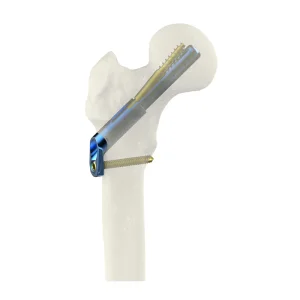
Femoral Neck Antirotation (FNAS) Instrumentation Set (Chicago Trauma)
Partner directly with Beijing ZhongAnTaiHua Technology Co., Ltd. (ZATH) for ISO 13485-certified knee replacement instrumentation. Request technical dossiers, CAD drawings, or evaluate trial kits for your clinical network.