
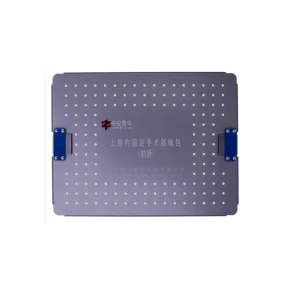
Precision Trauma & Spine Matrix
Engineered Reconstruction Systems: Featured Platforms
Direct factory configurations manufactured under ISO 13485 certification, engineered for exact anatomical contouring and stable internal osteosynthesis across complex fracture etiologies.
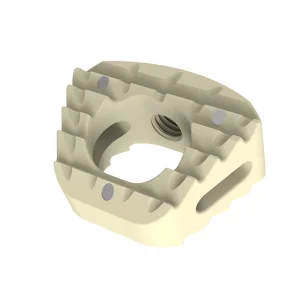
Cervical Interbody PEEK Fusion Cage
View Technical Specs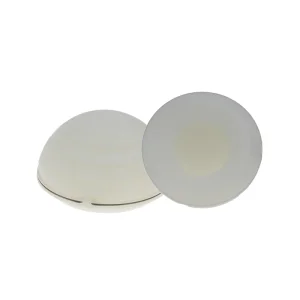
TDC Cemented Acetabular Cup System
View Technical Specs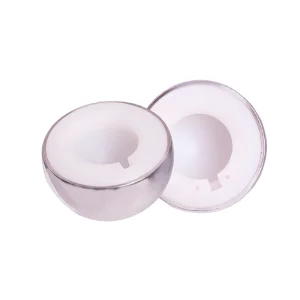
FDAH Bipolar Acetabular Hip Cup
View Technical Specs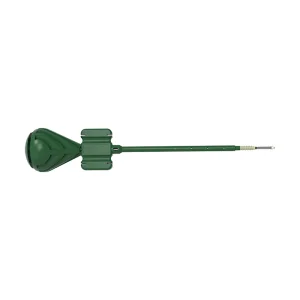
SuperFix P Knotless Suture Anchor
View Technical Specs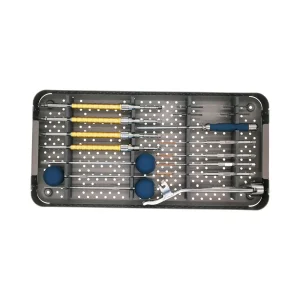
5.5 Spinal Pedicle Screw Instrument Set
View Technical Specs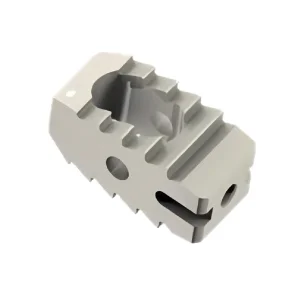
Straight Thoracolumbar Interbody Cage
View Technical Specs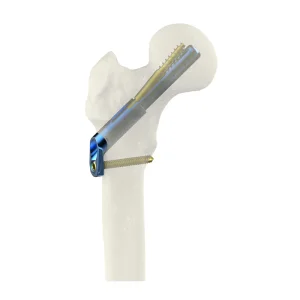
Femoral Neck Antirotation System (FNAS)
View Technical Specs
Clinical Engineering Analysis
The Paradigm Shift in Anatomical Reconstruction Locking Plates
Reconstruction plates represent one of the most mechanically demanding segments in modern trauma osteosynthesis. Bridging high multi-planar plasticity with fixed-angle angular stability requires exceptional manufacturing tolerances and metallurgical control.
Multi-Planar Plasticity vs. Thread Integrity
Traditional non-locking reconstruction plates allowed unrestricted contouring across three dimensions to accommodate irregular osseous anatomies such as the pelvic brim, acetabular columns, clavicle, and distal humerus. However, their reliance on friction between plate and bone compromised periosteal blood supply.
Modern reconstruction locking compression plates (LCP) incorporate specialized notched profiles between screw holes. This geometry concentrates plastic deformation strictly along bridging segments, preventing distortion of internal female locking threads during aggressive intraoperative pre-bending.
Internal Fixator Principles & Biological Healing
The locked screw-plate construct converts shear stresses into axial load-bearing forces across the entire structural bridge. This functional internal fixator eliminates the imperative for intimate contact against the periosteum, protecting osteogenic vascularization and accelerating callus formation.
By preventing secondary loss of reduction in osteoporotic or comminuted bone segments, locking reconstruction systems dramatically lower surgical revision indices and implant back-out risks compared to conventional dynamic compression constructs.
Dynamic Combination Hole (Combi-Hole) Versatility
Leading reconstruction platforms utilize asymmetric combination holes integrating two distinct functional geometries within a single portal. One half features tapered conical threads engineered for threaded locking screw heads; the adjacent dynamic compression unit facilitates axial compression via eccentric screw placement.
This dual modality empowers orthopedic surgeons to dynamically compress intermediate cortical fragments prior to applying fixed-angle angular stability across the primary fracture gap.
Critical Clinical Engineering Takeaway
In complex pelvic ring disruptions and periprosthetic fractures, micro-motion within the locking interface must not exceed 150 µm to avoid pseudoarthrosis, while avoiding absolute structural rigidity (>2500 N/mm) that induces stress shielding. Leading Chinese precision manufacturing hubs achieve this finite balance through precise pitch tolerances of ±0.005 mm on CNC thread profiles.
Materials Science & Engineering
Metallurgical Roadmap: Alloy Selection & Future Directions
Evaluating the clinical trade-offs between biomedical Grade 5 Titanium alloys and high-nitrogen vacuum-melted stainless steel, complemented by additive manufacturing advances.
| Biomaterial Benchmark | Ti-6Al-4V ELI (ASTM F136 / ISO 5832-3) | 316LVM Stainless Steel (ASTM F138 / ISO 5832-1) | Next-Gen Biodegradable Mg-Alloys |
|---|---|---|---|
| Elastic Modulus (GPa) | 110 GPa Closer to Cortical Bone | 210 GPa (Elevated Rigidity) | 40–45 GPa Near-Natural Bone Match |
| Yield Strength (MPa) | ≥ 860 MPa | ≥ 750 MPa | 220–300 MPa |
| Fatigue Resistance | Exceptional endurance limit; Type II anodization required | High notch sensitivity under repetitive torsion | Corrosion fatigue managed by polymer coatings |
| Bending & Contouring Capacity | Springback factor requires overbending; notched design crucial | High ductile deformability; minimal springback | Strictly pre-machined or 3D-patient-matched |
| Imaging Artifacts (CT / MRI) | Minimal scattering; clean visualization of healing zone | Significant ferromagnetic disturbance and void scatter | Artifact-free biological integration |
Micro-Arc Oxidation (MAO) & Anodization
Surface degradation and fretting corrosion between screw head and locking hole represent the leading cause of cold welding during hardware removal. Advanced factories apply Type II electro-chemical anodization or Micro-Arc Oxidation.
This process deposits a 3–5 µm ceramic titanium dioxide layer that enhances wear resistance, prevents screw-plate galling, and passivates trace element release into surrounding soft tissue.
Selective Laser Melting (SLM) Integration
The manufacturing frontier is shifting from subtractive CNC milling toward hybrid manufacturing: standard rolled plate blanks combined with 3D additive manufactured sub-micron trabecular lattices.
By creating a porous underside (60–70% porosity, pore size 300–500 µm), reconstruction plates encourage osseointegration at targeted bone contact pads while maintaining solid, high-density load struts across the bridging span.
Smart Antimicrobial & Bioactive Coatings
Post-surgical surgical site infections (SSI) in trauma interventions impose massive economic burdens on national healthcare systems. Forward-looking research involves physical vapor deposition (PVD) of nanostructured silver ions and bioactive hydroxyapatite coatings.
These surface enhancements demonstrate 99.8% in vitro inhibition against Staphylococcus aureus without compromising human osteoblast proliferation or construct mechanical fatigue life.
Applied Macro Solutions
Clinical Sector Applications & Surgical Scenarios
Reconstruction locking plates are uniquely specialized internal fixators deployed where complex three-dimensional skeletal anatomy prohibits straight, rigid straight-line implants.
Pelvic & Acetabular Reconstruction
Complex Letournel-type posterior and anterior column acetabular fractures require continuous multi-curved plate shaping along the pelvic brim. Locking reconstruction plates with deep edge-notches allow simultaneous twisting and in-plane bending without ovalizing threaded screw portals.
Thoracic Cage & Rib Stabilization
Flail chest segments and severe trauma-induced costal fractures demand low-profile (≤1.5 mm thickness), highly ductile titanium plates. They flex dynamically in synchrony with patient respiratory volume while shielding underlying pulmonary parenchymal structures.
Periprosthetic Fracture Management
When femoral or humeral stems prevent traditional unicortical or bicortical centerline screw purchase, reconstruction plates serve as rigid longitudinal scaffolding. Their multi-hole matrix facilitates cable-grip attachments, cerclage wiring, and offset locking screws.
Distal Clavicle & Humeral Shaft Non-Unions
In revision settings where atrophic or hypertrophic non-union has compromised bone stock, extended multi-hole reconstruction locking plates bridge avascular segments, distributing torsional and bending forces across sound proximal and distal diaphyseal cortices.
Smart Industrial Ecosystem
China Factory 4.0: Supply Chain Resilience & Precision Dynamics
Inside modern medical manufacturing clusters in Beijing Zhongguancun Science Park: how vertical integration, advanced robotics, and lean execution solve worldwide supply bottlenecks.
Multi-Axis High-Speed CNC Machining
Operating Swiss-type Citizen lathes and 5-axis simultaneous DMG Mori milling centers, modern facilities turn complex implant profiles in a single setup. This eliminates clamping tolerances, yielding thread pitch precision within ±0.003 mm and surface roughness values below Ra 0.4 µm.
- Sub-micron laser dimensional verification
- Zero-stress wire EDM for contour bridge notches
- Automated de-burring and electro-polishing
ISO Class 7 Cleanrooms & Automated Passivation
Cleanroom environments (Class 10,000) feature ultrasonic automated multi-tank aqueous washing lines utilizing non-ionic detergents and deionized water (>15 MΩ·cm). Implants undergo automated citric or nitric acid passivation meeting ASTM F86 standards before dual-barrier sterile packaging.
- Endotoxin testing below 2.15 EU/device limit
- Tyvek blister sealing with validated sterile barrier integrity
- EtO and Gamma irradiation sterilization compatibility
Vertical Cost Efficiency & Agile Lead Times
By consolidating medical bar stock procurement, precision tool grinding, multi-axis machining, biological testing, and regulatory documentation under a unified quality system, Chinese manufacturing ecosystems compress development-to-delivery lead times from 16 weeks to under 20 business days.
- High tooling reconfigurability for OEM batches
- Guaranteed batch-to-batch metallurgical consistency
- Substantial cost advantages passed directly to healthcare distributors
B2B Procurement Framework
Strategic Sourcing Blueprint for International Distributors
A detailed framework helping regional distributors, hospital purchasing groups (GPOs), and private label brands navigate vendor qualification, cost analysis, and supply chain continuity.
Total Cost of Ownership (TCO) Optimization
Initial unit purchase price accounts for only 40% of the true financial exposure in orthopedic supply chains. Global distributors must balance purchase price variance (PPV) against sterilization labor costs, OR turnaround efficiencies, inventory shelf life, and consignment burden.
Sourcing pre-sterilized, barcode-labeled individual blister packages eliminates hospital autoclave reprocessing expenses, reduces instrument set handling, and accelerates OR turnover times, delivering double-digit net operational savings.
Instrument Set Ergonomics & Compatibility
A locking plate is only as reliable as its corresponding surgical instrumentation. Leading procurement teams evaluate factory capabilities based on the durability and ergonomics of accompanying torque-limiting screwdrivers (1.5 Nm / 2.5 Nm), threaded drill sleeves, and bending irons.
ZATH provides fully configured, custom-anodized surgical instrument sets with clear laser-etched depth gauges, hardened tungsten carbide drill bits, and ergonomic silicone-overmolded handles resistant to repeat autoclave cycles (>500 cycles at 134°C).
Global Quality Assurance
Regulatory Compliance & Traceability Protocols
Navigating complex international medical device requirements: from EU MDR 2017/745 Class IIb compliance to FDA 510(k) equivalency testing and UDI data architecture.
Device Master Records & Mill Traceability
Every single reconstruction locking plate is tied to a discrete Heat Batch and Mill Test Certificate (MTC) documenting chemical spectrometry (O, N, C, H, Fe levels) and mechanical pull tests. Device History Records (DHR) preserve machining run logs, laser inspection profiles, and passivation titration curves for 15 years.
Biomechanical Fatigue Testing (ASTM F382)
Prior to clinical distribution, reconstruction locking plate designs undergo rigorous four-point bending and dynamic cyclic fatigue testing per ASTM F382 and ISO 9585 standards. Plates must survive 1,000,000 load cycles at 75% yield stress without structural micro-cracking, thread deformation, or screw decoupling.
Unique Device Identification (UDI) Architecture
In full compliance with FDA and EU MDR tracking dictates, every product features micro-laser-etched GS1 DataMatrix barcodes encoding Global Trade Item Numbers (GTIN), production batch, serial identifiers, and expiration dates. This allows instant scanning within hospital ERP and digital OR logs.
Comprehensive Portfolio Matrix
Trauma, Arthroplasty & Sports Medicine Implants
Expanding beyond trauma plates: complete orthopedic implants, precision prosthetics, and specialized surgical hardware engineered under single-source accountability.
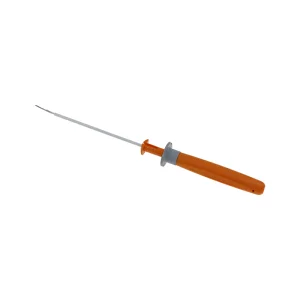
Fast All-Inside Meniscal Repair Device
View Technical Specs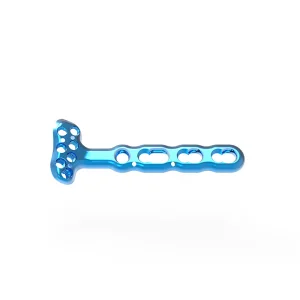
DVR Distal Radius Locking Plate
View Technical Specs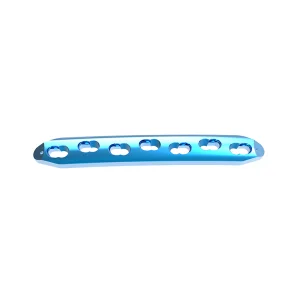
Curved Femoral Shaft Locking Plate
View Technical Specs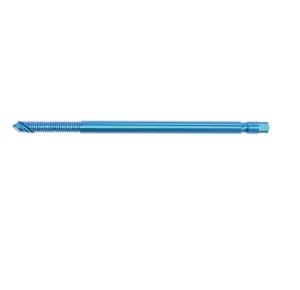
Titanium External Fixation Bone Pin
View Technical Specs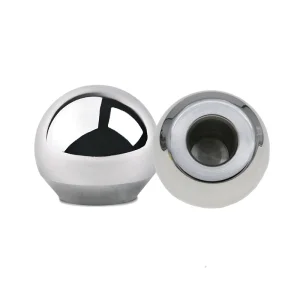
FDH Hip Femoral Head Prosthesis
View Technical Specs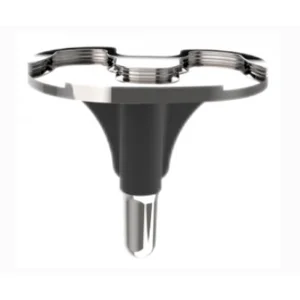
Enable Knee Tibial Baseplate Implant
View Technical Specs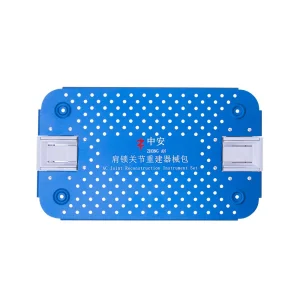
AC Joint Reconstruction Instrument Set
View Technical Specs
Surgical Stainless Steel Bone Pin
View Technical Specs
Information Gain FAQ
Engineering & Procurement Knowledge Base
Objective, data-driven answers to the most rigorous clinical engineering, metallurgical, and international regulatory queries.
How do reconstruction locking plates prevent screw cross-threading and cold welding during aggressive multi-axial bending?
Reconstruction locking plates incorporate deeply sculpted lateral notches positioned symmetrically between each screw hole. These structural reliefs establish a designated zone of plastic deformation, concentrating bending moments across the bridge struts rather than the threaded screw eyelets. Furthermore, high-end manufacturers apply electrochemical Type II anodization to Ti-6Al-4V ELI surfaces. This process grows a micro-hardened titanium dioxide barrier layer that dramatically mitigates adhesive galling (cold welding) and thread stripping when inserting self-tapping locking screws at high rotational velocity.
What mechanical trade-offs dictate the selection between 316LVM Stainless Steel and Grade 5 Titanium ELI?
The primary clinical trade-off centers on elastic modulus and fatigue behavior. Grade 5 Titanium ELI (ASTM F136) offers an elastic modulus (~110 GPa) much closer to human cortical bone (~18–20 GPa) than 316LVM stainless steel (~210 GPa), significantly mitigating stress shielding and subsequent osteopenia underneath the plate span. However, Titanium exhibits higher notch sensitivity; improper bending with sharp-edged pliers can introduce micro-cracks that degrade fatigue endurance under dynamic cyclic loading. In contrast, 316LVM stainless steel possesses superior tactile malleability with minimal elastic springback, making it preferred by certain surgeons in complex three-dimensional pelvic ring reconstructions where extensive iterative intraoperative shaping is unavoidable.
How do Chinese orthopedic factories guarantee lot-to-lot traceability for national tender registrations?
Traceability operates under strict ISO 13485:2016 audited frameworks. Every production run begins with raw bar stock certified by third-party spectroscopic analysis (Mill Test Certificates). Each individual plate is laser-etched with a high-density GS1 DataMatrix code containing the manufacturing run ID, part number, and serialized sequence. Detailed Device History Records (DHR) archive environmental cleanroom particulate logs, CNC multi-axis offset verification records, ultrasonic cleaning conductivity readings, and post-sterilization biological indicator incubation results. This documentation is collated into technical dossiers that streamline regulatory approval across EU MDR (CE), US FDA 510(k), and local Ministry of Health tenders.
What OEM and ODM customization capabilities can global distributors specify for trauma reconstruction portfolios?
Distributors can customize numerous parameters: customized screw-hole spacing, specialized plate profiles (e.g., straight, J-shaped, or curved 3D pelvic contours), variable hole diameters (e.g., 2.7 mm, 3.5 mm, or 4.5 mm combi-holes), and dedicated color-coding via spectral electrochemical anodization (gold, teal, blue, magenta). Beyond the implant itself, OEM contracts encompass custom-designed silicone surgical instrument trays, branded graphic lids, proprietary torque-limiting driver handles, and sterile-barrier Tyvek blister packaging with private-label multilingual instructions for use (IFUs).
How does pre-sterilized Tyvek blister packaging impact hospital economics compared to non-sterile consignments?
Pre-sterilized individual packaging dramatically simplifies hospital logistics by shifting sterilization liability from Central Sterile Services Departments (CSSD) back to the validated manufacturer. Unopened sterile blisters reduce hospital autoclave running costs, eliminate instrument box washing labor, and prevent nosocomial infection risks stemming from incomplete bioburden decontamination on crowded trauma trays. Furthermore, each blister includes peel-off barcode stickers for direct patient record charting, accelerating operating room setup and mitigating missing-implant billing disputes.
Global Engineering Collaboration
Establish Direct Manufacturer Procurement Channels
Beijing ZhongAnTaiHua Technology Co., Ltd. (ZATH) provides end-to-end orthopedic device contract manufacturing, technical regulatory dossiers, and sterile trauma systems for institutional distributors worldwide. Accelerate your market entry with predictable engineering excellence and resilient lead times.