
Precision Trauma & Fixation Matrix: Direct Sourcing Portfolio
Engineered to rigorous clinical standards, our titanium trauma instrumentation and implant systems deliver uncompromised anatomical stability for acute thoracic, long-bone, and articular reconstruction.

Executive Sourcing Brief: The Paradigm Shift in Thoracic Osteosynthesis
In emergency traumatology and advanced thoracic surgery, the treatment of severe chest wall injuries has decisively transitioned from conservative management (prolonged mechanical positive-pressure ventilation and analgesia) toward acute Surgical Stabilization of Rib Fractures (SSRF). Severe thoracic trauma, marked by flail chest kinematics, multiple bicortical rib fractures, and substantial respiratory chest wall disruption, imposes an excruciating physical and economic toll. When evaluating orthopedic manufacturing partners to buy rib plate titanium plate systems, hospital procurement boards, regional ministries of health, and specialized distributors demand far more than a basic bent metal strip. They necessitate an integrated biomechanical system that seamlessly balances low anatomical profile, exceptional fatigue resistance under dynamic respiratory cycles, and intuitive mono-cortical locking screw engagement.
Founded in 2009 in the Zhongguancun Science Park (Pinggu, Beijing), Beijing ZhongAnTaiHua Technology Co., Ltd. (ZATH) stands as an authoritative industrial force in specialized osteosynthesis manufacturing. Spanning joint replacement, spine fixation, long-bone trauma, and specialized rib titanium locking systems, ZATH couples state-of-the-art five-axis machining centers with rigorous ISO 13485 certified management. This comprehensive whitepaper evaluates the metallurgical, biomechanical, clinical, and economic frameworks essential for qualifying global rib titanium plate manufacturers, outlining the clear efficiency dividends realized through China's sophisticated medical manufacturing clusters.
Engineering Rib Fixation for 20,000 Respiration Cycles Daily
The human rib cage is never at rest. Implants must withstand cyclic physiological deformation without fatigue crack propagation, stress shielding, or hardware loosening.
Medical Grade 5 Titanium (Ti-6Al-4V ELI)
Fabricated using ASTM F136 / ISO 5832-3 extra-low interstitial titanium alloy, achieving superior tensile strength (>860 MPa) and biocompatibility while maintaining a modulus of elasticity (110 GPa) substantially closer to human cortical bone than stainless steel (200 GPa).
Dynamic Elastic Compliance
Anatomical rib stabilization requires dynamic physiologic compliance. Rigid over-fixation leads to stress shielding, screw cut-out, or secondary adjacent rib fractures. Our engineered plate geometries optimize elastic deformation under normal negative-pressure respiration.
Mono-Cortical Locking Security
Utilizing high-precision threaded screw-to-plate locking mechanisms that provide angular stability without needing bicortical penetration. This critically mitigates intraoperative laceration of the underlying intercostal neurovascular bundle and parietal pleura.
| Material Specification | Yield Strength (MPa) | Tensile Strength (MPa) | Modulus of Elasticity (GPa) | MRI Compatibility & Artifacts | Clinical Suitability |
|---|---|---|---|---|---|
| Ti-6Al-4V ELI (ASTM F136 / ZATH) | ≥ 795 | ≥ 860 | 110 | Artifact-Free / Non-Ferromagnetic | Optimal for Rib & Thoracic Wall Reconstruction |
| Commercially Pure Titanium (Grades 3/4) | 380 - 480 | 450 - 550 | 105 | Artifact-Free / Non-Ferromagnetic | Acceptable for Craniofacial; Low Fatigue for Ribs |
| Surgical Stainless Steel (316L ASTM F138) | ≥ 690 | ≥ 860 | 200 | Significant Diagnostic Scattering | Prone to Stress Shielding; Heavy Thoracic Load |
| Bioresorbable Polymers (PLLA/PLGA) | 50 - 80 | 60 - 100 | 3 - 5 | Completely Radiolucent | High Inflammatory Risk; Inadequate Flail Chest Rigidity |
Commercial Dynamics & Global Sourcing Imperatives
A rigorous examination of healthcare economics, hospital procurement trends, and regulatory barriers shaping thoracic implant distribution across primary international markets.
Hospital Economic ROI & ICU Decongestion
Prospective multi-center randomized controlled trials worldwide confirm that early surgical stabilization of flail chest utilizing anatomical titanium plates significantly reduces mechanical ventilation duration (averaging a drop from 14.2 days down to 4.8 days). It also decreases ICU length of stay by roughly 45%, slashes acute tracheostomy incidence by up to 50%, and drastically curtails secondary pneumonia episodes. For hospital financial administrators, transitioning to operative stabilization produces net institutional cost savings exceeding $18,000 per severe trauma admission, even after factoring in implant hardware procurement.
Epidemiology & Traumatology Demographics
The global rib trauma fixation market is experiencing a compounded annual growth rate (CAGR) surpassing 7.8%. Two convergent demographic catalysts drive this volume: severe high-velocity motor vehicle collisions (MVCs) in industrializing nations, and low-energy fragility falls in the aging geriatric demographic across North America, Western Europe, and East Asia. In osteoporotic patients, untreated rib fractures frequently cascade into respiratory hypoventilation, hypercapnia, and fatal pulmonary collapse, driving orthopedic and trauma surgeons to standardize immediate internal fixation.
Global Enterprise Procurement Trends & Supply Chain Vulnerabilities
Historically, major multi-national medical conglomerates dominated the thoracic trauma arena, bundling rib plates into broader hospital orthopedic consignment programs at excessive pricing structures ($1,200 to $2,800 per plate-and-screw construct). However, shifting global healthcare reimbursement models (such as Diagnosis-Related Group [DRG] systems in Europe and bundled payment initiatives in the Americas) have forced hospital procurement directors to seek direct manufacturer contracts. Sourcing teams now demand direct OEM/ODM cooperation with certified manufacturing facilities capable of delivering identical metallurgical tolerances, certified cleanroom sterilization packaging, and comprehensive regulatory technical files (DHF/DMR) at a fraction of legacy conglomerate costs.
The Beijing ZhongAnTaiHua Advantage: End-to-End Control
Combining high-speed Swiss-type CNC machining, in-house mechanical validation, and strict ISO 13485 cleanroom protocols under one roof.
Certified Bar Stock Control
Every titanium bar undergoes spectroscopic alloy verification, ultrasonic flaw detection, and mill microstructure certification before warehouse intake.
Wire EDM & High-Speed CNC
Precision wire electrical discharge machining (EDM) blanks plates without residual thermal strain, followed by multi-axis simultaneous milling of locking threads.
Electropolishing & Anodization
State-of-the-art electrochemical surface treatment strips micro-burrs and establishes a uniform, bio-inert Type II anodized oxide layer for superior corrosion resistance.
Optical CMM 100% Verification
Automated coordinate measuring machines (CMM) and video measurement systems inspect critical thread pitch, taper angles, and profile radii to ±0.005mm.
Class 10,000 Cleanroom Packaging
Ultrasonic multi-tank de-greasing followed by sterile barrier packaging inside ISO Class 7 cleanrooms, ensuring ultra-low bioburden prior to sterilization.
Validated Global Logistics
Complete batch serialization, laser lot etching, and express fulfillment (DHL, FedEx, UPS) ensuring secure international customs clearance within 4 to 6 days.
Anatomical Pre-Contouring Across Thoracic Fracture Topographies
Human ribs vary dramatically in curvature, helical torsion, and cortical cross-section from rib 1 through rib 12. Modular implants adapt to distinct anatomical segments.
Anterior Rib Fractures & Cartilage Border
Anterior ribs transition into flexible costal cartilage, presenting thin cortical bone. Low-profile (1.5mm) straight and gently curved titanium plates with multi-hole density enable secure fixation without impingement on anterior pectoral muscle groups.
Lateral Body Fractures (Flail Segments)
The lateral thoracic wall bears maximum bending moments during respiratory excursion. Anatomically pre-shaped S-curve and arc plates bridge comminuted segments, restoring structural thoracic volume and reversing paradoxical chest wall movement.
Subscapular & Posterior Fixation
Posterior fractures near the costovertebral junction reside beneath thick paraspinal musculature and the scapula. Ultra-low profile plates paired with specialized 90-degree right-angle screwdriver instruments allow minimally invasive percutaneous access.
Technological Frontiers in Thoracic Reconstruction
Where clinical research meets additive manufacturing: understanding 3D printing advancements, patient-specific customization, and comprehensive factory auditing.
Additive Manufacturing (DMLS 3D Printing)
While standardized pre-contoured locking plates satisfy 90% of acute emergency admissions, extensive thoracic oncology resections and complex sternocostal chest wall deformities require patient-specific titanium implants. Utilizing high-resolution spiral CT DICOM data, ZATH’s bio-design engineering department creates customized 3D printed porous titanium rib prostheses via Direct Metal Laser Sintering (DMLS). These custom frameworks mirror the patient's exact anatomical contour while trabecular porous margins facilitate robust biological soft-tissue integration.
Minimally Invasive Thoracoscopic SSRF (MITS)
Traditional open reduction often required extensive muscle-dividing thoracotomies (latissimus dorsi, serratus anterior), sometimes inflicting more soft-tissue morbidity than the initial blunt trauma. The cutting-edge trend leans toward thoracoscopic-assisted minimally invasive stabilization. Implants are evolving toward slimmer profiles, integrated radiopaque alignment locators, and flexible instrumentation sets featuring right-angle drills and trocars that preserve intercostal nerves.
Hospital Procurement Checklist: Evaluating a Titanium Rib Plate Manufacturer
Before issuing international tenders or entering distributor agreements, procurement directors must systematically audit prospective manufacturing partners across five technical criteria:
- Material Traceability: Mandatory mill inspection certificates validating Ti-6Al-4V ELI conforming strictly to ASTM F136 / ISO 5832-3 standards.
- Locking Thread Integrity: Cross-sectional CMM inspection verifying that screw heads and plate holes mate precisely, preventing micro-motion and premature mechanical galling.
- Edge Radiusing & Low Profile: Chamfered, fully radiused plate margins (<2.0mm profile) to prevent intercostal neuralgia and chronic skin erosion in asthenic patients.
- Cleanroom Validation: Routine microbial bioburden validation and particulate monitoring fulfilling ISO Class 7 (Class 10,000) operational standards.
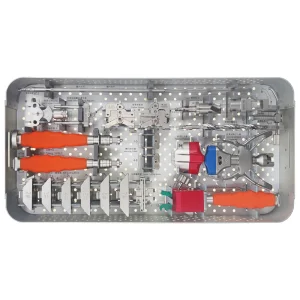
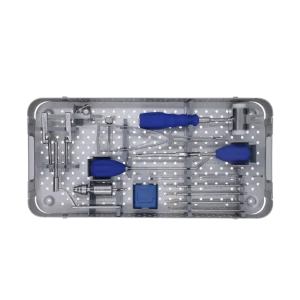
- Instrument Set Ergonomics: Dedicated trauma instrument sets including plate benders, drill guides, quick-coupling depth limiters, and self-retaining screwdrivers.
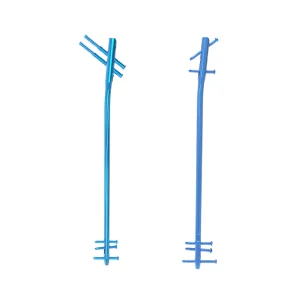
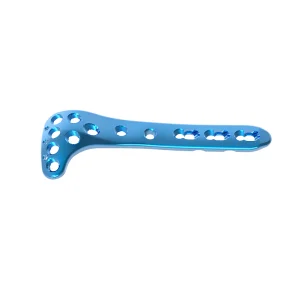
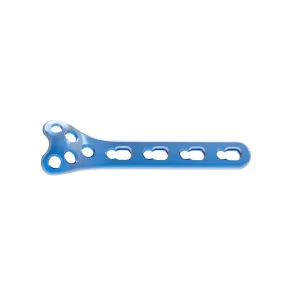
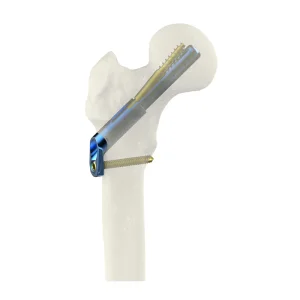
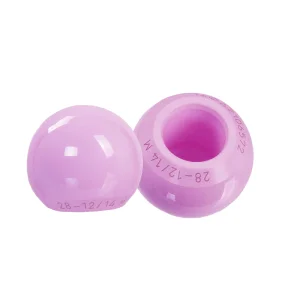
Integrated Orthopedic Platforms: Trauma, Joint & Spine
Beyond specialized thoracic fixation, ZATH engineers comprehensive reconstruction systems certified for international hospital distribution and OEM partnership.
Enterprise Q&A: Surgical Engineering & Global Procurement
Authoritative answers addressing surgeon clinical concerns, distributor regulatory compliance, and OEM manufacturing customization.
Titanium Grade 5 ELI possesses a modulus of elasticity (~110 GPa) substantially closer to human cortical bone than 316L stainless steel (~200 GPa). This closer biomechanical match dampens stress shielding and facilitates physiologically compliant respiratory flexure. Furthermore, titanium exhibits superior fatigue resistance under cyclic thoracic breathing loads and creates minimal MRI/CT scattering artifact during postoperative imaging.
Unlike long-bone osteosynthesis which frequently mandates bicortical purchase, rib plates rely on fixed-angle threaded locking caps that couple rigidly to the plate body. This creates an internal-fixator construct. Surgeons obtain absolute mechanical stability by engaging solely the outer (superficial) cortex, avoiding deep bicortical screw projection that could lacerate the subcostal neurovascular bundle or puncture the underlying parietal pleura and lungs.
ZATH operates under a comprehensively audited ISO 13485:2016 quality management system. Standard export documentation includes raw material spectroscopic melt certificates (MTR), Dimensional CMM Inspection Reports, Certificate of Conformance (CoC), Free Sale Certificates (FSC), and validated ethylene oxide (EtO) or Gamma sterilization release records.
Yes. Our in-house regulatory affairs team assists authorized distributors with comprehensive technical documentation dossiers. We supply biological evaluation reports (ISO 10993), biomechanical dynamic fatigue reports (ASTM F382 equivalent), packaging validation, and clinical literature evaluations tailored to local Ministry of Health registration protocols.
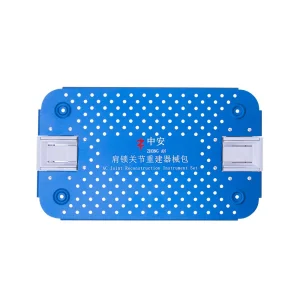
We provide comprehensive private-label OEM/ODM solutions: high-precision fiber laser etching of distributor trademarks and lot numbers, customized plate geometries (thickness from 1.5mm to 2.4mm, specialized hole spacing), Type II color anodization (cyan, gold, deep blue), custom-configured modular sterilization trays, and tailored sterile dual-barrier pouching.
Standard catalog products maintained in sterile or non-sterile bulk inventory are dispatched within 3 to 5 business days via premier international express carriers (DHL, FedEx, UPS), arriving at most global destinations within 4 to 6 days. Custom OEM production runs typically cycle from CAD/CAM review to final sterile packaging within 4 to 6 weeks.
Accelerate Your Orthopedic & Thoracic Supply Chain
Partner directly with Beijing ZhongAnTaiHua Technology Co., Ltd. Eliminate intermediary markups, obtain complete ISO 13485 regulatory dossiers, and secure dependable, high-precision titanium implant inventory.