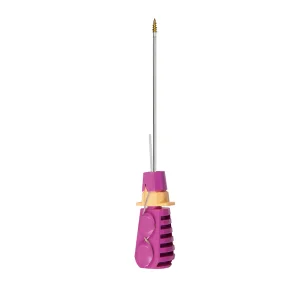
ODM Sports Medicine Titanium Orthopedic Suture Anchor Implant Suppliers, Service
View Specifications
Sterile-packed, lot-traceable intramedullary nails, dynamic joint reconstructive components, and specialized locking platforms engineered for primary trauma workflows.
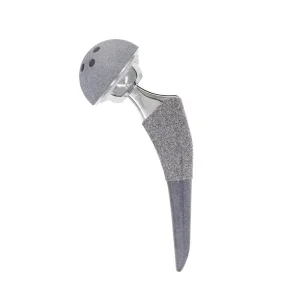
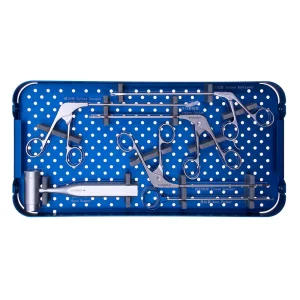
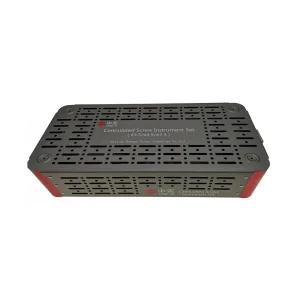
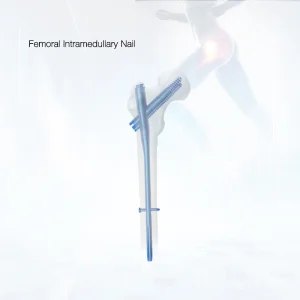
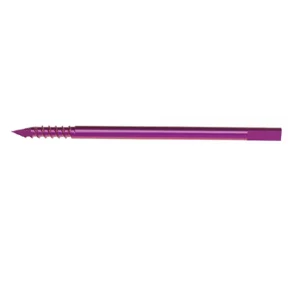
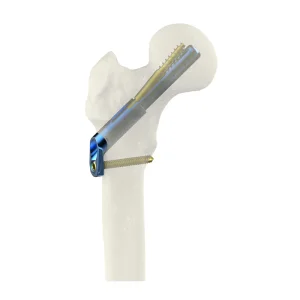
Modern intramedullary solutions have progressed from rigid biomechanical fixation to dynamic biological osteosynthesis, minimizing stress shielding while accelerating callus vascularization.
Early-generation femoral intramedullary nails were built with an excessively straight coronal profile or a flat bow radius (ROC > 2.0m), frequently causing anterior cortical impingement or distal anterior perforation. Current engineering standardizes a pre-curved radius between 1.5m and 1.2m, aligning dynamically with the typical multi-ethnic femoral canal morphology to prevent eccentric canal reaming.
Modern nail systems integrate progressive locking choices: static locking for comminuted subtrochanteric fractures to resist torsional displacement, dynamic longitudinal slots allowing up to 5mm controlled axial micromotion under patient weight-bearing, and oblique distal locking holes to avoid metaphyseal toggle in distal-third fractures.
Global procurement has overwhelmingly migrated toward Grade 5 Titanium Alloy (Ti-6Al-4V ELI conforming to ISO 5832-3). Offering an elastic modulus (~110 GPa) significantly closer to cortical bone (~18 GPa) than stainless steel (~210 GPa), titanium nails reduce stress shielding, yield significantly superior cyclic fatigue life, and are MRI-conditional.
Comprehensive specifications for femoral intramedullary nail systems to facilitate B2B regulatory auditing and procurement qualification.
| Specification Parameter | Antegrade Standard Femoral Nail | Reconstruction Femur Nail | Retrograde Femur Nail |
|---|---|---|---|
| Raw Material Grade | Ti-6Al-4V ELI (ISO 5832-3 / ASTM F136) | Ti-6Al-4V ELI (ISO 5832-3 / ASTM F136) | Ti-6Al-4V ELI (ISO 5832-3 / ASTM F136) |
| Diameter Options (mm) | Ø9.0, Ø10.0, Ø11.0, Ø12.0 | Ø9.3, Ø10.0, Ø11.0, Ø12.0 | Ø9.0, Ø10.0, Ø11.0, Ø12.0 |
| Length Range (mm) | 340mm to 440mm (20mm increments) | 340mm to 440mm (20mm increments) | 160mm to 300mm (Distal/Supracondylar) |
| Radius of Curvature (ROC) | 1.5m anatomical curve | 1.5m anatomical curve | Straight / Slight recurvatum bend |
| Proximal Fixation Screw | Standard dynamic / static locking bolt | Dual 6.4mm lag screws into femoral head | Transverse / Oblique distal locking bolts |
| Cannulation | Full length (guide wire up to Ø3.2mm) | Full length (guide wire up to Ø3.2mm) | Full length (guide wire up to Ø3.2mm) |
| Packaging Standard | Cleanroom sterile double-blister pack | Cleanroom sterile double-blister pack | Cleanroom sterile double-blister pack |
Overcoming clinical procurement bottlenecks through certified high-precision CNC manufacturing, instrument set integration, and scalable inventory models.
Many hospitals face instrument failure or misalignment due to third-party targeting jigs. ZATH manufactures dedicated, radiolucent carbon fiber or stainless steel targeting frames calibrated on multi-axis CNC machines to achieve a concentricity tolerance under ±0.05mm, ensuring 100% distal screw insertion hit rates under fluoroscopy.
Non-sterile implants require autoclave cycles at hospital sterilisation units, increasing logistical costs and the risk of nosocomial infection. All ZATH femoral nails and interlocking screws are processed in Class 100,000 cleanrooms and sealed in Tyvek double-barrier blister packs, arriving operating-room ready with an extended 5-year shelf-life validation.
Distributors require tailored branding and regional sizing variants (e.g., specific bow geometry suited for smaller Asian skeletal structures or larger Western canal anatomies). ZATH provides comprehensive private labeling, custom laser marking, tailored tray layout design, and full registration dossier authorship.
Navigating stringent regulatory transitions with comprehensive technical files, clinical evaluations, and rigorous batch quality audits.
Transitioning from MDD 93/42/EEC to EU MDR 2017/745 requires profound clinical documentation. ZATH maintains audited Clinical Evaluation Reports (CER), extensive biomechanical test documentation (ISO 7206 / ASTM F1264 for fatigue and bending stiffness), and detailed Post-Market Clinical Follow-up (PMCF) plans.
Every batch of titanium bar stock undergoes rigorous chemical composition analysis and mechanical tensile testing. Certified raw material mill test sheets accompany every production lot, fully integrated with laser-etched UDI (Unique Device Identification) codes for lifetime tracking from factory lathe to surgical theatre.
To accelerate registration in Latin America, Southeast Asia, the Middle East, and Eastern Europe, ZATH supplies authenticated Free Sale Certificates (FSC), consular legalizations, ISO 13485 declarations, and authorized representative agreements, reducing target-market registration timelines significantly.
Integrating digital sensing, bio-active coatings, and additive manufacturing into reconstructive orthopedic traumatology.
Embedded telemetric strain gauges within the cannulation cavity are poised to track real-time physiological axial loading and callus stiffness progression, alerting surgeons remotely to delayed unions or impending mechanical fatigue failures prior to clinical manifestations.
Advanced surface functionalization—including nano-silver dopants, hydroxyapatite (HA) plasma spraying, and diamond-like carbon (DLC) coatings—is being pioneered to reduce surgical site infections (SSI) while mitigating intramedullary biofilm colonization in compound fractures.
Additive manufacturing using Electron Beam Melting (EBM) and Direct Metal Laser Sintering (DMLS) allows on-demand fabrication of patient-matched intramedullary constructs for severe malunions, periprosthetic fractures, and pediatric osteogenesis imperfecta requiring non-standard canal matching.
Direct technical and commercial answers for hospital biomedical departments, import managers, and orthopaedic distributors.
Explore our full ecosystem of specialized implants, reconstructive screws, anatomical locking compression plates, and arthroscopy platforms.