Validated Clinical Systems
Precision Osteosynthesis & Surgical Fixation Portfolio
Engineered to rigorous biomechanical specifications, each surgical titanium implant and instrument provides optimal load-bearing strength, low profile geometries, and reliable clinical outcomes.
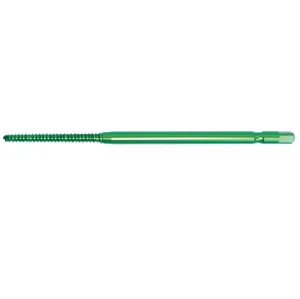
Cancellous Bone Pin System
Inspect Specifications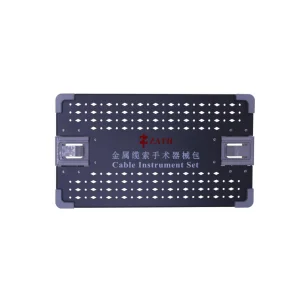
Cable Instrument Set III System
Inspect Specifications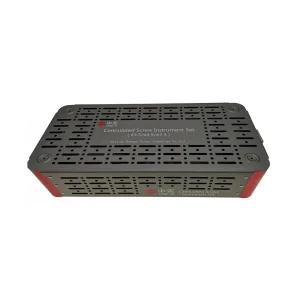
Ф3.5/4.5/7.3 Cannulated Screw Set
Inspect Specifications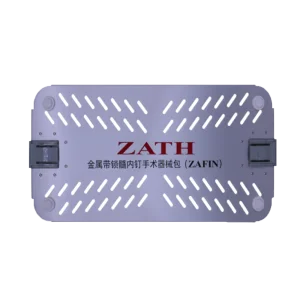
ZAFIN Femoral Nail Surgical Kit
Inspect Specifications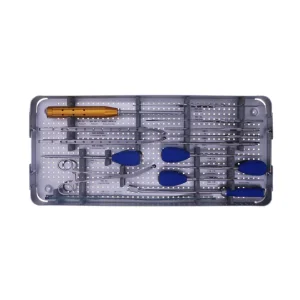
Zipper 6.0 Spine Fixation Set
Inspect Specifications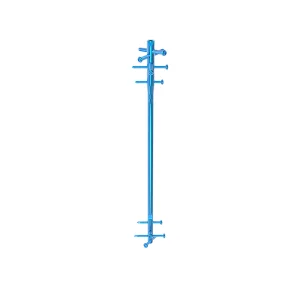
Expert Tibia Intramedullary Nail
Inspect Specifications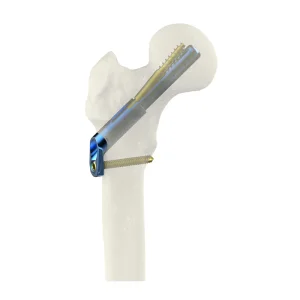
Femoral Neck Antirotation System
Inspect Specifications
Industry Macro Intelligence
Technological Paradigms in Orthopedic Titanium Plates
The global osteosynthesis market has migrated decisively from basic rigid compression plates to bio-harmonious variable-angle locking structures manufactured under stringent medical regulatory frameworks.
Ti-6Al-4V ELI Biocompatibility
Modern surgical fixation relies exclusively on medical-grade Grade 5 Extra Low Interstitial Titanium (ASTM F136 / ISO 5832-3). Its lower modulus of elasticity closer to human cortical bone significantly minimizes the risk of stress shielding, cortical osteopenia, and post-operative refracture.
Variable-Angle Locking Mechanics
Fixed-angle locking designs are evolving into combi-hole and polyaxial locking systems. Surgeons can achieve +/- 15 degrees of variable angulation, allowing precise trajectories around articular surfaces while retaining high pull-out torque and dynamic load redistribution under cyclical weight-bearing.
Type II Anodization & Fatigue Life
Advanced surface electro-chemical conversion (Type II Anodization) darkens the titanium surface, substantially improving wear resistance, reducing cold-welding between plate holes and screw heads, and elevating cyclical fatigue endurance beyond 5,000,000 cycles under ASTM F382 standards.
15+
Years of Direct Manufacturing Expertise (Since 2009)
300+
Engineers, CNC Machinists & QA Specialists
100%
ISO 13485 & CE Certified Batch Traceability
4-6d
Global Express OR Delivery Capability
Global Procurement Architecture
Enterprise Sourcing: Overcoming Regulatory & Supply Bottlenecks
Medical device importers, national health ministries, and orthopedic hospital groups face systemic challenges in supply reliability, regulatory convergence, and instrument interoperability.
Regulatory De-Risking under EU MDR (2017/745) and Global Frameworks
The transition from MDD to EU MDR has dramatically raised the barrier to entry for orthopedic implants. Many legacy manufacturers exited the market due to stringent clinical evaluation reports (CER), post-market clinical follow-up (PMCF), and comprehensive biocompatibility testing requirements (ISO 10993 series).
As an authoritative manufacturer, ZATH (Beijing ZhongAnTaiHua Technology Co., Ltd.) provides pre-audited technical documentation, ensuring our CE-marked titanium plates, screws, and instrument systems integrate seamlessly into local registration dossiers across Europe, Latin America, Southeast Asia, and the Middle East.
- Complete Technical Documentation: Immediate access to risk management dossiers (ISO 14971), biological evaluation files, and cleaning/sterilization validations.
- Sterile Barrier Assurance: Implants supplied in ISO Class 7 cleanroom medical-grade blister packaging with validated 5-year shelf-life stability data.
- Laser UDI Compliance: Unique Device Identification permanently marked on all plates and screws for instant operating room traceability.
Holistic OR Instrument Integration: Eliminating Surgical Discrepancies
A frequent pain point for orthopedic hospital procurement is the mismatch between implant locking threads and screwdriver bits, leading to intraoperative screw head stripping or cold-welding complications. ZATH eliminates this operational risk by developing proprietary surgical instrument sets matched specifically to our titanium plate tolerances.
From high-torque torque-limiting screwdrivers and hard-anodized drill guides to anatomical bending irons and reduction forceps, our sets guarantee surgical ergonomics and zero-tolerance dimensional fidelity across every procedural step.
Zero-Defect Philosophy
Advanced Production Line: From Certified Bar Stock to Sterile Implant
Precision orthopedic engineering executed in our 300+ personnel facility in the Zhongguancun Science and Technology Park, Pinggu, Beijing.
1. Material Ingestion & Spectrometry
Every batch of medical Ti-6Al-4V ELI bar stock undergoes chemical composition verification via optical emission spectrometry and ultrasonic flaw detection to ensure zero internal voids or inclusions prior to processing.
2. 5-Axis Simultaneous CNC Machining
Employing state-of-the-art multi-axis machining centers (Citizen & DMG MORI), anatomical plates are sculpted in continuous cycles, maintaining dimensional tolerances within ±5 microns and achieving anatomical curvature fidelity without micro-fracturing.
3. CMM & Optical Metrology
Thread pitches, locking taper geometry, and plate chamfer profiles are subjected to 100% Coordinate Measuring Machine (CMM) coordinate inspections and automated optical scanning, guaranteeing zero defective parts leave the line.
Strategic Scalability
Bespoke OEM/ODM Capabilities & Next-Gen Technology Roadmap
Empowering distributor private labels and leading hospital institutions with rapid customized prototyping, regional anatomical adaptions, and advanced bio-active surface coatings.
Private Labeling & Packaging
Tailored OEM/ODM engineering allows comprehensive customization of plate contours, screw hole patterns, custom color anodization coding for immediate OR identification, and custom localized multilingual sterile box packaging.
3D Printed Trabecular Titanium
Next-generation R&D incorporates Electron Beam Melting (EBM) and Direct Metal Laser Sintering (DMLS) to build interconnected trabecular structures directly onto bone contact interfaces, promoting rapid osseointegration and vascular ingrowth.
Anti-Bacterial Active Coatings
To drastically curtail surgical site infections (SSI), our technological roadmap integrates nano-silver and zinc-doped bioactive ceramic coatings capable of controlled local antimicrobial ion release without cytotoxicity to osteoblasts.
Procurement Knowledge Base
Frequently Asked Questions for Clinical & Commercial Evaluators
Essential guidance addressing regulatory approvals, material certifications, delivery timelines, and surgical application protocols.
1. How does ZATH guarantee compliance with European CE and international regulatory audits?
ZATH operates under a certified ISO 13485 Quality Management System audited continuously by renowned notified bodies. All titanium plates and locking systems maintain comprehensive CE certification technical documentation, Free Sale Certificates (FSC), biocompatibility dossiers conformant to ISO 10993, and mechanical testing verification under ASTM F382 (Standard Specification and Test Method for Metallic Bone Plates).
2. Why is Ti-6Al-4V ELI titanium alloy preferred over 316L stainless steel for bone plates?
Ti-6Al-4V ELI (Grade 5, ASTM F136) offers a modulus of elasticity approximately half that of stainless steel (~110 GPa vs ~200 GPa), significantly mitigating stress shielding. Furthermore, it boasts exceptional biocompatibility due to its inert titanium oxide (TiO2) layer, superior fatigue strength, non-magnetic resonance imaging (MRI) compatibility with negligible artifact distortion, and zero nickel content to eliminate patient allergic responses.
3. Are plates and screw implants delivered pre-sterilized or non-sterile?
Both configurations are fully supported based on national market logistics. We offer individually sterile-packed blister packs (Ethylene Oxide or Gamma Irradiation, validated to SAL 10^-6) featuring 5-year validated shelf-lives for rapid, autoclave-free OR access, as well as non-sterile bulk packaging configured for hospital sterilization container trays with matching graphic caddies.
4. What is the standard turn-around time for bulk orders and distributor replenishments?
Because all manufacturing stages—from raw material storage and wire EDM cutting to 5-axis CNC milling, cleaning, and cleanroom packaging—are centralized under our 300-employee Beijing manufacturing facility, standard catalog SKUs are maintained in safety stocks. Rush replenishments ship internationally via DHL, FedEx, UPS, or EMS within 4–6 business days. Custom OEM/ODM runs typically deliver within 3 to 5 weeks from technical drawing freeze.
5. Can ZATH accommodate regional anatomical variations in trauma plate designs?
Yes. Regional anatomical differences—such as distal radius curvature variations, proximal femur bow angles, or clavicle S-curve contours—are routinely engineered through our in-house R&D department. Using CT morphology datasets, our senior technicians modify CAD designs to match specific ethnic demographic morphologies while ensuring screw locking mechanics remain standard.
Complete Trauma & Spine Matrix
Trauma Locking Systems, Spine Instruments & Reconstructive Kits
Comprehensive orthopedic solutions designed to satisfy operating theater demands with zero tolerance for component failure.
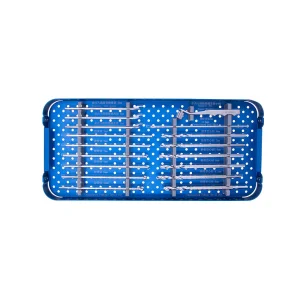
ACL/PCL Reconstruction Instrument Set
Inspect Specifications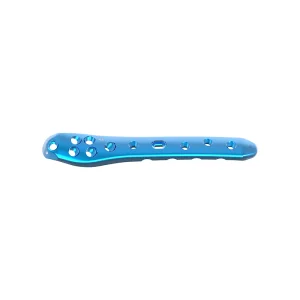
Proximal Femur Locking Plate V
Inspect Specifications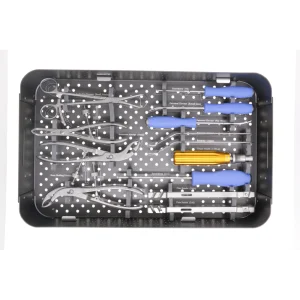
Upper Limb Locking Plate Instrument Set
Inspect Specifications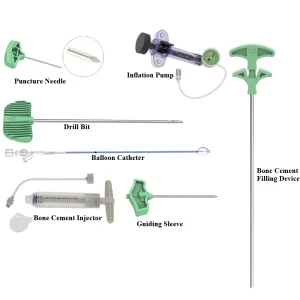
PKP Vertebroplasty Instrument Kit
Inspect Specifications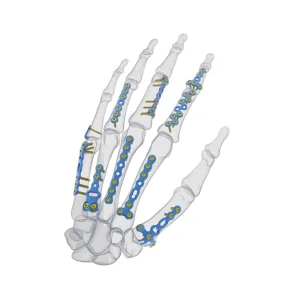
Hand Fracture Locking Plate System
Inspect Specifications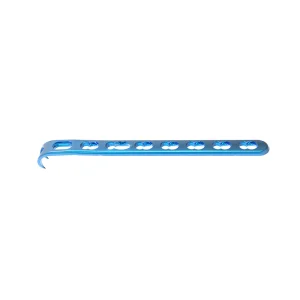
Olecranon Hook Locking Plate
Inspect Specifications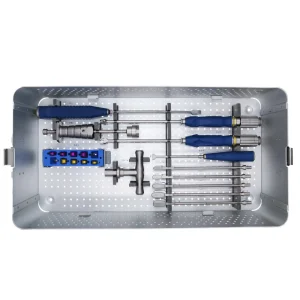
Thoracolumbar TLIF Cage Instrument Set
Inspect Specifications