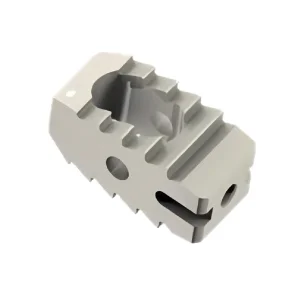
Primary Orthopedic Fixation Portfolio
Explore precision-engineered orthopedic systems, trauma plates, and arthroplasty assemblies machined under stringent ISO 13485 cleanroom protocols.
Demystifying Sourcing: Why "Cheap" Means High-Efficiency Manufacturing
In surgical device procurement, commercial competitiveness must never compromise clinical survivorship or biomechanical rigidity.
40-60%
Direct Cost Reduction vs. Tier-1 Importers
100%
Full Lot Heat-Number Traceability
10⁻⁶
Sterility Assurance Level (SAL) Standards
5-Axis
CNC Machining Accuracy (±0.005mm)
Redefining Orthopedic Economics: Value-Engineered Trauma Implants
For hospital tender committees, national health organizations, and surgical implant distributors, the term "cheap femur nail manufacturer" has transitioned from meaning sub-par materials to designating lean, vertically integrated manufacturing. The historical markup charged by multinational conglomerates—often exceeding 600% above production cost—stems from legacy marketing budgets, multi-tiered middleman layers, and inflated Western overheads.
Modern Chinese industrial centers, spearheaded by pioneers like Beijing ZhongAnTaiHua Technology Co., Ltd. (ZATH), utilize automated 5-axis Swiss-lathe processing, economies of scale, and localized metallurgical refining to supply titanium alloy (Ti-6Al-4V ELI) intramedullary nail systems at a fraction of Western pricing. The result is accessible osteosynthesis without a single compromise on mechanical fatigue life, screw-pullout resistance, or histological biocompatibility.
China's Industrial Ecosystem: Unmatched Supply Chain Resilience
How state-level advanced manufacturing parks enable rapid tooling, consistent material chemistry, and bulk delivery speed.
Direct Metallurgical Access
Integrated supply contracts with aerospace-grade titanium suppliers guarantee Grade 5 ELI (ASTM F136) rods with zero porosity, optimal grain structure, and verified tensile stress exceeding 860 MPa.
Automated High-Volume Milling
Multi-axis computerized machining executes deep-hole cannulation gun-drilling and proximal slot curvature in continuous operational cycles, mitigating batch variation and human error.
End-to-End Cleanroom Integration
Class 10,000 / ISO Class 7 cleanrooms on-site conduct ultrasonic bio-burden decontamination and Tyvek sterile heat sealing, enabling ready-to-implant surgical dispatch directly to consignees.
Clinical Indication Matrix & Anatomical Matching
Comprehensive classification of femur nail variants engineered for both trochanteric stabilization and mid-shaft diaphyseal fractures.
| Implant Classification | Anatomical Indication | Proximal Configuration | Biomechanical Objective | Instrument Targeting |
|---|---|---|---|---|
| Proximal Femoral Nail (PFNA / InterZan Type) | Pertrochanteric, intertrochanteric, and high subtrochanteric fractures (AO 31-A1/A2/A3). | Helical blade or dual integrated lag screws (dynamic & static). | Compacts cancellous bone in osteoporotic patients; prevents "cut-out" and rotational collapse. | Carbon-fiber radiolucent aiming arm for fast distal locking under fluoroscopy. |
| Antegrade Femoral Nail (AFN) | Diaphyseal fractures, subtrochanteric extensions, and bilateral femur trauma (AO 32-A/B/C). | Recon screws directed into femoral head or standard transverse locking. | Restores axial alignment, load sharing, and preserves periosteal blood supply with reamed insertion. | Rigid calibrated carbon arch with calibrated proximal depth guides. |
| Retrograde Femoral Nail (RFN) | Distal third supracondylar fractures, periprosthetic fractures above TKA, polytrauma patients. | Distal multi-planar interlocking screws with intercondylar lock. | Enables percutaneous insertion through intercondylar notch without repositioning supine patient. | Curved distal targeting guide preventing intra-articular screw penetration. |
Global Enterprise Sourcing Demands & Quality Assurances
Addressing the technical, regulatory, and supply chain expectations of hospital consortiums and national distributors.
Technical Dossier (MDR/FDA)
Full support with Common Technical Documents (CTD), biocompatibility validation (ISO 10993), and risk assessment (ISO 14971) to expedite national health authority registrations.
Fatigue Life Validation
Dynamic axial and torsional cyclic fatigue testing according to ASTM F383 and ASTM F1264 standards, verifying survival beyond 5 million cycles without micro-fissuring.
Comprehensive Tooling Kits
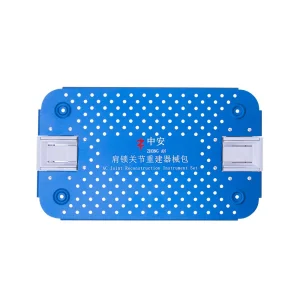
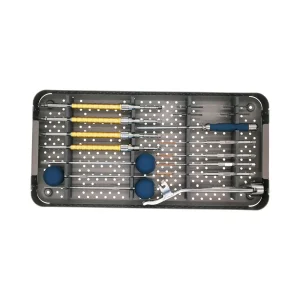
Supplied with complete, autoclavable surgical instrument cases (medical-grade 17-4PH stainless steel and anodized aluminum) that match all implant thread pitches and diameters.
Supply Agility & Consignment
Buffer inventory models with predictable lead times (4-6 days dispatch via courier) ensuring hospital distributors minimize standing capital while avoiding theater stockouts.
Industry Evolution: Emerging Trends in Intramedullary Fixation
Next-generation advancements reshaping femoral osteosynthesis manufacturing over the next decade.
Radiolucent Carbon-Fiber Aiming Arms
Eliminating fluoroscopic blind spots during distal interlocking. Manufacturers are integrating high-performance PEEK and carbon-composite matrices into re-usable instrument caddies.
Anti-Bacterial Active Coatings
Surface modification via silver nanoparticle deposition or bio-absorbable antibiotic-loaded hydrogel sheaths aimed at reducing implant-associated post-traumatic osteomyelitis in compound fractures.
Anatomical Radius-of-Curvature Optimization
Modern femur nail designs have shifted from an aggressive anterior bow radius (R1500mm) to a flatter curvature (R1800mm-R2000mm) preventing anterior femoral cortex perforation in shorter stature populations.
Frequently Asked Questions: B2B Femur Nail Sourcing
Direct technical and operational clarifications for hospital buyers, procurement officers, and implant brand custodians.
Cost advantages in state-level Chinese medical clusters originate from vertically integrated metallurgical smelting, fully automated CNC multi-axis milling, lower capital depreciation overheads, and the removal of intermediate marketing agents. The physical implants are fabricated from the identical standard raw materials (Ti-6Al-4V ELI conforming to ISO 5832-3 or ASTM F136) on the exact same multi-axis CNC machines utilized by top Western manufacturers, ensuring matching structural yield and cyclic durability.
OEM/ODM buyers receive a comprehensive technical dossier. This covers ISO 13485 manufacturing certificates, Free Sale Certificates (FSC), raw material mill test reports indicating chemical and mechanical metrics, EO/Gamma sterilization validation curves (ISO 11137 / ISO 11135), ISO 10993 cytotoxicity and biological evaluation tests, and biomechanical static/dynamic load reports (ASTM F1264).
Helical blades are advantageous in osteopenic and osteoporotic elderly bone structures because they compact cancellous trabeculae during insertion rather than removing it, significantly elevating resistance to "cut-out" and superior migration. Dual lag screws provide precise axial compression and rotational stability during active patient rehabilitation, making them ideal in complex subtrochanteric patterns with comminution.
For standard off-the-shelf catalog implants under neutral or factory packaging, immediate stock dispatch is typically 4 to 6 business days. For customized OEM programs (laser etching logos, custom anodized colors, tailored length-to-diameter matrices, and specialized distributor carton labeling), MOQs typically start at 50-100 units per specification range with a 30 to 45-day fabrication run.
Supplementary Trauma, Joint & Instrument Solutions
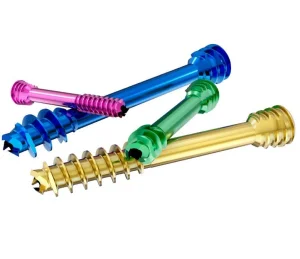
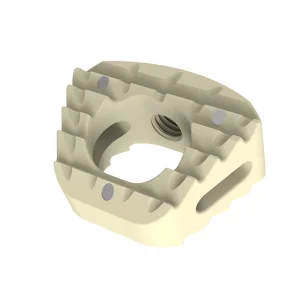
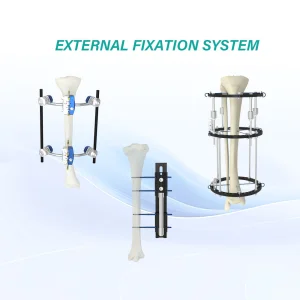
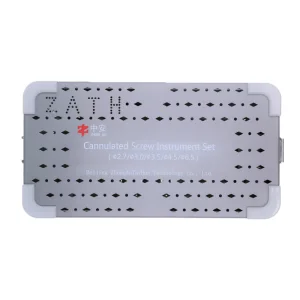
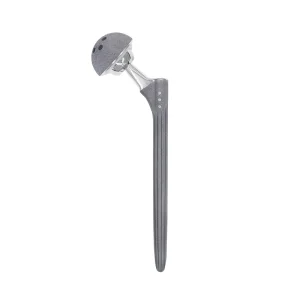
Complete your catalog with matching high-precision instruments, spinal stabilization hardware, and cannulated screw systems.