Precision Fastening & Rigid Fixation Systems
Explore high-tolerance medical bone screws, osteosynthesis compression plates, and matching surgical sets produced with sub-micron CNC Swiss machining.
Medical Bone Screws Manufacturing: Metallurgical & Biomechanical Fundamentals
A technical whitepaper examining structural metallurgy, thread pitch dynamics, shear stress resilience, and ISO 13485 fabrication standards driving China's leading orthopedic device exporters.
Material Science & Biocompatibility
Medical bone screws are exposed to aggressive axial loading, multi-planar bending, and corrosive interstitial body fluids. Fabricated primarily from medical-grade Ti-6Al-4V ELI (Grade 23, ASTM F136 / ISO 5832-3) and ultra-clean implant-grade stainless steel (316LVM, ASTM F138 / ISO 5832-1), our screw profiles prevent stress shielding while maximizing fatigue limits.
- Yield strength exceeding 860 MPa for high torque resistance
- Passive TiO2 oxide barrier minimizing ion leakage
- Vacuum arc remelted metallurgy guaranteeing purity
Thread Profile & Pull-Out Mechanics
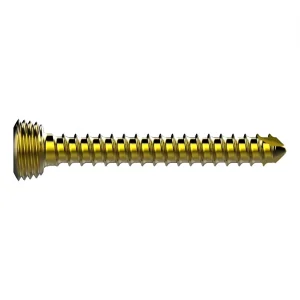
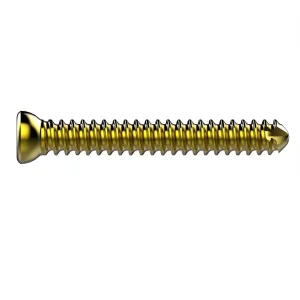
Screw purchase relies directly on optimized flank angles, core-to-outer diameter ratios, and lead design. Cortical bone screws feature dense, fine pitches designed to maximize thread engagement within hard cortical shell walls, whereas cancellous screws incorporate deep, asymmetrical buttress threads that grip loose trabecular bone meshes without stripping.
- Self-tapping reverse flutes eliminating tap insertion
- High-pitch lead angles reducing insertion temperature
- Standardized Torx (Stardrive) recess minimizing stripping
Clinical Standardization & Testing
ZATH subjects every bone screw production batch to rigorous mechanical bench testing conforming to ASTM F543 (Standard Specification and Test Methods for Metallic Medical Bone Screws). This protocol includes torsional yield strength evaluation, maximum torque, breaking angle verification, axial pull-out load testing, and self-tapping insertion force mapping.
- 100% optical inspection of thread profile geometry
- Dynamic fatigue cycling verifying 1,000,000+ stress passes
- Laser-etched lot traceability directly on screw head rim
Macro-Industry Orthopedic Solutions: From Trauma to Spine Reconstruction
Engineered to interface seamlessly with modern anatomical plates, rod assemblies, and intramedullary nailing constructs across diverse surgical disciplines.
Trauma Fracture Fixation
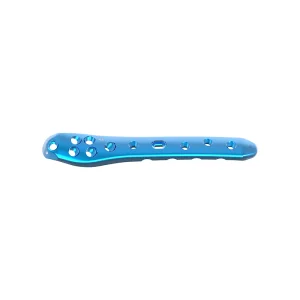
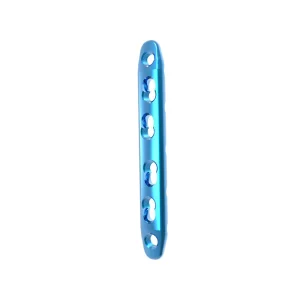
Standard cortical screws (2.0mm, 2.7mm, 3.5mm, 4.5mm) and locking variable-angle compression screws for periarticular fractures. Engineered to maintain angular stability without compressing the periosteum, protecting bone vascularity.
- Diaphyseal humerus & radius
- Femoral & tibial plateau repairs
- Small fragment hand and foot fixes
Spine & Pedicle Fixation
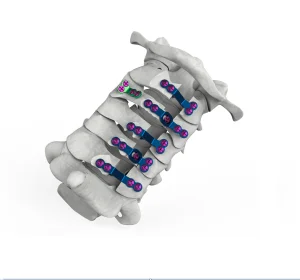
Monoaxial and polyaxial pedicle screws engineered with dual-lead cortical-cancellous threads. Compatible with MIS percutaneous guide towers and 5.5mm/6.0mm rod constructs for severe scoliosis, degenerative discs, and spondylolisthesis.
- Cervical anterior plate anchoring
- Thoracolumbar posterior fusion
- Cannulated cement-injectable screws
Sports Medicine & Extremity
Headless cannulated compression screws (Herbert screws) for scaphoid, osteochondral fractures, and bunion hallux valgus corrections. Cannulated core channels guide wires under fluoroscopic control for precise intraoperative positioning.
- Differential thread pitch compression
- Knotless titanium suture anchors
- Interference ligament fixation screws
Reconstruction & Maxillofacial
Miniature 1.0mm to 2.0mm micro-screws fabricated for mandibular, orbital, and cranial neurosurgical reconstruction. Designed with zero-profile countersunk heads to eliminate soft tissue irritation beneath thin facial epidermal tissues.
- Low-profile self-drilling cross-drives
- Orthognathic rigid fixation systems
- Micro-mesh plate fastening pins
| Bone Screw Modality | Available Diameters (mm) | Material Specification | Head Geometry | Key Clinical Indications |
|---|---|---|---|---|
| Standard Cortical Screw | 1.5, 2.0, 2.4, 2.7, 3.5, 4.5 | Ti-6Al-4V ELI / 316LVM | Hexagonal / Torx Stardrive | Shaft fractures, non-locking compression plates, lag screw fixation |
| Locking Compression Screw | 2.4, 2.7, 3.5, 5.0 | Ti-6Al-4V ELI (Anodized Type II) | Threaded Conical Locking Head | Osteoporotic bone, comminuted metaphyseal and periarticular fractures |
| Cannulated Headless Screw | 2.5, 3.0, 4.0, 4.5, 6.5, 7.3 | Ti-6Al-4V ELI (ASTM F136) | Headless Countersunk | Femoral neck, scaphoid fractures, intra-articular joint arthrodesis |
| Polyaxial Pedicle Screw | 4.5, 5.0, 5.5, 6.0, 6.5, 7.0 | Ti-6Al-4V ELI + CoCr Caps | Saddle Head (±30° cone) | Spinal deformity, degenerative disc disease, thoracolumbar trauma |
China Factory 4.0: Automated Precision & Supply Chain Resilience
How Beijing ZhongAnTaiHua Technology Co., Ltd. (ZATH) deploys advanced multi-axis CNC robotics, cleanroom automation, and continuous lean throughput to insulate global distributors from supply bottlenecks.
Multi-Axis Swiss CNC Machining
Bone screws demand intricate thread geometry with zero runout. Our workshops deploy automated Swiss-type sliding headstock lathes (Citizen & Star) capable of turning titanium wire coils or bar stock into finished, threaded, and fluted screw blanks in a single, uninterrupted operational cycle, achieving micro-tolerances within ±0.005mm.
Automated Surface Decontamination
Microscopic metallic particulate and machining coolants are stripped using a multi-stage ultrasonic passivation bath cycle conforming to ASTM A967 and ASTM F86. Implants undergo automated electrochemical anodization (Type II and Type III color coding), building a dense barrier that blocks fretting corrosion and streamlines surgical sizing.
ISO Class 7/8 Cleanroom Sterilization
To eliminate bioburden and hospital autoclaving delays, our Beijing plant houses certified cleanrooms for double-blister Tyvek sterile barrier sealing. Qualified under ISO 11137 (Gamma Irradiation) and ISO 11135 (Ethylene Oxide), each packaged batch features an accelerated-aging proven 5-year shelf-life readiness.
Streamline Your Orthopedic Device Supply Chain
Connect with ZATH technical engineers to review custom drawing tolerances, volume-tiered export price sheets, and regulatory submission dossiers for regional tender registrations.
Global Enterprise Sourcing: Tailored OEM, ODM, & Private-Label Pathways
Comprehensive turnkey engineering solutions for global brand holders, government tender agencies, and fast-growing hospital network supply distributors.
Custom Screw Blueprinting & Prototyping
Leverage our 100+ seasoned R&D engineers to develop tailored screw thread profiles, headless pitch progressions, and proprietary drive heads. Rapid metal 3D prototyping and CAD/CAM modeling allow prototype testing within 10 to 14 business days from approved STP/IGS CAD models.
Branding, Color Coding & Laser Marking
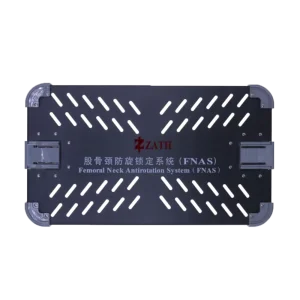
Complete custom branding options including fiber-laser marking of distributor logos, part catalog numbers, batch identifiers, and GS1-compliant DataMatrix 2D barcodes. Color anodization across screws and screw racks enables instantaneous visual identification in surgical theaters.
Turnkey Matching Instrument Kits
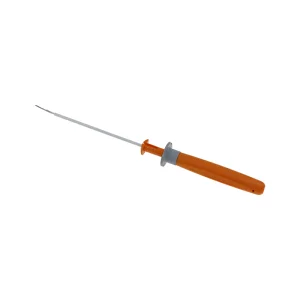
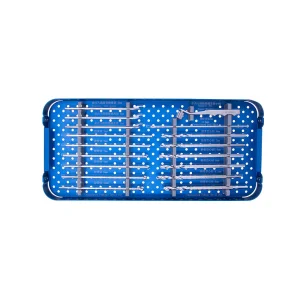
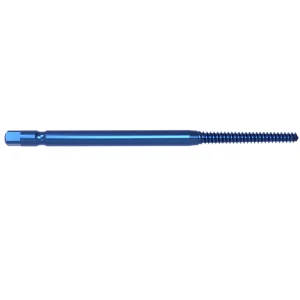
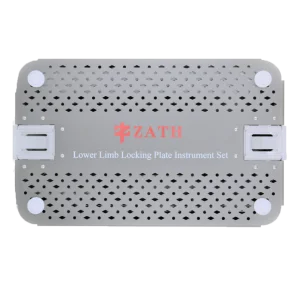
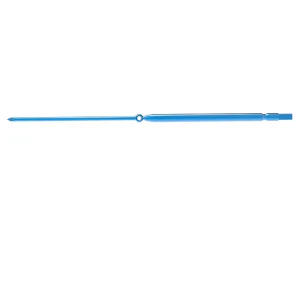
A screw is only as reliable as its insertion driver. ZATH manufactures matching surgical screwdriver shafts (custom torque-limiting quick-coupling adapters, silicone ergonomic handles, self-holding sleeves, and depth gauges) constructed from hardened German 17-4PH stainless steel.
Regulatory Compliance & International Market Entry Assurance
De-risking regional registration across North America, the European Union, Southeast Asia, Latin America, and the Middle East with comprehensive technical files.
ISO 13485:2016 Certified Quality Management System
ZATH’s manufacturing site in the Zhongguancun Science and Technology Park, Pinggu District, Beijing, is managed under an audited ISO 13485 QMS. Every metallurgical heat number, raw bar ultrasonic test report, dimensional CMM inspection run, and bioburden audit is permanently cataloged to guarantee 100% end-to-end accountability throughout the product’s 10-year clinical lifespan.
- Fully validated cleanroom monitoring protocols (airborne particle & settlement plate monitoring)
- Rigorous CAPA (Corrective and Preventive Action) and vendor qualification systems
- Annual third-party audit recertifications by accredited notified bodies
Regulatory Dossier Preparation & Free Sale Certificates
Entering national healthcare tenders requires robust technical documentation. ZATH equips distributor regulatory teams with comprehensive CE technical dossiers aligned with EU MDR 2017/745 requirements, ISO 10993 biological evaluation portfolios (cytotoxicity, systemic toxicity, sensitization, and hemocompatibility), and official Free Sale Certificates (FSC) to expedite ministry of health approvals.
- ASTM F543 biomechanical test reports verifying torsional and pullout equivalence
- Sterilization validation reports conforming to ISO 11137 / ISO 11135 protocols
- Dedicated regulatory engineering liaisons providing responsive clarification letters
Technology Roadmap: Next-Generation Medical Bone Screw Innovations
Investigating advanced bioresorbable alloys, 3D printed osteoconductive architectures, and active anti-microbial surface treatments reshaping clinical outcomes.
Additive Trabecular Porous Titanium
By leveraging Selective Laser Melting (SLM) 3D printing technologies, next-gen titanium pedicle and interference screws incorporate interconnected 300–500μm porous lattices directly into their thread shafts. This biomimetic structure encourages osseointegration within 4 to 8 weeks, significantly lowering revision rates in osteopenic populations.
Bioabsorbable Magnesium & Polymer Alloys
To eliminate secondary hardware removal surgeries, ZATH’s forward R&D evaluates biodegradable high-purity magnesium-zinc (Mg-Zn) and PLGA/PLLA composite screws. These implants maintain rigid fixation during critical 12-week callus healing phases before gradually hydrolyzing into benign, bioassimilable ions without toxic localized acidosis.
Smart Anti-Microbial Hydroxyapatite Coatings
Implant-associated surgical site infections (SSI) represent significant clinical liabilities. Incorporating plasma-sprayed nano-hydroxyapatite (HA) dopants infused with silver (Ag) and copper micro-ions provides dual benefits: stimulated osteoblastic deposition alongside a permanent barrier preventing bacterial biofilm formation.
Frequently Asked Questions: Technical & Sourcing Specifications
In-depth responses covering mechanical specifications, material certifications, minimum order quantities, and international logistics.
What is the difference between Cortical and Cancellous bone screws?
Cortical screws possess smaller outer thread diameters, finer pitch, and a shallower thread flute depth engineered to purchase into dense cortical bone tissue (typically diaphyseal regions). Cancellous screws have wider profiles, coarse thread pitches, and larger flank surface areas to achieve mechanical hold in porous, spongy metaphyseal bone.
How does ZATH guarantee against screw head cam-out or stripping?
ZATH utilizes precision cold-forged and wire-EDM Torx (Stardrive) recess geometries conforming to ISO 10664. Unlike standard hexagonal drives, Torx designs eliminate radial cam-out forces by transmitting torque parallel to the driver axis, permitting maximum seating insertion torque without damaging internal head splines.
Which titanium grades are utilized across your screw manufacturing lines?
All titanium bone screws are machined from certified Ti-6Al-4V ELI (Extra Low Interstitial, Grade 23) complying with ASTM F136 and ISO 5832-3. We rigorously reject non-medical industrial titanium bar stock, verifying every incoming bar with chemical spectroscopy and tensile fracture testing.
Can ZATH supply custom bone screw lengths and thread diameters under OEM?
Yes. Our in-house toolmakers and CAM programmers can customize pitch lead, core taper, self-tapping cutting flute angle, and lengths ranging from 6mm micro-screws to 140mm long cannulated lag screws. Minimum order quantities (MOQ) for custom OEM geometries start as low as 200–500 units per spec.
Are bone screws supplied sterile-packed or non-sterile?
Both modalities are readily available. We supply sterile-packed screws sealed inside double Tyvek blisters validated under ISO 11137 Gamma irradiation (SAL 10⁻⁶) for direct OR shelf storage, as well as non-sterile bulk lots intended for hospital caddy autoclaving and local sterilization cycles.
What is the standard turnaround lead time for global shipments?
For standard stocked catalog items (cortical, locking, and cannulated screws), orders are packaged and dispatched via DHL, FedEx, UPS, or air freight within 48 to 72 hours, arriving globally within 4 to 6 business days. Custom OEM production cycles generally require 4 to 6 weeks.
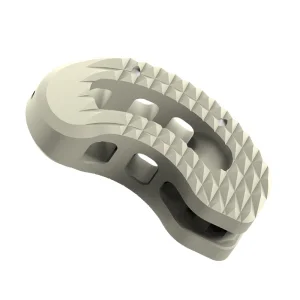
Spinal, Trauma & Sports Medicine Orthopedic Systems
Comprehensive orthopedic implant lines manufactured under identical ISO 13485 cleanroom and CNC quality controls for hospital procurement teams.