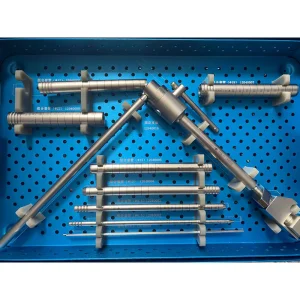
Platform Systems
Standardized Orthopedic Implants & Surgical Instrumentation
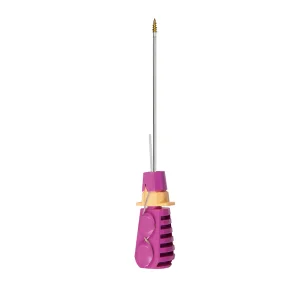
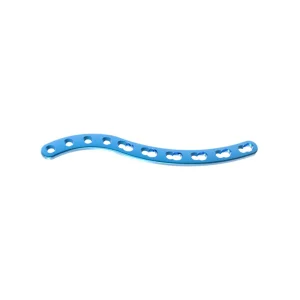
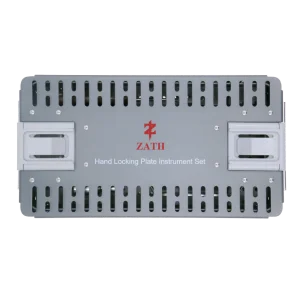
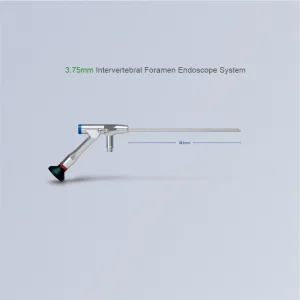
Explore initial critical instrumentation platforms engineered for rapid trauma mobilization and specialized orthopedic interventions.
6.4%
Global IM Nail CAGR (2024–2032)
Ti-6Al-4V ELI
Biocompatible Grade 23 Alloy Standard
100%
Cleanroom Class 100,000 Packaging
ISO 13485
Certified Quality Management System
Industry Economics & Dynamics
Commercial Realities of Global Tibial Fracture Internal Fixation
A strategic overview of supply chain resilience, regulatory transitions, and material advancements defining modern orthopedic trauma manufacturing.
The Global Trauma Burden
Tibial shaft fractures represent the most frequent long-bone fractures encountered in trauma registries worldwide, occurring at an incidence of 16.9 to 22 per 100,000 person-years. Driven by high-energy road traffic accidents, industrial mishaps, and geriatric fragility events, intramedullary (IM) nailing remains universally recognized as the clinical gold standard for AO/OTA 42 diaphysis stabilization.
Supply Chain Realignment
Global hospital networks and healthcare distributors face mounting cost constraints. Procurement heads are increasingly bypassing legacy multinational tiers to partner directly with tier-one Chinese original equipment manufacturers (OEMs). Advanced manufacturing facilities in industrial corridors like Beijing possess integrated capabilities from multi-axis CNC swiss turning to ISO 11137-compliant sterilization.
Regulatory Stringency (MDR & FDA)
With the implementation of the European Medical Device Regulation (EU MDR 2017/745) and strict FDA 510(k) post-market clinical follow-ups, Chinese manufacturers have upgraded quality systems. Traceability across metallurgical raw bar stock, fatigue bench testing (ASTM F1264), and cleanroom validation ensures streamlined compliance for international distribution partners.
Clinical Engineering
Biomechanics: Suprapatellar vs. Infrapatellar Approaches
Evaluating load-bearing optimization, Herzog bends, multiplanar distal locking, and patellofemoral cartilage preservation.
Suprapatellar Extended Portal
The semi-extended suprapatellar insertion technique eliminates the typical apex anterior angulation (recurvatum deformity) frequently observed during infrapatellar hyperflexion. Specially designed cannulated instrumentation sleeves protect the trochlear groove and patellar articular cartilage, reducing operative fluoroscopy exposure and procedural repositioning.
Herzog Bend Geometry
Contemporary tibia intramedullary nails feature a proximal 10.5° Herzog bend, engineered to match the natural anatomical curvature of the proximal tibial medullary canal. This angle prevents anterior cortical breakout during entry point reaming and nail advancement, mitigating the risk of intraoperative iatrogenic comminution.
Multiplanar Distal Locking
Fixation of distal third metafiaphyseal fractures demands multi-directional angular stability. Modern designs include up to four distal multiplanar locking holes—including ultra-distal AP and oblique options positioned within 5mm of the nail tip—preventing coronal displacement and rotational failure under early weight-bearing.
| Implant Parameter | Material / Specification | Clinical Rationale | Standard Compliance |
|---|---|---|---|
| Raw Material Substrate | Ti-6Al-4V ELI (Extra Low Interstitial) | High fatigue strength, low modulus reducing stress shielding | ASTM F136 / ISO 5832-3 |
| Nail Diameter Range | Ø 8.0 mm to Ø 12.0 mm (0.5 mm increments) | Fits variable reamed and unreamed medullary diameters | Class IIb Medical Device |
| Nail Length Range | 255 mm to 420 mm (15 mm increments) | Accommodates patient stature across diverse demographics | Precision CNC Tolerance ±0.05mm |
| Proximal Locking Options | Multi-axis dynamic/static compression slots | Allows controlled secondary dynamization for delayed unions | ASTM F1264 Fatigue Bench Testing |
| Surface Treatment | Type II Anodization (Titanium Anodized Grey/Gold) | Increases surface hardness, reduces fretting corrosion and galling | ISO 10993 Biocompatibility |
Application Scenarios
Global Clinical Adaptability: From Level 1 Trauma to Emerging Markets
Examining field deployability, surgeon usability, and anatomical fit variations across different geographical demographics.
High-Volume Trauma Centers
Western and metropolitan centers prioritize rapid, radiolucent carbon-fiber targeting arms with minimal surgical steps, supporting immediate fluoroscopy verification and same-day semi-extended suprapatellar nailing workflows.
Emerging Market Procurement
Tender programs across Southeast Asia, Latin America, and the Middle East prioritize mechanical durability, non-sterile reusable autoclave containers, and cost predictability without compromising ISO-certified surgical outcomes.
Pediatric & Small Stature Anatomy
Asian and Latin populations frequently display smaller intramedullary isthmuses, creating critical demand for smaller diameter cannulated implants (Ø8.0 mm and Ø8.5 mm) with preserved inner lumens for flexible guide wires.
Austere & Military Environments
In conflict zones or disaster relief missions, closed reduction intramedullary nailing under portable C-arm fluoroscopy offers safe closed stabilization, minimizing soft-tissue disruption and infection risks in contaminated wounds.
Technology Roadmap
The Future of Intramedullary Nailing: Next-Gen Innovation
Where precision manufacturing converges with orthobiologics, additive printing, and telemetry diagnostics.
Antibacterial & Bioactive Coatings
Open tibial fractures feature high non-union and deep infection rates. Future pipelines integrate silver nanoparticle electrolytic deposition and bio-absorbable antibiotic-loaded polylactic acid (PLLA) thin coatings to eradicate Staphylococcus biofilm formation on implant surfaces.
Smart Nails with Micro-Telemetry
Embedded MEMS strain sensors within the unreamed canal will transmit micro-deformation load data wirelessly to surgeon smartphones. Real-time monitoring of callus stiffness index facilitates objective, personalized weight-bearing protocols, preventing premature fatigue failure.
Additive EBM Porous Lattices
Electron Beam Melting (EBM) 3D-printing introduces topologically optimized cellular metamaterial structures into specific regions of the nail. This tailored stiffness gradient reduces the flexural modulus closer to cortical bone (18 GPa), eliminating proximal stress shielding.
Industrial Solutions
Integrated OEM/ODM Supply Chain Architecture
Turnkey contract manufacturing frameworks designed for private label medical distributors and brand holders worldwide.
Custom Design & Rapid Prototyping
Collaborative CAD/CAM engineering from Beijing tech hubs transforms clinical feedback into validated prototypes within 14 business days. Finite element analysis (FEA) validates load distribution before Swiss-type CNC pilot runs commence.
Sterile-Pack Turnkey Delivery
Full-barrier double-blister Tyvek packaging processed within Class 100,000 cleanrooms. Ready-for-OR labeling includes customized multilingual branding, GS1 DataMatrix barcodes, and gamma or EO sterilization indicators.
International Regulatory Dossiers
Partners receive complete technical documentation including bio-compatibility studies (ISO 10993), clinical evaluation reports (CER), packaging shelf-life validations, and manufacturer Free Sale Certificates (FSC) to expedite regional market registration.
Procurement & Clinical Knowledgebase
Frequently Asked Questions (FAQ)
Essential clinical, metallurgical, and regulatory answers for hospital procurement authorities and orthopaedic implant importers.
Q1: Why is Ti-6Al-4V ELI titanium preferred over 316L stainless steel for tibia nails?
Ti-6Al-4V ELI (Grade 23) offers superior fatigue resistance and a lower elastic modulus (approximately 110 GPa) compared to 316L stainless steel (approximately 200 GPa). This closer proximity to cortical bone (18-20 GPa) significantly diminishes stress shielding, accelerates secondary callus formation, and provides excellent MRI compatibility with minimal image distortion artifact.
Q2: What are the primary clinical advantages of suprapatellar tibia nailing?
Suprapatellar nailing allows the knee to remain in semi-extension (approximately 15° to 20° flexion). This neutral positioning neutralizes the deforming pull of the quadriceps mechanism, preventing apex-anterior (recurvatum) malalignment typical of proximal third fractures, while simplifying C-arm imaging setup.
Q3: Can Chinese manufacturers support custom dimensional changes for regional distributors?
Yes. Leading Chinese manufacturers like ZATH provide comprehensive OEM/ODM engineering services. Using five-axis CNC turning centers, dimensions including nail curvature radius, Herzog bend angle, distal hole distribution, and cannulated wall thickness can be adjusted to specific regional demographic anatomies with low minimum order quantities (MOQs).
Q4: How is rotational stability ensured in extreme distal tibia fractures?
Rotational and coronal stability in distal metaphyseal fractures is achieved through multiplanar distal locking holes positioned within 5mm to 13mm of the nail tip. Angled transverse and anteroposterior (AP) locking screws cross multiple cortices, providing fixed-angle construct stability without requiring additional open plating.
Q5: What documentation is provided to satisfy regional health authority registration?
Reputable Chinese suppliers deliver comprehensive regulatory dossiers containing ISO 13485 declarations, material mill certificates, ASTM F1264 biomechanical fatigue testing reports, EO or Gamma sterilization validations (ISO 11135/11137), biocompatibility cytotoxicity profiles, and legalized Free Sale Certificates (FSC).
Q6: How is instrumentation compatibility managed between nail implants and targeting arms?
Intramedullary systems are engineered as closed-loop platforms. Targeting carbon-fiber or titanium aiming frames, tissue protection sleeves, trocar drills, and calibrated depth gauges undergo rigorous co-verification to eliminate deflection tolerance issues, ensuring precise drill-to-hole targeting accuracy even under dynamic intraoperative conditions.
Comprehensive Portfolio
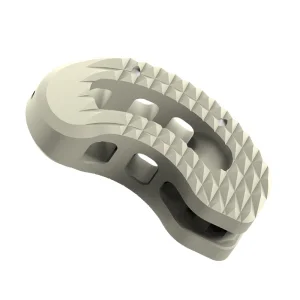
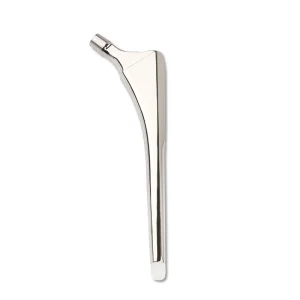
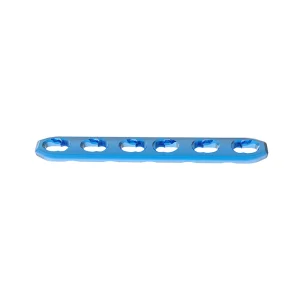
Associated Reconstructive & Trauma Fixation Assemblies
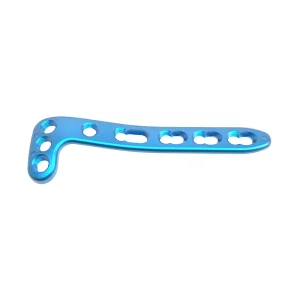
Complementary trauma fixation plates, arthroplasty components, and cannulated systems supporting hospital surgical suites.