Featured Implant Platforms & Surgical Instruments
Explore our top-tier trauma, joint arthroplasty, and soft-tissue reconstruction modules built for clinical accuracy, torsional stability, and biological osseointegration.
Anatomical Curvature & Biomechanic Precision
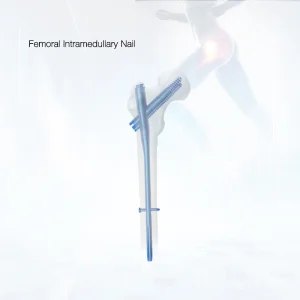
Modern fracture repair requires an optimal balance between structural rigidity and secondary bone healing stimulus. Our custom femoral intramedullary nail systems feature engineered bows, multidirectional interlocking vectors, and fatigue-resistant titanium cores.
Optimized Radius of Curvature (ROC)
Anterior femoral curvature varies substantially across ethnic populations. Our factory crafts customizable ROC from 1.5m to 2.0m, reducing anterior cortical impingement, distal perforation, and malalignment during retrograde or antegrade insertion.
Ti-6Al-4V ELI (Grade 23) Purity
Fabricated strictly with biocompatible medical-grade alloy conforming to ASTM F136 and ISO 5832-3 standards. Delivers an elastic modulus (~110 GPa) closer to cortical bone than stainless steel, dramatically minimizing the risk of stress shielding.
Integrated Compression & Anti-Rotation
Features double-screw reconstructed lag screw designs and helical blade options. Dynamically converts axial shear forces into active axial compression while maintaining rigid rotational control over subtrochanteric fracture zones.
China Supply Chain Resilience: Unmatched Scale & Precision
From raw titanium bar stock receiving in Beijing to finished sterile blister packs, our vertically integrated plant removes third-party dependencies, guaranteeing short lead times and absolute quality consistency.
Multi-Axis Swiss CNC
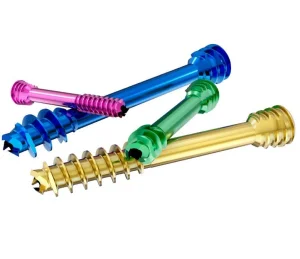
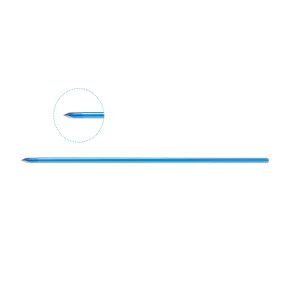
Equipped with 5-axis DMG MORI and Citizen high-speed turning centers capable of deep-hole gundrilling (cannulation Ø3.5mm–Ø4.5mm) with sub-micron wall concentricity.
Complete Metallurgical Tests
Every incoming batch is validated via optical emission spectrometers, mechanical tensile testers, and fatigue testing up to 5,000,000 dynamic cycles per ASTM F384/F543 protocols.
Cleanroom & Sterilization
Our Class 10,000 (ISO Class 7) cleanroom facilitates ultrasonic multiphase passivated washing, clean sealing, and validated Gamma / EO sterilization for surgical shelf readiness.
Comprehensive Registration
ISO 13485 QMS, UDEM certified documentation, and active Free Sale Certificates (FSC) to assist procurement teams in streamlining regional health ministry registrations.
| Implant Parameter | Antegrade Femoral Nail | Retrograde / Distal Nail | Reconstruction / Cephalomedullary Nail |
|---|---|---|---|
| Primary Material | Ti-6Al-4V ELI (ASTM F136) | Ti-6Al-4V ELI (ASTM F136) | Titanium Alloy / High-Yield Strength |
| Diameter Options (mm) | Ø9.0, Ø10.0, Ø11.0, Ø12.0 | Ø9.0, Ø10.0, Ø11.0, Ø12.0 | Ø9.0, Ø10.0, Ø11.0, Ø12.0, Ø13.0 |
| Length Range (mm) | 320mm – 440mm (20mm increments) | 160mm – 300mm (Short & Standard) | 170mm – 240mm (Short) / 340mm – 440mm (Long) |
| Radius of Curvature (ROC) | 1500mm – 2000mm Anatomical | Straight Distal Core with 5° Bend | Anatomical Anterior Bow (1500mm) |
| Proximal Angle | 4° – 5° Medio-lateral Herzog Angle | Multi-planar Distal Locking Screws | 125° / 130° CCD Neck-Shaft Angles |
B2B Procurement Realities & Next-Gen Clinical Trends
International tenders and hospital procurement divisions face heightened margin pressures and stringent regulatory barriers. Here is how our OEM/ODM custom intramedullary nail platform meets these modern market shifts.
Turnkey Instrument Matching
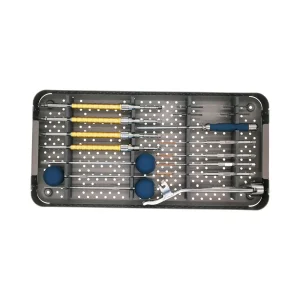
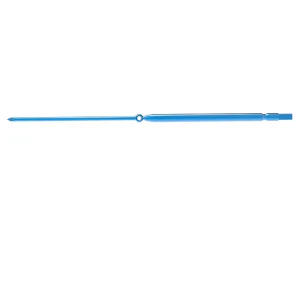
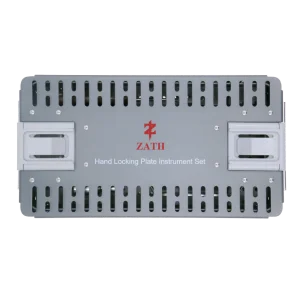
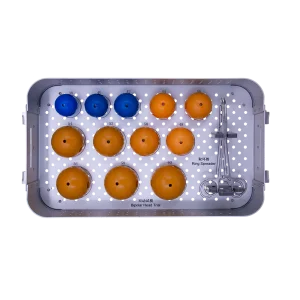
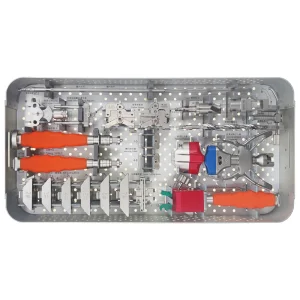
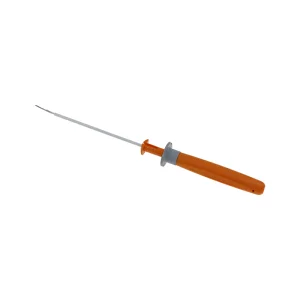
Nails cannot function without surgical instrumentation. We supply complete instrument kits: radiolucent carbon-fiber targeting guides, quick-coupling flexible reamers, dynamic impactors, and specialized nail extraction extractors packed in autoclavable aluminum trays.
Regional Morphological Adaptation
Latin American, Southeast Asian, and Middle Eastern patient demographics often exhibit smaller medullary canal diameters and tighter femoral bows. We deliver OEM custom nail profiles and short-stature lines to protect against iatrogenic fractures.
Trend: Radiation-Free Digital Targeting
Distal locking represents up to 40% of fluoroscopy exposure in femoral trauma cases. Our engineering department is integrating electromagnetic tracking and radiolucent carbon guide systems to reduce C-arm usage and surgical duration.
Frequently Asked Questions
Clear, direct engineering and commercial answers to resolve technical queries prior to sample requests or formal OEM partnership agreements.
What are the key technical differences between antegrade and retrograde femoral nails?
How does your custom factory support distributor regulatory registrations?
Can we request custom diameters, wall thicknesses, and cannulation bores?
What packaging options are available for sterile versus non-sterile delivery?
What is the standard production cycle and express delivery timeframe?
Complementary Orthopedic Implants & Fixation Hardware
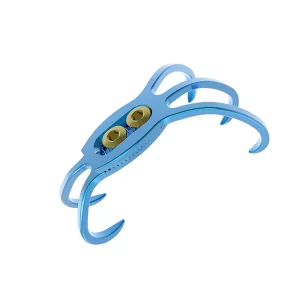
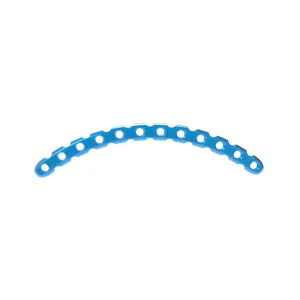
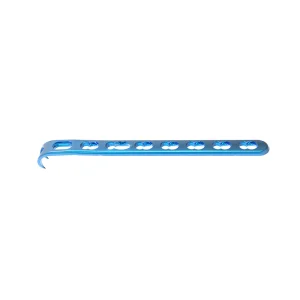
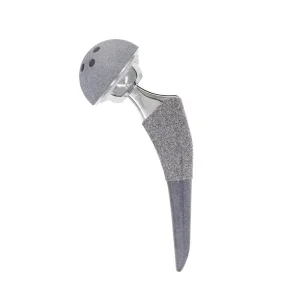
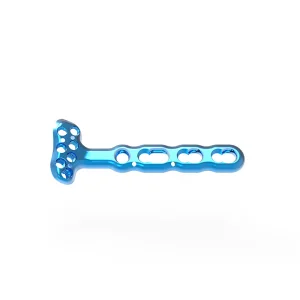
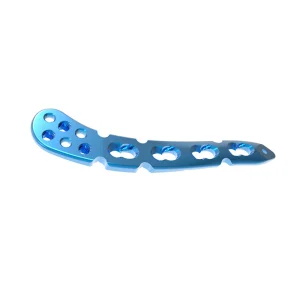
Expand your hospital catalog with anatomical compression plates, spinal fixation systems, joint prostheses, and reconstruction assemblies engineered to exact tolerances.