
High-Precision Trauma & Arthroplasty Implant Systems
Explore our ISO 13485:2016 accredited orthopedic solutions. Every implant is machined from implant-grade titanium or PEEK biomaterials, featuring full lot traceability and matching specialized instrument sets.
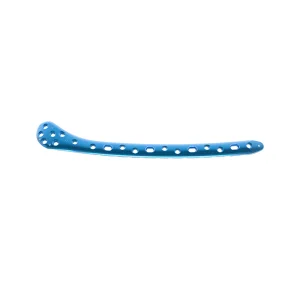
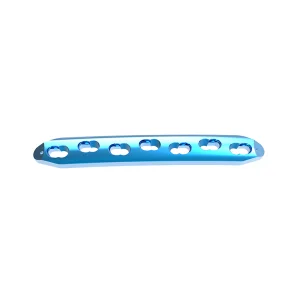
Distal Tibia Locking Plate #1 Set: Anatomical Fixation Re-Engineered
Distal tibial fractures—encompassing AO/OTA 43-A metaphyseal extra-articular breaks and complex 43-C pilon intra-articular fractures—represent one of the most formidable challenges in trauma orthopedics. Our Distal Tibia Locking Plate #1 System establishes a new paradigm in stability, soft-tissue friendliness, and surgical versatility.
Ultra-Low Profile Anatomic Contouring
The distal anteromedial and anterolateral aspects of the human tibia offer minimal subcutaneous soft-tissue coverage. Excessive plate thickness leads to wound dehiscence, skin necrosis, and plate irritation.
The Set #1 plate is precision pre-contoured based on high-resolution 3D CT morphology databases. It tapers smoothly from 3.5mm along the shaft to an ultra-thin 2.0mm at the distal articular fringe, eliminating intraoperative bending while minimizing cutaneous profile.
- Torx/Stardrive recess prevents screw head stripping
- Scalloped margins reduce periosteal compression
Angular Stability & Subchondral Rafting
Restoring the articular surface of the tibial plafond requires uncompromising subchondral support. In osteoporotic or comminuted bone, conventional non-locking screws quickly suffer toggle and pullout failure under physiologic axial loading.
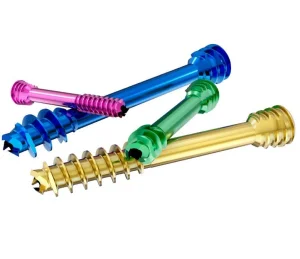
Our #1 Set features convergent and divergent distal locking screw clusters (utilizing 2.7mm and 3.5mm locking screws) that create a three-dimensional fixed-angle structural "raft". This transfers joint loads directly to the cortical diaphyseal shaft, preventing secondary varus collapse.
- Dynamic Combi-Holes for locking or compression
- High fatigue resistance tested to 1.2M cycles
MIPPO-Friendly Bullet-Nose Tip
Biological osteosynthesis dictates the preservation of periosteal blood flow and osteogenic hematoma. The Distal Tibia Locking Plate #1 incorporates a tapered, beveled bullet-nose designed specifically for Minimally Invasive Percutaneous Plate Osteosynthesis (MIPPO).
The implant glides effortlessly beneath the submuscular or subcutaneous tunnel through a small 2-3 cm distal incision. Matching radiolucent targeting guides ensure rapid, accurate screw placement without broad surgical exposure.
- Significantly lowers post-op wound complications
- Full compatibility with radiolucent jigs
Why Tier-1 Orthopedic Distributors Source from Beijing ZATH
Founded in 2009 and headquartered in the high-tech hub of Beijing Zhongguancun Science Park (Pinggu), Beijing ZhongAnTaiHua Technology Co., Ltd. (ZATH) has emerged as an authoritative global manufacturer of orthopedic implants and surgical instruments. Over 300 dedicated specialists, including nearly 100 seasoned biomedical engineers, operate an integrated manufacturing ecosystem.
Multi-Axis Swiss CNC Centers
Our plant houses synchronized 5-axis and 7-axis DMG MORI and Citizen CNC Swiss-type automatic lathes. Plates and locking screws are milled with zero residual stress and micrometer-level precision.
Class 100,000 Cleanrooms
From automated multi-frequency ultrasonic washing and acid passivation to Class 10,000 filling/packaging, our cleanroom facilities safeguard against bioburden, particulate contamination, and pyrogens.
Unmatched Cost-to-Performance
China's comprehensive industrial supply chain enables ZATH to source certified titanium bar stock, precision tooling, and gamma sterilization packaging with 40-55% cost efficiencies passed to our distributors.
Single-Batch Lot Traceability
Every single Distal Tibia Locking Plate and locking screw is laser-etched with a unique matrix code and lot number, allowing seamless tracing back to raw material metallurgical certificates and machine operator logs.
Emerging Technological Trends in Distal Tibial Fracture Care
The global orthopedic fixation device sector is experiencing rapid evolution driven by aging populations, higher incidence of polytrauma, and demand for faster patient ambulation. Key technological shifts dictate modern plate selection:
From Rigid Construct to Elastic Fixation
Historically, bone plates emphasized maximum rigidity, which frequently resulted in stress shielding, cortical bone resorption, and delayed fracture healing. Contemporary clinical practice mandates relative stability that promotes micromotion and robust secondary bone healing through callus formation.
Modern Distal Tibia Locking Plate #1 systems feature optimized elastic modulus matching human cortical bone more closely, reducing the incidence of nonunion in metaphyseal segments.
Polyaxial Variable-Angle Locking Mechanics
While monoaxial fixed-angle locking plates provided superior holding power compared to non-locking plates, their rigid screw trajectories often collided with subchondral bone voids, joint surfaces, or adjacent hardware. Variable-angle locking allows surgeons to swivel screws up to 15° in any direction.
This allows exact target-aiming of specific dense articular bone fragments or the Volkmann triangle in trimalleolar injuries while securely locking into the plate eyelet.
Surface Functionalization & Bio-Inertness
Surgical site infections (SSI) in lower-extremity trauma can be catastrophic. Modern titanium locking plates undergo specialized electrochemical micro-arc oxidation (MAO) and Type II anodization.
This nanoscale surface treatment inhibits bacterial biofilm formation, improves biocompatibility, reduces cold welding between screw threads and plate holes, and simplifies eventual hardware removal if clinically indicated.
Clinical Protocols & Anatomical Application Scenarios
The Orthopedic Distal Tibia Locking Plate #1 Set is engineered to address complex pathologies across varying anatomical profiles and patient demographics.
AO/OTA 43-C Pilon Fractures
High-energy axial loading injuries causing articular comminution. The plate provides subchondral buttressing and joint congruity restoration when combined with independent lag screws or cannulated compression screws.
43-A Metaphyseal Fractures
Extra-articular comminuted fractures where intramedullary nailing is contraindicated due to an excessively short distal segment, narrow medullary canal, or proximity to existing ankle implants.
Osteoporotic Fragility Fractures
In low bone mineral density geriatric patients, conventional screws easily loosen. The multiple fixed-angle locking holes distribute stress across a wider cortical area, ensuring secure mechanical purchase.
Malunion & Corrective Osteotomy
For distal tibial nonunions or post-traumatic angular deformities, the #1 Set enables rigid internal fixation following wedge resection or deformity realignment, facilitating direct bone contact and early rehabilitation.
Macro Solutions for Global Hospital Networks & Orthopedic Tender Bidders
Public healthcare authorities, group purchasing organizations (GPOs), and multinational distributors face intense pressure to balance surgical efficacy with constrained orthopedic budgets. ZATH provides an integrated framework addressing institutional pain points:
Turnkey "One-Tray" Surgical Trays
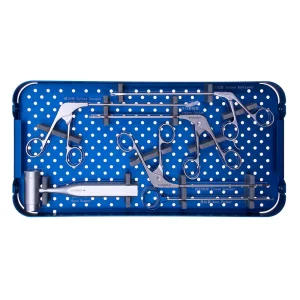
Disorganized instrumentation increases operating room turnover times and raises CSSD reprocessing costs. The Distal Tibia Locking Plate #1 Set arrives in a color-anodized, laser-slotted aluminum sterilization tray.
Instruments, depth gauges, drill bits, screw racks, and reduction forceps are laid out in surgical workflow order, reducing scrub nurse confusion and OR preparation time by up to 25%.
Regulatory Dossiers (MDR & FDA Ready)
Entering tenders in Southeast Asia, the Middle East, Latin America, or Europe requires exhaustive documentation. ZATH supplies qualified distributors with full Device Master Files (DMF), Biocompatibility Reports (ISO 10993), Mechanical Test Reports (ASTM F382), and valid ISO 13485 certification.
We empower regional partners to secure national ministry of health registrations swiftly.
Direct Factory OEM/ODM Scalability
Distributors seeking to build private-label equity benefit from our flexible OEM/ODM capabilities. We support custom plate length adaptations, custom hole configurations, specialized surface colors (blue, gold, silver), and private brand packaging.
Low Minimum Order Quantities (MOQs) allow distributors to validate local markets without tying up massive working capital.
Distal Tibia Locking Plate #1 Set Specification & Benchmark
A granular technical comparison showcasing our design precision against industry standards:
| Design Parameters | ZATH Distal Tibia Locking Plate #1 | Standard Generic Trauma Plate | Clinical Advantage |
|---|---|---|---|
| Raw Material | Ti-6Al-4V ELI (ASTM F136 / ISO 5832-3) | Standard Grade Ti / 316L Stainless Steel | Superior biocompatibility & fatigue life, lower artifacts under MRI |
| Plate Profile Thickness | 3.5mm shaft tapered to 2.0mm distal edge | Uniform 3.2mm - 3.8mm across length | Substantially reduced skin tension and risk of wound dehiscence |
| Screw Configuration | Distal: 2.7mm/3.5mm Locking & Cortex; Shaft: 3.5mm Combi | Fixed 3.5mm Locking Only | Allows multi-fragment subchondral rafting without bone splitting |
| Screw Head Recess | Stardrive / Torx T15 Self-Retaining | Hexagonal Recess | Prevents screw strip-out and enables secure single-handed insertion |
| Insertion Technique | Optimized for MIPPO with radiolucent carbon guides | Primarily Open Reduction Internal Fixation (ORIF) | Preserves periosteal blood supply, faster patient recovery time |
| Packaging Availability | Sterile Double-Blister (Gamma) & Non-Sterile Tray Bulk | Predominantly Non-Sterile Bulk | Sterile option ready for emergency surgery; saves OR preparation |
| Instrument Set Ergonomics | Color-coded silicone handles, torque-limiting screwdrivers (1.5Nm) | Standard stainless screwdrivers without torque limit | Eliminates risk of cold-welding or thread stripping during final lock |
Frequently Asked Questions for Sourcing & Sizing
Expert answers addressing the commercial, regulatory, and mechanical questions most frequently posed by hospital procurement managers and orthopedic importers.
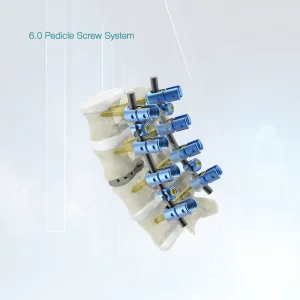
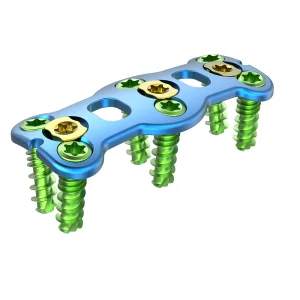
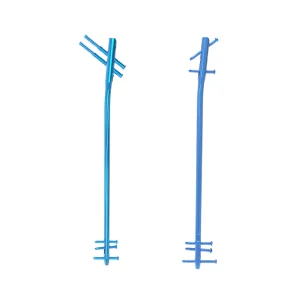
Advanced Spine, Trauma & Joint Systems
Explore ZATH's broader medical device portfolio, manufactured under identical ISO 13485 cleanroom precision to support your hospital tender and clinical supply needs.
Request Custom Quotations & Surgical Demonstration Sets
Partner with Beijing ZhongAnTaiHua Technology Co., Ltd. (ZATH) to elevate your orthopedic portfolio. Connect with our senior biomedical engineers to request formal catalog pricing, sample evaluation sets, or custom OEM/ODM manufacturing specifications.