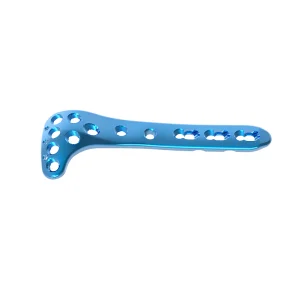
Precision Meditech Implant & Fixation Systems
Directly manufactured under cleanroom conditions with full material certs (ASTM F136 / ASTM F138). Explore high-demand trauma, spine, and joint instrumentation configurations below.
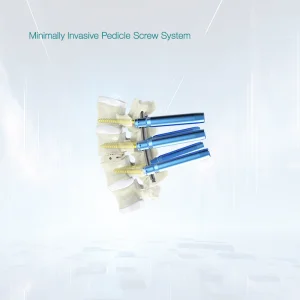

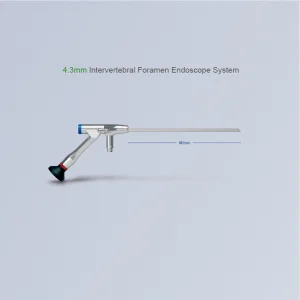
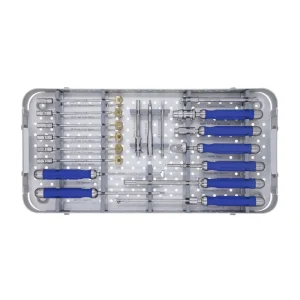
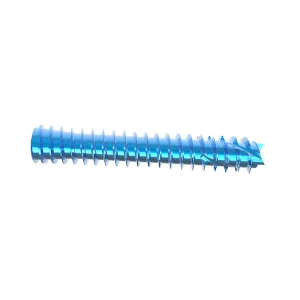
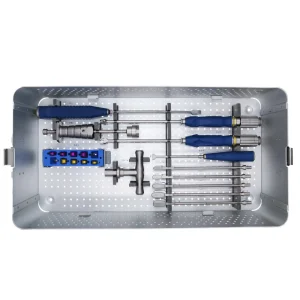
Global Cortical Screw Meditech Landscape & Wholesale Pricing Matrix
Understanding global supply economics, unit-cost variance across alloys, and volume discount brackets for medical distributors, tender consortia, and hospital networks.
The global market for orthopedic trauma fixation screws has undergone an aggressive structural realignment. Driven by escalating healthcare expenditures and mandatory tender-based centralized procurement policies across the European Union, the United States, Latin America, and the Asia-Pacific region, medical technology (Meditech) companies face intensifying pressure to deliver biomechanically superior fixation solutions at reduced acquisition costs. The cortical bone screw—a core workhorse in musculoskeletal stabilization—accounts for nearly 38% of all rigid internal fixation consumables consumed in hospital trauma operating rooms globally.
Historically, legacy Western tier-1 manufacturers commanded extreme price premiums exceeding 300% to 600% above manufacturing cost. However, high-precision manufacturing centers operated by advanced ISO 13485-certified enterprises such as Beijing ZhongAnTaiHua Technology Co., Ltd. (ZATH), operating out of the national Zhongguancun Science and Technology Park since 2009, have disrupted this status quo. By deploying high-speed Citizen and Star Swiss-type 7-axis CNC turning centers alongside automated cleanroom sterile blister packaging lines, ZATH eliminates intermediary trading markups. This enables global distributors to source medical-grade titanium alloy (Ti-6Al-4V ELI conforming to ASTM F136 / ISO 5832-3) and implant-grade stainless steel (316LVM conforming to ASTM F138 / ISO 5832-1) cortical screws at authentic wholesale discount levels without compromising fatigue tolerance, pull-out resistance, or metallurgical traceability.
| Screw Type & Core Diameter | Standard Thread Pitch & Drive | Material Specification | Standard Catalog Price (USD) | Wholesale Volume Tier (1k-5k pcs) | Contract Tier (>10k pcs Discount) | Primary Clinical Indication |
|---|---|---|---|---|---|---|
| Micro Cortical Ø1.5mm - 2.0mm | 0.50mm / 0.60mm Pitch, Star T6 / Hex 1.5 | Ti-6Al-4V ELI / 316LVM | $14.50 - $19.00 | $4.80 - $6.20 | $2.90 - $3.80 | Phalangeal, metacarpal, craniofacial fractures |
| Small Fragment Ø2.7mm Cortical | 1.00mm Pitch, Star T8 / Hex 2.5 | Ti-6Al-4V ELI (Anodized) | $16.00 - $22.50 | $5.20 - $7.10 | $3.20 - $4.40 | Distal fibula, clavicle, olecranon, radius |
| Small Fragment Ø3.5mm Cortical | 1.25mm Pitch, Star T15 / Hex 2.5 | Ti-6Al-4V ELI / 316LVM | $18.00 - $25.00 | $5.80 - $7.80 | $3.60 - $4.90 | Forearm diaphysis, pelvic brim, fibular shaft |
| Large Fragment Ø4.5mm Cortical | 1.75mm Pitch, Star T25 / Hex 3.5 | Ti-6Al-4V ELI / 316LVM | $22.00 - $32.00 | $7.10 - $9.60 | $4.20 - $5.80 | Femoral shaft, tibial diaphysis, humerus |
| Self-Tapping Shaft Ø4.5mm (Sterile) | 1.75mm Pitch, Dual Cutting Flute | Ti-6Al-4V ELI (Type II Anodized) | $28.00 - $39.00 | $8.90 - $11.50 | $5.40 - $7.10 | Emergency bicortical dynamic plate fixation |
The matrix above illustrates the transformative economies of scale realized when contracting directly with an integrated manufacturer. Standard international meditech catalog pricing reflects typical localized distributor lists carrying overhead margins of 150-250%. Direct factory-level supply contracts execute at 65% to 80% discounted rates, unlocking lucrative tender competitive advantages for regional medical suppliers across Latin America, Africa, Eastern Europe, and Southeast Asia.
Biomechanical Architecture: Thread Form, Yield Limits & Stripping Safety
Standardized testing according to ASTM F543 requirements ensures maximum pullout strength, optimized holding power, and fail-safe torsional integrity during orthopedic torque application.
Asymmetrical Buttress Thread Profile
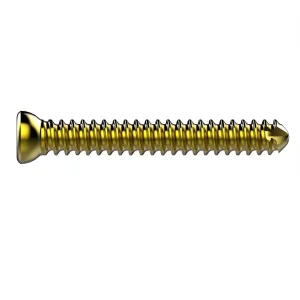
Cortical screws operate under severe axial pullout forces. ZATH cortical screws feature an asymmetrical thread form with a flat trailing face and an angled leading face. This geometry maximizes surface area contact against dense osteon lamellae while directing reactionary vector forces axially rather than radially, significantly reducing hoop stresses within fragile cortical walls.
Torx (Hexalobe) vs Hexagonal Recesses
Surgical drive stripping represents an acute OR complication. Traditional hexagonal drives suffer from cam-out at high torque. ZATH’s hexalobe Star drive (ISO 10664) establishes a near-zero contact angle, eliminating radial spreading forces. This permits higher terminal seating torque, ensuring secure interfragmentary lag compression without driver slip.
ASTM F543 Torsional Qualification
Every lot manufactured by ZATH undergoes rigorous mechanical qualification in conformance with ASTM F543 Annex A1 (Torsional Properties of Metallic Bone Screws). We guarantee minimum breaking torque margins exceeding 135% of ISO baselines, alongside an axial pull-out resistance calibrated to synthetic polyurethane bone models (ASTM F1839 grade 40PCF).
The Biomechanical Ratio: Insertion Torque vs. Stripping Torque
A critical engineering parameter governing cortical screw safety is the ratio between insertion torque ($T_{ins}$) and stripping torque ($T_{strip}$). Clinical biomechanical research indicates that when the ratio of $T_{strip} / T_{ins}$ falls below 1.5, surgeons face an exponentially increased risk of thread stripping in diaphyses, converting a rigid construct into an unstable, loose implant. ZATH’s precision CNC-ground cutting flutes evacuate osseous chips effectively during insertion, maintaining an average ratio of 2.8 in healthy bone and 2.1 in compromised bone, guaranteeing tactile feedback and immediate clinical confidence.
Localized Clinical Application Scenarios: From Emergency Trauma to Reconstructive Surgery
Detailed operative deployment methodologies for small fragment (2.7mm/3.5mm) and large fragment (4.5mm) cortical systems across varied orthopedic fracture patterns.
Diaphyseal Shaft Fracture Plating (Bicortical Neutralization)
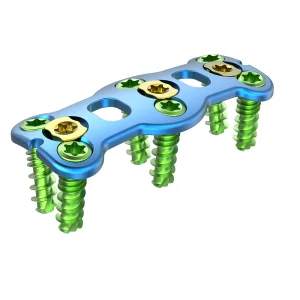
In standard AO fixation principles, diaphyseal fractures of the tibia, humerus, and radius demand rigid anatomical neutralization to allow immediate mobilization. Cortical screws are driven bicortically through limited-contact dynamic compression plates (LC-DCP) or anatomical locking compression plates (LCP). By engaging both the near cortex and far cortex with at least 1.5 to 2 protruding thread pitches, the construct achieves exceptional bending rigidity and axial load neutralization, preventing non-union or secondary displacement.
Interfragmentary Lag Screw Fixation
For oblique or spiral fractures, interfragmentary compression provides the biomechanical gold standard. A cortical screw placed as an isolated lag screw requires overdrilling the near cortex to the screw’s major diameter (gliding hole) and drilling the far cortex to the core diameter (thread hole). Tightening the screw exerts massive compressive force across the fracture plane, inducing primary direct bone healing without intermediate callus formation.
Osteoporotic Bone Considerations & Hybrid Plate Dynamics
In aging populations presenting with severe osteopenia, cortical screw engagement in thin, porous cortices presents a classic surgical dilemma. Standard cortical screws risk micro-fracture during seating or progressive loosening under cyclic loading. In modern clinical protocols, surgeons employ hybrid plating: locking screws provide fixed-angle axial and angular stability across comminuted segments, while non-locking cortical screws are strategically utilized to pull the bone plate flush against the periosteal cortex, establishing initial anatomical alignment before final locking fixation is initiated.
Technological Frontiers: Titanium Anodization, Nano-Topography & Automation
From medical-grade bar stock validation to Class 100,000 cleanroom packaging, how modern meditech factories engineer maximum fatigue life and biocompatibility.
Type II Anodization (Anti-Galling)
Titanium screws tightened into titanium bone plates are vulnerable to cold-welding and galling. ZATH implements electrochemical Type II anodization, creating an ultra-dense, low-friction titanium oxide surface layer that suppresses galling, enhances fatigue strength by up to 20%, and prevents intraoperative screw head stripping or cold fusion inside locking plate combi-holes.
Micro-EDM & Precision Flute Geometry
Traditional milling flutes can leave microscopic burrs that detach into surgical sites. By utilizing specialized wire electrical discharge machining (Wire EDM) and automated abrasive flow deburring, cortical screw cutting tips are shaped with surgical sharpness. This allows effortless self-tapping action through 4.5mm thick adult cortical bone with negligible thermal osteonecrosis risk.
Automated Optical CMM Inspection
Manual micrometer inspection is no longer adequate for regulatory compliance under modern Medical Device Regulation (MDR). ZATH utilizes non-contact optical coordinate measuring machines (CMM) that map pitch diameter, lead angle, runout, and head spherical concentricity in under 3 seconds per screw, guaranteeing sub-5-micron tolerances across massive batch outputs.
Technological Roadmap & Future Outlook (2026 - 2030)
Anticipating the evolution from passive metallic fasteners to bio-interactive, smart-monitored, and fully resorbable cortical fixation constructs.
Sterile Unit-Dose RFID Systems
Mass transition to pre-sterilized, RFID-tagged single-pack blister systems that automate operating room inventory tracking, eliminate autoclave cycles, and eradicate contamination risks.
Silver-Copper Antimicrobial Coatings
Integration of nanostructured bactericidal ion-doped coatings that resist multi-drug-resistant Staphylococcus aureus (MRSA) biofilm colonization without inhibiting osteoblast adhesion.
Bioabsorbable Mg-Zn Cortical Screws
High-tensile strength Magnesium-Zinc-Calcium bioresorbable alloys that maintain mechanical integrity through 16 weeks of bone healing, progressively absorbing to eliminate implant removal surgeries.
Sensor-Embedded Smart Constructs
Micro-piezoelectric sensors integrated into the screw head capable of transmitting wireless real-time micromotion and strain telemetry to external clinical monitors during patient weight-bearing rehabilitation.
Distributor Due Diligence: Qualifying ZATH as Your Tier-1 Strategic Partner
Operating with full regulatory backing: ISO 13485 QMS certification, UDEM conformity, Free Sale Certificates (FSC), and comprehensive technical dossiers for global tenders.
When procurement executives, ministry tender boards, and B2B medical supply wholesalers evaluate orthopedic hardware companies, product price represents only one component of the total value equation. Unplanned clinical recalls, non-conforming thread tolerances, late shipments, or regulatory documentation deficiencies will immediately erase initial price savings. Beijing ZhongAnTaiHua Technology Co., Ltd. (ZATH) eliminates these commercial vulnerabilities through institutional engineering rigor:
Vertical Production Under One Roof
Unlike trading brokerages that outsource screw machining to uncertified machine shops, ZATH executes all operations—from medical-grade titanium bar stock receipt, ultrasonic degreasing, CNC Swiss-lathing, and color anodization to ISO Class 7 (Class 10,000) cleanroom packaging—in our proprietary facility in Pinggu, Beijing.
OEM / ODM Custom Labeling & Sizing
We empower regional medical distributors to build significant brand equity. Our engineers support private-label laser marking (distributor logo, batch number, 2D GS1 DataMatrix code), custom thread pitches, modified flutes, and tailored color coding to seamlessly match your regional hospital preferences.
Full Regulatory Dossier Support
Accelerate your local national health authority registrations (ANVISA, COFEPRIS, SFDA, MOH, etc.). ZATH provides certified raw material mill test reports, biocompatibility test data (ISO 10993), sterilization validation documentation (ISO 11137 / ISO 11607), and ready-to-file technical dossiers.
Frequently Asked Questions: Cortical Screws & Wholesale Meditech Sourcing
Direct answers to the most common queries raised by hospital biomedical engineers, procurement directors, and orthopedic distributors.
What are the key differences between cortical screws and cancellous bone screws?
How does ZATH ensure raw material metallurgy complies with ASTM F136 standards?
What are the minimum order quantities (MOQ) for custom OEM / ODM cortical screw manufacturing?
Are ZATH cortical screws supplied sterile or non-sterile?
What prevents screw head stripped drive failures during surgical tightening?
What is the standard delivery timeline for international wholesale shipments?
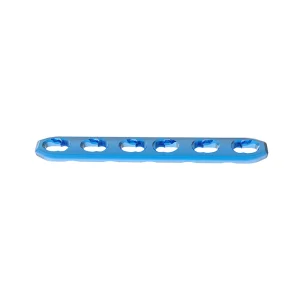
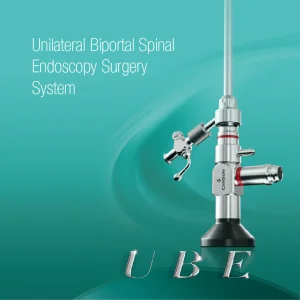
Trauma, Arthroplasty & Endoscopy Solutions
Complementary surgical platforms engineered to work synergistically with our cortical screw and fracture stabilization product lines.