
Sterile Orthopedic Systems & Precision Instruments
Direct factory supply featuring fully documented traceability, rigorous biocompatibility certifications, and premium medical-grade alloys.
-
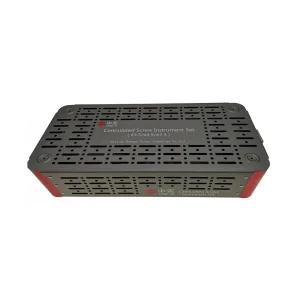
Wholesale Professional Ф3.5/4.5/7.3 Cannulated Screw Instrument Set Products, Service
-
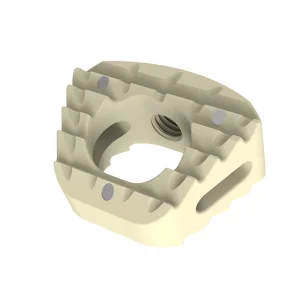
Discount ZATH Brand Cervical Interbody Cage PEEK Cage Factory CE ISO Pricelist, Quotes
-
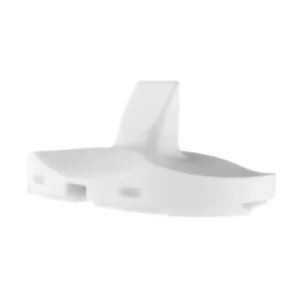
Wholesale Enable Tibial Insert Knee Joint Prosthesis Pricelist, Exporters
-
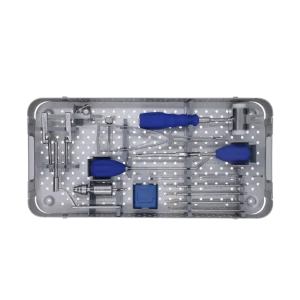
ODM High Quality ZP Cage Instrument Set Manufacturer, Manufacturers
-
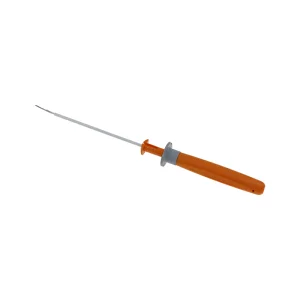
ODM Orthopedic Fast All Inside Meniscal Repair Device System Products, Service
-
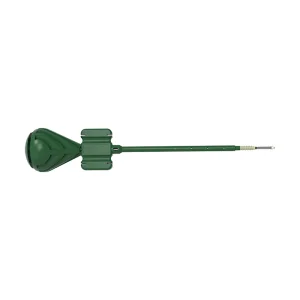
Wholesale SuperFix P Knotless Suture Anchor Manufacturer, Suppliers
-
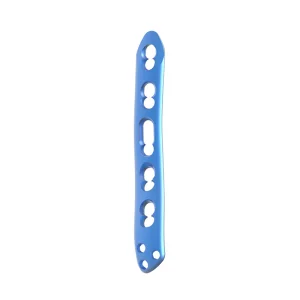
Buy Distal Medial Humerus Locking Compression Plate Factory, Exporters
-
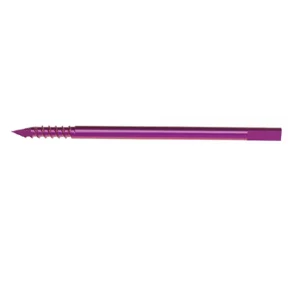
China Self Drilling and Self Tapping Triangular Cutting Edge Pin for Orthopedic External Fixation Supplier, Products
Engineering Principles of Volar Distal Radius Locking Plating
Distal radius fractures (DRFs) account for approximately 18% of all adult fractures encountered in emergency trauma orthopedics. Modern fixation demands angular stability, anatomical contouring below the watershed line, and structural rigidity without inducing tendon irritation.
Subchondral Raft Architecture
Our distal radius locking plate designs incorporate multi-hole subchondral locking screw matrices arranged in divergent and convergent rows. This creates a mechanical "scaffolding raft" directly beneath the articular facet, preventing secondary subsidence of the lunate fossa and scaphoid facet even in comminuted AO Type 23-C3 articular collapse fractures.
- Dual-column biomechanical reconstruction
- Divergent distal trajectory secures styloid process
- Optimal subchondral distance (<2.0 mm)
Watershed Line Compliance
Impingement of the Flexor Pollicis Longus (FPL) tendon remains the predominant cause of late hardware removal and tendon rupture. Our factories engineer ultra-thin (1.5mm to 1.8mm) distal tapers featuring electropolished, chamfered margins designed strictly to sit proximal to the anatomical watershed line, drastically mitigating soft-tissue friction.
- Low-profile profile edge chamfering (<1.6mm distal)
- Eliminates pronator quadratus dead-space
- Decreased tenosynovitis indices in post-op recovery
Variable-Angle (VA) Technology
While fixed-angle locking plates provide robust rigidity, complex multi-fragment fractures require directional trajectory customization. Our polyaxial locking holes permit a ±15° cone of angulation (30° total cone), enabling the operating surgeon to target specific fragment cores while avoiding intra-articular screw penetration.
- ±15° polyaxial freedom on subchondral rows
- Threaded locking lip prevents screw back-out
- Cross-threaded screw prevention engineering
Clinical Benchmark Insight: Modern clinical studies demonstrate that internal fixation with volar anatomically pre-contoured locking plates achieves union rates exceeding 98.4% across elderly osteoporotic populations while maintaining radial inclination (avg. 22.1°), volar tilt (avg. 11.4°), and ulnar variance (+0.6mm).
The Chinese Manufacturing Advantage: Precision at Scale
How Chinese orthopedic manufacturing hubs combine Tier-1 Japanese and German CNC tooling, localized metallurgical supply chains, and stringent cleanroom automation to deliver unmatched cost-to-quality ratios for global distributors.
Swiss-Type Multi-Axis CNC
Utilizing Citizen Cincom and Star Micronics Swiss-type turning centers, our factories mill titanium plates and variable-angle screws with micro-tolerances down to ±0.005mm, eliminating burrs and surface defects.
Certified Titanium Ti6Al4V ELI
Direct procurement of ASTM F136 and ISO 5832-3 Grade 5 Extra-Low Interstitial titanium bars ensures high tensile strength (>860 MPa), superior fatigue endurance, and seamless MRI/CT compatibility.
Type II Hard Anodization
Surface passivation under ASTM A967 followed by specialized Type II electrochemical anodization establishes a biocompatible anti-galling oxide layer, dramatically reducing fretting corrosion and screw cold-welding.
Direct Exporter Economics
Eliminating overseas intermediary brand markups allows international hospital procurement groups to purchase premium trauma implants at discounts of 45% to 65% compared to multinational conglomerate pricelists.
Future Trends in Distal Radius Fixation Technology
Orthopedic trauma devices are transitioning from simple mechanical stabilizers to biologically optimized, minimally invasive, and economically agile implant ecosystems.
Single-Use Sterile Packaging
Global hospitals are aggressively eliminating heavy orthopedic autoclave trays due to cross-contamination liabilities and rising Central Sterile Services Department (CSSD) overhead. Modern China factories provide pre-sterilized (EO or Gamma irradiated) double-blister packed distal radius plates complete with sterile single-use disposable screwdrivers and guide sleeves, reducing OR turnaround time by 35 minutes per case.
Patient-Specific 3D Customization
Selective Laser Melting (SLM) additive manufacturing is becoming essential for complex malunions, severe bone defects, and pediatric corrective osteotomies. Chinese manufacturers lead in combining CT-derived DICOM volumetric reconstruction with 3D-printed porous trabecular titanium constructs that accelerate osteointegration and provide tailored screw trajectories.
Carbon Fiber & PEEK Hybrid Plates
To combat metal artifact distortions during intraoperative fluoroscopy and postoperative computed tomography, radiolucent carbon-reinforced PEEK implants are emerging. These plates boast an elastic modulus closely mirroring cortical bone (18 GPa vs 110 GPa in Titanium), substantially diminishing stress shielding while offering zero cold-welding risk.
Clinical Scenarios & AO/OTA Fracture Fixation Pathways
Matching distal radius plate anatomy to specific clinical fracture morphologies ensures early wrist mobilization, restoration of joint congruency, and prevention of carpal instability.
| AO/OTA Class | Fracture Morphology | Recommended Plate Configuration | Biomechanical Objective | Primary Surgical Approach |
|---|---|---|---|---|
| Type 23-A | Extra-articular (Colles, Smith) | Standard Volar 2.4/2.7mm T-Plate or Narrow Plate | Restore radial length and neutral/volar tilt (10°-12°) | Modified Henry Approach |
| Type 23-B | Partial articular (Barton, Chauffeur) | Anatomical Volar/Dorsal Buttress Locking Plate | Anatomical reduction of shearing articular fragments | Volar or Dorsal direct exposure |
| Type 23-C1 / C2 | Simple or comminuted complete articular | Variable-Angle Volar Locking Plate (Dual Column) | Subchondral raft support for both scaphoid & lunate facets | Extended Volar Henry (FCR release) |
| Type 23-C3 | Severely comminuted, intra-articular with bone loss | Wide Distal Radius Locking Plate + Fragment-Specific Plating | Multi-planar cross-pinning to counter radial impaction | Combined Volar & Radial Styloid Exposure |
| Malunions | Post-traumatic deformity, shortening >3mm | Corrective Osteotomy Volar Wedge Plate + Bone Grafting | Realign radiocarpal & distal radioulnar joint (DRUJ) axis | Volar osteotomy approach |
Geriatric Fragility Fractures
In severely osteoporotic bone (DEXA T-score < -2.5), conventional cortical screws fail by toggling and stripping. Fixed-angle locking constructs function as an internal fixator, relying on the threaded interface between the screw head and plate hole rather than bone friction, providing uncompromising mechanical purchase.
High-Impact Sports & Industrial Polytrauma
Motorcycle impacts and industrial falls present severe coronal split fragments and intra-articular comminution. Our variable-angle dual-column plates allow multi-directional cross-fixation across the radial styloid and intermediate columns, permitting immediate active range-of-motion therapy within 48 hours.
Corrective Osteotomies for Nonunion
Malunited fractures with significant dorsal tilt (>15°) induce severe wrist pain and DRUJ arthrosis. Our anatomical plates act as stabilizing templates following open-wedge dorsal or closed-wedge volar osteotomy, securing cancellous autografts or synthetic PEEK/TCP wedges until complete osseous consolidation.
Macro Procurement Solutions for Global Distributors & Tenders
Navigating Diagnosis-Related Group (DRG) hospital reimbursement reforms, national healthcare tenders, and regulatory compliance matrices with a high-capacity manufacturing partner.
DRG & Bundled Reimbursement Optimization
Under universal capitated healthcare models (e.g., US DRG, UK NHS tariffs, German G-DRG), implant procurement margins dictate hospital solvency. ZATH supplies factory-direct trauma locking plate systems at 50% lower acquisition expenditure, empowering distributors to win massive competitive tenders while preserving substantial distributor markups.
MDR & Regulatory Technical Dossiers
Entering regional markets requires comprehensive technical files. We provide complete ISO 13485:2016 audit documentation, EU MDR 2017/745 transition protocols, ISO 10993 cytotoxicity and sensitization reports, ASTM F382 static/fatigue mechanical testing certificates, and local Free Sale Certificates (FSC) to accelerate regional MOH registrations.
Comprehensive OEM/ODM Engineering
We partner with medical device brands seeking white-label turnkey production. Our engineering services encompass custom plate geometries, customized surgical graphic cases, laser-marked distributor logos, custom anodized color-coding (e.g., gold 2.4mm, blue 2.7mm), and tailored sterile barrier blister packaging.
Technical & Procurement FAQ for Orthopedic Importers
Answers to critical clinical, metallurgical, and international logistics questions submitted by biomedical engineers, hospital procurement officers, and trauma distributors.
All ZATH trauma plates are precision-milled from certified Ti-6Al-4V ELI (Extra Low Interstitial) conforming strictly to ASTM F136 and ISO 5832-3 standards. This material delivers an exceptional ultimate tensile strength of >860 MPa, superior elongation characteristics (>10%), and enhanced biocompatibility compared to conventional commercial-purity titanium or standard stainless steel 316LVM.
Our distal radius plates feature an ultra-low profile with a distal thickness tapering to 1.5mm–1.8mm. The plate is anatomically pre-contoured to replicate the volar radial concavity, seating immediately proximal to the anatomical watershed line. In addition, all screw holes are fully recessed and plate margins undergo robotic diamond-edge radiusing and electropolishing to prevent abrasive soft-tissue attrition.
Our Variable-Angle locking holes feature four points of threaded engagement, allowing the surgeon to angle the 2.4mm or 2.7mm locking screw within a conical freedom of ±15° off the central axis (resulting in a complete 30° trajectory cone). This permits precise targeting of small intra-articular styloid or lunate fragments without sacrificing locked mechanical angular stability.
Yes. Every plate family is complemented by a dedicated, color-coded surgical instrument tray manufactured from surgical stainless steel and medical-grade polyphenylsulfone (PPSU). Trays include calibrated depth gauges, calibrated drill bits with quick-coupling ends, threaded drill guide sleeves, self-retaining Star/Torx screwdrivers with torque limiters (0.8 Nm / 1.5 Nm), and periosteal elevators.
We provide full ISO 13485:2016 audited Quality Management System certifications, UDEM technical certificates, Chinese National Medical Products Administration (NMPA) Class III clearances, Certificates of Free Sale (CFS/FSC) issued by government chambers, and full technical dossiers including biocompatibility test reports (ISO 10993) and static/fatigue testing data under ASTM F382.
For standard inventory stock under the ZATH brand, there is no strict MOQ requirement. For customized OEM/ODM projects (custom laser marking, unique hole matrices, or private brand packaging), our standard production MOQ is typically 50 to 100 units per specification. Turnaround times range between 15 to 30 working days depending on surface treatment and packaging specifications.
We provide both configurations based on distributor requirements. Implants can be shipped clean-packed for hospital autoclave loaner trays or individually double-blister packed with Tyvek sterile lids under validated ISO 11607 sterilization protocols (EO or Gamma), providing a 5-year guaranteed shelf-life with GS1-128 compliant 2D UDI barcodes.
Cold-welding between titanium screw threads and plate locking holes is effectively neutralized through two specialized processes: high-precision CNC thread synchronization and proprietary Type II electrochemical surface anodization. This creates an anti-galling oxide ceramic barrier that allows reliable screw removal years post-implantation without stripping or head shearing.
Joint Arthroplasty, Spine Fusion & Trauma Implants
Explore our full orthopedic spectrum manufactured with the same Swiss-type tolerances, certified medical alloys, and responsive global logistics.
-
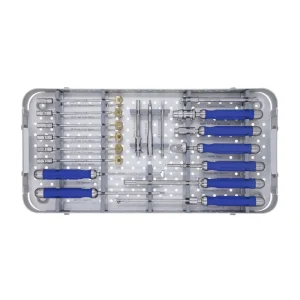
Famous Cervical Fusion Cage Instrument Set Exporters, Service
-
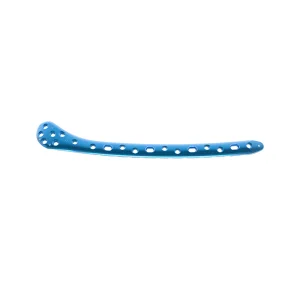
Best Distal Lateral Femur Locking Compression Plate I Factory, Company
-
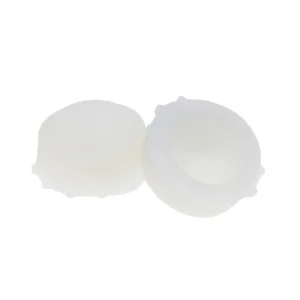
High-Quality Hip Joint ADC Acetabular Liner Manufacturer, Supplier
-
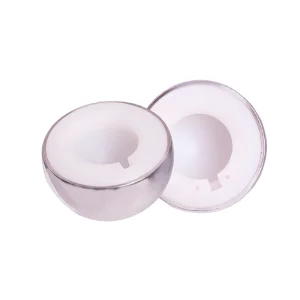
Wholesale FDAH Bipolar Acetabular Cup Medical Hip Joint Prosthetics Companies, Product
-
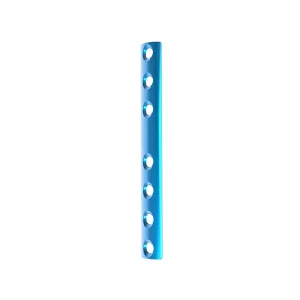
Cheap Metacarpal & Metatarsal Fractures 1/3 Tubular Locking Plate Factories, Service
-
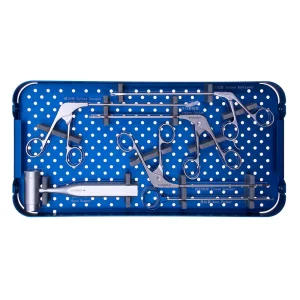
OEM Shoulder Arthroscopy Instrument set Supplier, Product
-
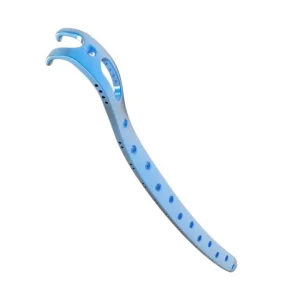
ODM Proximal Femur Locking Plate III Manufacturer, Suppliers
-

OEM Surgical Hospital Use InterZan Titanium Interlocking Nail for Femur Supplier, Factories
Empower Your Orthopedic Supply Chain with Factory-Direct Pricing
Request full technical dossiers, CE/ISO 13485 audit reports, sterile sample kits, or volume pricelists for distal radius locking plates and associated trauma instrumentation systems.