
Engineered Fixation Systems: Primary & Trauma Implants
Precision-manufactured titanium and stainless steel anatomical systems conforming to ISO 5832, ASTM F136, and European Medical Device Regulations (EU MDR 2017/745).
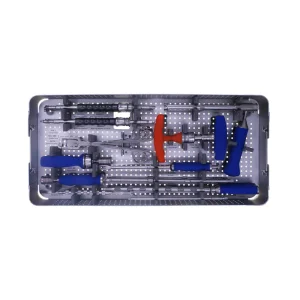
CE Certification Zipper 6.0 System Spinal Internal Fixation System Instrument Exclusive Set
Explore Specifications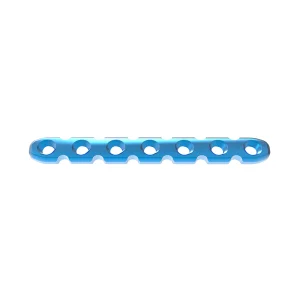
Cheap Reconstruction Locking Plate Quotes, Company Direct Supply
Explore Specifications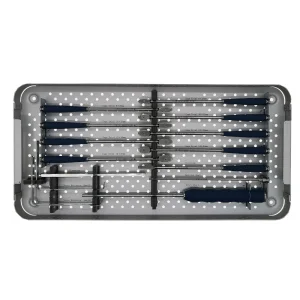
Famous Spine Surgery Thoracolumbar PLIF Cage Instrument Set Supplier
Explore Specifications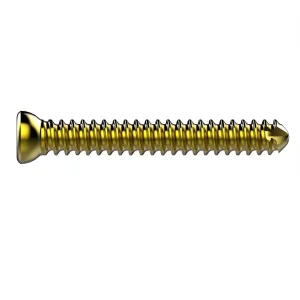
Best 2.0mm 2.7mm 3.5mm 4.5mm Cortical Screw Suppliers, Exporters
Explore Specifications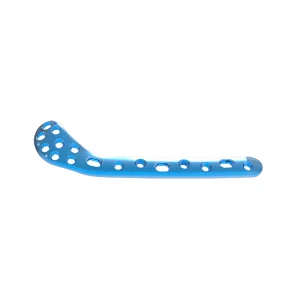
Discount Distal Medial Femur Locking Compression Plate Pricelist, Products
Explore Specifications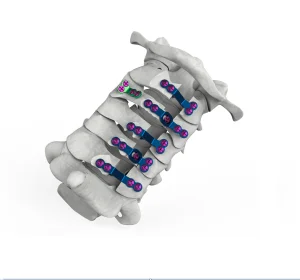
ODM Posterior Cervical Plate Fixation Dome Laminoplasty Plate Bone Implant Pricelist
Explore Specifications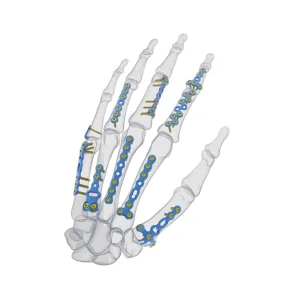
Best Hand Fracture Locking Plate System Exporter, Companies
Explore Specifications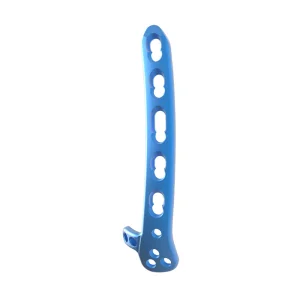
ODM Distal Posterolateral Humerus Locking Compression Plate (Lateral Support)
Explore SpecificationsGlobal Procurement Economics in Internal Fixation
Navigating volume consolidation, GPO contracting frameworks, sterile barrier reliability, and clinical instrument turnover.
Institutional Sourcing Vulnerabilities
Group Purchasing Organizations (GPOs), regional health authorities, and national health services face unprecedented friction within the orthopedics trauma and spinal implant ecosystem. The transition toward value-based healthcare models demands that hospital supply directors mitigate excessive line-item markups imposed by legacy multinational medical device conglomerates. Enterprise procurement directors require direct factory-tier wholesale pricing alongside guaranteed dimensional continuity, material heat traceability, and uninterrupted surgical supply lines.
Sterile-Pack Unitized Consignments
Legacy institutional workflows reliant on autoclave-sterilized hospital instrument trays present systemic overhead: bio-burden accumulation, surgical schedule cancellations driven by instrument attrition, and heavy Central Sterile Processing Department (CSPD) labor costs. Our factory-level terminal sterilization (Gamma irradiation and Ethylene Oxide) guarantees double-barrier medical-grade blister packaging with a validated five-year shelf life under ASTM F1980 accelerated aging protocols, reducing operating theatre preparation timelines by up to 34%.
Modular Instrumentation Ergonomics
A primary driver of implant revision and surgical delay is cross-generational instrument mismatch. As a comprehensive OEM/ODM internal fixation manufacturer, we configure modular, color-coded, CNC-milled surgical tool sets—such as our Zipper 6.0 Spinal Fixation and Lower Limb Locking Plate sets. Each tray features hard-anodized aluminum and medical-grade silicone brackets engineered to withstand over 1,500 autoclave cycles while maintaining sub-20 micron dimensional tolerances on quick-coupling screwdrivers and drill guides.
Macro Commercial Landscape: Navigating Regulatory Escalation & Cost Compression
How leading orthopedic device manufacturers are structuring production pipelines under intense margin constraints and regulatory compliance pressure.
EU MDR 2017/745 & Global Regulatory Bottlenecks
The enforcement of the European Medical Device Regulation (EU MDR 2017/745) has reshuffled global supply chains. Class III and Class IIb implantable devices (including spinal pedicle systems and anatomical locking plates) now demand exhaustive Clinical Evaluation Reports (CER), verified Post-Market Clinical Follow-up (PMCF) registries, and comprehensive Notified Body surveillance. Western boutique manufacturers have pruned their catalogs due to recurring auditing overheads, leaving profound supply deficits across secondary healthcare systems. Our Beijing facility maintains an active, audited ISO 13485 QMS alongside verified UDEM and Free Sale Certification (FSC), filling regional procurement voids seamlessly.
Volume-Based Procurement (VBP) Dynamics
National-level public bidding mechanisms and Diagnosis-Related Group (DRG) compensation frameworks have triggered severe price rationalization worldwide. Healthcare systems can no longer support gross margins exceeding 80% on standard osteosynthesis implants. Our industrial model bridges this gap through end-to-end integration: we manage high-purity ingot stocking, precision multi-axis CNC swaging, automated tumbling, electrochemical surface finishing, Class 10,000 cleanroom sealing, and international door-to-door distribution, granting distributor partners the fiscal resilience necessary to capture major government tenders.
Supply Chain Nearshoring vs. Contract Mega-Hubs
While nearshoring remains a prominent discussion among procurement executives, the specialized capital expenditure required for Class 7 cleanrooms, multi-axis Swiss longitudinal lathes, and ISO 17025 accredited metallurgical testing limits localized scaling. China’s advanced medical manufacturing corridor—anchored by our facility in Pinggu Park, Zhongguancun Science and Technology Park—provides an unassailable synthesis of raw material liquidity, an advanced pool of medical device machinists, and robust supply continuity that insulates overseas distributor stocks from geopolitical disruptions.
Engineering Integrity: High-Purity Alloys & Sub-Micron Machining
From bar stock to high-strength surgical construct: structural specifications, fatigue lifecycle testing, and biological surface passivation.
Advanced Biomaterial Selection Standards
Internal fixation requires balanced mechanical properties: the construct must achieve adequate rigidity to sustain physiological axial loads during fracture consolidation without inducing severe stress shielding that leads to bone resorption. We strictly utilize vacuum-arc remelted (VAR) medical alloys conforming to international surgical implant benchmarks.
| Alloy Grade | Material Standard | Tensile Strength (Rm) | Yield Strength (Rp0.2) | Primary Clinical Application |
|---|---|---|---|---|
| Ti-6Al-4V ELI (Grade 23) | ASTM F136 / ISO 5832-3 | ≥ 860 MPa | ≥ 790 MPa | Spinal Pedicle Screws, Locking Compression Plates (LCP), Proximal Femur Nails |
| High-Nitrogen Stainless Steel | ASTM F138 / ISO 5832-1 | ≥ 930 MPa | ≥ 690 MPa | Heavy-Duty Trauma Reconstruction, Cortical Screws, Pediatric Osteotomy Pins |
| Unalloyed Titanium (CP Grade 4) | ASTM F67 / ISO 5832-2 | ≥ 550 MPa | ≥ 480 MPa | Maxillofacial Plates, Craniofacial Fixation, Low-Profile Hand Fracture Plates |
| PEEK-OPTIMA Natural | ASTM F2026 | ≥ 100 MPa | ≥ 90 MPa | Radiolucent Interbody Fusion Cages (PLIF, TLIF), Cervical Spacers |
Multi-Axis Swiss Machining
Internal fixation components, including variable-angle combi-holes and reverse-cutting screw flutes, are machined on high-precision Swiss-type 7-axis CNC lathes (Citizen and Star tooling platforms). High-pressure oil cooling guarantees thermal stabilization throughout the milling cycle, preventing micro-structural crystalline distortion and maintaining thread tolerances within ±0.005mm.
Electrochemical Passivation & Anodization
To mitigate fretting corrosion and surface micro-fissuring, every titanium construct undergoes Type II Anodization in accordance with AMS 2488. This process thickens the biocompatible titanium dioxide (TiO2) passive film, significantly elevating the fatigue endurance threshold under dynamic cyclic loading while standardizing friction coefficients during screw insertion.
Mechanical Validation Protocols
Our products undergo rigorous mechanical validation. We test bone plates via ASTM F382 (four-point bending structural stiffness and bending strength), bone screws via ASTM F543 (torsional yield strength, maximum torque, and axial pull-out resistance in polyurethane foam models), and spinal fixations via ASTM F1717 (vertebrectomy model fatigue testing to 5 million cycles at 10 Hz).
Technical Roadmap: Next-Gen Bioabsorbables & Additive Architectures
Anticipating clinical evolutions through 3D trabecular printing, magnesium alloy resorption, and smart navigation-ready osteosynthesis.
Electron Beam Melting (EBM) Trabecular Titanium
The limitations of smooth titanium interfaces in compromised bone beds have driven our development of additive-manufactured porous titanium surfaces. Utilizing selective laser melting (SLM) and electron beam melting (EBM), our R&D team designs continuous trabecular matrices featuring 600–800 μm interconnected pore geometries and 70% porosity. This mimics human cancellous architecture, accelerating biological vascular ingrowth and stable osseointegration.
Bioabsorbable Magnesium WE43 Alloys
Addressing the clinical drawbacks of secondary implant retrieval surgeries—particularly in pediatric, craniofacial, and small-fragment sports applications—we are pioneering bioabsorbable high-purity magnesium-rare-earth alloy systems (WE43). Engineered with controlled micro-galvanic degradation rates, these implants retain structural stabilization over a 16-week window before naturally resorbing into non-toxic biological salts.
Surgical Robotics & Navigation Synergy
Modern operative suites demand seamless alignment with computer-assisted surgical navigation and robotic pedicle-cannulation arms. Our 3-in-1 minimally invasive spine constructs and cannulated cortical lines incorporate specialized optical tracker arrays, calibrated instrument stops, and radio-dense cobalt-chromium fiducials to minimize radiation exposure while maintaining sub-millimeter screw trajectory accuracy.
Regulatory Assurance, Localization & Cleanroom Infrastructure
Mitigating commercial cross-border friction through validated ISO 13485:2016 quality systems, localized technical files, and rapid international air corridors.
Cleanroom Terminal Packaging
Contamination prevention remains paramount in Class III implantable manufacturing. Our cleanroom facilities operate under strict ISO 14644-1 Class 7 environmental controls, with integrated laminar flow benches exceeding Class 5 requirements. Automated double-blister medical sealing with breathable Tyvek lidding undergoes 100% burst and bubble-leak verification (ASTM F2096), delivering a validated sterility assurance level (SAL) of 10-6.
Comprehensive Registration Dossiers
To expedite distributor product registration before local authorities (including COFEPRIS, ANVISA, SFDA, and regional MoHs), our internal regulatory affairs team maintains ready-to-dispatch Technical Documentation conforming to the ASEAN Common Submission Dossier Template (CSDT) and STED formats. This includes biocompatibility data (ISO 10993 series), cleaning/disinfection validations (AAMI TIR12), and full metallurgical mill certs.
Customized OEM & ODM Private Labeling
We provide end-to-end original equipment manufacturing (OEM) and original design manufacturing (ODM) services. Our engineering teams assist global distributor brands in developing proprietary anatomical contours, fiber-laser branding, custom color-anodized sizing schemes, and multi-lingual sterile packaging. Barcode schemes support GS1 compliant UDI (Unique Device Identification) implementation required under 21 CFR Part 801.
Frequently Asked Questions: Technical & Sourcing Specifications
Definitive answers covering mechanical testing thresholds, minimum order quantities, cleanroom validation, and lead times.
All spinal internal fixation assemblies, including our Zipper 6.0 and Zenith HE systems, undergo dynamic cyclic fatigue testing per ASTM F1717 guidelines. Construct testing models run up to 5,000,000 cycles at a frequency of 10 Hz without structural yield, fracture, or screw-tulip detachment under peak axial compression-bending forces exceeding 250 N. Detailed mechanical validation test reports are provided within distributor technical dossiers.
For standard catalog products—such as standard cortical screws, reconstruction locking plates, and cervical ACP systems—we maintain standing inventory with an MOQ of only 10 to 50 units per specification to support initial hospital trials. For specialized OEM/ODM private-label contracts involving unique laser etching, custom dimensions, or tailored sterile box packaging, our typical batch threshold is 200 to 500 units per line item, supported by prototype verification runs.
Trauma locking plates and bone screws feature an electropolished surface roughness (Ra) maintained strictly below 0.4 μm across shaft and contour zones to discourage bacterial bio-film attachment and reduce soft-tissue friction. Conversely, our interbody fusion cages and porous bone-contact interfaces incorporate controlled microroughness (Ra 2.0 to 3.5 μm) created via grit-blasting or additive trabecular laser sintering to promote primary osteoblast attachment.
Our trauma and spine systems utilize internationally standardized drive connections (e.g., standard Torx star recesses like T15, T20, and T25, as well as classic hexagonal interfaces conforming to ISO 10664). This prevents intraoperative driver stripping and allows surgeons to leverage our dedicated modular trays or cross-interface with standardized hospital power tools via AO-type quick couplings.
In-stock trauma and spinal line replenishment orders are dispatched within 24 to 48 hours via premium air freight (DHL, FedEx, UPS), ensuring hospital delivery within 4 to 6 business days worldwide. Custom production runs or large institutional bulk orders generally maintain an industrial lead time of 3 to 4 weeks from raw billet QA to final cleanroom terminal sterilization.
Specialized Extremity, Femur & Endoscopic Instrumentation
Precision surgical toolkits, cervical reconstruction systems, and minimally invasive endoscopy modules engineered for high clinical efficacy.
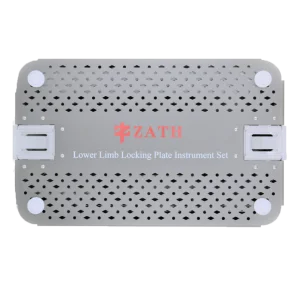
ODM Orthopedic Instrument Lower Limb Locking Plate Instrument Set Manufacturer
Explore Specifications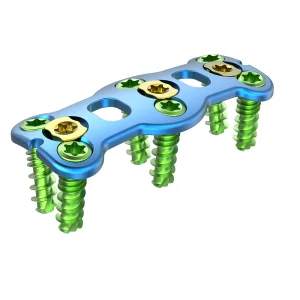
CE Certification High quality Orthopedic Cervical Shielder ACP Plate System
Explore Specifications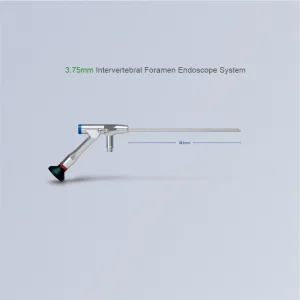
CE Certification 3.75mm Intervertebral Foramen Endoscope System Manufacturer
Explore Specifications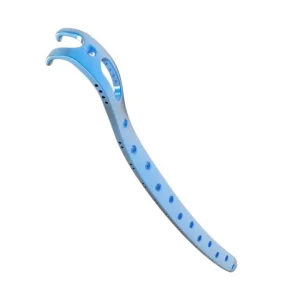
ODM Proximal Femur Locking Plate III Manufacturer, Suppliers
Explore Specifications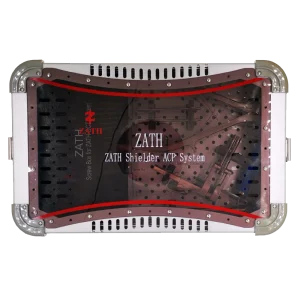
ODM Orthopedic Surgical Use Cervical ACP Plate System Instrument Set
Explore Specifications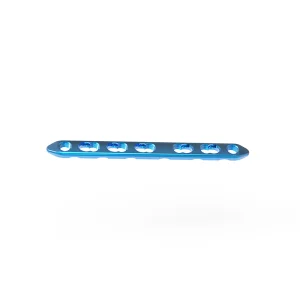
Custom Radius-Ulna Limited Contact Locking Compression Plate Factory
Explore Specifications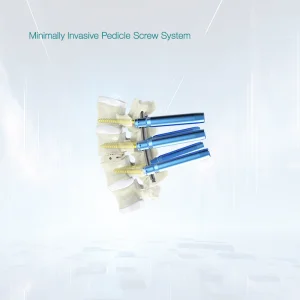
OEM High Quality ZATH HE Minimal Invasive Spine Pedicle Screw Manufacturers
Explore Specifications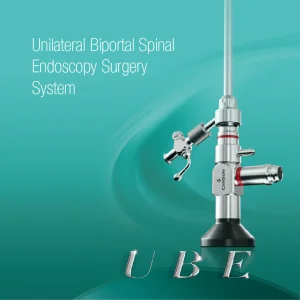
Custom High Quality Spine Surgery Unilateral Biportal Endoscopy Quotes
Explore SpecificationsEquip Your Distribution Network with Direct Factory Production
Request comprehensive engineering master catalogs, audit certifications, lot validation dossiers, and wholesale quotation tiers directly from our Beijing biomedical manufacturing facility.