
Featured Orthopedic Implants & Systems
Explore factory-direct compression plates, anatomical locking assemblies, and surgical instrumentation built under rigorous ISO 13485 quality frameworks for competitive orthopedic procurement.
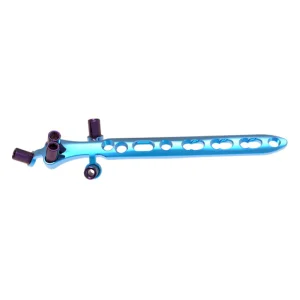
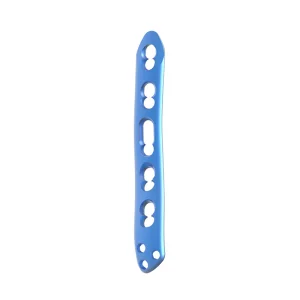
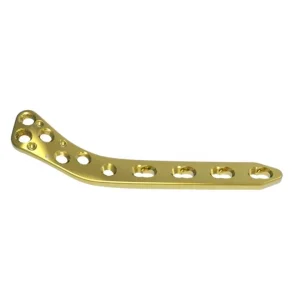
The Macroeconomics of Compression Plates in Trauma Surgery
From dynamic axial load compression to locked internal fixation: navigating global demand shifts, healthcare budget ceilings, and the industrial transition from Western monopoly brands to validated high-yield manufacturing hubs.
Biomechanical Shift: Dynamic to Locked Stability
Historically, the standard Dynamic Compression Plate (DCP) relied entirely on friction between the underside of the plate and the periosteum, generated by spherical screw head engagement into ramped hole geometries. While effective for simple diaphyseal fractures, high plate-to-bone compression caused localized periosteal devascularization, delaying osteogenesis. The industry responded with Limited-Contact DCP (LC-DCP) and ultimately the revolutionary Locking Compression Plate (LCP).
- Combines Dual Principles: Dynamic axial compression combined with rigid angle-stable internal splinting.
- Biological Fixation Preservation: Elevation off the cortex protects Haversian canal microcirculation.
- Osteoporotic Anchorage: Threaded screw heads lock into plate combi-holes, preventing toggling and secondary reduction loss.
The Global Procurement Squeeze & Value Polarization
Trauma surgery represents an inelastic segment of medical care; road traffic incidents, athletic trauma, and fragility fractures in aging demographics ensure high surgical volumes worldwide. However, national healthcare schemes (such as NHS England, European DRG systems, Latin American Seguro Social, and Middle Eastern health ministries) face severe fiscal stress. The premium 400% to 800% price tag historically commanded by Western multinational conglomerates is no longer sustainable.
- Tender Restructuring: Public hospitals require identical metallurgic specs at accessible unit economics.
- Direct Sourcing Mandates: Hospital networks are eliminating multi-tier distributor margins.
- Quality Parity Realization: ISO 13485 certified factories yield identical fatigue lifespans and tolerances.
Redefining "Cheap": Economic Efficiency vs. Clinical Quality
In semantic orthopedic procurement, searching for a "cheap compression plate supplier" is not a quest for substandard implants—it is a search for structural cost elimination. A truly economical trauma plate manufacturer derives its low cost not from inferior alloys, but from vertical integrated metallurgy, ultra-high automated CNC capacity, synchronized cleanroom assembly, and zero Western corporate marketing overhead.
- Certified Raw Stock: Medical-grade Ti-6Al-4V ELI (ASTM F136 / ISO 5832-3) and 316LVM (ISO 5832-1).
- Sub-Micron Precision: Multi-axis Swiss sliding-head CNC machining runs uncrewed 24/7.
- Direct Foundry Pricing: True B2B unit costs without speculative intellectual property markups.
Clinical Truth in Orthopedic Procurement: A bone plate does not evaluate the geographic location or marketing expenditure of its manufacturer. It responds purely to metallurgical purity, yield strength, Young's modulus matching, screw thread engagement tolerance, and surface micro-topography. Direct-factory sourcing delivers identical clinical outcomes at up to 70% lower acquisition expenditure.
Why Beijing & Zhongguancun Form the Epicenter of Orthopedic Efficiency
How Beijing ZhongAnTaiHua Technology Co., Ltd. (ZATH) harnesses high-density industrial clusters, sovereign supply chain integration, and precision engineering to deliver world-class implants at disruptive price points.
End-to-End Vertical Manufacturing Integration
Unlike Western distributors who contract out plate stamping to one firm, threading to another, and surface treatment to a third, ZATH operates a completely self-contained manufacturing campus in Zhongguancun Science and Technology Park, Pinggu, Beijing. Founded in 2009, our 300+ employee base includes almost 100 seasoned biomedical engineers and technicians managing the entire device lifecycle in-house.
- Raw Titanium Sourcing: Direct mill partnerships ensure validated ingot-to-bar traceability.
- Precision Wire EDM: Cold wire-cutting avoids high-temperature heat-affected structural zones.
- Surface Anodization: Type II surface modification within clean chemical processing tanks.
Automated Multi-Axis CNC Machining Fleet
Every locking compression plate requires extremely intricate geometrical milling—especially anatomical contour transitions and combi-holes which combine dynamic compression ramps with female screw-locking threads. ZATH utilizes high-speed Swiss-type longitudinal machining centers and multi-axis DMG MORI CNC systems capable of micron-level repeatability (±0.005mm).
- Continuous 24-Hour Cycle Runs: High throughput minimizes idle machine amortization costs.
- Ultra-Smooth Edge Beveling: Eliminates burrs and micro-notches that could initiate fatigue crack propagation.
- Anatomical Pre-Contouring: Reduces the surgeon's intraoperative bending requirements.
Class 100,000 Cleanroom & Sterile Tyvek Barrier
One of the greatest hidden costs for hospital surgical suites is internal implant re-sterilization, tray wrapping, and autoclave validation cycles. ZATH eliminates this operational hurdle by delivering gamma-irradiated, ethylene oxide (EO) validated sterile-packed compression plates sealed in double-barrier Tyvek blisters ready for immediate theater hand-off.
- Saves OR Turnaround Time: Immediate peel-and-present efficiency during emergency trauma calls.
- Zero Cross-Contamination: Guaranteed sterility assurance level (SAL) of 10⁻⁶.
- Full UDI Barcoding: Streamlines inventory control, billing, and patient batch tracking.
Comprehensive Anatomical Fixation Frameworks
Trauma osteosynthesis demands site-specific biomechanics. Explore how ZATH anatomical locking compression plates address load distribution, fracture patterns, and soft tissue limitations across human skeletal anatomy.
Upper Extremity Fractures (Humerus, Radius, Ulna)
Diaphyseal and articular trauma of the arm necessitates anatomical low-profile designs that prevent extensor/flexor tendon impingement while withstanding rotational torsion.
- Distal Medial Humerus Locking Plate: Double-plate construct for supra/intercondylar fractures providing column reconstruction.
- Proximal Ulna ISC Locking Plate: Conforms accurately to the olecranon tip and coronal process, countering triceps pull.
- Distal Volar Radius System: Low-profile buttressing preventing flexor pollicis longus tendon rupture.
Weight-Bearing Lower Extremity (Femur, Tibia, Fibula)
Lower extremity fracture fixation requires massive axial fatigue strength and stiffness modulation to promote secondary bone healing via controlled micro-motion.
- Proximal Lateral Tibia LCP: Multiple convergent/divergent subchondral locking screws raft and support depressed plateau fragments.
- Distal Lateral Femoral Locking Plate: Bridges metaphyseal-diaphyseal comminution, supporting early patient weight-bearing.
- Distal Fibula Lateral/Posterolateral Plate: Anatomical contouring prevents fibular shortening and restores ankle mortise kinematics.
Periprosthetic, Pediatric & Complex Reconstruction
Specialty trauma situations require hybrid fixation methods when standard diaphyseal plates fail to address preexisting prostheses or delicate cortices.
- Periprosthetic Locking System: Offset staggered hole patterns allow screw insertion around existing hip or knee stems, reinforced with cerclage cable eyelets.
- Titanium Reconstruction Plates: 3D-bendable architecture tailored for pelvic ring, acetabular, and clavicular comminution.
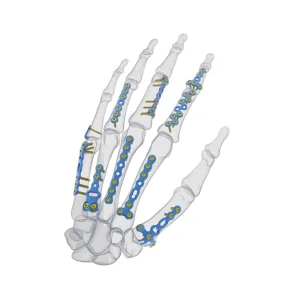
- Hand & Foot Mini-Fragment Plates (1.5mm - 2.7mm): Ultra-compact locking systems for phalangeal, metacarpal, and metatarsal osteotomies.
The 6-Stage Controlled Manufacturing Lifecycle
Traceability from raw aerospace-grade titanium rod to sterilized blister packaging inside our ISO 13485 accredited Beijing manufacturing plant.
Raw Material Receipt & Inspection
Every batch of medical-grade Ti-6Al-4V ELI (ASTM F136) and 316LVM stainless steel enters with metallurgical mill test certificates (MTC). Spectrometric alloy testing, tensile pull tests, and microstructure grain verification guarantee uncompromised substrate integrity.
Precision Wire Electrical Discharge Machining
High-precision wire EDM shapes anatomical profiles, plate boundaries, and complex curves with minimal thermal degradation. This cold cutting process avoids localized material embrittlement common in standard high-heat laser slicing.
Multi-Axis CNC Machining & Threading
High-speed CNC machining centers bore combi-holes, sculpt dynamic compression ramps, mill conical thread paths, and chamfer plate edges. Advanced toolpath algorithms ensure sub-micron concentricity between screw head threads and plate locking holes.
Surface Treatment & Biomechanical Testing
Automated electropolishing and controlled Type II anodic oxidation thicken the passivating titanium oxide (TiO₂) layer, eliminating residual micro-stress and minimizing metal-on-metal cold welding. 100% CMM coordinate dimensional testing is applied.
Cleanroom Ultrasonic Washing & Tyvek Packaging
Inside our Class 100,000 cleanroom, multi-stage ultrasonic deionized water baths remove all hydrocarbon residuals and particulate traces. Implants are heat-sealed in medical-grade double Tyvek/PET blister packaging, with gas sterilization validation.
Controlled Storage & Rapid Global Dispatch
Finished implants are cataloged with distinct UDI lot numbers, manufacturing timestamps, and shelf-life records. Direct logistics via DHL, FedEx, UPS, and EMS ensure international delivery within 4 to 6 business days.
Future-Proofing Trauma Fixation: Next-Gen Plate Engineering
The orthopedic trauma sector is rapidly evolving. At ZATH, our R&D pipeline integrates cutting-edge biomaterials, variable-angle mechanics, and digital design into our commercial implant platforms.
Variable-Angle (Polyaxial) Locking Mechanisms
While traditional monoaxial locking plates mandate rigid screw trajectory perpendicular to the plate hole, variable-angle (VA) locking allows surgeons a 30-degree conical freedom (±15° off-axis). This proves critical in complex intra-articular periarticular fractures, allowing surgeons to target isolated subchondral fragments without risking screw collision.
- Eliminates screw collisions around intramedullary rods or joint spaces.
- Reinforced locking ring interfaces retain push-out and shear stability.
Additive Manufacturing & 3D Printed Micro-Trabecular Plates
Direct Metal Laser Sintering (DMLS) using medical titanium powder allows the creation of internal porous lattices mimicking trabecular cancellous bone (60-70% porosity, 300-500μm pore size). This matches bone modulus, reduces stress-shielding bone resorption, and accelerates osteointegration directly onto the implant's bone-facing boundary.
- Lower structural modulus mitigates stress-shielding osteopenia.
- Rapid prototyping capability for patient-specific oncology and non-union cases.
Antimicrobial & Bioactive Surface Coatings
Surgical site infections (SSI) in trauma remain a devastating clinical failure mode. Next-generation compression plates are being augmented with silver-ion dopants, hydroxyapatite (HA) plasma sprays, and nano-textured anti-biofilm topographies. These engineered surfaces inhibit staphylococcus adherence without impeding healthy osteoblast attachment.
- Passive bactericidal action reduces reliance on prolonged systemic antibiotics.
- Accelerated callus maturation observed in compromised diabetic patients.
Strategic Procurement Framework for International Wholesalers
Everything institutional buyers, tender committees, and private label medical distributors need to verify before establishing an OEM/ODM supplier relationship with ZATH.
Regulatory Dossiers & International Certification
Importing medical devices requires bulletproof technical documentation. ZATH equips distributor partners with complete regulatory registration files:
- ISO 13485:2016 Certification: Full QMS audit compliance across design, milling, and sterilization.
- UDEM Conformity & CE Technical Files: Verified safety data and biocompatibility dossiers (ISO 10993).
- Free Sale Certificate (FSC): Official legal documentation streamlining fast national health authority registration across SE Asia, LATAM, and Africa.
Matching Surgical Instrument Tray Sets
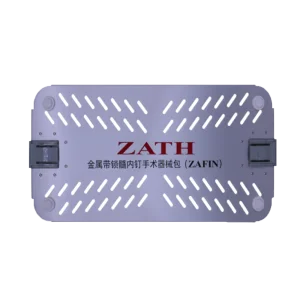
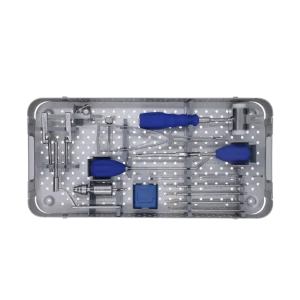
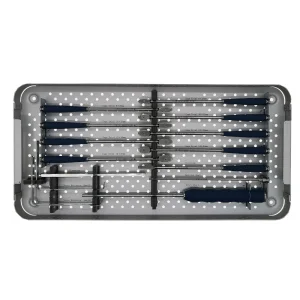
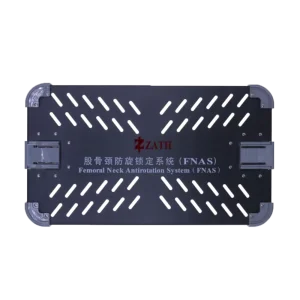
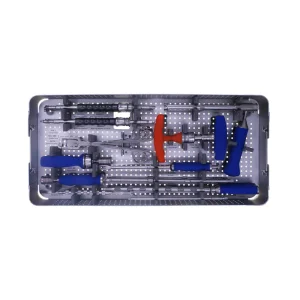
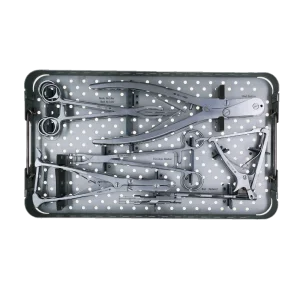
An orthopedic bone plate cannot be implanted without precision surgical instruments. ZATH builds custom-machined stainless steel instrument cases containing:
- Torque-Limiting Screwdrivers: Calibrated to prevent stripping titanium screw heads or over-tightening.
- Threaded Drill Sleeves: Screwed into locking holes to ensure precise coaxial pilot hole trajectory.
- Depth Gauges, Benders, & Self-Centering Bone Clamps: Built from autoclavable German-grade medical stainless steel.
Tailored OEM / ODM & Private Label Branding
Empowering medical brands to build local equity without capital investment in expensive CNC machining centers:
- Custom Laser Annealing: High-resolution laser etching of your brand logo, lot code, and sizing matrix.
- Color-Coded Anodization: Visual identification for emergency theater staff (e.g., gold for 3.5mm, blue for 5.0mm).
- Customized Packaging Architecture: Box graphics, IFU leaflets, and blister layout matching regional regulatory norms.
Frequently Asked Questions for Medical Importers
Comprehensive clinical, regulatory, financial, and logistical insights for hospital supply officers and commercial distribution executives.
Why are your compression plates significantly cheaper than multinational brand names without quality compromise?
What exact raw material grades are used in ZATH compression plates and screws?
Are ZATH compression plates supplied sterile or non-sterile?
Does ZATH support custom OEM/ODM development and localized brand labeling?
What documentation do you provide to assist with our national medical device registration?
What are the shipping turnaround times and minimum order quantities (MOQ)?
Comprehensive Trauma, Screws & Minimally Invasive Platforms
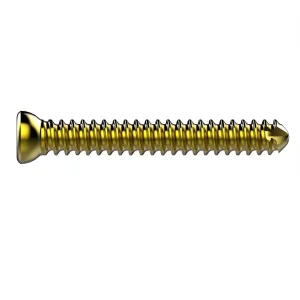
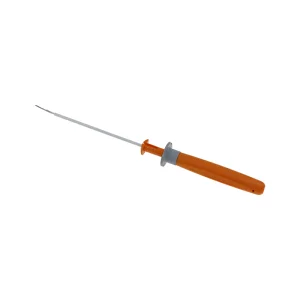
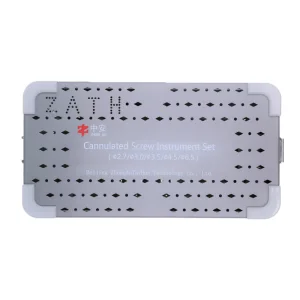
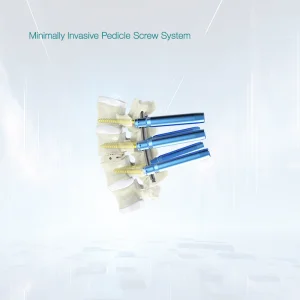
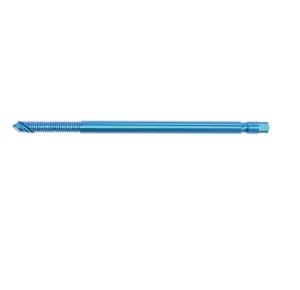
Extend your surgical offerings with our precision cortical screws, minimally invasive spinal screw platforms, arthroscopic meniscal repair tools, and modular instrument sets.
Partner with an Established Orthopedic Original Equipment Manufacturer
Gain direct-from-foundry pricing, certified sterile blister packaging, complete regulatory technical dossiers, and unmatched orthopedic manufacturing capacity.