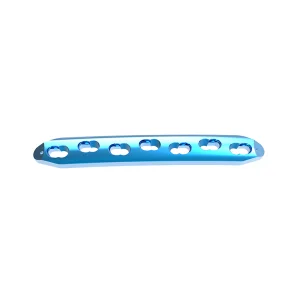
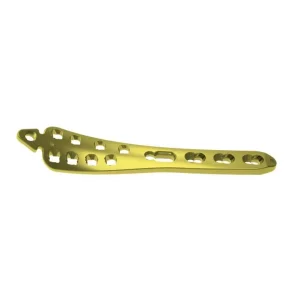
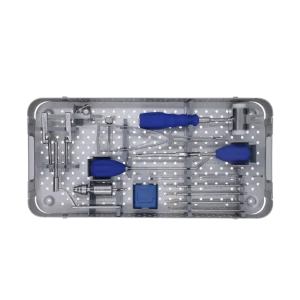
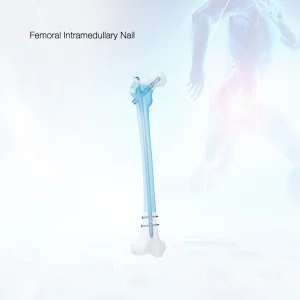
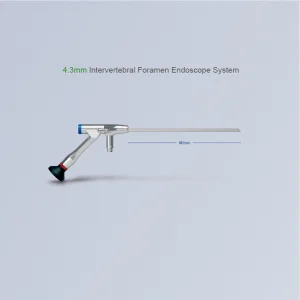
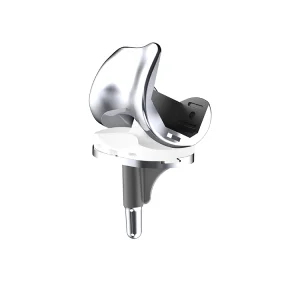
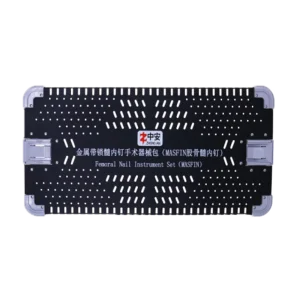
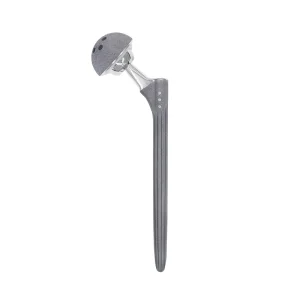
Featured Orthopedic Screws & Fixation Hardware
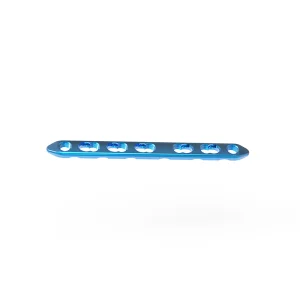
Explore high-precision implant assemblies, locking compression plates, and matching cannulated screws engineered under stringent class-10,000 cleanroom environments.
Global Procurement Demands for Bone Fixation Screws
Surgical screw failure is not an option. Modern orthopedic procurement teams evaluate original design manufacturers across rigorous biomechanical, metallurgical, and supply reliability parameters.
Torsional Strength & Shear Resistance
Global orthopedic hospitals demand bone screws machined from medical-grade Ti-6Al-4V ELI (ASTM F136) and implant-grade 316L stainless steel (ASTM F138). Torsional yield stress and insertion torque thresholds must comfortably surpass ASTM F543 requirements to prevent head stripping and screw breakages in dense cortical bone.
Thread Profile & Pitch Precision
Clinical purchase specifications require buttress or reverse-buttress thread designs tailored specifically for cancellous versus cortical bone density. ODM capability must allow precise variable pitches (dual-lead threads) that reduce operating room insertion time by 50% while sustaining optimal pull-out resistance.
Pre-Sterile Double Barrier Packaging
Tier-1 distributors prefer single-unit sterile packaging (gamma radiation or EO sterilized) with intact Tyvek® blisters. This eliminates hospital autoclave logistics, avoids bio-burden risks, and guarantees an airtight shelf-life validation period up to 5 continuous years.
China Factory Supply Chain Competitive Advantages
Our Beijing Zhongguancun Science Park manufacturing base combines automated multi-axis Swiss CNC precision lathe turning with end-to-end metallurgical verification, providing unmatched scale and price-to-performance.
Swiss Longitudinal Machining Centers
Utilizing state-of-the-art Citizen and Star Swiss-type 7-axis CNC turning-milling machines, we hold micrometric dimensional tolerances within ±0.005mm. Complex self-tapping flutes, Star/Torx recesses, and cannulated inner lumens are finished in single setups with zero tool repositioning error.
Raw Material Integrity & Traceability
Medical metals are procured strictly from certified aerospace and surgical titanium mills with full 3.1 chemical composition analysis and physical tension test reports. Every lot is stamped and laser-tracked from billet bar stock through wire EDM shaping to finished screw packaging.
Vertical Integration & Rapid Tooling
Our Beijing engineering hub maintains an internal tooling shop for custom drills, tapers, screwdrivers, and depth gauges. This vertical synergy decreases the new product development cycle for customized bone plate and screw sets from months to just 3-4 weeks.
Localized Regulatory Support & Audit Assurance
Expanding medical implants into foreign markets requires bulletproof documentation. ZATH partners with distributors to navigate stringent national health authority clearances.
| Target Market | Regulatory Framework | ODM Deliverables Provided | Compliance Benefit |
|---|---|---|---|
| European Union | MDR (EU) 2017/745 Class IIb / III | Full Technical Documentation, Risk Assessment (ISO 14971), Biocompatibility (ISO 10993) | Streamlined Notified Body clearance with complete clinical evaluation dossier. |
| United States | FDA 21 CFR Part 820 / 510(k) | DHF/DMR creation, ASTM F543 Mechanical Pull-out & Torque reports, Bio-burden validation | Substantial equivalence verification against predicate orthopedic screw systems. |
| LATAM & Asia-Pacific | ANVISA, COFEPRIS, TGA, MFDS | Free Sale Certificates (FSC), Legalized Apostilles, Factory ISO 13485 QMS audit files | Accelerated tender entry and localized private labeling authorizations. |
Anatomical Application Scenarios & Design Specializations
Our versatile bone fixat screw catalog is engineered to address distinct physiological loading environments across both human trauma and spinal biomechanics.
Trauma & Diaphyseal Fractures
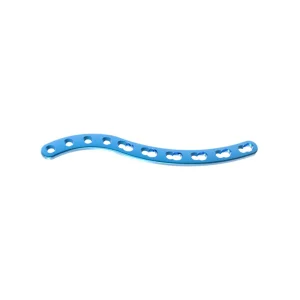
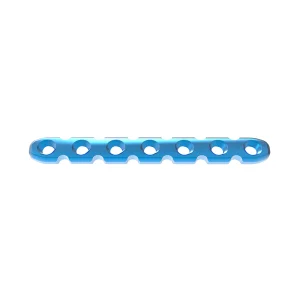
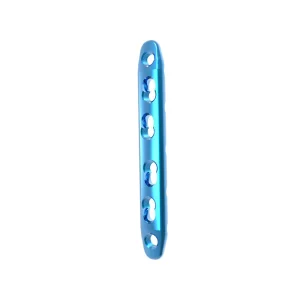
Applied in humerus, radius-ulna, femur, and tibia fracture reconstruction. Cortical screws utilize fine threads and a tapered pitch to bite deeply into the hard outer cortex. Combined with limited contact dynamic compression plates (LC-DCP), they preserve periosteal blood flow and accelerate secondary callus formation.
Spinal Pedicle Fixation
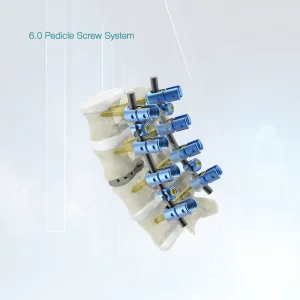
Engineered for posterior thoracolumbar pedicle fixation. The polyaxial head allows multi-directional swiveling up to ±25°, enabling smooth rod reduction in spondylolisthesis and spinal deformity correction while mitigating cantilever fatigue stress at the screw-rod interface.
Articular & Small Bone Osteosyntheses
Utilizing cannulated headless compression screws with differential thread pitches. These draw intra-articular scaphoid or osteochondral fragments together dynamically while sinking beneath the articular cartilage surface to eliminate soft-tissue impingement.
Future Trends in Bone Screw Manufacturing
The next horizon in internal fixation devices blends bioactive coatings, 3D additive manufacturing, and bioresorbable polymer matrices.
Bioactive Trabecular Coatings
Integration of plasma-sprayed Hydroxyapatite (HA) and titanium microporous coatings on the thread core. This increases bone-to-implant contact (BIC) and enhances early osseointegration, which is especially critical for osteoporotic geriatric fixation.
Additive 3D Lattice Architectures
Selective Laser Melting (SLM) enables screws with solid cores for high torsional resilience combined with porous outer surfaces that match natural bone's elastic modulus (10–30 GPa), drastically reducing stress-shielding effects.
Magnesium & Bioabsorbable Polymers
Progress in high-purity magnesium alloys and PLLA/PLGA composites offers controlled degradation that eliminates the requirement for second-stage implant removal surgeries in pediatric and sports trauma.
Frequently Asked Questions (FAQ)
Key commercial, technical, and regulatory clarifications for distributor sourcing teams and OEM partners.
What orthopedic product lines does ZATH manufacture?
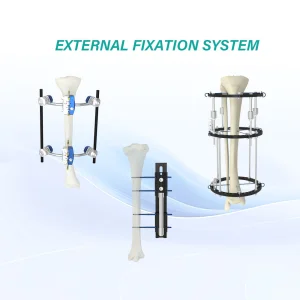
ZATH manufactures five primary platforms: joint replacement (hip and knee arthroplasty), spine (pedicle screw, MIS, anterior cervical plate, fusion cage, vertebroplasty), trauma (locking plates, intramedullary nails, cannulated screws, external fixation, pin and cable), sports medicine (suture anchors, buttons, staples), and dedicated matching orthopedic surgical instrument sets.
Is ZATH certified to ISO 13485 and global standards?
Yes. ZATH operates under a comprehensive ISO 13485-certified quality management system covering product design, multi-axis machining, mechanical testing, sterile double-barrier packaging, and storage. Copies of ISO certificates, UDEM certificates, and Free Sale Certificates (FSC) are available upon distributor qualification.
Are the implants supplied pre-sterile or non-sterile?
All ZATH implant series, including our bone fixation screws and locking plates, can be supplied in pre-sterile medical packaging (using certified Tyvek blister packaging). This guarantees contamination prevention, shortens hospital OR setup times, and assists in hospital infection control protocols.
What customization and ODM/OEM support options are available?
We provide complete OEM/ODM flexibility: custom laser branding and logo printing, customized thread geometry/pitches, head recess adaptations (Hex, Torx, Star), specific plate-hole spacing, custom surface treatments (anodizing/coatings), and tailored packaging designs complying with regional language labeling standards.
What is the standard lead time for international express delivery?
For standard inventory items, shipments are processed within 48 hours and shipped via express couriers (DHL, FedEx, TNT, UPS, EMS), typically arriving at destination ports in 4 to 6 business days. Custom ODM runs have an expedited sampling cycle of 3 to 4 weeks.
Extended Implant Systems & Instrument Sets
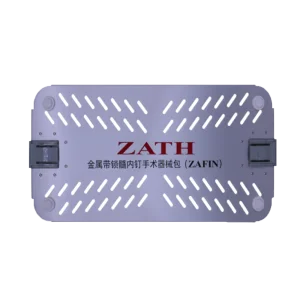
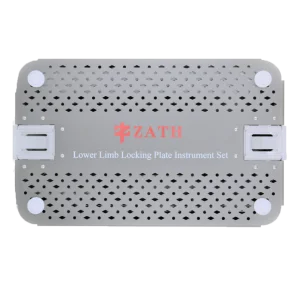
Comprehensive lower-limb, intramedullary, and arthroplasty platforms precision-machined for universal surgical compatibility.