
Featured Orthopedic Fixation & Arthroplasty Implants
Explore our export-grade orthopedic implants manufactured under Class 100,000 cleanroom protocols with complete batch traceability and sterile blister packaging.
The Paradigm Shift in Orthopedic Internal Fixation
Addressing the dual challenges of global healthcare cost containment and rising complex fracture cases with high-performance, cost-effective titanium osteosynthesis platforms.
The Clinical Transition: Absolute Stability to Biological Osteosynthesis
Over the last decade, orthopedic trauma surgery has shifted decisively from rigid compression plates (such as traditional Dynamic Compression Plates) that stripped the periosteum toward biological internal fixation via Locking Compression Plates (LCP). Modern anatomical locking plates function as internal fixators, eliminating the requirement for compressive friction between the bone cortex and the plate surface. This preserves the essential endosteal and periosteal microvascular blood supply, accelerating secondary bone healing through controlled micromotion and robust callus formation.
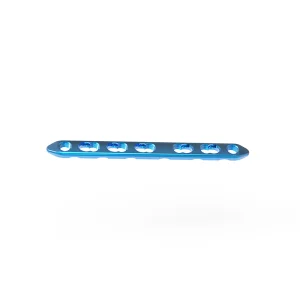
For global medical device distributors, sourcing high-tier titanium alloy (Ti-6Al-4V ELI) plates that feature variable-angle combi-holes provides surgeons with the freedom to achieve either dynamic axial compression or locked angle stability within the identical surgical bed, dramatically reducing operating times and post-surgical non-union rates.
Mitigating DRG & VBP Cost Pressures
Hospitals worldwide face tightening reimbursement frameworks (such as Diagnosis-Related Groups and volume procurement tenders). Healthcare providers are actively seeking alternatives to inflated Western multinational brands without compromising tensile fatigue life or dimensional precision.
- Direct Chinese factory pricing without brand surcharges
- Turnkey matching of implants and surgical instrument trays
- Sterile-packed blister kits reducing hospital autoclave loads
Engineering Specifications & Metallurgical Purity
Every ZATH fracture plate is designed according to ASTM F382 standards, balancing fatigue endurance limits, elastic modulus, and anatomical congruence.
ASTM F136 Ti-6Al-4V ELI Alloy
We strictly utilize medical grade Extra Low Interstitial Titanium Alloy conforming to ISO 5832-3 and ASTM F136. With an elastic modulus of approximately 110 GPa (substantially closer to cortical bone's 18 GPa compared to stainless steel's 200 GPa), our implants actively minimize the clinical incidence of stress shielding, cortical osteopenia, and hardware refracture post-union.
- Ultimate Tensile Strength: ≥ 860 MPa
- Yield Strength (0.2% offset): ≥ 795 MPa
- Elongation at Break: ≥ 10%
Advanced Combi-Hole Mechanics
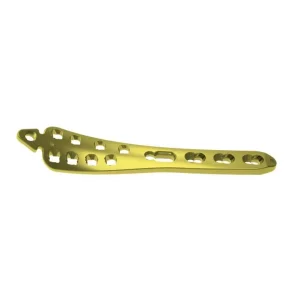
Our combi-hole architecture integrates dynamic compression unit (DCU) geometry on one hemisphere and threaded conical locking threads on the opposing side. High-precision CNC milling guarantees that standard cortex screws seat flush while self-tapping locking screws lock at an exact perpendicular or polyaxial trajectory, mitigating cross-threading and cold-welding phenomena under severe physiological loading.
- Thread tolerance machined to ±0.005mm
- Chamfered edges prevent tendon impingement
- Under-surface grooving limits soft-tissue ischemia
Type II Hard Anodization & Passivation
All titanium implant surfaces undergo electrochemical Type II anodization and multi-stage nitric acid passivation according to ASTM F86. This creates a dense, non-cytotoxic titanium dioxide (TiO2) layer that prevents ion leaching, minimizes the risk of galvanic corrosion, and enhances wear resistance at the screw-plate interface during micro-motion.
- Color-coded anodization by screw diameter (Ø2.4/2.7/3.5/5.0mm)
- Hydrophobic surface profile reduces bacterial biofilm formation
- Zero chemical residue after ultrasonic multi-solvent wash
| Fixation Parameter | ZATH Titanium LCP Series | Standard Stainless 316L Plates | Clinical / OEM Benefit |
|---|---|---|---|
| Raw Material Grade | Ti-6Al-4V ELI (ASTM F136 / ISO 5832-3) | AISI 316LVM (ASTM F138 / ISO 5832-1) | Superior Biocompatibility & MRI Safety |
| Modulus of Elasticity | ~105 – 114 GPa | ~193 – 210 GPa | Matches Bone Modulus; Prevents Stress Shielding |
| Fatigue Bending Strength | ASTM F382 Validated (>1,000,000 cycles) | Standard fatigue threshold | Zero Hardware Failure in Ununited Fractures |
| Plate Profile & Geometry | Low-profile anatomical pre-contour with limited contact base | Straight/semi-tubular planar profiles | Eliminates In-OR Contouring; Preserves Perfusion |
| Screw Locking Mechanism | Conical taper thread-in-thread (Zero Cross-Threading) | Friction seat or single thread tap | Fixed-Angle Rigidity in Osteoporotic Cancellous Bone |
China Factory 4.0: Resilience, Precision & Capacity
Founded in 2009 in Beijing's Zhongguancun Science and Technology Park, ZATH operates an integrated manufacturing base uniting 300+ professionals and 100+ precision machining technicians.
5-Axis DMG MORI & Swiss CNC Lathes
Our machine park integrates 5-axis high-speed CNC milling centers from DMG MORI alongside multi-axis Citizen Swiss screw machines. Complex multi-curved anatomical geometries—such as proximal humeral locking plates and distal femoral condylar plates—are milled in unified single-setup routines to eliminate setup inaccuracies and tool misalignment.
- Positional repeatability within ±0.0025 mm
- Automated robotic bar loading for high-volume production
- Dedicated toolpath optimization for smooth edge de-burring
CMM & Automated Metrology Testing
Each production run is monitored using Hexagon coordinate measuring machines (CMM), optical contour projectors, and precision thread plug gages. We execute 100% thread pitch and profile verification for locking holes to prevent catastrophic in-vivo screw seizure or stripping during emergency trauma surgery.
- Dimensional capability study (Cpk ≥ 1.33)
- Surface roughness (Ra) testing across all contact zones
- Tensile, yield, and torque testing in compliance with ASTM F543
ISO Class 100,000 Cleanroom & Packaging
To support global hospital infection control, our devices are processed through ultra-pure water ultrasonic degreasing stations and sealed within sterile double-barrier blister packs inside Class 100,000 cleanrooms. Implants are validated for Ethylene Oxide (EtO) or Gamma irradiation sterilization with a documented 5-year shelf life.
- Sterility Assurance Level (SAL) of 10-6
- Tyvek® sterile barrier peel-strength validation per ISO 11607
- Endotoxin testing < 20 EU/device per USP <161>
Global Enterprise ODM/OEM Procurement Framework
A streamlined five-phase engineering and delivery framework tailored to multinational brands, national tender winners, and orthopedic distributors.
DFM & CAD Review
Distributors submit technical drawings or sample benchmarks. Our R&D engineering team conducts Design for Manufacturability (DFM) reviews within 72 hours, optimizing hole spacing and taper threads.
Rapid Prototyping & FEA
We perform 3D FEA (Finite Element Analysis) stress simulations to evaluate peak yield points under 4-point bending loads, followed by CNC rapid prototyping of master plates within 10 business days.
DHF/DMR Documentation
Preparation of full Device Master Records (DMR), Design History Files (DHF), risk assessment matrices per ISO 14971, and material biocompatibility test certificates ready for regional registration.
Custom Sterile Packaging
Private labeling with customer logos, customized color-coded anodization, GS1-standard UDI (Unique Device Identification) barcode generation, and customized multilingual instruction manuals (IFU).
Global Express Delivery
Standardized packaging dispatched via DHL, FedEx, TNT, UPS, or direct air/ocean freight. Typical international sample express shipments clear and arrive within 4 to 6 business days.
Regulatory Compliance & Global Access Support
Removing registration hurdles for our distributors. Comprehensive technical dossiers built to withstand stringent notified body reviews worldwide.
ISO 13485:2016 & CE UDEM
Our quality management system is audited and certified under ISO 13485:2016 for medical devices. We hold UDEM CE conformity certificates and valid Free Sale Certificates (FSC) to accelerate import approvals across Latin America, Southeast Asia, the Middle East, and Eastern Europe.
- Full traceability from raw melt bar heat numbers to end patient
- Annual third-party surveillance audits without critical non-conformities
- Post-Market Surveillance (PMS) feedback integrated into QA cycles
EU MDR 2017/745 Prepared Dossiers
In response to European Union Medical Device Regulation (MDR 2017/745) Class IIb requirements, ZATH maintains comprehensive Clinical Evaluation Plans (CEP), Clinical Evaluation Reports (CER), and Post-Market Clinical Follow-up (PMCF) literature databases.
- Pre-clinical mechanical performance data (ASTM F382, ASTM F543)
- Biocompatibility test suites fully compliant with ISO 10993-1
- Periodic Safety Update Reports (PSUR) documentation
Complete Distributor Tender Support
We furnish regional partners with authorized Letters of Authorization (LOA), Certificates of Analysis (COA) for incoming titanium ingots, autoclave sterilization validation reports, and matching surgical technique animation brochures for local key opinion leader (KOL) engagement.
- Rapid notarization and apostille service coordination
- Customized graphic surgical case layouts for local hospitals
- On-site or remote engineering training for distributor product specialists
Technology Roadmap: The Future of Orthopedic Implants
Investing in bio-resorbable metallurgy, 3D additive manufacturing, and smart osteosynthesis technologies to deliver clinical differentiation for our global OEM partners.
3D Printed Trabecular Porous Titanium
Utilizing Electron Beam Melting (EBM) and Selective Laser Melting (SLM), our next-gen trauma and joint components incorporate interconnected porous trabecular titanium scaffolds with 600–800 μm pore dimensions and 70% open porosity. This mimics natural human cancellous architecture, stimulating rapid osseointegration and biological anchor stability.
Biodegradable Magnesium (Mg-Zn-Ca) Alloys
To eliminate the secondary surgical trauma of implant removal in pediatric patients and sports medicine cases, ZATH's metallurgical research roadmap incorporates high-purity magnesium-rare-earth alloys. These implants provide rigid mechanical fixation during the 12-week bone healing phase, subsequently bio-degrading safely into natural physiological ions.
Smart Fixation & Antimicrobial Coatings
Addressing hospital-acquired surgical site infections, we are advancing thin-film silver-doped hydroxyapatite (Ag-HA) and bioactive surface texturing. Concurrently, our R&D collaborates with clinical centers to prototype micro-telemetry strain sensors embedded within reconstruction plates for non-invasive, real-time wireless healing stage monitoring.
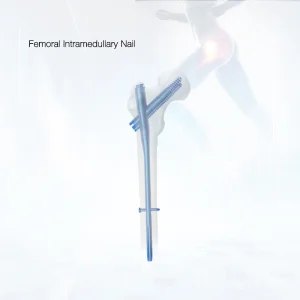
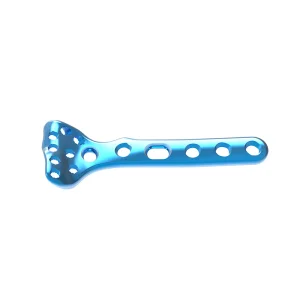
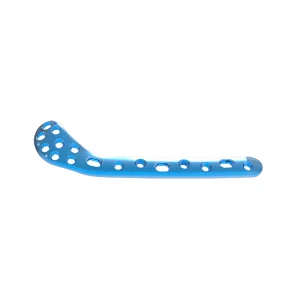
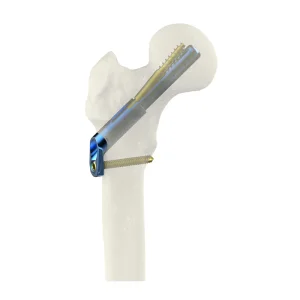
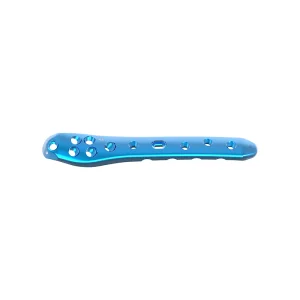
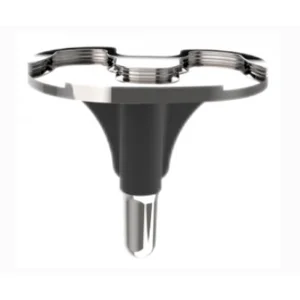
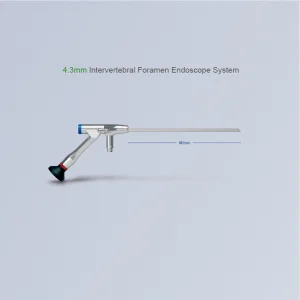
Specialized Trauma, Joint & Endoscopy Hardware
Engineered for high clinical reproducibility, anatomical precision, and seamless instrument mating during operative procedures.

Frequently Asked Questions for Procurement Teams
Essential guidance for qualifying ZATH as your strategic OEM contract manufacturer or authorized distributor.
What testing standards validate your orthopedic bone plates?
All ZATH locking compression plates undergo mechanical verification in strict adherence to ASTM F382 (Standard Specification and Test Method for Metallic Bone Plates). Tests include 4-point dynamic bending fatigue life (evaluated to ≥ 1,000,000 cycles without catastrophic fracture), static bending stiffness, and bending strength. Locking screws are rigorously evaluated against ASTM F543 for torsional yield strength, insertion/removal torque, and axial pull-out resistance from synthetic cortical bone analogs.
How does ZATH prevent screw-to-plate cold welding and cross-threading?
Cold welding and cross-threading represent critical clinical failure modes. We solve this by implementing differential surface hardness and strict micro-machining tolerances. Screws feature precision-milled conical heads with lead-in pitch guides, while plate holes are tapped using multi-axis CNC routines to ±0.005mm accuracy. Additionally, our controlled Type II anodization generates a dense oxide barrier on both mating surfaces, mitigating metal-on-metal galling under high insertion torque.
What is the typical Minimum Order Quantity (MOQ) and sample lead time?
For standard catalog configurations (under the ZATH brand or neutral sterile packaging), standard evaluation MOQs start as low as 10 to 50 units per SKU to support hospital trial evaluations. For full custom OEM/ODM projects (custom anatomical plate profiles, client branding, and custom-milled graphic instrument trays), production runs typically start at 100 to 200 units per size. Functional prototypes are delivered in 10 to 14 business days, while bulk deliveries dispatch within 30 to 45 days.
Can you provide matching surgical instruments for every plate system?
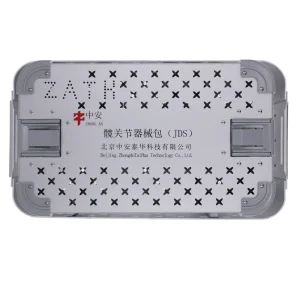
Yes. Every orthopedic plate family is paired with an engineered, autoclavable instrument set housed in high-grade anodized aluminum graphic cases. Trays include quick-coupling ergonomic screwdrivers (Torx / Star drive or Hex), self-centering bone drill sleeves, calibrated depth gauges, calibrated bone taps, and self-holding plate holding forceps. All instruments are crafted from surgical-grade 17-4PH stainless steel or medical silicone.
Are titanium and stainless steel implants manufactured separately to prevent cross-contamination?
Absolutely. Strict compliance with ISO 13485 requires rigorous environmental and metallurgical segregation. Titanium alloy (Grade 5 / Ti-6Al-4V ELI) and medical stainless steel (316LVM) are machined on dedicated tooling setups, cleaned in isolated ultrasonic baths, and handled with non-ferrous fixtures. This prevents particulate cross-transfer, completely mitigating galvanic potential and iron contamination that could cause local tissue metallosis.
What documentation do you supply for regional health authority registration?
We supply full Technical Documentation Files (TDF) structured in the Common Submission Dossier (CSD) format. This includes ISO 13485:2016 certificate copies, UDEM CE certificates, Certificates of Free Sale (CFS/FSC) issued by national authorities, raw material mill test certificates (chemical analysis and physical test verification), biocompatibility reports (ISO 10993 cytotoxicity, sensitization, irritation, implantation), and accelerated 5-year packaging aging validation data.
How does ZATH support distributor tender quoting and price benchmarking?
We provide tiered quotation schedules engineered for national tender competitiveness. Our international business team assists partners by calculating landed cost models, offering split shipments to maintain hospital buffer stock, and supplying sample kits accompanied by official manufacturer authorization letters (LOA) to guarantee exclusive territorial bid protection.
What is the standard warranty and post-market tracking policy?
ZATH guarantees 100% replacement coverage for any device exhibiting dimensional deviation or packaging barrier breaches prior to surgical use. Through our enterprise ERP and unique device identification (UDI) laser marking, every single plate, screw, and nail can be traced backward to its specific melt batch, CNC machine, operator, cleaning cycle, and sterilization load, providing complete post-market vigilance integrity.