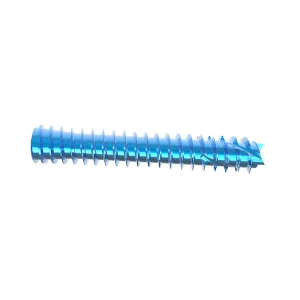
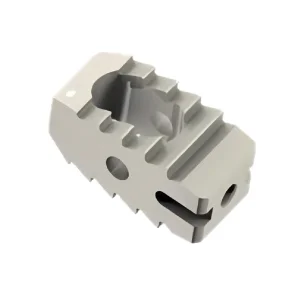
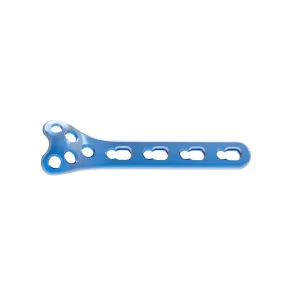
Precision Trauma & Joint Reconstruction Implants
Explore high-performance trauma locking plates, cannulated solutions, and arthroplasty platforms precision-machined by ZATH.
Biomechanics of Calcaneal Fracture Fixation Systems
Restoring Bohler's Angle, Gissane's Angle, and Subtalar Joint Articular Congruency via Low-Profile Locked Fixation.
Anatomical Perimeter Pre-Contouring
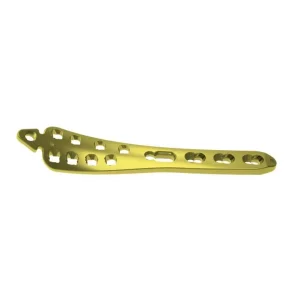
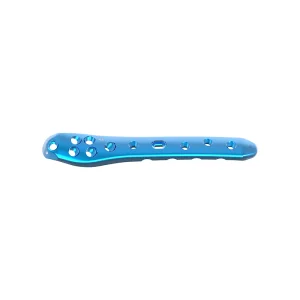
Calcaneal fractures (Sanders Type II to IV) feature complex fragmentation patterns. China’s premier orthopedic manufacturing integrates high-precision 5-axis CNC stamping and micro-milling to replicate the complex lateral calcaneal wall topography. Pre-shaped profiles eliminate intraoperative bending fatigue and prevent lateral cortical impingement on the peroneal tendons.
Sustentaculum Tali Locking Fixation
Achieving stable structural reduction requires targeting the dense cortical bone of the constant fragment: the sustentaculum tali. Modern calcaneal plates engineered by ZATH incorporate multi-angle diverged and converged locking screw hole layouts. This permits subchondral raft screw insertion immediately below the posterior facet to prevent secondary articular collapse under dynamic weight-bearing.
Low-Profile Soft-Tissue Protection
The lateral hindfoot soft-tissue envelope is notoriously prone to wound breakdown, ischemic necrosis, and dehiscence. Chinese orthopedic manufacturers have engineered tapered smooth plate margins (down to 1.2mm - 1.5mm) and recessed screw heads. These design characteristics significantly minimize hardware prominence and mitigate soft-tissue irritation during long-term consolidation.
Why Tier-1 Distributors Source Calcaneal Systems from China
Combining world-class metallurgy, scalable robotic machining, strict ISO 13485 cleanroom sterilization, and comprehensive OEM/ODM engineering agility.
Advanced 5-Axis Precision Machining
Operating in state-of-the-art facilities like the Zhongguancun Science and Technology Park in Beijing, Chinese facilities deploy Japanese and Swiss CNC centers. Tool path tolerances within ±5 μm guarantee zero variance in locking thread geometries, preventing screw-cross threading during critical surgical procedures.
Strict Quality Verification & Traceability
Full conformance to ISO 13485 and stringent medical device standards. Every calcaneal plate batch undergoes coordinate measuring machine (CMM) dimensional checks, surface roughness tests, and metallurgical spectrographic validation. Implantable Grade 5 Titanium (Ti-6Al-4V ELI) is supplied with verifiable mill test certificates.
Integrated Instrument Sets & OEM Scalability
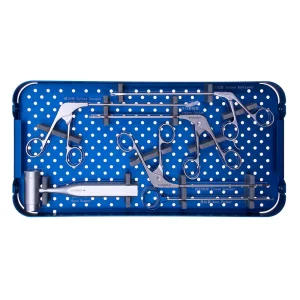
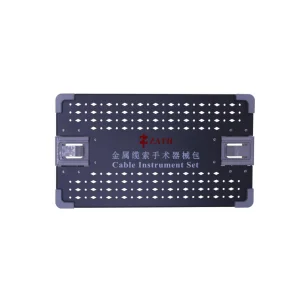
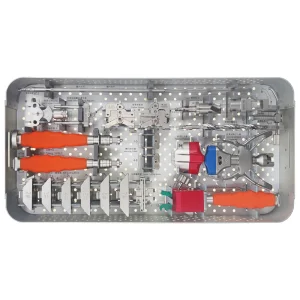
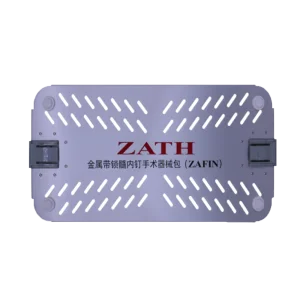
From minimally invasive sinus tarsi retractors and specialized calcaneal distractors to screw depth gauges and torque limiters, Chinese factories manufacture comprehensive surgical kits alongside plates. Rapid customization of screw pitches, plate dimensions, anodization colors, and sterile packaging allows overseas brands to scale product catalogs seamlessly.
Surgical Approaches & Localized Clinical Scenarios
Addressing intra-articular fractures, comminuted calcaneal bodies, and post-traumatic deformities across various patient demographics.
Extensile Lateral L-Approach
The traditional standard for complex Sanders III & IV intra-articular fractures. The broad perimeter locking plate provides complete exposure and rigid multi-point neutralization across the anterior process, calcaneocuboid joint, tuberosity, and the sustained subtalar joint articular surface.
Sinus Tarsi Minimally Invasive Surgery (MIS)
Engineered for low incision complication rates. Specialized narrow and grid-type calcaneal locking mini-plates slide smoothly through a 3-4 cm incision beneath the peroneal tendons, delivering stable subchondral fixation while drastically accelerating wound closure and skin recovery.
Osteoporotic High-Energy Calcaneal Trauma
Elderly patients with bone mineral density deficiencies present major fixation challenges. Fixed-angle locking constructs act as internal fixators, distributing joint loads over the entire heel cortical shell rather than depending solely on cancellous screw thread purchase.
Corrective Malunion & Fusion Revision
Late presentation of untreated heel fractures results in loss of heel height, lateral impingement syndrome, and severe arthrosis. Calcaneal plates assist distraction bone grafting and subtalar arthrodesis, restoring biomechanical gait kinematics.
Macro Industry Trends & Next-Gen Developments
Examining additive manufacturing, sterile kit delivery, and multi-axial locking technology transforming foot and ankle trauma reconstructive surgery.
3D Printed Patient-Specific Plates
Direct Metal Laser Sintering (DMLS) in medical Grade 23 titanium enables the printing of patient-specific calcaneal meshes for complex bone defect reconstructions. Chinese research units in conjunction with medical hubs like ZATH are advancing 3D printed porous scaffolds that stimulate trabecular bone ingrowth.
Variable-Angle Locking Innovations
Moving beyond fixed monoaxial trajectory screws, variable-angle (polyaxial) locking mechanisms allow surgeons an angular cone up to 30 degrees. This provides absolute freedom to target isolated subchondral bone islands and avoid existing syndesmotic implants or adjacent hardware.
Sterile Pre-Packaged Procedure Kits
Global hospitals are systematically shifting away from non-sterile bulk delivery and hospital central reprocessing. Pre-sterilized, single-use blister-packed calcaneal trauma sets lower per-case cross-contamination risks and streamline inventory tracking for surgical networks worldwide.
Frequently Asked Questions for B2B Importers & Clinical Buyers
Essential technical, regulatory, and supply chain answers when qualifying a medical device factory in China.
What specific titanium grade is utilized for calcaneal locking plates?
ZATH manufactures all high-load orthopedic trauma locking plates using medical-grade Ti-6Al-4V ELI (Extra Low Interstitial) conforming to ASTM F136 and ISO 5832-3. This delivers the highest yield strength, fatigue endurance, and optimal biological compatibility.
How do you verify accuracy for locking screw hole threading?
Every plate features precision-machined threads cut on automated multi-axis turn-mill machining centers. In-process inspection employs optical automated measurement and Go/No-Go thread gauge checking to ensure 100% thread engagement with locking caps.
Can you provide customized OEM geometries and private labeling?
Yes. As an authentic primary manufacturer with more than 15 years of industry tenure, we support extensive OEM/ODM services. We customize plate profiles, screw dimensions, laser-etched barcodes/logos, anodization colors, and multilingual blister packing for national tenders.
What technical documentation is provided for country health authority registrations?
We supply qualified distributors with complete technical documentation (Technical File/DMR), ISO 13485 certificates, Certificate of Free Sale (CFS), biocompatibility testing reports (ISO 10993), sterilization validation, and mechanical fatigue test results according to ASTM F382.
Are dedicated surgical instrument sets available with the implants?
Complete surgical instrumentation sets—including carbon-fiber radiolucent retractors, calcaneal pins, tissue protective drill sleeves, specialized bending irons, and depth gauges—are engineered and supplied to work natively with every plate variant.
What is the standard production and shipping lead time for volume orders?
Standard trauma components and catalog plates are maintained in stock for rapid fulfillment. OEM customized production cycles generally require 4-6 weeks, with expedited door-to-door air freight shipping dispatch via DHL, FedEx, UPS, or TNT within 4 to 6 business days.
Comprehensive Spinal, Cannulated & Extremity Systems
Engineered with uncompromising precision to ensure clinical stability, biological fusion, and rapid patient rehabilitation.