Advanced Trauma, Spine & Arthroplasty Solutions
Explore ZATH's precision-engineered orthopedic implants and instrument assemblies manufactured under ISO 13485 cleanroom governance for worldwide clinical deployment.
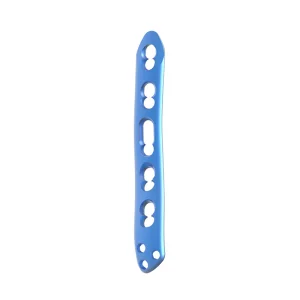
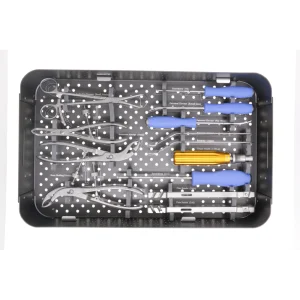
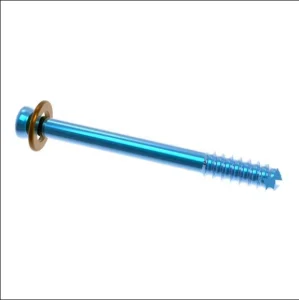
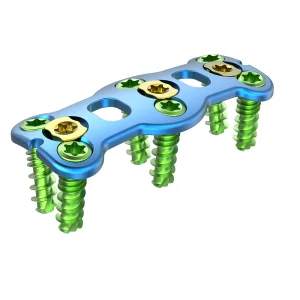
Clinical Anatomy of Cortical Bone Screws for Membrane Fixation
In oral-maxillofacial reconstruction, craniomaxillofacial repair, and complex orthopedic guided bone regeneration (GBR), the structural retention of non-resorbable (titanium mesh, dense PTFE) or resorbable (cross-linked porcine/bovine collagen, pericardium) barrier membranes dictates the biological success of the osteogenic envelope. A Cortical Bone Screw for Membrane Fixation serves as the critical mechanical anchor that counteracts transmucosal compressive vectors, muscle traction forces, and interstitial fluid micro-pressures.
Without rigid micro-screw fixation, barrier membranes succumb to micro-motions exceeding 100 to 150 microns, triggering fibroblastic invasion rather than osteoblastic differentiation. According to classical osteopromotive principles, stabilizing the osteogenic chamber requires an ultra-low-profile, high-shear cortical screw capable of achieving immediate primary stability within dense cortical lamellar bone without micro-fracturing the outer cortical table.
Primary Stability Axiom: The success rate of horizontal and vertical alveolar ridge augmentation drops by over 34% when membrane micromovement exceeds 50 µm during the initial 21-day vascular recruitment window. ZATH's micro-machined cortical membrane screws provide up to 22 N·cm of pull-out resistance in Type I/II cortical bone, providing absolute spatial stability for particulate allografts, autogenous bone blocks, and synthetic osteoconductive matrices.
Morphological Geometries: Head Architecture & Thread Mechanics
The engineering topology of a cortical bone screw engineered specifically for membrane application departs significantly from standard bicortical trauma lag screws or cancellous locking screws:
- Umbrella / Flat-Beveled Mushroom Head: Engineered with a broad bearing surface (typically 2.4 mm to 3.2 mm diameter) that smoothly compresses collagen matrices or mechanically locks through 1.0–1.2 mm titanium mesh perforations without puncturing or tearing thin tissue layers during clockwise axial torquing.
- Ultra-Low Profile Elevation: A dome-height profile restricted to under 0.45 mm guarantees tension-free soft tissue primary closure, dramatically reducing the clinical incidence of early mucosal dehiscence, peri-implant exposure, and subsequent bacterial biofilm colonisation.
- Self-Drilling & Self-Tapping Thread Flutes: Incorporating reverse-cutting flutes and acute-pitch cutting tips, our screws penetrate dense cortical bone (mandibular symphysis, retromolar trigone, anterior alveolar crest) without requiring prior pilot osteotomies, thereby preserving maximum local bone stock and avoiding thermal necrosis.
- Hexalobe (Torx) / Cross-Fit Friction Drive: Traditional cruciform and slotted drives carry high cam-out risks, which can cause metallic debris shedding and axial slipping during intra-oral application. ZATH incorporates deep friction-fit hexalobe and square-taper interfaces, allowing single-handed screw engagement and zero-wobble retention during challenging angled insertion vectors.
Clinical Deployments Across Surgical Disciplines
Examining the localized biological mechanisms and biomechanical requirements across reconstructive oral surgery, maxillofacial trauma, and orthopedics.
Guided Bone Regeneration (GBR) & Tenting
In severe horizontal and vertical jaw atrophy, cortical bone screws act as biological "tenting poles." Positioned 3 mm to 6 mm above the residual alveolar plate, the screw head elevates the overlying collagen or d-PTFE membrane, preserving an inviolable sub-periosteal space where autogenous particulate and xenografts undergo uninterrupted angiogenic revascularization without collapse under muscular compression.
Titanium Mesh & Custom Cage Fixation
For complex 3-dimensional volumetric defects, pre-formed 3D titanium meshes or CAD/CAM patient-matched subperiosteal scaffolds require non-yielding peripheral stabilization. Cortical micro-screws penetrate cortical boundaries along the external oblique ridge and pyriform aperture, preventing mesh tilting, micro-rotation, or dislodgement throughout a 6 to 9-month consolidation period.
Craniomaxillofacial Fracture Containment
Beyond alveolar GBR, cortical membrane screws secure biological barrier sheets and fine titanium containment plates over fragmented anterior sinus walls, zygomatic arches, and orbital floor reconstructions. The low-profile countersunk design minimizes external palpability beneath thin facial skin and peri-orbital soft tissues.
Orthopedic Masquelet Technique Anchoring
In segmental orthopedic diaphyseal defect reconstruction via the induced membrane (Masquelet) technique, cortical micro-screws stabilize internal synthetic matrices and biological dural grafts against adjacent bone ends, preventing dead-space collapse prior to second-stage cancellous morcellized bone packing.
Orthodontic Cortical Anchorage & Soft-Tissue Tacking
Miniaturized cortical bone screws serve a dual purpose in surgical orthodontics, acting as temporary skeletal anchorage devices (TADs) while also tacking connective tissue grafts and biological collagen sheets to augment deficient attached gingiva in regions undergoing extensive tooth movement.
Global Commercial Landscape & Procurement Benchmarking
Comparative structural assessment: Evaluating tier-one global brands against ZATH's vertically integrated Chinese OEM/ODM manufacturing capability.
The global market for oral, maxillofacial, and orthopedic micro-fixation devices is projected to surpass USD 3.8 billion by 2030, progressing at an estimated compound annual growth rate (CAGR) of 6.8%. Increasing adoption of regenerative implantology, coupled with demographic aging across Europe, North America, and East Asia, has caused demand for high-precision cortical screws and barrier fixation systems to accelerate. However, regulatory complexities—such as the transition from the European MDD to the stringent EU MDR (2017/745)—and acute hospital cost pressures have forced procurement directors to seek reliable manufacturing partners capable of combining certified quality management with resilient unit economics.
| Evaluation Parameter | Tier-1 Western Conglomerates | Generic Domestic Machine Shops | ZATH (Beijing ZhongAnTaiHua) |
|---|---|---|---|
| Raw Material Specification | Ti-6Al-4V ELI (ASTM F136) | Variable Industrial Titanium | Medical Grade 5 ELI / Pure Grade 4 Ti |
| Dimensional Precision | ± 0.010 mm | ± 0.035 mm | ± 0.005 mm (Swiss 5-Axis Turning) |
| Cleanroom Packaging | ISO Class 7 Cleanroom | Non-sterile bulk shipment | Class 10,000 Validated Sterile Barrier |
| Quality System Certification | ISO 13485, CE MDR, FDA | Uncertified or local registration only | ISO 13485, UDEM CE, Free Sale Cert |
| Supply Lead Time & Dispatch | 12 to 24 weeks backorder | 4 to 8 weeks | 4–6 Days Worldwide Air Logistics |
| OEM / ODM Customization | Rigid, high minimum batch fees | Limited engineering ability | Full Flexibility (Head, Thread, Laser, Kit) |
| Procurement Cost Structure | High premium brand margin | Low cost, variable quality | Optimal Factory-Direct Unit Economics |
Chinese Manufacturing Resiliency & Production Depth: The ZATH Advantage
Founded in 2009 in Beijing's national innovation core—Zhongguancun Science Park (Pinggu District)—Beijing ZhongAnTaiHua Technology Co., Ltd. (ZATH) exemplifies modern Chinese medical device precision engineering. Operating across a multi-hectare production base staffed by over 300 employees and nearly 100 seasoned engineering and quality specialists, ZATH controls every phase of orthopedic and micro-screw synthesis under one unified ISO 13485 Quality Management System.
Global medical distributors frequently encounter fractured supply chains where raw material procurement, micro-turning, surface passivation, visual inspection, and cleanroom packaging are subcontracted across disparate entities. This fragmentation introduces compounding dimensional tolerances, cross-contamination hazards, and audit gaps. ZATH eliminates these systemic vulnerabilities through end-to-end in-house production:
Raw Material Verification
Direct sourcing of titanium alloy bars accompanied by full metallurgical mill test certificates (MTC), ultrasonic grain flaw inspection, and chemical spectroscopy to verify compliance with ASTM F136 standards.
Multi-Axis Swiss CNC Turning
Ultra-high-precision multi-axis Swiss-type automated turning machines craft microscopic pitch configurations, reverse cutouts, and low-profile umbrella heads with repeatable tolerances to ±0.005 mm.
Validated Cleanroom Packaging
100% automated optical inspection (AOI) followed by multi-stage ultrasonic cleaning and terminal sterile packaging in ISO Class 10,000 cleanrooms, verified by continuous bioburden monitoring.
This integrated supply ecosystem provides global distributors with decisive supply chain agility. While Western OEM suppliers frequently require 16-week lead times for batch modifications, ZATH achieves rapid prototyping within 10 to 14 days, with full-scale production batches rolling off lines in under 3 weeks. Supported by courier logistics partnerships (DHL, FedEx, UPS, TNT), routine stock replenishments reach destination ports across Europe, the Middle East, Southeast Asia, and Latin America within 4 to 6 business days.
Technological Roadmap & Next-Generation Outlook (2025–2035)
Emerging metallurgical innovations, nano-surface engineering, and bioresorbable micro-fixation paradigms driving R&D at ZATH.
Bio-Absorbable Magnesium-Zinc Alloys
Addressing the clinical requirement for second-stage hardware removal, next-generation cortical membrane screws utilize bioresorbable Mg-Zn-Ca alloys. These deliver high initial tensile strength (exceeding polymer PLGA systems) while predictably corroding into biocompatible ions over 9 to 14 months, matching physiological bone remodeling timelines.
Nano-Engineered SLA & Anodized Surfaces
By applying controlled Sandblasted, Large-Grit, Acid-Etched (SLA) techniques and micro-arc oxidation (MAO) to the shaft threads while keeping the umbrella head mirror-polished, screws achieve rapid osteointegration within the cortical floor while preventing soft-tissue adhesion at the coronal head interface, simplifying eventual explantation.
Dynamic Navigation & Robotics Compatibility
Future micro-fixation instrument sets integrate optical tracking markers and fiducial sensors directly into the screw insertion handles. This interface connects with surgical navigation workstations, guiding optimal cortical screw trajectory and depth to safeguard anatomical structures like the inferior alveolar nerve and mental foramen.
Regulatory Compliance & Localized Market Entry Dossiers
Distributors expanding into regulated territories require comprehensive technical and biological safety documentation. ZATH's dedicated regulatory affairs group maintains a complete repository of compliance files ready for local health ministry submission:
ISO 13485 QMS Certification
Our complete manufacturing pipeline operates under an independently audited ISO 13485 medical device quality management system, covering design, production, packaging, and risk analysis (ISO 14971).
CE Conformity & UDEM Audit
Implants and matching instrument systems maintain valid conformity certifications via respected notified bodies, including UDEM, fulfilling essential safety and performance requirements for commercial distribution.
Free Sale Certificates (FSC)
Governmentally authenticated Free Sale Certificates enable expedited registration pathways across regional regulatory bodies throughout Latin America, Africa, the Middle East, and the Asia-Pacific region.
Beyond paper compliance, ZATH provides localized technical file dossiers: biocompatibility test reports (ISO 10993 series for cytotoxicity, sensitization, systemic toxicity, and genotoxicity), accelerated and real-time package aging validations (ISO 11607), gamma / ethylene oxide sterilization validation reports, and engineering finite element analysis (FEA) models verifying torsional shear failure limits.
Frequently Asked Questions on Cortical Bone Screws & Supply
In-depth responses covering biomechanics, metallurgy, sterilization, and distributor support.
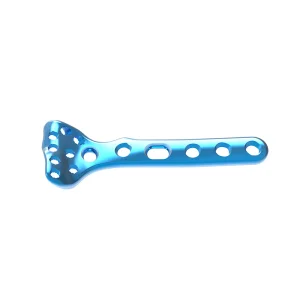
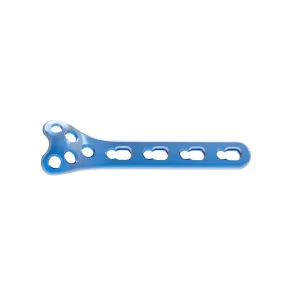
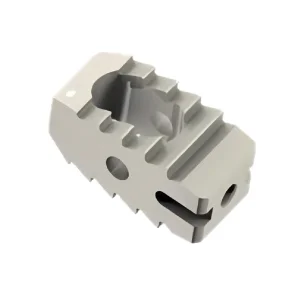
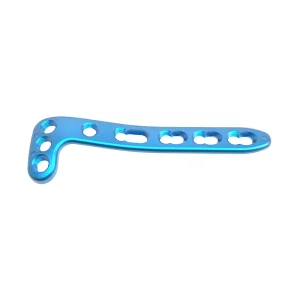
Comprehensive Reconstructive & Spinal Systems
Explore ZATH's broader range of titanium locking systems, endoscopic spine platforms, and anatomical compression implants engineered for high clinical reliability.